Why must hardware components be finished with high-quality paint? — A system-level upgrade solution from surface to service life!
Many people think that spraying a coat of paint on hardware surfaces is just for "good looks". In fact, in the industrial field, the primary logic of hardware coating is not appearance, but protection. Once metal loses coating protection, oxidation, rusting, and corrosion will occur irreversibly, the structural reliability will decline accordingly, and the appearance will also drag down the overall value. To achieve a truly durable hardware finish, the coating must be done with engineering methods, not "sprayed casually".

The first critical step is surface preparation, which directly determines the coating's service life. Visible rust and oil contamination must be thoroughly removed, as any residue will become the root cause of future coating delamination. Subsequently, phosphating forms a dense conversion film on the metal surface, significantly improving the coating's adhesion and corrosion resistance—this is the dividing line between amateur and professional work.
The second key point is the spraying environment and application method. Spraying must be carried out in a dust-free or low-dust environment to prevent dust from settling on the paint film and causing particles and pitting. A professional spray gun should be used with multiple thin passes at a constant speed and even distance to avoid orange peel and sagging. The primer is responsible for adhesion and filling, the intermediate coat provides hiding and build, and the topcoat determines appearance and resistance; each layer is part of the system.
The third key point is high-temperature curing. Spraying is not the end; the parts must enter the baking oven for high-temperature baking to enable the coating molecules to crosslink and cure into a dense hard film. The common process temperature range is 120°C–180°C for 20–40 minutes. Different substrates require adjusted temperature control curves; insufficient baking shortens service life, while over-baking damages the substrate. What truly makes hardware coatings "hardcore and durable" is not the spraying, but the "baking."
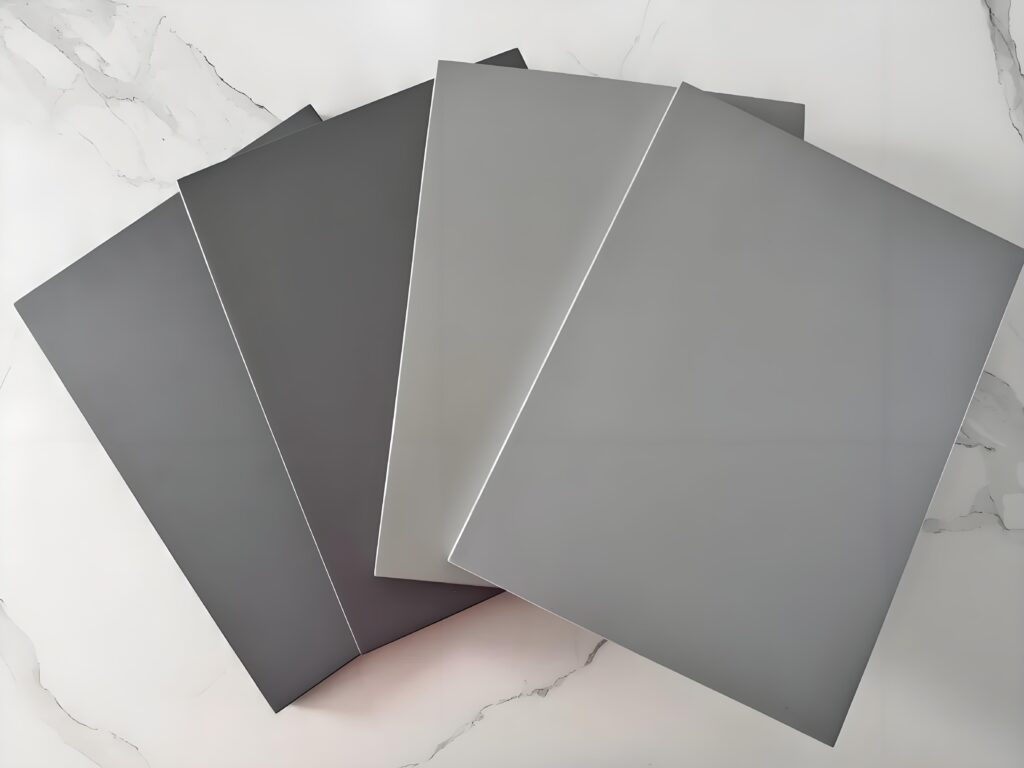
After standardized construction, what you get is not just a "high-gloss appearance," but: mirror-like high gloss, improved tactile feel, scratch resistance and wear resistance, corrosion and chemical resistance, and doubled service life. In other words, high-quality hardware coating is not just an embellishment, but an integral part of product competitiveness.