In modern architectural and industrial spaces, floor paint has become an important material for improving ground quality, enhancing durability and aesthetics. Whether it is a home garage that needs a clean and wear-resistant parking space, or a factory workshop that requires a high-strength floor capable of withstanding forklift rolling, the requirements for floor systems vary completely across different scenarios. Faced with various types of floor paints on the market—water-based epoxy, solvent-based epoxy, polyurethane, moisture-proof primer, etc.—many people often find it difficult to choose. This article will help you select the right floor paint in one go from the three core dimensions of environmental characteristics, functional needs, construction conditions.
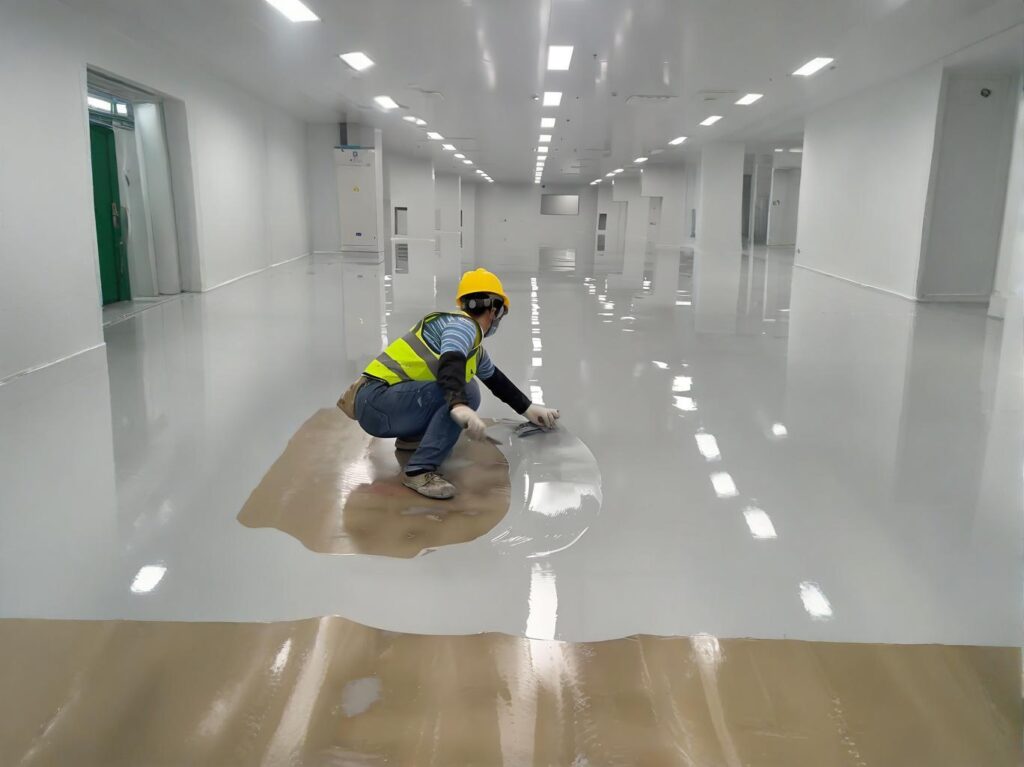
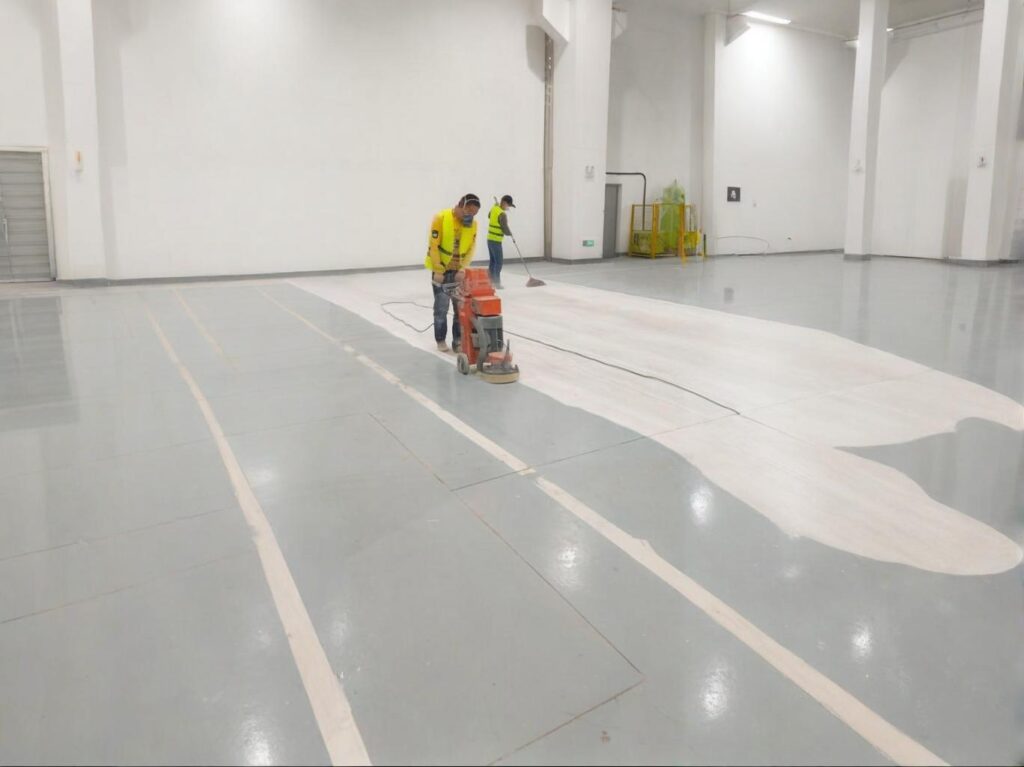
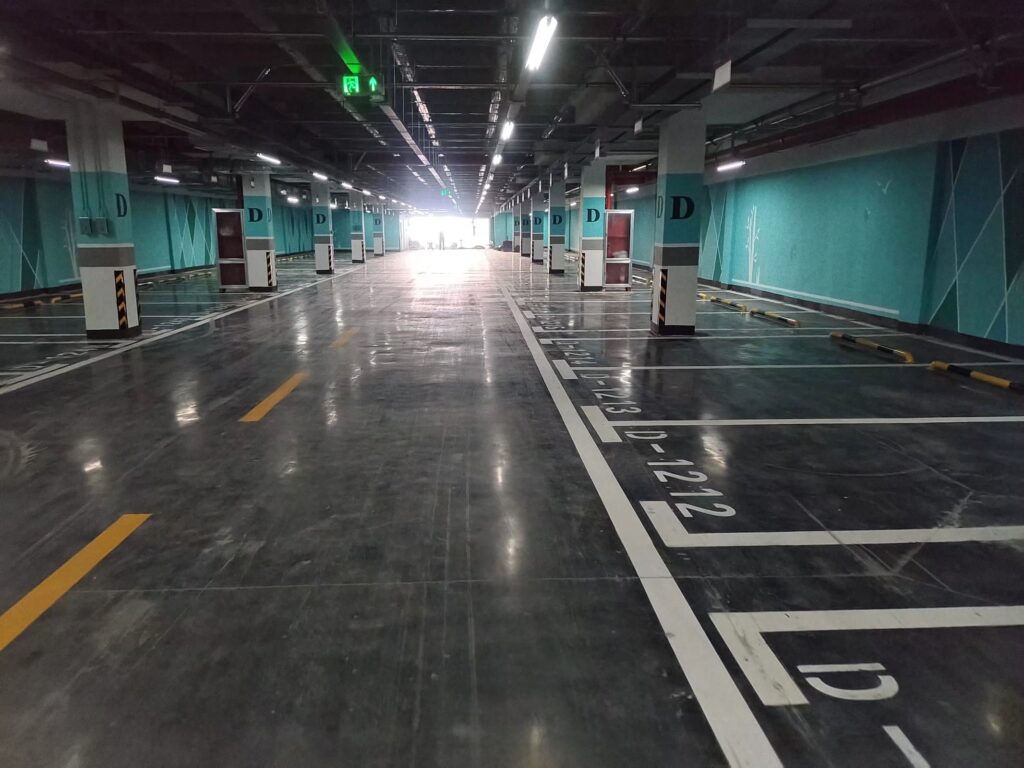
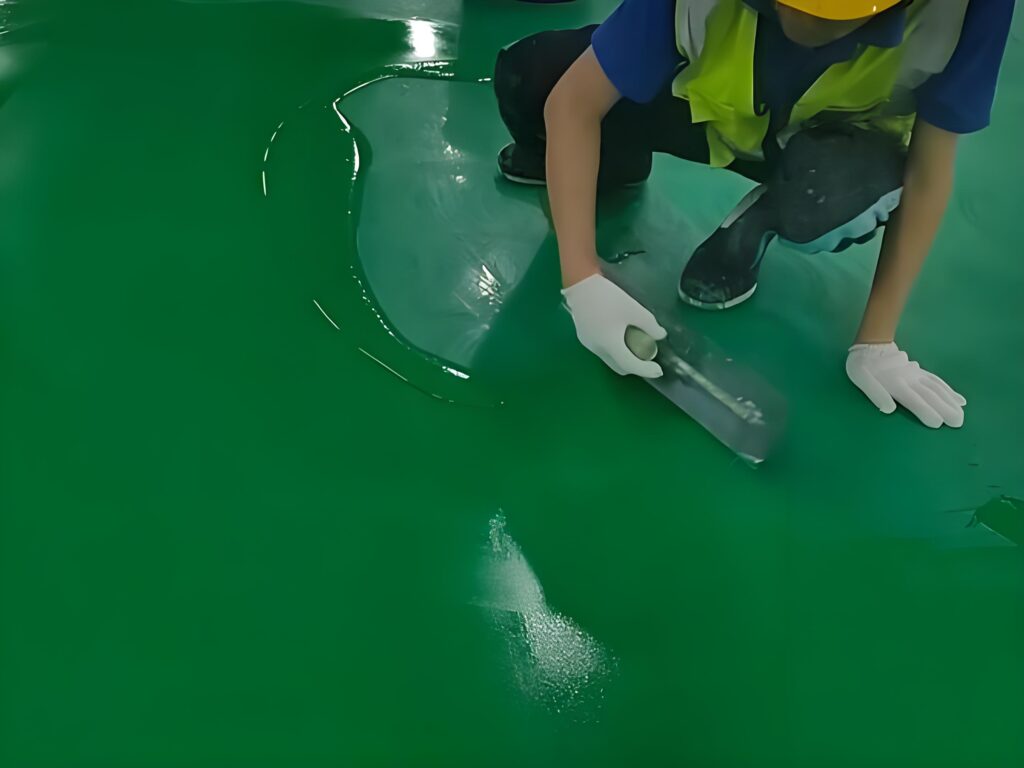


1. Select the Type of Floor Paint Based on Environmental Characteristics
1. Home garage and balcony: Emphasis on eco-friendliness and low odor, water-based epoxy is more suitable
Sensitive to odors in the home environment, especially in spaces such as the garage, balcony, and storage room.
Water-based epoxy floor paint uses water as the thinning medium, with minimal volatile matter, and can be ventilated and used shortly after application.
Its outstanding advantages include:
- Almost odorless, more eco-friendly and safe
- Excellent wear resistance, anti-slip, and dust-proof performance
- Daily tire run-over is absolutely no problem
- More suitable for DIY installation
Suitable for: garages, balconies, small storage rooms, children's play areas, and other everyday household spaces.
2. Factory workshops, warehousing logistics, parking lots: For high-intensity demands, solvent-based epoxy or polyurethane must be selected
In industrial-grade scenarios, foot traffic and material handling are frequent, and the flooring must withstand enormous pressure and long-term impact.
Therefore, in industrial environments, it is usually recommended:
- Solvent-based epoxy floor paint (high hardness, no deformation under heavy pressure)
- Polyurethane floor paint (better elasticity, stronger scratch resistance)
Such coatings have:
- Highly wear-resistant
- Excellent pressure resistance and impact resistance
- Resistant to chemical corrosion, such as oil, acid and alkali, alcohol, etc.
- More suitable for automated production lines and continuous operation environments
Suitable for: machinery manufacturing, heavy-duty warehouses, underground parking garages, food processing workshops, large-scale logistics centers, etc.
3. Basements and damp areas on the first floor: Water-based systems combined with moisture-proof primer yield the best results
A humid environment is the main cause of "failure" in flooring systems, with the most common problems being blistering and delamination.
To avoid such situations, it is necessary to select:
- Water-based epoxy floor paint (better moisture resistance)
- Moisture-proof sealing primer (blocks rising water vapor)
Suitable for: basements, semi-underground garages, first-floor storage areas near ground level, etc.
II. Determine the System Structure of the Flooring Based on Usage Requirements
The thickness and structure of different flooring systems determine their service life and performance.
1. Primarily for aesthetics and cleanliness: A thin coat of epoxy is sufficient
Thin-coat epoxy flooring with a coating thickness of approximately 0.3–0.5 mm, featuring a smooth surface, rich color options, easy cleaning, and resistance to daily use.
Suitable for: offices, home garages, showrooms, small studios.
2. Requires high-strength pressure resistance: Choose epoxy mortar flooring
Epoxy mortar flooring combined with quartz sand, thickness up to 1–3mm, with stronger mechanical properties.
Suitable for scenarios with long-term heavy load bearing and frequent forklift operation.
Advantages:
- Wear resistance significantly improved
- Superior impact resistance
- More resistant to heavy vehicle rolling and impact
Suitable for: production workshops, processing plants, heavy-duty warehouses.
3. Need elasticity, cushioning, and noise reduction: Polyurethane flooring performs better
Polyurethane exhibits good elasticity, can withstand continuous impact, and provides a certain degree of shock absorption.
Suitable for: parking lot ramps, sports areas, and zones with frequent mechanical vibration.
3. Construction Quality Determines the Actual Service Life of the Flooring
Regardless of which flooring system is used, application is always the most critical step.
1. DIY-able Ground Conditions
If the floor is relatively intact, with essentially no cracks, no oil stains, and no obvious potholes, it can be coated after simple grinding and cleaning.
Suitable for:
- residential garage
- balcony
- Small space
The convenience of DIY kits and the easy-application nature of water-based floor paint enable most home users to effortlessly achieve floor renovation.
2. If the ground conditions are complex, be sure to find a professional team
The following situations require professional application:
- There are numerous ground cracks.
- Obvious oil stains have penetrated into the concrete.
- severe sanding/aggregate exposure
- The flooring requires high-strength load-bearing capacity.
- Excessively high humidity requires professional moisture-proof treatment.
A professional construction team ensures strong coating adhesion and fundamentally extends the service life through steps such as mechanical grinding, epoxy repair, penetrating sealer primer, and mortar leveling.

Summary: Three Principles for Choosing Floor Paint
- Environment determines type
For home use, choose water-based epoxy; for industrial use, choose solvent-based epoxy or polyurethane; for damp areas, a moisture-proof primer must be used. - Requirements determine structure
For aesthetics, choose thin coating; for heavy load resistance, choose mortar; for elasticity, choose polyurethane. - Construction determines lifespan
The better the floor, the easier the construction; the worse the floor, the more you need to find a professional team.
Proper selection of floor paint not only enhances the user experience of the floor, but also significantly improves the durability and overall quality of the space.