The metallic coating effect on plastic surfaces is an advanced painting process that combines decorative and functional properties. Through special primers, metallic paints, and surface treatment technologies, plastic products are given a realistic metallic texture, and it is widely used in automotive, home appliances, electronics, and high-end industrial fields.

I. Industry Background of Metallic Coating Effects on Plastic Surfaces
As industrial design continues to advance, traditional plastic appearances can no longer meet the demands of high-end products for texture, premium feel, and brand image. Achieving realistic metallic coating effects on plastic surfaces has become a key direction in manufacturing upgrading. Compared with real metal materials, plastic substrates offer advantages such as light weight, high design freedom in molding, and controllable cost. Through plastic-to-metal imitation spray coating processes, these advantages can be retained while obtaining metallic visual and tactile effects.
Plastic metallization coating effects have been widely applied in automotive interior and exterior trims, smart home appliance panels, consumer electronics housings, medical device enclosures, and high-end industrial control panels.


II. Core Principles of Metallic Coating Effects on Plastic Surfaces
Plastics are not inherently amenable to metal adhesion; therefore, metallization of plastic surfaces is not a simple painting process, but a systematic coating engineering. Its core principles include the following aspects:
- Plastic surface modification treatment
Through flame treatment, plasma treatment, or chemical treatment, the adhesion of the plastic surface is improved, laying the foundation for subsequent metal coating. - High-adhesion primer system
In plastic metallic paint systems, the primer acts as a critical bridge, forming a strong bond between the plastic substrate and the metallic-textured coating. - Metallic effect coating film formation
High-gloss aluminum powder, stainless steel powder, or special alloy pigments are used to make the coating present a real metallic reflection effect under light. - Protective varnish enhances durability
The transparent varnish improves wear resistance, chemical resistance, and anti-aging performance, keeping the metallic-textured plastic coating stable over the long term.
III. Common Types of Plastic Metal Coating Effects
1. High-gloss electroplated silver effect
The visual effect is close to that of mirror-finish stainless steel, and it is the most mature option among plastic electroplating alternatives, commonly used for automotive trim strips and high-end home appliances.

2. Brushed metal effect
A fine brushed texture is formed through a special spraying process, combining a sense of technology with industrial aesthetics.
3. Matte Metallic Effect
Low-reflectance metallic finish, suitable for high-end electronic products and industrial equipment enclosures.
4. Colored Metallic Effect
Incorporate color control into metallic paint systems to achieve effects such as champagne gold, gunmetal gray, and titanium gold.
IV. Advantages of Plastic Metal Coating Effects Over Traditional Electroplating
Compared with traditional plastic electroplating processes, metallic-effect spray coating for plastics offers distinct advantages:
- Heavy-metal-free and more environmentally friendly
- More flexible process flow
- Controllable cost with high yield rate.
- Suitable for complex structural components
- Easy to customize in color and effect
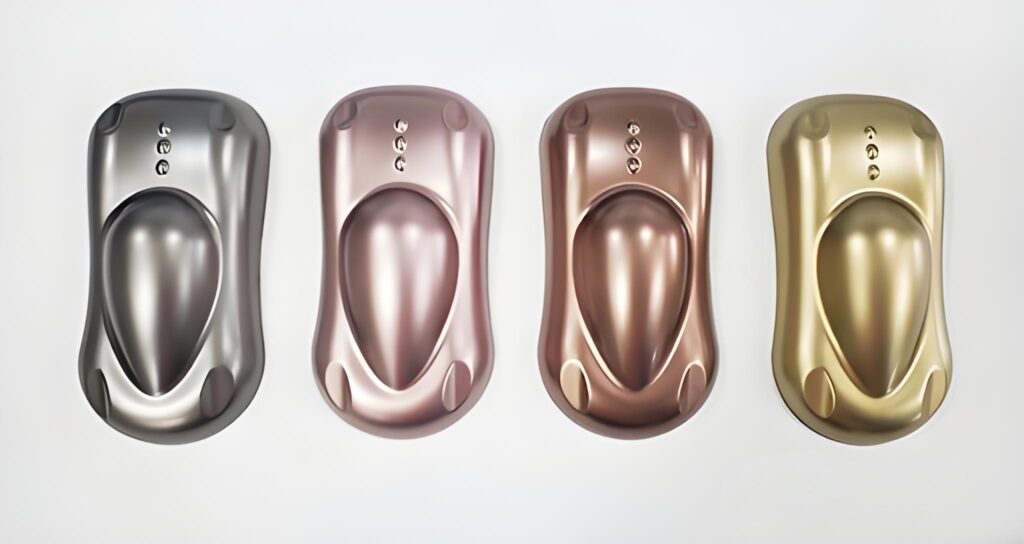
Therefore, metallized coatings on plastic surfaces are gradually becoming the mainstream alternative to plastic electroplating.
V. Key Application Areas for Plastic Metal Coating Effects
- Automotive Industry: Interior trim strips, knobs, logos
- Home Appliances: refrigerator, washing machine, air conditioner panel
- Consumer Electronics: Smart device enclosures, audio equipment exterior parts
- Industrial Equipment: Control panels, instrument enclosures
- Medical Equipment: Appearance components for high-end instruments
Continuous advancement in plastic industrial coating technology has made metallic-effect coatings a standard configuration across more industries.
VI. Key Points of Quality Control in the Process of Metallic Coating on Plastic Surfaces
To achieve stable and consistent plastic metallic coating, key controls are required:
- Plastic substrate cleanliness
- Coating thickness uniformity
- Orientation of metallic pigment alignment
- Baking temperature and time
- Balance between leveling and hardness of varnish
Systematic process control is the key to the success of high-end plastic surface treatment processes.

VII. FAQ – Frequently Asked Questions
Q1: Is the plastic metal coating effect prone to paint peeling?
With proper plastic surface treatment processes and a compatible coating system, both adhesion and durability can meet industrial-grade standards.
Q2: Can plastic metallic paint replace plastic electroplating?
In the vast majority of decorative application scenarios, the plastic metallic coating effect has become a mature alternative to electroplating.
Q3: Do different plastic materials require different processes?
Plastics such as ABS, PC, and PP have different requirements for surface treatment and require targeted process design.
Q4: Will the metallic effect darken over time?
The high-quality clear coat system effectively prevents oxidation and aging, maintaining long-term metallic luster.
Q5: Do you support small-batch customization?
The plastic metallic-look spray coating process has flexible batch requirements and is suitable for customized production.
VIII. Conclusion

Achieving high-quality metallic coating effects on plastic surfaces has become an important direction in modern industrial design and manufacturing. Through mature plastic metallic paint systems and systematic plastic surface treatment processes, not only is the product's aesthetic value enhanced, but environmental friendliness, cost, and production efficiency are also balanced, providing more competitive solutions for the global manufacturing industry.