In settings such as home garages, warehouses, or industrial plants, floors inevitably develop problems like dusting, cracks, potholes, and peeling after long-term use, and a floor paint suited to the scenario can quickly refresh the ground. There are many types of floor paints on the market, from water-based epoxy to solvent-based epoxy, to polyurethane flooring, with huge differences between materials. If the choice is improper, it not only affects service life, but may also cause bubbling, delamination, insufficient wear resistance, and other issues. This article will systematically explain the selection principles of floor paint from three major aspects: usage scenario, performance requirements, and construction method.
1. Choose the Right Floor Paint Based on the Application Scenario
1. Home garage, balcony, small storage room: Water-based epoxy floor paint is more suitable
Household environments have higher requirements for environmental friendliness, especially in semi-enclosed areas such as garages and balconies.
Water-based epoxy floor paint uses water as the diluting medium, has almost no pungent odor, and can be used shortly after construction with ventilation. The coating has good abrasion resistance, slip resistance, and resistance to daily rolling, fully meeting the needs of home scenarios.
Its advantages include:
- Environmentally friendly with no noticeable odor
- Wear-resistant and scratch-resistant, easy to clean
- Moderate price, low construction difficulty
Suitable for: home garages, balconies, small storage rooms, and small office spaces.
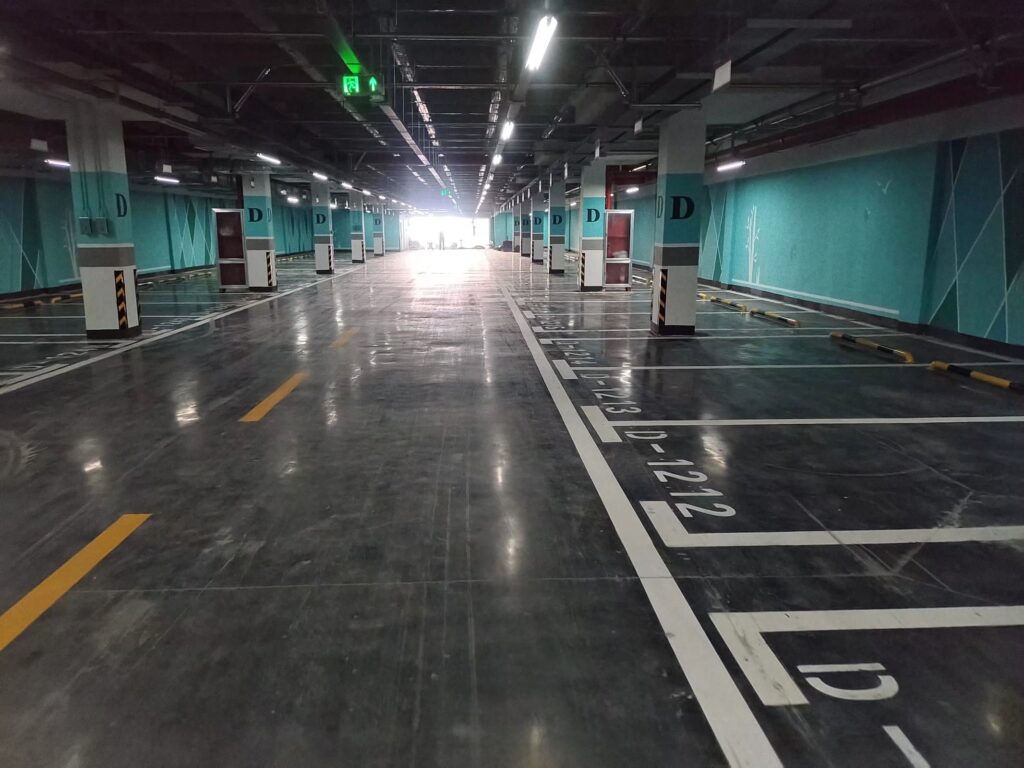
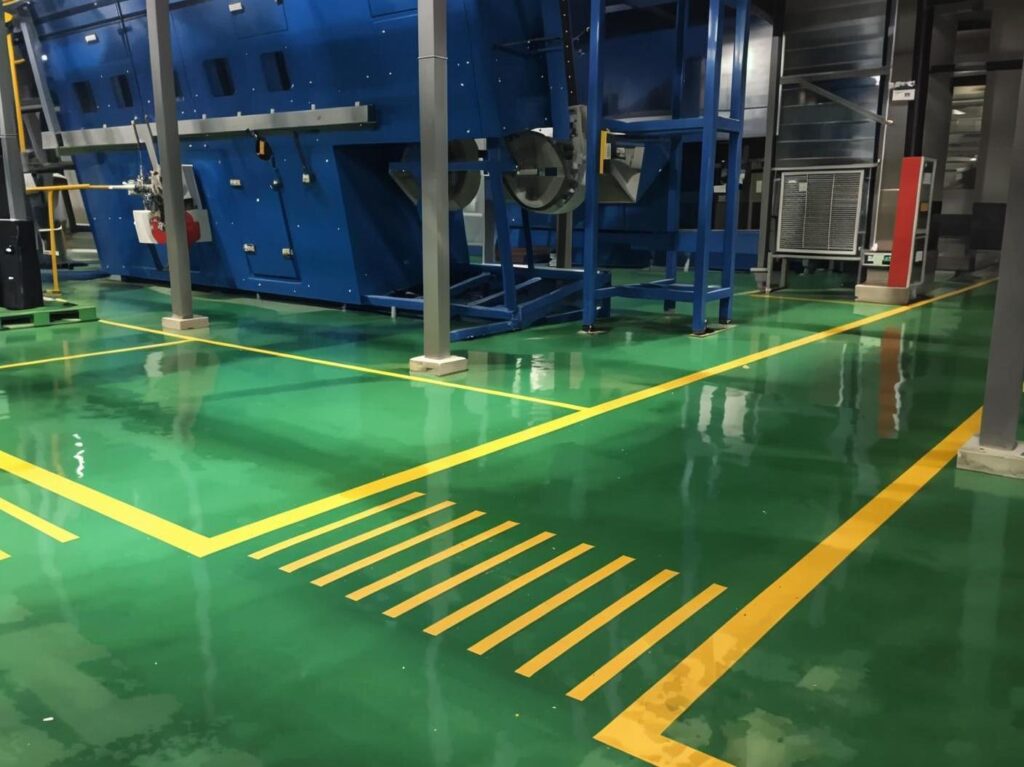
2. Factory workshops, logistics warehouses, parking lots: Solvent-based epoxy or polyurethane flooring is safer and more reliable
Factories and parking lots are high-traffic areas where flooring must withstand long-term heavy loads such as forklifts, pallet trucks, impact from goods, and tire abrasion.
Recommended for such areas:
- Solvent-based epoxy floor paint: High hardness and strong compressive strength, suitable for production environments with heavy pressure and high wear.
- Super wear-resistant polyurethane floor paint: Excellent elasticity, scratch-resistant, impact-resistant, and stronger chemical resistance.
Its advantages include:
- High impact strength
- Excellent heavy-load resistance
- Chemical corrosion resistance, oil resistance, leak-proof
- Suitable for 24-hour high-load operation factories
Suitable for: machinery manufacturing, warehousing and logistics, underground parking lots, food workshops, electronic factories, etc.
3. Basements and damp areas on the first floor: Prioritize water-based systems or moisture-resistant primers
A damp environment is one of the primary causes of flooring paint failure. If the substrate has high moisture content, the coating is prone to blistering and peeling.
Priority should be given to:
- Water-based epoxy floor paint (higher tolerance for damp substrates)
- Moisture-proof specialized epoxy primer (seals substrate, blocks moisture)
Suitable for: basements, ground-floor rooms, semi-underground warehouses.
II. Determine the flooring system structure based on performance requirements
Different scenarios require not only different coating types but also different coating thicknesses and structures.
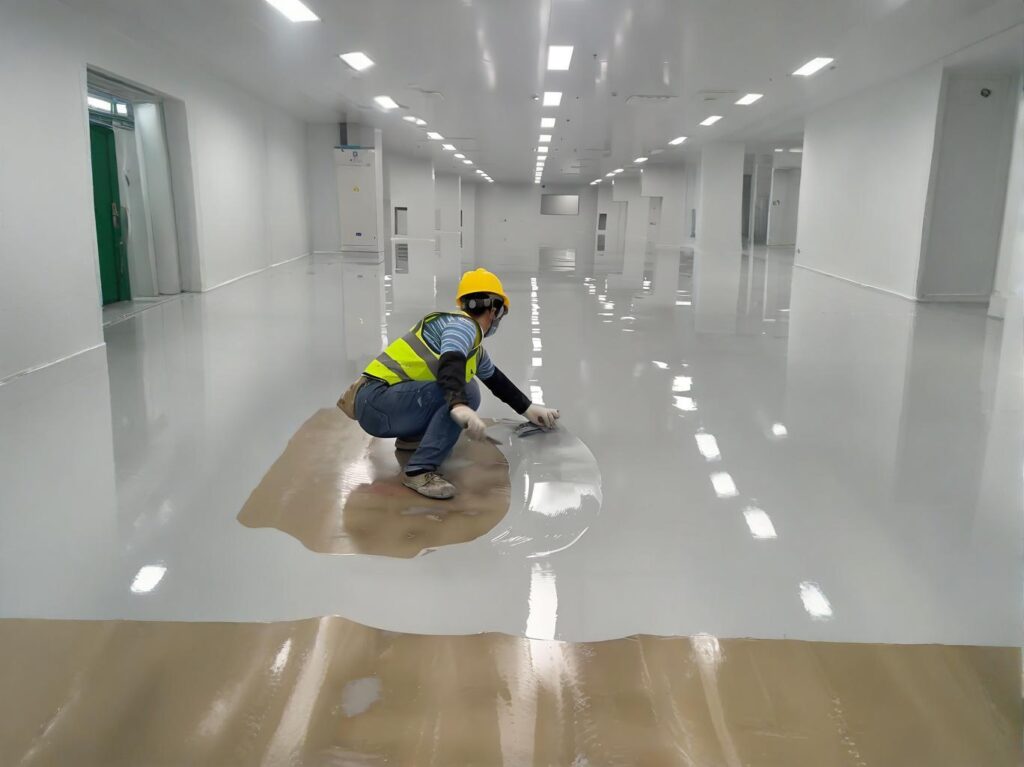
1. Just need clean and beautiful: thin-coat epoxy flooring is enough
The thin-coat system is generally around 0.3–0.5mm, with a glossy coating that is easy to clean and resistant to daily use.
Suitable for: offices, exhibition halls, residential garages.
2. Needs to withstand heavy pressure, impact resistance, and corrosion resistance: epoxy mortar flooring is more stable
Epoxy mortar flooring can reach a thickness of 1–3 mm, using epoxy resin blended with quartz sand to make the coating more pressure-resistant, impact-resistant, and able to withstand frequent vehicle traffic.
Suitable for: factory workshops, equipment areas, storage yards.

3. For elasticity, shock absorption, and noise reduction: polyurethane flooring performs more prominently
Polyurethane flooring features high elasticity, resists impact and heavy loads, and also provides excellent noise reduction.
Suitable for: parking lot ramps, sports venues, and environments with high seismic resistance requirements.
3. Construction is the Core Factor in Floor Lifespan
No matter how good the floor paint is, improper application will lead to failure. Before application, it is recommended to pay attention to the following points:
1. Can DIY handle it? Depends on the floor condition
If the floor is relatively flat, requiring only simple sanding and cleaning with no oil stains or cracks, users can completely apply the kit floor paint themselves by roller coating.
DIY Applications:
- residential garage
- balcony
- small storage room
- leveled cement self-leveling floor
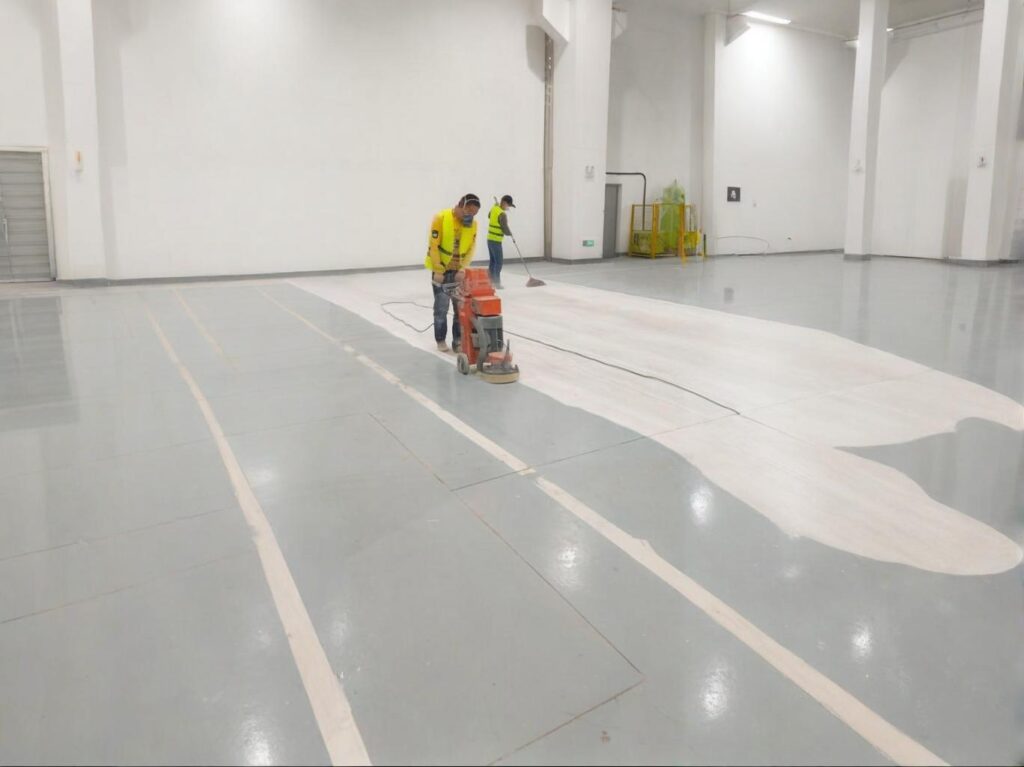
2. Floor has cracks, oil stains, pitted surface: requires professional construction team to handle
Floor substrate preparation includes:
- Crack repair
- oil stain removal
- Floor grinding
- Epoxy primer penetration and sealing
- Leveling mortar layer treatment (if necessary)
The quality of substrate preparation directly determines the floor's service life.
"The better the substrate, the more durable the flooring" is a consensus in the industry.

Summary: 3 Golden Rules for Choosing Floor Paint
- Matching Scenarios
For home use, choose water-based epoxy; for industrial use, choose solvent-based epoxy or polyurethane; for damp areas, prioritize water-based systems or moisture-resistant primer. - Clarify performance requirements
For ordinary aesthetic use, choose thin coating; for pressure-resistant and impact-proof, choose epoxy mortar; for elasticity and noise reduction, choose polyurethane flooring. - Construction determines lifespan
If the floor is in good condition, you can do it yourself, but for problematic floors, be sure to hire a professional team.
Choosing the right floor paint not only refreshes the space, but also significantly enhances durability and user experience.