Have you ever wondered why those beautifully painted automotive parts, industrial equipment, electronic enclosures, or furniture always go through an "oven cure" step on the production line? This seemingly simple heating process is in fact a precise chemical and physical transformation, and the dividing line between ordinary painting and high-quality, high-performance coatings.
Today, we will take an in-depth look at how this critical "high-temperature spa" enables the coating to undergo a stunning transformation.
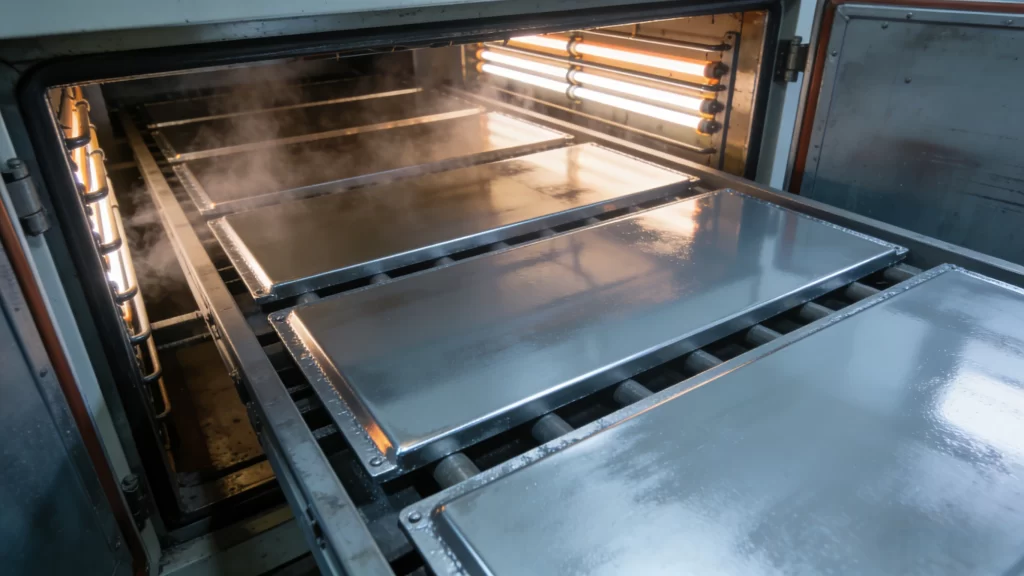
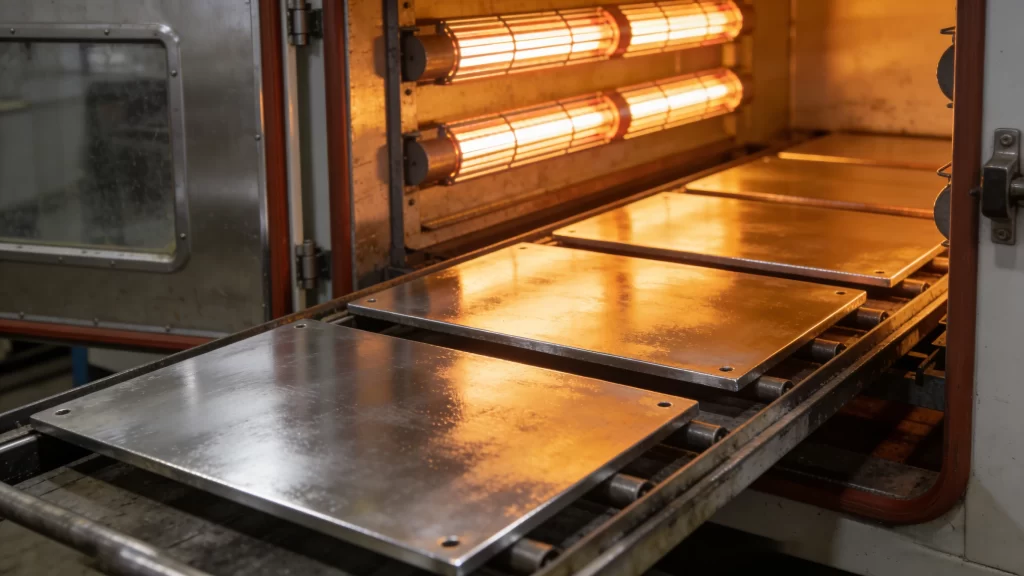

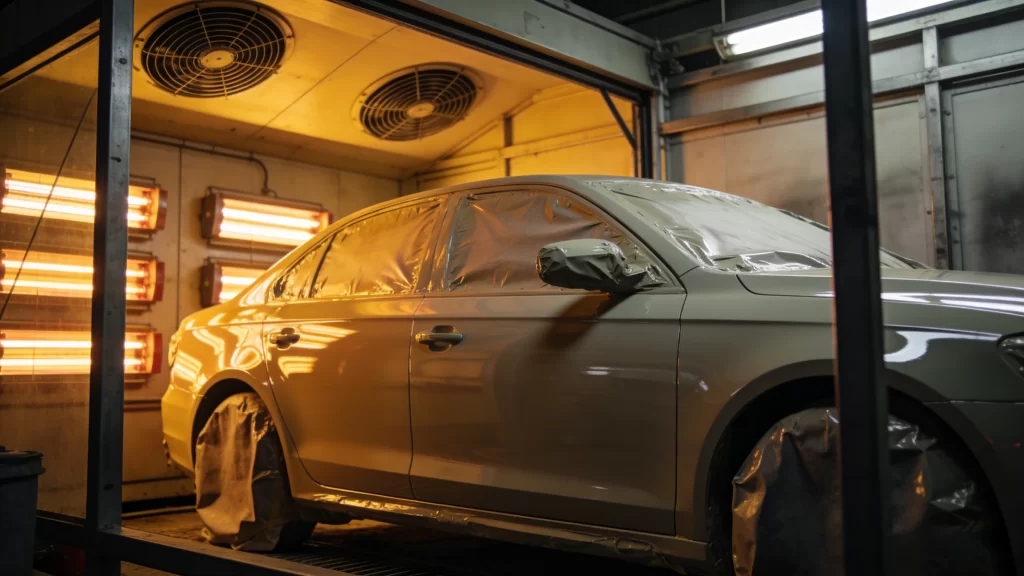
I. Core Function 1: Ultimate Speed-Up, Empowering Efficient Production
If relying on natural air-drying, a layer of high-quality industrial paint may take several days or even longer to fully cure, which obviously cannot meet the efficiency demands of modern manufacturing. The baking process, through precisely controlled temperature, can greatly accelerate the evaporation of solvents in the paint and the cross-linking reaction of the core film-forming substance (resin). It compresses the long waiting period into just a few hours or even tens of minutes, directly leading to a surge in production efficiency and providing a guarantee for rapid turnover and product off-line.
II. Core Function 2: Forging a "Diamond Shield" for Outstanding Performance
The core value of baking goes far beyond merely "drying fast." The high-temperature environment provides activation energy for coating molecules, prompting them to undergo deep "crosslinking and curing"—forming a dense, robust three-dimensional network structure between molecules. Reflected in macroscopic performance, this microscopic change means a leap in coating quality:
- Adhesion leap: The coating bonds more firmly to substrates such as metal and plastic, making it difficult to peel off.
- Improved Hardness and Wear Resistance: The paint film surface becomes harder, significantly enhancing its scratch resistance and friction durability.
- Durability comprehensively enhanced: The dense coating can more effectively resist chemical corrosion, UV aging, and erosion from various harsh environments, thereby greatly extending the product's service life.
It can be said that baking is the key forging process through which the coating acquires its "steel-like toughness".
III. Core Function 3: Polishing the "Highlight Finish" for a Premium Appearance
A first-class product requires a first-class appearance. Even baking heat allows the paint to achieve better leveling before curing, enabling it to spread evenly and automatically repair minor brush or spray marks. This effectively prevents surface defects such as "orange peel texture" and "sagging." At the same time, this process helps the pigment display color stably, ultimately forming a top-tier visual effect with a mirror-smooth surface, full and long-lasting gloss, and uniform, brilliant color.
Conclusion: The Qualitative Transformation Journey from Liquid to Armor
Therefore, when you see the "baking paint" process again, you will understand that it is by no means a simple drying. It is a precisely controlled high-temperature curing empowerment, the core step for the coating to achieve a qualitative transformation from a "liquid film" to a "solid armor", while attaining a perfect unity of excellent performance and stunning appearance.
We are well aware of the decisive impact this process has on the final product quality. In our production system, precise baking and curing processes are part of the standard procedure, ensuring that every product we produce, such as automotive paint, industrial paint, furniture wood coating, can achieve the designed performance and aesthetic pinnacle. We not only provide high-quality coatings, but also gladly share coating process knowledge.
Pursuing ultimate product appearance and long-lasting protection? Contact us to learn how our products and technical support can help you enhance quality.