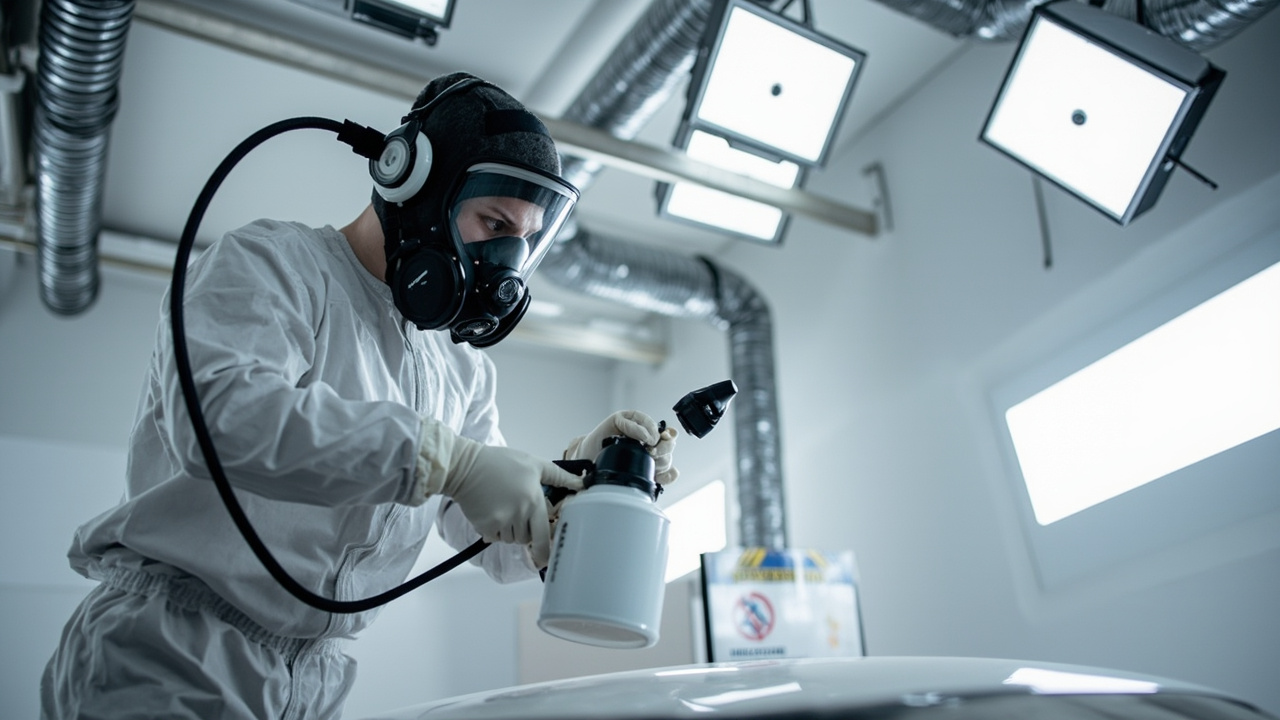
At automotive refinish and OEM coating sites, "isocyanate safety" is not an optional reminder but a life-and-death line written on the first page of every MSDS (Material Safety Data Sheet). Automotive 2K coatings (especially 2K clear coat and 2K solid color paint) contain isocyanates in their hardeners; inhaling their vapors or atomized particles may cause sensitization, and once sensitized, the process is irreversible and there is no so-called "safe exposure level". This means: even if you had "no problem" for the past ten years, one exposure in the eleventh year may make you never able to contact such chemicals again.
This article is a must-read on safety for paint technicians, workshop supervisors, and EHS (Environment, Health, Safety) managers. All key values and requirements are derived from the core MSDS entries and publicly available 2K clear coat technical data in the batch research archive, with sources noted, so you can directly cite them in work instructions and training materials. Compliance is not a cost, it is the bottom line.
As a supplier of automotive coatings and supporting systems, Kexin New Materials (kexinMaterials) provides complete MSDS and application safety guidelines with its 2K clear coats containing isocyanate hardeners. The protection requirements in this article are exactly the bottom-line clauses we recommend clients write into their Standard Operating Procedures (SOP). For safe configuration of ventilation and tools at coating sites, you may also refer to the general framework for spray booths, extraction, and personal protection in Water-based Paint Application Tools and Equipment.
I. Where the Risk Comes From: Isocyanates in 2K Coatings
1.1 Why "2K" Means Risk
The most commonly used in automotive topcoats is the two-component (2K) system: one part is a hydroxyl-containing resin (such as acrylic resin), and the other is a hardener containing isocyanate groups (–NCO). After the two cans are mixed, –NCO and –OH undergo an addition reaction to crosslink into a film. The problem lies in the hardener—it is essentially an isocyanate chemical.
According to automotive paint technical data in the research archive, the hardeners of mainstream 2K clear coats are all polyisocyanates:
- AkzoNobel Lesonal 2K Clear Coat 288 HS: two-component acrylic polyurethane, hardener is polyisocyanate, mix ratio clear coat : 728 hardener = 2 : 1, plus about 10% thinner;
- Axalta Metalux LV9714: contains isocyanate, for professional use, those with asthma/allergy history are prohibited from contact;
- BASF Glasurit 923-666 HS: 2K acrylic polyurethane, hardener is polyisocyanate, mix ratio clear coat : 929-666 hardener = 2 : 1.
In other words, as long as it is "2K clear coat / 2K solid color paint", it almost certainly contains isocyanate. Treating it as "ordinary paint" is the biggest cognitive misconception on site.
1.2 Hazard Forms: Vapor + Atomized Particles
The risk of isocyanate is not only at the moment of "opening the can". The mixed wet paint forms droplets (aerosol) during spraying, and the dissolved isocyanate enters the air as the solvent evaporates; even after the paint film begins to surface-dry, unreacted –NCO may still be released. Therefore there are two exposure routes:
- Inhaling vapor: during mixing, stirring, pouring, and cleaning spray guns;
- Inhaling droplets: spraying, touch-up, and any agitation related to atomized particles.
This is also why MSDS lists "harmful if inhaled" and "may cause sensitization" as the highest-priority warnings.
II. Sensitization Mechanism: Why "Irreversible" Is Not a Scare Tactic
2.1 Sensitization Is the Immune System "Holding a Grudge"
Isocyanate is a typical respiratory sensitizer. After first or repeated low-dose contact, some people's immune systems produce specific IgE antibodies, marking isocyanate as an "enemy". Thereafter, even a tiny amount re-entering the respiratory tract will trigger an amplified response—bronchospasm, wheezing, coughing, and in severe cases occupational asthma.
The key point: once this "mark" is established, it is usually lifelong. According to the core MSDS entries in the research archive: "Irreversible after sensitization (no safe exposure level, permanent asthma)". In other words, there is no turning back of "wear a good mask later and still can work"—for already sensitized persons, any exposure below the limit may induce an attack, so the regulatory and manufacturer stance is "no minimum contact concentration that can guarantee safety".
2.2 Not Everyone Will Be Sensitized, but You Can't Gamble
Sensitization varies by individual; some develop symptoms after long contact, some early on. Precisely because it is impossible to predict "who will, when will", the principle of engineering control is to assume everyone will be sensitized and protect per the strictest scenario, rather than "upgrade after an incident". This is why PPE and ventilation requirements are mandatory bottom lines, not options.
2.3 Don't Take Skin and Eyes Lightly Either
Isocyanate vapor/droplets can also irritate skin and eyes, causing dermatitis and conjunctivitis. Although the core pathway of sensitization is respiratory, skin breaks or eye contact increase systemic exposure and local sensitization risk, so goggles and chemical-resistant gloves are also indispensable.
2.4 Latency and "Atopy": Who Should Be More Vigilant
Sensitization often does not appear on first contact, but has a latency period—symptoms may first appear only after accumulation of weeks, months or even longer, which easily makes people mistakenly think "always fine means safe". In addition, people with atopic constitution (atopy, such as allergic rhinitis, eczema, asthma history) have relatively higher risk of respiratory sensitization; MSDS and product data (such as Axalta noting "those with asthma/allergy history are prohibited from contact") give stricter exclusion positions for such groups. Precisely because of latency and individual differences, engineering control must "rather overdo than underdo".
III. Reality of Exposure Concentration: 50–100 Times OSHA PEL During Spraying
3.1 What That "0.02 ppm" Means
According to the core MSDS entries in the research archive, the OSHA PEL (Permissible Exposure Limit) for HDI (hexamethylene diisocyanate) type polyisocyanate is 0.02 ppm (as HDI). This is the legal ceiling for 8-hour time-weighted average, not the threshold of "smelling it", nor a permit of "breathe freely below the safe line".
It must be emphasized: 0.02 ppm is an extremely low concentration, far below the level human olfaction can detect—you can't smell isocyanate, but that doesn't mean it's not there. Relying on "nose alarm" to judge safety completely fails with isocyanate.
3.2 How Exaggerated Exposure Is at Spraying Sites
The archive clearly states: during spraying, isocyanate concentration in the spray booth can exceed the OSHA PEL (HDI 0.02 ppm) by 50–100 times. That is, instantaneous concentration may reach the order of 1–2 ppm, far beyond any notion of "ventilation alone is enough". This explains why even with booth extraction, respiratory protection is still mandatory—ventilation reduces quantity but not below PEL (see Section V).
3.3 Exposure Limit Comparison Table
Put the key concepts into a table for easy magnitude comprehension during training:
| Item | Value/Requirement | Description |
|---|---|---|
| HDI OSHA PEL (8h TWA) | 0.02 ppm | Legal permissible exposure limit, extremely low, cannot be smelled |
| Measured concentration in booth during spraying | 50–100 times PEL | Instantaneous may reach about 1–2 ppm order |
| Olfactory detectability | Unreliable | Isocyanate often below olfactory threshold, cannot rely on smell |
| Safe level after sensitization | None | Per MSDS: sensitization irreversible, no safe exposure level |
| Can ventilation alone reduce to PEL | No | Still need respiratory protection (see Section V) |
The core message of this table is only one sentence: the hazard of isocyanate is "sensitization at low concentration, and irreversible", so protection must be designed for the "worst case".
3.4 Monomer and Prepolymer: Why "Low Volatility" Is Still Dangerous
It is necessary to clarify a common misunderstanding. Commercial 2K hardeners mostly use polyisocyanate prepolymers (such as HDI trimer), whose molecular weight is larger than HDI monomer and saturated vapor pressure is lower, so the "amount volatilized into air" is smaller than pure monomer—this is often misread as "prepolymer is safe". The fact is:
- Prepolymer still contains inhalable –NCO groups; atomized particles directly deliver prepolymer into the breathing zone, without waiting for it to volatilize;
- Residual free HDI monomer in prepolymer has high vapor pressure and is an important source of vapor exposure, so compliant products control free monomer content;
- Sensitization does not pick "monomer or prepolymer", it only picks "whether –NCO enters the respiratory tract".
Therefore, "high solids, low free monomer" is a good engineering direction to reduce emissions, but it absolutely does not change the conclusion that complete PPE and ventilation are still required. Any claim that equates "low volatility" with "less protection needed" is a misreading of the MSDS.
IV. Core PPE Requirements: From Minimum Baseline to Recommended Configuration
4.1 Minimum Baseline for Respiratory Protection: Half-Mask APR + OV/P100
According to the core entries of the archived MSDS, the minimum level of respiratory protection is: half-mask APR (Air-Purifying Respirator) + OV/P100 cartridge. Both letters here are critical:
- OV (Organic Vapor): adsorbs isocyanate vapor;
- P100: filtration efficiency ≥ 99.97% for particles (including atomized paint droplets).
Why is the OV/P100 combination necessary? Because the risk involves both vapor and mist; a particulate-only filter cannot block vapor, and an organic-vapor-only canister cannot block mist. Neither can be omitted.
4.2 Recommended Upgrade: Full-Face APR or PAPR
The archive clearly states "recommend full-face APR or PAPR (OV/HEPA)". Reasons:
- Full-face APR: adds eye/face protection on top of the half-mask's OV/P100, eliminating the need for separate goggles and offering better seal;
- PAPR (Powered Air-Purifying Respirator): uses a fan to actively deliver filtered air into the hood, with low breathing resistance and high protection factor, suitable for long-duration spraying or high-concentration operations. Its cartridge is marked OV/HEPA (HEPA corresponds to P100-level particulate filtration).
For refinishers and OEM lines that spray large volumes daily, PAPR is a more sustainable choice—ensuring safety while reducing the physiological burden of prolonged wear.
4.3 Cartridge Replacement Discipline: 8 Hours or Upon Smelling, Whichever Comes First
The archive stipulates: replace cartridge every 8 hours of spraying or immediately upon smelling odor. Note that the two trigger conditions take the "earlier one":
- Cumulative spraying reaches 8 hours (not "worn for 8 hours", but "used in contaminated environment for 8 hours")—replace regardless of whether it still "looks clean";
- Once organic odor is detected (indicating OV layer breakthrough), replace immediately; do not "tough it out".
Cartridges are consumables, not durables. Writing the replacement cycle into the SOP and having the team leader sign off is a hard measure to prevent "overdue service".
4.4 Hand and Eye Protection: Nitrile ≥ 8 mil, Latex Ineffective
For skin protection, the archive requires nitrile gloves ≥ 8 mil (one thousandth of an inch, approx. 0.2 mm); and specifically emphasizes "latex ineffective"—latex provides insufficient barrier against many organic solvents and isocyanate permeation, and cannot substitute for nitrile gloves. Goggles must be worn separately when using a half-mask; a full-face mask already includes eye/face protection.
Also note for gloves: replace when soaked through by paint, cut, or visibly contaminated; avoid contacting the outer surface when removing to prevent bringing chemicals back to skin or environment.
4.5 Respiratory Protection Level Comparison Table
Organize the PPE requirements from the archive into a level table for easy selection by workshop based on operation intensity:
| Protection Level | Configuration | Applicable Scenario | Key Notes |
|---|---|---|---|
| Minimum Baseline | Half-mask APR + OV/P100 cartridge | Short-time, low-intensity, compliant ventilation | OV and P100 both required; replace cartridge at 8h/upon smell |
| Recommended Upgrade | Full-face APR (OV/P100) | Need integrated eye/face protection | No separate goggles needed, better seal |
| Recommended Upgrade | PAPR (OV/HEPA) | Long-duration/high-concentration spraying | Powered air, low resistance, high protection factor |
| Hand | Nitrile gloves ≥ 8 mil | All contact operations | Latex ineffective, prohibited |
| Eye/Face | Goggles or full-face mask | Must be separate when using half-mask | Anti-fog, anti-liquid splash |
Selection principle: the more frequent the operation and the higher the exposure, the higher the level should be chosen; PAPR is a long-term solution that balances cost-effectiveness and safety for professional painters.
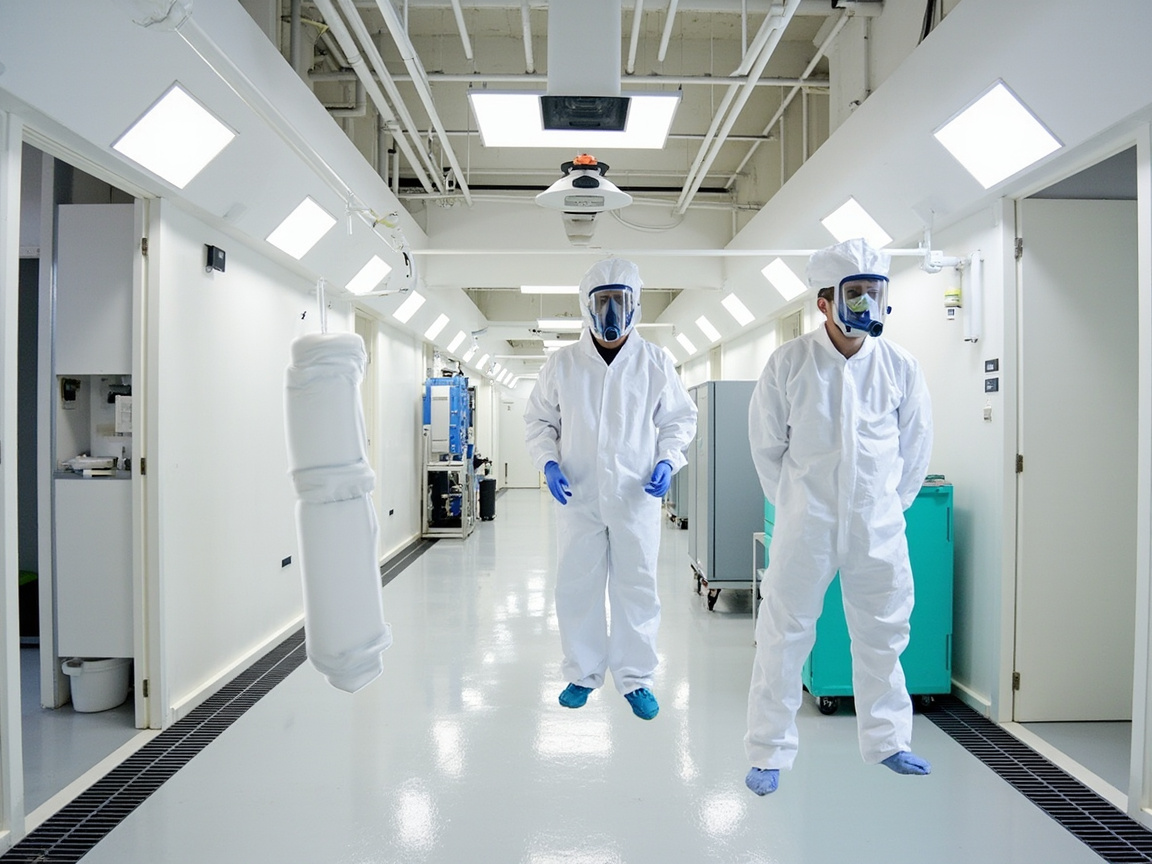
V. Boundaries of Spray Booth Ventilation: Ventilation Cannot Replace Respiratory Protection
5.1 Spray Booth Exhaust Is "Engineering Control", Not a Reason to "Skip Respirator"
Automotive spray booths are usually equipped with powerful exhaust and supply air filtration, which can significantly reduce total contaminants in the booth. But per the core MSDS entries in the archive: booth ventilation alone cannot reduce isocyanate concentration below the PEL; respiratory protection is still required. Reasons:
- At the instant of spraying, concentration at the spray gun tip and technician's breathing zone is extremely high; local turbulence and close-range exposure far outpace dilution by air exchange;
- The PEL of 0.02 ppm is too low; conventional booth exchange rates can hardly stably press below this line;
- Isocyanate mist has settling and re-suspension characteristics, and may remain after spraying stops.
Therefore the correct hierarchy is: spray booth ventilation (engineering control) + respiratory protection (PPE) layered together, not "have ventilation so no mask needed".
5.2 Treat Ventilation as "First Line, Not the Only Line" of Defense
The value of engineering control lies in reducing overall load, protecting others (e.g., adjacent stations) and extending cartridge life, but it does not relieve the obligation of personal respiratory protection. Any omission in SOP stating "ventilation sufficient so no need to wear" is a misreading of the MSDS and a high-risk item in compliance audits.
For the configuration logic of booth and on-site ventilation and exhaust systems, see extended reading Water-Based Paint Application Tools and Equipment, where the general principles of exhaust, supply air, and work environment control also apply to isocyanate-containing solvent-based 2K systems.
5.3 Why Local Exhaust Ventilation (LEV) Is Better Than "General Dilution"
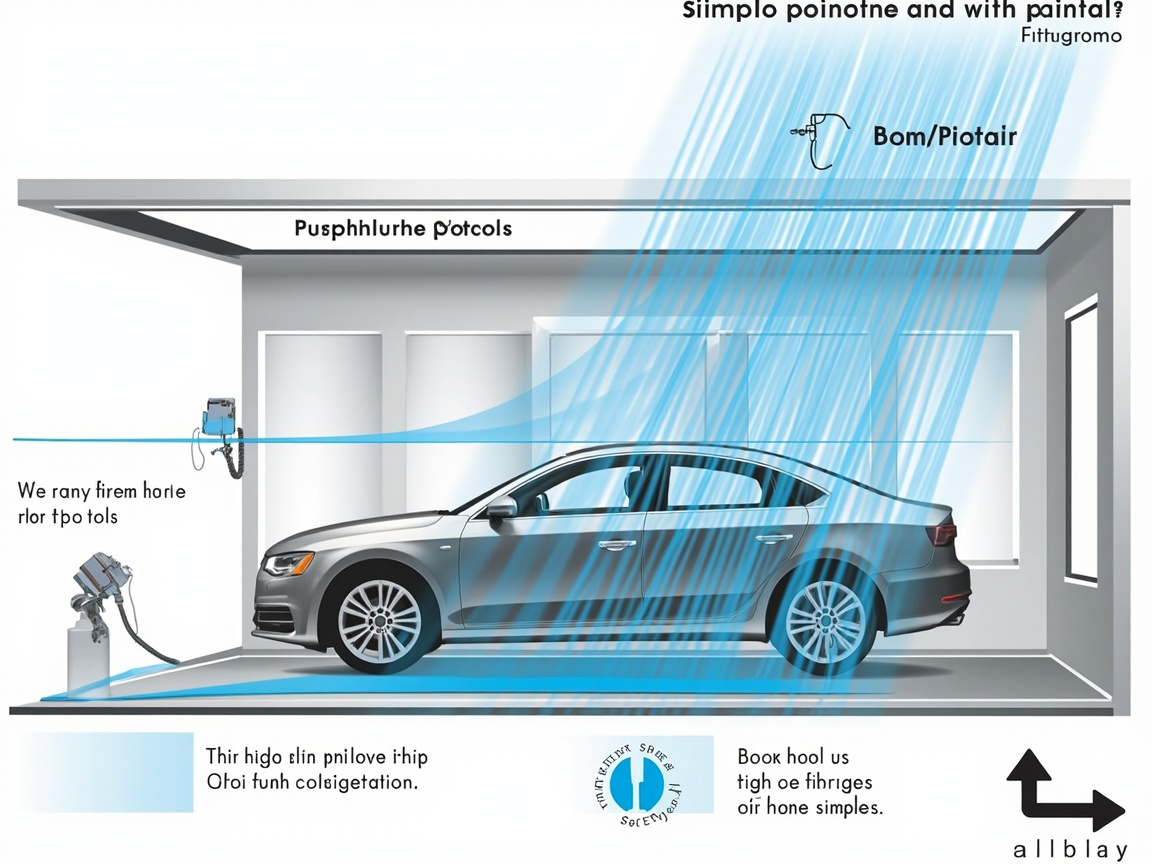
Spray booths follow the Local Exhaust Ventilation (LEV) concept: capture and extract contaminated air near the source (spray gun tip), far more efficient than simply "diluting the room air by general exchange". Key points of effective LEV:
- Capture velocity must establish directional airflow between gun tip and breathing zone, pulling mist "toward" the exhaust rather than the technician's face;
- Airflow balance: supply and exhaust matched to avoid door leakage causing backflow;
- Filter maintenance: paint mist quickly clogs filter cotton; as differential pressure rises, airflow drops, so replace by differential pressure or schedule, otherwise LEV exists in name only.
But even with perfect LEV design, as stated in Section III, it still cannot stably press concentration to the 0.02 ppm PEL—so between "good ventilation" and "can skip mask", never draw an equal sign.
5.4 Exposure Monitoring: Use Data to Verify "Protection Is Effective"
Compliance cannot rely only on "feels like ventilation is good". For high-frequency spraying posts, periodic air sampling monitoring is recommended: wear personal samplers in the breathing zone to measure isocyanate concentration, compare against PEL to verify whether engineering control and PPE truly keep exposure within acceptable range. Monitoring can also reveal hidden issues like "abnormally high concentration at a station" (e.g., insufficient booth airflow, over-fine atomization of a gun), turning safety from "experience" into "data". When monitoring shows approaching the limit, decisively upgrade PPE (e.g., switch to PAPR) or limit exposure time, rather than waiting until someone shows symptoms.
VI. Absolute Prohibitions: Sanding and Welding of Uncured Paint Film
6.1 Why "Dried Paint" Is Still Dangerous
Isocyanate reaction takes time. Even if the film is surface-dry and non-tacky to touch, internal –NCO may not be fully reacted (2K clear coat full cure often takes days; per archive AkzoNobel data 60℃ baking shortens it, at room temp 728B handleable in 2h but full cure longer; BASF data 20℃ air needs approx. 10h to cure). On not-fully-cured film:
- Sanding: re-releases unreacted isocyanate as inhalable dust/mist directly into breathing zone;
- Welding/cutting: high heat decomposes film, producing fumes containing isocyanate and other hazardous substances.
Per core MSDS entries in the archive: prohibit sanding/welding of not-fully-cured paint film. This must be written into the SOP, with special emphasis on the repair process (such as secondary processing of already painted parts) — many people only prevent during "spraying" but ignore "grinding and welding after painting".
6.2 Correct Approach to Handling Uncured Paint Film
If handling is unavoidable, the following must be met: confirm complete curing (per product MSDS curing time/temperature), work under ventilation, wear respiratory protection and goggles no lower than the aforementioned grade, use local exhaust, and manage dust as hazardous waste. In short: treat "uncured" as "still containing hazard sources" until there is evidence showing the reaction is complete.
Seven, Compliance Reminders and Supporting Suggestions from Kexin New Materials
To translate the above points into management actions, Kexin New Materials (kexinMaterials) provides four bottom-line suggestions for direct adoption by the workshop:
- MSDS on the wall, training documented: Every MSDS for products containing isocyanates must be accessible on site; new employees must complete sensitization/PPE/ventilation training and sign before starting work.
- Tiered PPE configuration: At minimum equip half-mask APR + OV/P100; long-term spraying recommended to upgrade to PAPR; nitrile gloves ≥ 8 mil, latex substitution strictly prohibited; filter cartridges replaced at 8h or upon smell, with a replacement log established.
- Ventilation and respiratory protection double insurance: Spray booth exhaust runs as usual, but anyone entering areas with uncured paint film for spraying/grinding must wear respiratory protection, not to be omitted on the grounds of adequate ventilation.
- No grinding or welding before curing: Based on product MSDS curing time, any grinding, welding, or cutting is prohibited before meeting the standard.
In addition, a feasible path to reduce risk at the source is to select 2K curing agents with high solids, low free monomer (such as the high-solids direction in the archive like BASF Glasurit varnish VOC ≤ 419 g/L, Axalta fast-dry varnish VOC approx. 230 g/L), and control free HDI monomer content at the formulation end — this does not change the fact that "protection is still required", but can reduce the total emission per operation. Regarding comprehensive judgment of hazards and regulations when selecting coatings, you can return to the Water-based/Solvent-based Coating Selection Guide, and treat "safety compliance" as a selection dimension alongside "performance, cost".
Seven-A, Occupational Health Surveillance: Don't Wait Until Coughing to Check
Sensitization is progressive and irreversible, so "after-the-fact remediation" is almost ineffective; the focus must be on pre-screening and periodic surveillance. Common industry practices include:
- Pre-employment baseline examination: Lung function (e.g., spirometry), allergy history and asthma history questionnaire; those with asthma or isocyanate allergy history should not engage in contact operations per MSDS position (Axalta data also notes "asthma/allergy history personnel prohibited from contact").
- Periodic medical surveillance: During employment, re-examine lung function and respiratory symptoms per occupational health management requirements, and establish personal health records.
- Symptom reporting channel: Anyone with recurrent cough, chest tightness, wheezing, eye/nose irritation should immediately leave exposure and seek medical attention, and clearly inform the doctor of "isocyanate exposure history" — this relates to diagnosis and subsequent job adjustment.
Writing health surveillance into the EHS system is more practical than any "slogan-style safety slogan".
Seven-B, Emergency Response and First Aid: Three Things the Site Must Know
Even with proper protection, accidents (spray gun burst, large spill, PPE failure) may still occur. The site must prepare emergency procedures and conduct drills:
- Inhalation: Immediately move the person to fresh air, keep quiet and warm, loosen restrictive clothing; if wheezing or difficulty breathing occurs, seek medical attention immediately and state isocyanate exposure; do not let them "tough it out".
- Skin contact: Remove contaminated clothing, rinse with plenty of soapy water; do not wipe with organic solvent (it drives chemicals deeper).
- Eye contact: Hold eyelids open, rinse with running water or saline for at least 15 minutes, seek medical attention immediately.
- Leak/spill: Cut off ignition sources, enhance ventilation, collect with inert absorbent material per hazardous chemical procedure, waste managed as hazardous waste; cleanup personnel must also wear respiratory protection and gloves, no "casual mopping".
Emergency supplies (eyewash, emergency shower, absorbent pads, spare cartridges) should be fixed-point, usable, and regularly inspected, not "locked in a cabinet".
Seven-C, Training and Records: Making Compliance Auditable
Safety systems must be "provable", relying on training and records:
- MSDS accessible on site: Each isocyanate-containing product's corresponding MSDS visible in spray booth and material area;
- Training documentation: New employees complete training on sensitization mechanism, PPE wearing, ventilation boundaries, prohibited operations before starting and sign;
- Cartridge/glove replacement log: Record replacement time, personnel, batch number to prevent overdue;
- Exposure and accident records: Any abnormal exposure, health abnormality, leak registered and reviewed.
These records are both compliance audit evidence and a two-way evidence chain protecting the company and the victim.
Seven-D, Three Paths to Reduce Risk at Source
Protection is the bottom line, but smart workshops also reduce total risk from the "source", three paths can run in parallel:
- Select high-solids, low free monomer curing agent: Such as BASF Glasurit varnish VOC ≤ 419 g/L, Axalta fast-dry varnish VOC approx. 230 g/L in the archive, this high-solids direction reduces solvent and potential emission under same film formation; meanwhile prioritize products with controlled free HDI monomer content.
- Evaluate water-based/high-solids substitution: Vehicle paint water-basedization (constrained by GB 24409-2020) can significantly reduce overall exposure to solvent-based isocyanate mist in many scenarios, but water-based 2K still contains curing agent, evaluation still based on MSDS, not blindly "water-based = zero risk".
- Process optimization to reduce grinding: Through precise film thickness and good leveling, reduce the "spray then grind" step, cutting off the high-risk action of uncured paint film grinding at the source.
All three paths serve the same goal: reduce the pressure of "must protect", but never cancel protection because of it. Always understand "no cough today" as "lack of evidence of exposure yet", not a certificate of "already safe" — the irreversibility of sensitization is exactly why we must do protection before symptoms appear. For the workshop, the most costly mistake is using one person's lifelong health to verify a bottom line that could have been held earlier.
Eight, Frequently Asked Questions
Q: Why does automotive 2K varnish contain isocyanates?
A: The 2K system relies on hydroxyl-containing resin and isocyanate-containing (–NCO) curing agent to crosslink into film; the curing agent is essentially polyisocyanate (e.g., HDI type). According to the archive, AkzoNobel, Axalta, BASF mainstream 2K varnish curing agents are all polyisocyanates, so any 2K varnish almost inevitably contains isocyanates.
Q: Can I continue spray painting after sensitization?
A: According to core MSDS items, sensitization is irreversible, no safe exposure level, asthma can be permanent. Sensitized persons should not contact isocyanates again, otherwise any low-concentration exposure may trigger an attack. This is why protection must be in place "beforehand".
Q: The spray booth has exhaust, can I skip the mask?
A: No. According to the archive, spray booth ventilation alone cannot reduce concentration below PEL (HDI 0.02 ppm), respiratory protection still required. Ventilation is the first line of defense, not the only one; the two must be stacked.
Q: OSHA PEL for HDI is 0.02 ppm, if I can't smell it, is it safe?
A: Isocyanates are often below olfactory threshold, not smelling does not mean absent. 0.02 ppm itself is extremely low and non-detectable by smell, never judge safety by nose, must rely on engineering control + respiratory protection.
Q: Is half-mask + ordinary dust mask enough?
A: Not enough. Minimum requirement is half-mask APR + OV/P100 cartridge, must protect against both organic vapor (OV) and particles (P100). Ordinary dust mask only blocks particles, not vapor, and half-mask must be certified respirator not simple mask.
Q: Can latex gloves replace nitrile?
A: No. According to MSDS, nitrile gloves must be ≥ 8 mil, and latex is explicitly ineffective — latex insufficient for solvent and isocyanate penetration protection, latex substitution prohibited.
Q: Can cartridges be used until dirty then replaced?
A: No. Archive states replace every 8 hours of spraying or upon smell, whichever comes first. OV layer breakthrough may have odor, but do not rely on smell; cumulative use time reached must replace, and establish replacement log.
Q: Paint film is touch-dry, can I grind directly?
A: No. Grinding uncured paint film releases unreacted isocyanates. According to MSDS, grinding/welding uncured paint film prohibited, must confirm complete curing per product curing time/temperature before handling, and still protect during handling.
Q: How is PAPR better than half-mask?
A: PAPR (powered air-purifying) actively supplies filtered air, higher protection factor, lower breathing resistance, suitable for long-time or high-concentration operations; half-mask is passive adsorption minimum bottom line. Archive recommends full-face APR or PAPR as upgrade configuration.
Q: Selecting low VOC varnish means no protection needed?
A: No. Low VOC/high-solids reduces unit emission, but does not change isocyanate sensitization nature. As long as contains isocyanate curing agent, PPE and ventilation requirements unchanged.
Nine, Further Reading
- Safety misconceptions in water-based paint application(Same cluster: correction of safety awareness at coating site, complementary to PPE/ventilation discipline in this article)
- Tools and equipment for water-based paint application(Same cluster: configuration framework for spray booth, exhaust, and personal protective equipment)
- Water-based vs. solvent-based coating selection guide(Related: treat safety compliance as a selection dimension alongside performance and cost)