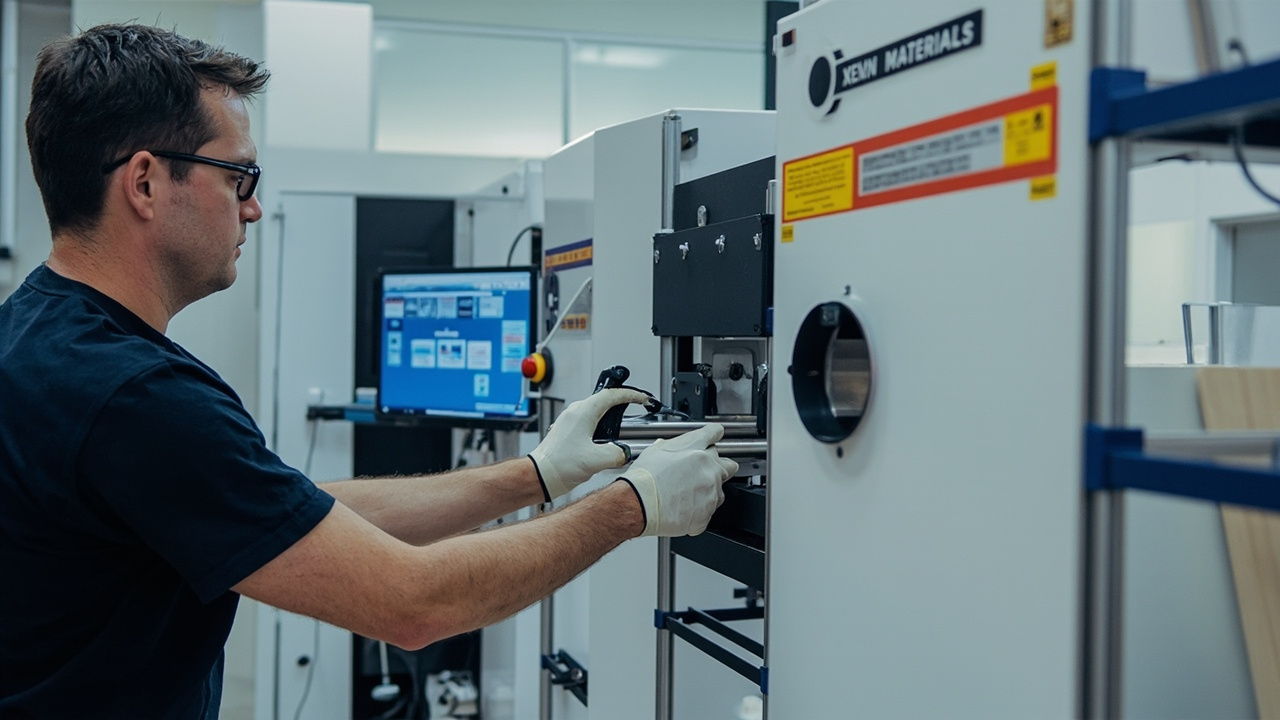
Automotive paint is not a product that is qualified just by being "applied to look good." It must satisfy decorative requirements, withstand ultraviolet radiation, salt spray, stone chipping, and chemical corrosion, and also control VOC and heavy metals within regulatory red lines. For OEMs, parts suppliers, and body shop chains, testing standards are the "legal text" of acceptance—they can both block non-conforming incoming materials and provide an objective basis in quality disputes. This article takes GB 24409-2020 "Limits of Harmful Substances in Vehicle Coatings" as the core, linking testing standards for adhesion, weathering, salt spray, gloss, hardness, etc., to clarify the OEM acceptance logic and regulatory red lines. All specific limits are from publicly available national standards and research archives.
As a coating system supplier, Kexin New Materials (kexinMaterials) always treats the harmful substance limits of GB 24409-2020 as hard constraints in formula design for automotive refinish and protective coatings development, rather than a post-hoc testing threshold. In the "compliant selection" section, this article will also combine this approach to help procurement and quality engineers translate standards into executable incoming material acceptance checklists.
I. Regulatory Red Lines: What Does GB 24409-2020 Govern
GB 24409-2020 "Limits of Harmful Substances in Vehicle Coatings" is a mandatory national standard for automotive coatings (including OEM and refinish coatings), standing alongside GB 30981-2020 for industrial protective paints, forming two environmental gates for vehicle and industrial coatings. It mainly controls four categories of risk substances:
- Volatile Organic Compounds (VOC): Vehicle coatings set VOC limits by category (primer, intermediate coat, solid topcoat, metallic paint, clear coat, refinish paint, etc.). According to research archives, the VOC of several 2K clear coats cited in the previous section are: AkzoNobel 288 HS 538 g/L, Axalta LV9714 230 g/L (i.e., 2.1 lb/gal), BASF Glasurit 923-666 HS ≤419 g/L, all within the high-solid/low-VOC technical range of vehicle coatings.
- Heavy metals: Lead, cadmium, mercury, chromium (hexavalent chromium), etc. According to the heavy metal limit references of the GB 30981/24409 series, lead ≤90 mg/kg, cadmium ≤75 mg/kg (mercury and hexavalent chromium also have corresponding limits). These heavy metals were once used as pigments or driers, and are now basically replaced in compliant formulations.
- Benzene series: Limits on aromatic hydrocarbon solvents such as benzene, toluene, xylene, etc., to control inhalation risks and environmental release during painting.
- Other harmful components: The standard also specifies limits for halogenated hydrocarbons, free diisocyanates, etc., for different coating types, where free diisocyanates are directly related to the sensitization risk of HDI-type curing agents mentioned in the previous article.
It must be emphasized: GB 24409-2020 is a mandatory standard; non-compliance means it cannot be used as a basis for production, sale, or import of vehicle coatings. For suppliers, "compliance" is an entry ticket, not a bonus.

II. How to Measure VOC: Method Standards First
VOC is not just a number; it is highly dependent on the measurement method. According to research archives, VOC determination for pigmented paints and varnishes follows:
- GB/T 23985-2009, GB/T 23986-2009 (GC-MS method);
- ISO 11890, ISO 17895.
For the same paint, results will fluctuate using different methods and different "exempt solvent" calibrations. Therefore, when OEMs and suppliers reconcile accounts, they must agree on "which method, which limit system." For example, the 538 g/L of 288 HS mentioned earlier is clearly marked as "mixed material theoretical value," while Glasurit's ≤419 g/L is marked as "compliant with EU/China," indicating its limit calibration covers both Chinese and foreign systems.
Implication for procurement: The incoming material acceptance sheet cannot just say "VOC qualified"; it must clearly state "measured XXX g/L according to GB/T 23985, compliant with the limit for XX-type coating in GB 24409-2020". A vague "qualified" has no defensive value in quality traceability.
III. Adhesion: Cross-cut Method GB/T 9286
Adhesion is the "lifeline" of the bond between the paint film and the substrate. If automotive paint has insufficient adhesion under stone chipping, thermal cycling, and bending, it will peel off in sheets. According to research archives, the adhesion (cross-cut method) standards are:
- GB/T 9286-1998, ISO 2409, ASTM D3359;
- Rating 0–5, grade 0/1 is excellent (falloff ≤5%).
The cross-cut method uses a blade to cut a grid on the paint film, then applies tape and pulls it off to rate by fallen area. Grade 0 means the cut edges are completely smooth with no falloff; grade 1 allows very small area falloff. OEMs usually set ≤1 grade as a hard indicator for topcoats and clear coats, especially interlayer adhesion between clear coat and pigmented paint, and between pigmented paint and intermediate coat.
Key factors affecting adhesion return to the "drying and curing" logic from the previous article: insufficiently cured paint film has inadequate cross-linking, and both adhesion and interlayer bonding are compromised; substrate treatment (such as electrophoretic quality, sanding roughness) determines 70% of success or failure. Therefore, adhesion failure is often not "poor paint," but "insufficient drying" or "out-of-control pre-treatment."
IV. Weathering Resistance: Xenon-arc Aging GB/T 1865
Vehicles are exposed to sunlight year-round; weathering resistance directly determines color and gloss retention life. According to research archives:
- Artificial climate aging standards: GB/T 1865 (xenon-arc), GB/T 23987 (UV), ASTM G154, ISO 11507;
- Typical criteria: after 1000h xenon-arc aging, color change ≤ grade 2, chalking ≤ grade 1.
The xenon-arc weathering chamber simulates full-spectrum daylight and spray, accelerating the reproduction of several years of outdoor effects. 1000 hours is a common "threshold" in the industry—color change ≤ grade 2 means barely visible color difference to the naked eye, chalking ≤ grade 1 means no visible chalking or gloss loss on the paint surface. Higher-requirement OEMs (such as exterior parts of premium brands) may extend duration to 2000h or more, and add quantitative indicators such as gloss retention and color difference ΔE.
Weathering resistance is closely related to "curing" from the previous article: if two-component polyurethane clear coat is not fully cured, its UV and chalking resistance will not reach final values. This is why weathering acceptance samples must be taken from "fully cured" paint films, not sent for testing as soon as they can be polished.

V. Salt Spray and Corrosion: The Medium-to-Long Term Test of GB/T 1771
Areas such as chassis, wheels, and body seams are in long-term contact with de-icing agents and salt water; salt spray resistance is a mandatory test for automotive protective coatings. According to research archives:
- Neutral salt spray standards: GB/T 1771-2007, ASTM B117, DIN EN ISO 9227;
- Usual criteria: 500h no blistering, unilateral rust ≤1–2mm; heavy anti-corrosion can reach 1000–3000h.
For automotive paint systems, salt spray performance is more determined by the "primer–intermediate–topcoat" combination: zinc-rich/epoxy primer provides cathodic protection or shielding, epoxy micaceous iron oxide intermediate coat extends the diffusion path of corrosive media, and topcoat handles weathering and decoration. Looking at clear coat salt spray alone is meaningless—the combination system must be submitted for testing as a whole.
By extension, if involving heavy anti-corrosion scenarios such as chassis armor and wheel protection, the logic of industrial protective systems (such as epoxy zinc-rich, epoxy micaceous iron oxide intermediate coat) can be referenced, but vehicle parts must also balance adhesion to lightweight substrates (aluminum, galvanized steel) and electrophoretic compatibility, and cannot simply apply steel structure heavy anti-corrosion formulations.
VI. Gloss and Hardness: GB/T 9754 and GB/T 6739
Decorative automotive paint cannot be separated from the two quantitative indicators of gloss and hardness:
Gloss (60°): According to research archives, the standards are GB/T 9754, ISO 2813, ASTM D523, with the judgment "high gloss ≥85 GU." 60° is the most commonly used gloss measurement angle for automotive paint, and the high-gloss effect of clear coat is directly reflected in the GU value. The Glasurit 923-666 HS mentioned earlier is marked with pencil hardness >2H, and its high-gloss performance relies on the dense network after complete curing.
Pencil hardness: The standard is GB/T 6739, ISO 15184, with the judgment range "B–H grade." Pencil hardness uses a series of standard pencils to scratch the paint film, and the grade is represented by the hardest pencil that does not scratch. Note: high hardness does not equal good impact resistance; automotive paint also needs to balance flexibility to avoid "hard but brittle" cracking under stone chipping.
VII. Horizontal Comparison Table of Multiple Standards
Summarize the above testing items for easy establishment of acceptance checklists:
| Test Item | Core Standard | Key Criteria (Typical) | Applicable Stage |
|---|---|---|---|
| Harmful substances (VOC/heavy metals) | GB 24409-2020 (vehicle coatings) | VOC classified limits; lead≤90, cadmium≤75 mg/kg | Mandatory compliance, all vehicle coatings |
| VOC determination method | GB/T 23985, GB/T 23986 (GC-MS) | Value as determined by method | Incoming inspection and reconciliation |
| Adhesion (cross-cut) | GB/T 9286-1998, ISO 2409 | 0–5 grade, grade 0/1 excellent (falloff ≤5%) | Interlayer and substrate bonding |
| Weathering (xenon lamp) | GB/T 1865 | 1000h color change ≤2 grade, chalking ≤1 grade | Exterior trim, varnish, pigmented paint |
| Salt spray | GB/T 1771-2007, ASTM B117 | 500h no blistering, unilateral rust ≤1–2mm | Chassis, wheel hub, seams |
| Gloss (60°) | GB/T 9754, ISO 2813 | High gloss ≥85 GU | Topcoat, varnish decorative property |
| Pencil hardness | GB/T 6739, ISO 15184 | B–H grade | Scratch resistance |
| Flexibility/impact | GB/T 1731, GB/T 1732 | Bending diameter ≤2mm, impact ≥50cm | Stone-chip resistance, bending |
| Abrasion (Taber) | GB/T 1768, ASTM D4060 | ≤10–50 mg/1000 rev (depending on grade) | High-wear areas |
This table is both a "testing map" and the skeleton of an "acceptance contract". In the SOR (Statement of Requirements), automakers designate several of these items as "critical to quality" and specify sampling frequency and scrap criteria.
VIII. Automaker Acceptance Logic: From "Qualified" to "Characteristic Controlled"
OEMs generally follow a three-tier logic for accepting automotive coating: "regulatory red line + performance threshold + process stability":
- Regulatory red line (veto): The hazardous substances in GB 24409-2020 must comply; any exceedance of VOC, lead, cadmium, etc. results in whole-batch rejection with no room for negotiation.
- Performance threshold (quantified barrier): Adhesion grade 0/1, 1000h xenon lamp color change ≤2 grade, salt spray 500h no blistering, etc., as hard indicators for incoming and periodic testing.
- Process stability (SPC control): Not only single-batch qualification, but also inter-batch variation. Suppliers must provide process capability data (e.g., Cpk) to prove long-term stability, not "occasional compliance".
For suppliers, this means the quality system must move upstream: use GB 24409-2020 to constrain the formulation at the design stage, and establish online and periodic inspection with GB/T 9286, GB/T 1865, etc. at the mass-production stage, rather than waiting for the automaker's spot check to find problems and then rework.
Kexin New Materials (kexinMaterials), in collaboration with automotive coating customers, breaks down the above standards into a three-stage delivery of "development formulation constraints + factory inspection checklist + delivery report template", so that each batch can provide traceable data corresponding to GB 24409-2020 and performance standards. For parts factories and body shop chains that are building incoming inspection systems, this "standard as process" approach is more reliable than ad-hoc testing. For how to incorporate testing standards into overall selection and acceptance, refer further to Acceptance and testing key points of water-based paint; if your project is shifting from solvent-based to water-based to reduce VOC, the discussion on film integrity in Drying and curing key points of water-based paint also relates to whether final weathering and adhesion meet the standard.
IX. Common Compliance Misconceptions
- Misconception 1: "Low VOC means compliant." Wrong. GB 24409-2020 sets different VOC limits for different coating types, and also controls heavy metals, benzene series, free diisocyanates. Low VOC is only one item and cannot replace overall compliance.
- Misconception 2: "Adhesion grade 2 is also usable." High risk. Grade 0/1 is the excellent range (falloff ≤5%); grade 2 already shows visible falloff and is prone to early failure under stone impact and thermal cycling. OEMs usually set ≤1 grade as a hard indicator.
- Misconception 3: "Salt spray 500h is the highest requirement." Incorrect. 500h is a general threshold; heavy-duty anti-corrosion chassis parts can reach 1000–3000h. It should be based on the SOR of the specific vehicle model and part, not a generic value.
- Misconception 4: "Higher hardness is better." One-sided. Automotive coating needs to balance hardness and flexibility; too hard easily cracks under stone impact. Pencil hardness per GB/T 6739 and flexibility/impact per GB/T 1731/1732 must be considered together.
- Misconception 5: "Submitted sample qualified means batch qualified." Ignores process stability. Automakers look at batch consistency (SPC/Cpk); passing a single submission does not mean stable supply.
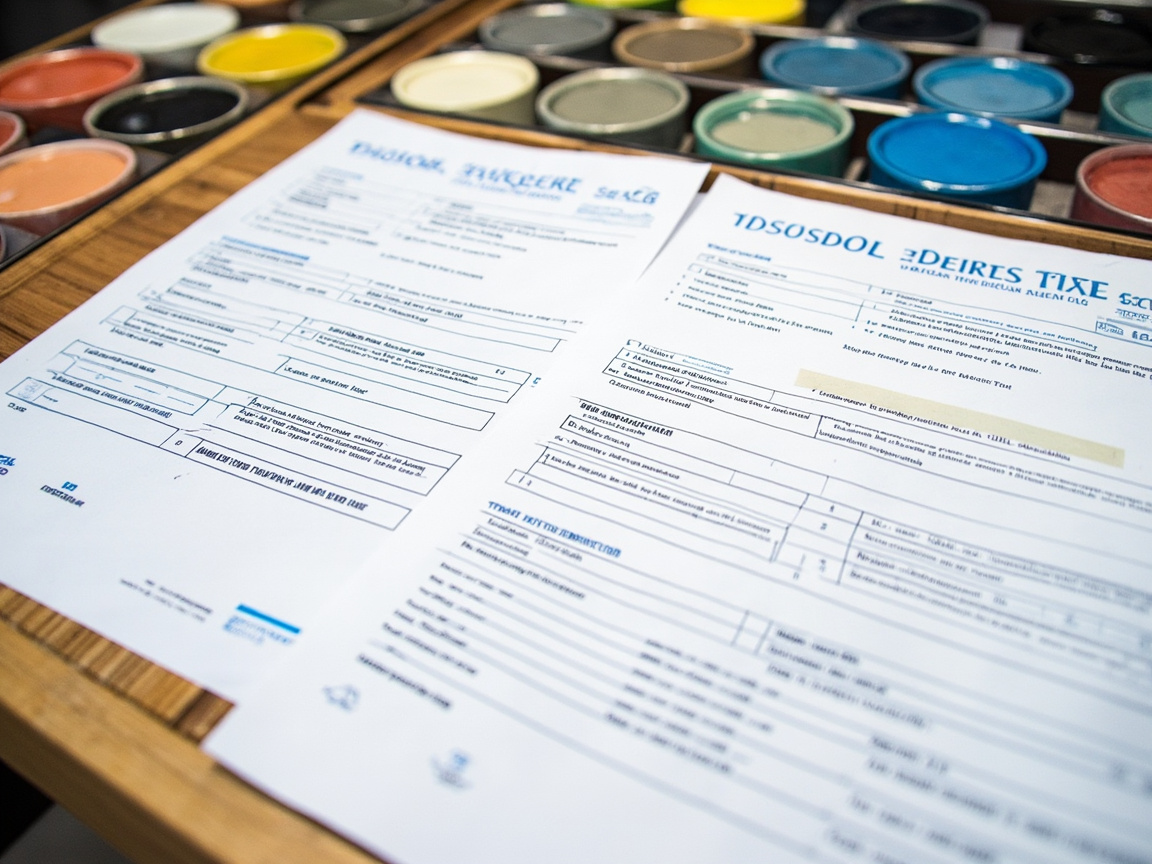
X. From Standard to Implementation: Incoming Inspection Checklist Template
A directly applicable checklist for procurement and quality engineers (trim by vehicle model and part):
- [ ] GB 24409-2020 hazardous substance report: VOC (note determination method and coating category limit), lead, cadmium, mercury, hexavalent chromium, benzene series, free diisocyanates;
- [ ] Adhesion GB/T 9286: cross-cut result ≤1 grade (interlayer and substrate);
- [ ] Weathering GB/T 1865: xenon lamp 1000h color change ≤2 grade, chalking ≤1 grade (exterior parts);
- [ ] Salt spray GB/T 1771: 500h (or SOR-specified duration) no blistering, unilateral rust ≤1–2mm;
- [ ] Gloss GB/T 9754 (60°): meet design high-gloss/matte range;
- [ ] Pencil hardness GB/T 6739: meet design grade;
- [ ] Flexibility/impact GB/T 1731, GB/T 1732: bending diameter and impact value meet standard;
- [ ] Inter-batch consistency: process capability data (Cpk) and recent batch trend.
Writing this checklist into the procurement contract and technical agreement provides an objective yardstick in quality disputes.
XI. Chemical and Gasoline Resistance: Underestimated Invisible Indicators
Beyond decoration, automotive coating must also withstand "chemical attack": gasoline and diesel spilled at gas stations, urban acid rain, car wash liquid, bird droppings and insect residue, even de-icing salt. Such indicators are often overlooked in acceptance but determine coating life in real use. According to the TDS of BASF Glasurit 923-666 HS, its chemical resistance is evaluated per ISO 2812, with tolerance requirements for acid, gasoline, and UV; pencil hardness >2H also supports combined chemical and scratch resistance.
Chemical resistance typically uses the immersion or spot method of ISO 2812: immerse or contact the coating film sample with a specific medium (e.g., gasoline, acid, alkali, cleaner) and observe gloss loss, blistering, softening, discoloration after a specified time. This item is strongly related to "cure degree"—as emphasized earlier, an incompletely cured polyurethane network is loose and chemical resistance does not reach the final value. Therefore, chemical resistance samples must also be taken from fully cured coating films.
For commercial vehicles, construction machinery, and work vehicles frequently exposed to oil products, gasoline and diesel resistance should be written into the SOR as critical characteristics; for ordinary passenger car exteriors, more attention is paid to weathering and gloss retention. Elevating chemical resistance from "tested by the way" to "graded by use scenario" avoids the gap of "pretty in lab, faded on road in six months".
XII. Test Panel Preparation and Sampling: Premise for Credible Results
No matter how strict the standard, if sample preparation is non-standard, the result is meaningless. Automotive coating testing highly depends on "panel consistency"; the same can of paint can yield vastly different data under different conditions:
- Adhesion (GB/T 9286) depends on substrate treatment and interlayer bonding. Results differ on rough electrophoretic panel vs. smooth old paint film; measuring before full cure gives falsely low adhesion.
- Weathering (GB/T 1865) requires fully cured and uniformly thick samples, otherwise differences are amplified after 1000h.
- Salt spray (GB/T 1771) must use real "primer–intermediate–topcoat" system panels; testing varnish alone has no reference value.
- Gloss (GB/T 9754) is affected by spray uniformity and leveling; inconsistent panel technique causes GU fluctuation.
Therefore, when automakers and suppliers reconcile, the technical agreement must specify: substrate specification, surface treatment grade, film thickness range, curing condition, panel environment and curing duration. Clarifying "how to prepare panels" makes test results comparable and legally valid. Vague "sample submission testing" often becomes the source of conflicting claims.
XIII. How to Read Third-Party Test Reports
Facing a "qualified" report, quality engineers should penetrate item by item, not stop at the conclusion stamp:
- Institution qualification: Check for CNAS, CMA accreditation marks, confirm testing capability covers the corresponding standards.
- Standard number referencedThe report must state "judged per GB/T 9286-1998", "executed per GB/T 1865", etc., rather than vaguely "adhesion qualified".
- Sample status: Record film thickness, curing conditions, and substrate, to ensure consistency with the preceding panel preparation specification.
- Measured values vs. limits: Qualification should be seen as "measured 88 g/L ≤ limit 100 g/L", not just printing "compliant". The magnitude of the difference also reflects the safety margin.
- Uncertainty: A formal report gives measurement uncertainty, helping to judge whether critical values are reliable.
- Batch correspondence: The report sample batch number must correspond to the supplied batch number, to prevent "using one good batch to cover multiple delivered batches".
Reading the report as a "data stream" rather than a "pass", is a sign of maturity in incoming material acceptance. For small and medium sheet-metal and paint chains, at minimum the key reports for the three items of hazardous substances per GB 24409-2020, adhesion, and weather resistance should be locked down, and a supplier archive established.
14. Cases of Acceptance Differences by Vehicle Model and Location
Standards are not "one-size-fits-all", but graded by usage scenario. Several typical locations:
- Exterior varnish/pigmented paint: Weather resistance (GB/T 1865, 1000h color change ≤ grade 2), gloss (GB/T 9754, high gloss ≥85 GU), hardness (GB/T 6739) prioritized, directly determining appearance and color retention.
- Chassis and wheels: Salt spray (GB/T 1771, up to 1000–3000h), impact flexibility (GB/T 1731/1732) prioritized, against stone chipping and corrosion.
- Interior plastic parts: Adhesion (GB/T 9286, and plastic-specific adhesion must be considered), VOC and odor (GB 24409-2020 and related to interior air quality) prioritized, to protect occupant health.
- Refinish paint: On the basis of meeting GB 24409-2020, more attention is paid to on-site application window — pot life, drying method and recoat compatibility (see earlier drying section).
- Commercial vehicles/working vehicles: Chemical resistance (ISO 2812, gasoline diesel), weather resistance and salt spray comprehensively weighted, usage intensity far higher than passenger cars.
This "SOR grading" thinking is more professional than "applying a generic pass line". It requires the supplier to ask before quoting: where used, how used, what to inspect.
15. Common Testing Disputes and Rejection Cases
When standards are implemented, the easiest disputes are not "over or not", but "how to count as over". Several typical scenarios:
- Critical value dispute: A varnish VOC measured 418 g/L, limit 420 g/L, supplier judged qualified, car maker questioned that measurement uncertainty may make the true value exceed the limit. Solution: look at report uncertainty, keep a safety margin if necessary rather than releasing right at the line.
- Sample representativeness dispute: Supplier submitted ideal prepared panels, mass-produced parts had low film thickness and insufficient curing, weather resistance and adhesion measured failed. Solution: write "panel preparation specification" into the agreement, and add surprise spot checks (irregular sampling from production line).
- Coating system dispute: Salt spray unqualified, is responsibility with varnish or primer? Testing varnish alone is meaningless, must submit by real配套 system and define each party's responsibility.
- Whether to reject after aging gloss loss: 1000h xenon color change ≤ grade 2 is a hard index, but "gloss retention" is often not written into SOR, causing both sides to argue "can it still be delivered". Solution: SOR specifies both color difference grade and gloss retention dual indices.
The common lesson of these disputes is: standards must be written into contract details, not停留在 "compliant with national standard" four characters. Solidify limits, methods, panel prep, batch correspondence, uncertainty all into the technical agreement, so disputes have a basis for adjudication.
16. Compliant Supply Chain: Standard Transmission from Raw Material to Finished Product
The red line of GB 24409-2020 is not something a coating plant alone can hold; it relies on compliance transmission across the whole supply chain:
- Raw material end: Resin, pigment, additive, solvent suppliers must provide their own hazardous substance declarations, ensuring lead, cadmium etc. are controlled at source;
- Formulation end: Coating plant uses limits to reverse-derive formulation at design stage, rather than remedying after finished product;
- Production end: Batch management ensures each batch traceable, avoiding mixing of different compliance-grade materials;
- Testing end: Self-check at factory per GB/T 23985/23986 etc., send key batches to third party;
- Delivery end: Provide with goods a data sheet containing measured values and standard numbers, for car maker incoming inspection.
For automotive coating purchasers, when auditing suppliers one should not only ask "does it meet the standard", but ask "where does your compliance data come from, how is it traced, is it stable between batches". Kexin New Materials (kexinMaterials) in collaboration with automotive customers, makes this chain into an auditable delivery package, so each batch's GB 24409-2020 compliance can be traced back to raw material declaration and factory test, rather than a vague qualified certificate. This also echoes the acceptance logic of this article "process stability优于 single-time qualification" — true compliance is system capability, not luck.
17. Standard Implementation Checklist for Engineers
Compress all standards of this article into a "location—standard matrix" for one-click call during design and acceptance:
| Vehicle location | Primary standard | Key index | Recommended threshold |
|---|---|---|---|
| Exterior varnish/pigmented paint | GB/T 1865, GB/T 9754 | Weather resistance, gloss | 1000h color change ≤ grade 2; high gloss ≥85 GU |
| Exterior varnish/pigmented paint | GB/T 9286, GB/T 6739 | Adhesion, hardness | ≤ grade 1; B–H grade |
| Chassis/wheels | GB/T 1771 | Salt spray | 500h (heavy anti-corrosion 1000–3000h) |
| Chassis/wheels | GB/T 1731, GB/T 1732 | Flexibility/impact | Bend ≤2mm, impact ≥50cm |
| Interior plastic parts | GB/T 9286 + GB 24409 | Adhesion, VOC | ≤ grade 1; meet interior limit |
| Wear-prone parts | GB/T 1768 | Abrasion (Taber) | ≤10–50 mg/1000 rev |
| All vehicle coatings | GB 24409-2020 | Hazardous substances | VOC/lead ≤90/cadmium ≤75 mg/kg etc. |
Finally, three action items engineers can directly implement: First, write GB 24409-2020 limits into formulation design input, not finished product test threshold; Second, write panel prep spec, film thickness range, curing condition into test agreement, making data comparable and traceable; Third, build batch consistency (SPC/Cpk) monitoring for key characteristics, replacing single-time qualification with process stability. With these three done well, automotive paint compliance and quality move from "luck" to "manageable".
From the trend, vehicle coating standards will only get stricter and more detailed: GB 24409-2020 as mandatory national standard has locked VOC and heavy metals, subsequent industry direction is lower VOC, higher solid content and water-based substitution; meanwhile weather, chemical, abrasion performance thresholds are also rising with longer whole-vehicle warranty years. For suppliers and car makers, internalizing standards into design input and process capability one step earlier means one step less passive rectification risk. Testing standards are not the end of acceptance, but the starting point of product competitiveness.
FAQ
1. What substances does GB 24409-2020 mainly limit?
It is the mandatory national standard for hazardous substance limits of vehicle coatings, mainly controlling VOC, heavy metals (lead, cadmium, mercury, hexavalent chromium etc.), benzene series and free diisocyanates etc. Per GB 30981/24409 series, lead ≤90 mg/kg, cadmium ≤75 mg/kg are typical heavy metal limits. Non-compliance means it may not be produced, sold or imported as vehicle coating.
2. How is automotive paint VOC measured, and why does the value fluctuate?
VOC determination follows GB/T 23985, GB/T 23986 (GC-MS method) and ISO 11890 etc. The same paint fluctuates due to different measurement methods and exempt solvent caliber. Therefore acceptance must agree method and limit system, e.g. incoming sheet should state "measured XXX g/L per GB/T 23985, compliant with XX class limit in GB 24409-2020".
3. Is there a big difference between cross-cut adhesion grade 0 and 1?
Per GB/T 9286, cross-cut method rates grade 0–5, 0/1 both excellent (falloff ≤5%). Grade 0 cut edges completely smooth no falloff, grade 1 only tiny area falloff. OEMs usually set ≤ grade 1 as hard index, grade 2 already visible falloff, not recommended for exterior load-bearing locations.
4. What is the concept of 1000h xenon aging?
Per GB/T 1865, xenon arc weathering common judgment is after 1000h color change ≤ grade 2, chalking ≤ grade 1. It uses full-spectrum daylight and spray to accelerate simulate years of outdoor exposure, is the core threshold for automotive paint weather resistance. Higher requirement models may extend to 2000h and add gloss retention and ΔE color difference.
5. Is 500h salt spray sufficient for all automotive coatings?
No. 500h without blistering and single-side rust ≤1–2mm is a general threshold (per GB/T 1771), but heavy anti-corrosion areas such as chassis and wheels can require 1000–3000h. It should be based on the SOR of the specific vehicle model and part, and salt spray performance depends on the primer–intermediate–topcoat system rather than just the clear coat.
6. What are the gloss and hardness standards respectively?
Gloss (60°) per GB/T 9754, high gloss typically ≥85 GU; pencil hardness per GB/T 6739, range B–H grade. The two respectively reflect decorativeness and scratch resistance, but need to be balanced with flexibility/impact (GB/T 1731, GB/T 1732) to avoid "hard yet brittle" cracking under stone chipping.
7. Why is failed adhesion often blamed on "poor paint"?
Adhesion is more determined by pretreatment and curing. An incompletely cured film has insufficient crosslinking and poor interlayer bonding; electrophoretic quality and sanding roughness also account for 70% of success or failure. Before accepting adhesion, it must be confirmed that the sample is taken from a fully cured film.
8. Is it enough for automakers to only check the "pass" report for acceptance?
No. OEMs follow a three-tier logic of "regulatory red line + performance threshold + process stability". Besides single-batch pass, they also look at batch consistency (SPC/Cpk). Suppliers need to prove long-term stability, not occasional compliance.
9. Why is the free diisocyanate limit important?
It relates to the sensitization risk of HDI-type curing agents mentioned in the previous article. GB 24409-2020 includes it in the limit, protecting applicator health and constraining free monomer content in the formulation. When selecting, request this test data rather than only looking at VOC.
10. Do refinish paint and OEM original paint use the same set of standards?
Both are governed by GB 24409-2020, but OEM original lines also have full-system standards and process control for electrophoretic paint, intermediate coat, etc.; refinish paint focuses more on on-site application window (pot life, drying method, see previous text). Acceptance items are set separately by "original/refinish" and "primer/intermediate/topcoat" categories.
Further Reading
- Acceptance and testing key points of water-based paint: Extends the testing framework of this article to water-based systems, supplementing practical details of incoming inspection and compliance judgment.
- Drying and curing key points of water-based paint: Film formation integrity directly affects weather resistance and adhesion, and is causally linked with the GB/T 1865 and GB/T 9286 indicators in this article.
- How to select water-based vs. solvent-based coatings: Comprehensive decision from VOC limits, performance and cost, echoing the "regulatory red line" and "selection implementation" sections of this article.