Original factory paint is an important standard for measuring a vehicle's quality and value. This article systematically explains the definition, process flow, performance advantages, identification methods, and common misconceptions of original factory paint, helping readers gain a comprehensive understanding of its true value.

I. What is Original Factory Paint
Original factory paint typically refers to the automotive coating system that is completed in one go on the vehicle production line within the automobile manufacturing plant, following standardized spraying procedures. Compared with later repair painting or refurbishment painting, original factory paint has irreplaceable advantages in terms of process stability, adhesion, color consistency, and durability.
Within the automotive industry system, OEM paint is not merely a decorative exterior layer, but a critical component of the vehicle's overall corrosion protection, rust prevention, weather resistance, and safety standards. Therefore, whether a vehicle retains its original factory paint frequently serves as a key basis for used-car appraisal, vehicle pricing, and brand quality assessment.
II. Complete Spray Painting Process Flow for Original Factory Automotive Paint
The original factory paint is not a simple spray application, but a highly automated and precisely controlled industrial coating system, typically comprising the following key steps:

- Pre-treatment process
Through degreasing, cleaning, phosphating and other processes, the cleanliness and rust-proof ability of the vehicle body metal surface are improved. - Electrophoretic Primer (E-Coat)
Adopting full-vehicle immersion electrophoresis, the paint film evenly covers the interior and exterior of the body, forming the first anti-corrosion barrier. - Mid-coat Paint (Primer)
Increases film thickness, enhances stone-chip resistance, and provides a good adhesion base for the basecoat. - Base Coat
Determines the vehicle's final color effect and is the core of the original factory paint's visual appearance. - Clear Coat
Provides gloss, UV resistance, scratch resistance, and chemical resistance.
This complete OEM painting process is precisely controlled by robots in terms of spray angle, paint volume, and curing conditions, ensuring a consistent paint finish on every vehicle.
III. Core Advantages of Original Factory Paint
1. Stronger adhesion and durability
The original factory paint forms a stable film under high-temperature baking and standard curing conditions, and is not prone to peeling or cracking over the long term.
2. Minimal color difference control
The entire vehicle is painted in a single environment, avoiding the color mismatch issues commonly seen with later touch-up painting.
3. Superior anti-corrosion and anti-rust performance
Electrophoretic primer is a critical process that repair painting cannot fully replicate.
4. Higher vehicle residual value
In the used car market, vehicles that retain their original factory paint are generally more competitive.
IV. Main Differences Between Original Factory Paint and Repainted Paint
| Comparison Dimension | Original Factory Paint | Aftermarket Paint |
|---|---|---|
| Spraying Environment | Dust-free Constant-temperature Workshop | Repair Workshop |
| Process Method | Fully Automated Production Line | Mostly Manual |
| Paint Film Structure | Complete Multi-layer System | Locally Simplified |
| Color Consistency | Highly Uniform | Prone to Color Difference |
| Service Life | Longer | Relatively Shorter |
V. How to Identify Whether a Vehicle Has Original Factory Paint
- Paint film thickness inspection: The original factory paint is usually stable within a reasonable range; if it is too thick, there may have been repairs.
- Edge and detail observation: The original factory paint edges are smooth, with no obvious runs or orange peel.
- Color consistency comparison: Whether the color is uniform across different body parts.
- Professional Testing Report: Confirmed by a third-party testing organization.
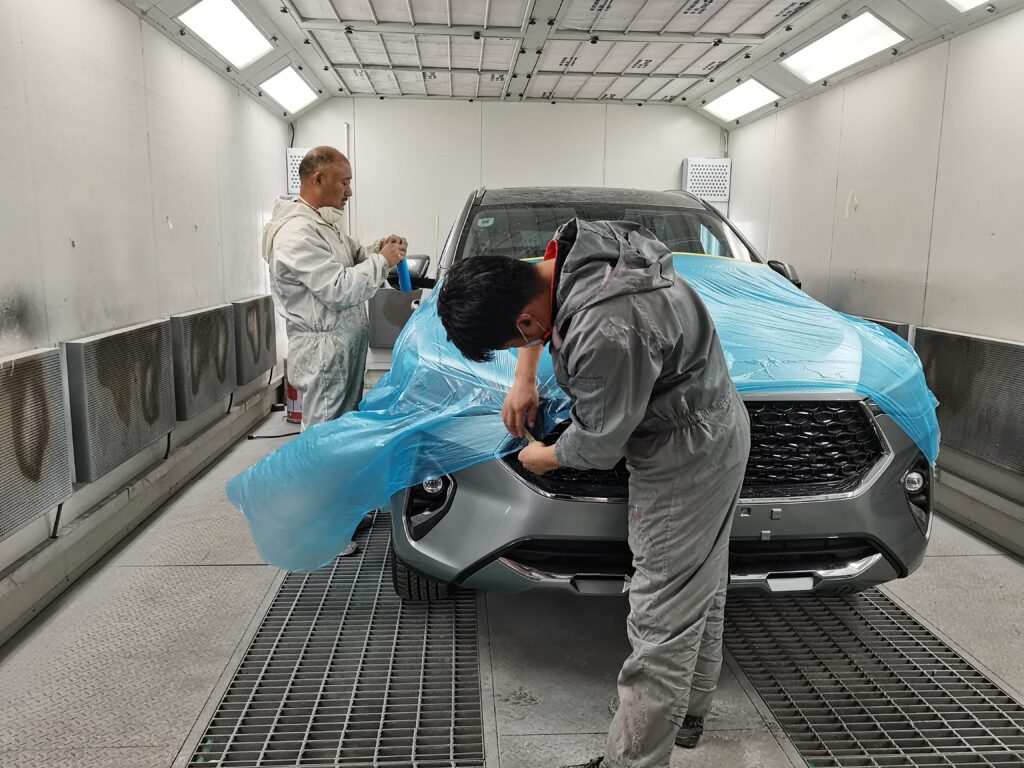
VI. Analysis of Common Misconceptions about Original Factory Paint
- The original factory paint is not "immune to damage," but it is more durable.
- Polishing and waxing do not equate to damaging the original factory paint.
- Partial repair means losing all original-factory value (not absolute).
VII. FAQ - Frequently Asked Questions
Q1: Can the original factory paint be repaired?
Light repairs can be performed, but the repaired area will no longer be part of the intact original factory paint.
Q2: Is the original factory paint thickness fixed?
There are reasonable differences between different brands and models, but the overall range is stable.
Q3: Will a full car wrap affect the original factory paint?
High-quality film used normally will not damage the original factory paint.
Q4: Why is the cost of original factory paint higher?
The core lies in equipment investment, process complexity, and quality control standards.
VIII. Conclusion

Original factory paint not only represents the vehicle's exterior quality, but also reflects the high maturity of automotive manufacturing processes. Whether for new car selection, used car evaluation, or long-term use and maintenance, understanding the value of original factory paint is an important topic that every car owner cannot afford to overlook.