In modern automotive painting processes, the combination of metal and plastic parts has become an industry standard. From hoods to bumpers, different materials have completely different requirements for paint performance. To achieve a uniform appearance and durable paint finish, one must understand a fundamental principle: Metal and plastic must use different coating systems.
I. Material differences determine process logic
Metal surfaces are hard, conduct heat quickly, and have strong deformation resistance, making them suitable for paint film systems with high hardness and high cross-linking density. In contrast, plastic surfaces have low surface energy, high flexibility, and high thermal expansion; using the same paint often leads to cracking, peeling, or poor adhesion.
Therefore, a professional spraying process must be formulated based on the physical properties of the material, forming two independent yet coordinated coating schemes.
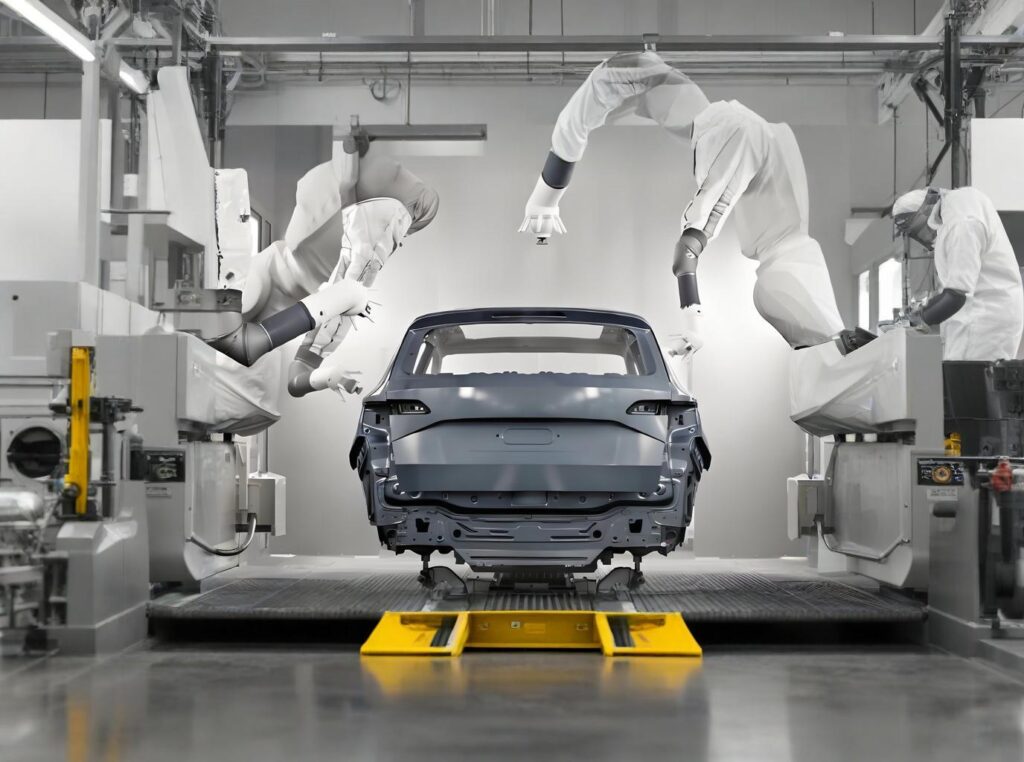
II. Metal Housings: Emphasis on Both Corrosion Resistance and Hardness
The core objective of a metal car body is corrosion resistance and gloss retention. The industry-recognized three-layer system is the most stable structure:
- Primer: Provides adhesion and prevents metal from rusting;
- Base Coat: Determines color and visual effect;
- Clear Coat: Enhances gloss, UV resistance, and scratch resistance.
Among them, 2K polyurethane paint is the preferred choice for metal spraying. It forms a tough paint film through chemical cross-linking, offering excellent weather resistance and mechanical properties, and is widely used in vehicle manufacturing and repair fields.
III. Plastic parts: Adhesion and flexibility are key.
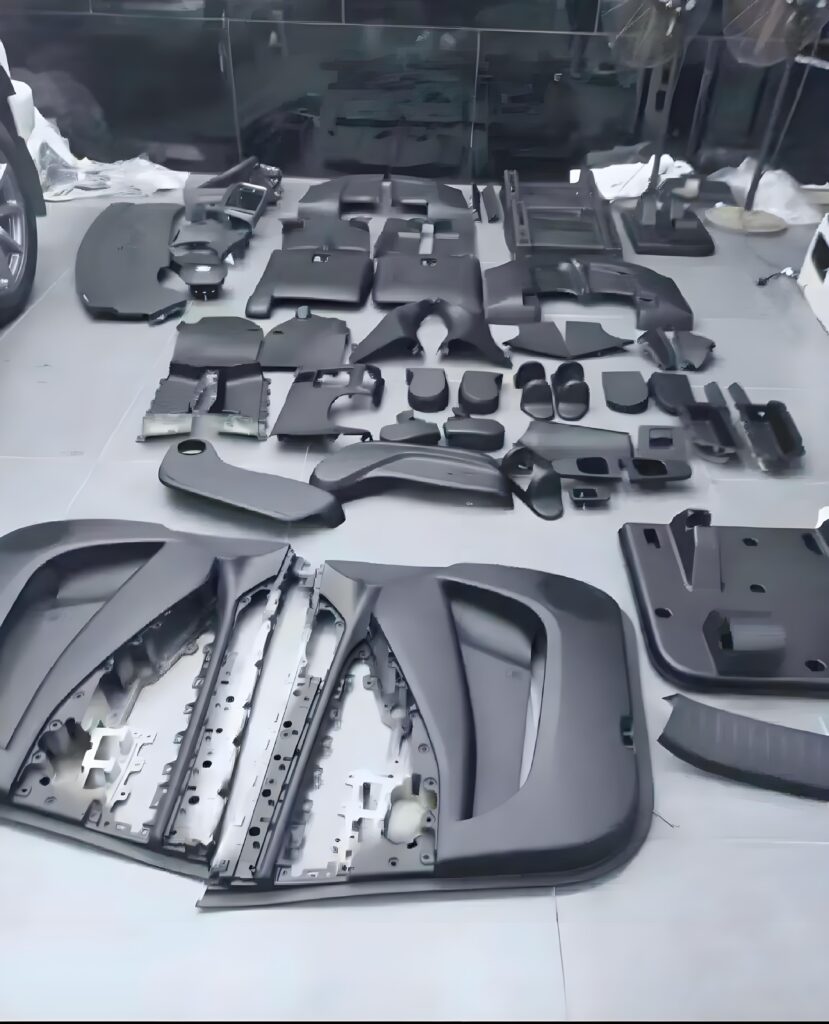
Plastic parts such as bumpers, mirrors, and interior trims have low surface energy and are prone to deformation. Ordinary paint struggles to adhere firmly and a plastic-specific primer must be used. This type of primer contains flexible resins and adhesion promoters that expand and contract in sync with the plastic, preventing paint film cracking.
During construction, attention should be paid to:
- Use a plastic-specific cleaner to thoroughly degrease and remove mold release agent;
- Select the corresponding primer based on plastic type (PP, ABS, PU, etc.);
- The color coat layer should use the same brand series as the metal body to reduce color difference.

IV. Color Difference Control and System Compatibility
Even when plastics and metals use the same color, color difference may occur due to differences in material reflectance and film thickness. The key to avoiding color difference is to maintain system consistency: same brand, same colorant, same batch of clearcoat, and appropriately add flexible additives to the plastic basecoat. The clearcoat layer must be unified to maintain consistent gloss and feel.

V. Conclusion: Only by classifying materials into systems can the effect be unified.
The perfect formula for automotive painting can be summarized as:
Plastic-specific primer + basecoat and clearcoat from the same series as the metal body = color-matched, durable, and perfect coating effect.
For coating manufacturing and sales enterprises, establishing a product line of "material-specific matching systems" not only enhances technical expertise but also helps build brand authority and high visibility across major search platforms.