Three key technologies for scientifically selecting plastic coatings: ensuring durability and texture based on substrate, performance, and process!
In the appearance design of industrial plastic components and consumer electronics, spray coatings often represent the final step that determines a product’s perceived value. Color, tactile feel, abrasion resistance, and long-term reliability are almost entirely locked within the coating system and spraying process. Yet many companies rely on “experience” or “intuition” when selecting coatings, leading to issues such as cracking, paint peeling, scratching, color loss, gloss fading, bubbling, and bleeding—with costly batch rework.

To avoid these mistakes at the root, one must return to the three fundamental variables of scientific paint selection: substrate compatibility, performance standards, and process feasibility. These are not abstract principles, but technical logic that can be implemented in practice.
I. Substrate determines the prerequisite for paint selection: without correct substrate identification, all consequences are merely delayed failures.
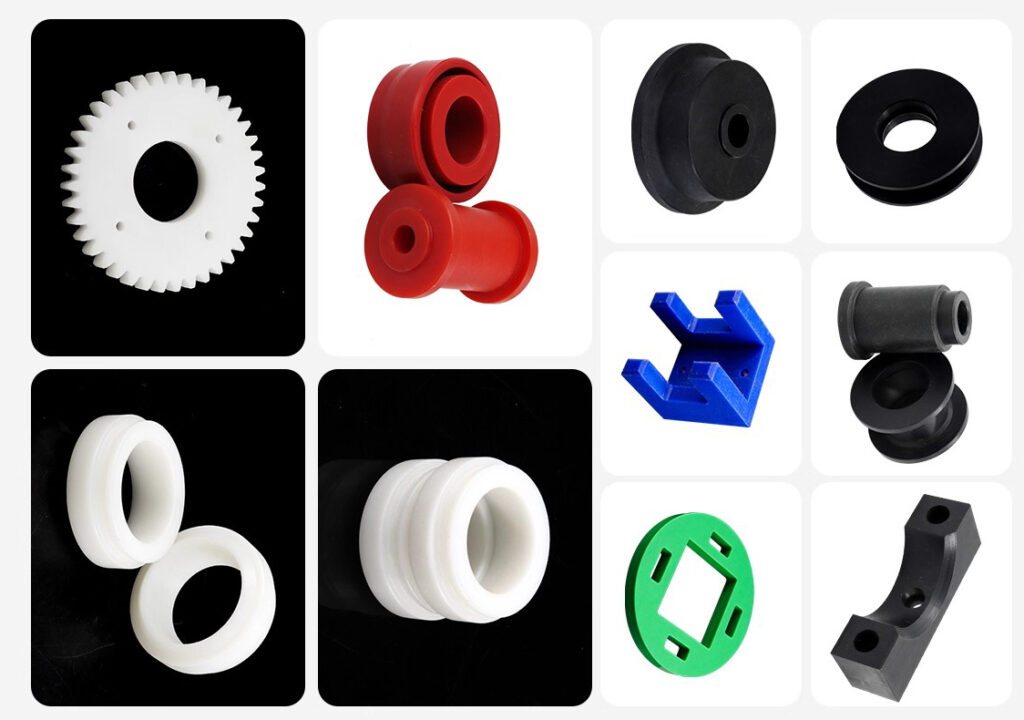
The polarity, heat deflection temperature, and surface activity of different plastic substrates vary completely, directly determining whether the coating system is usable and whether the adhesion is reliable.
ABS / PC are medium-to-high polarity materials, and general-purpose plastic paint systems in the industry can establish stable adhesion;
PP / PE are low-polarity materials, and without special primer or corona/flame treatment, any subsequent paint will "eventually peel off".
One iron rule that must be remembered:
For base materials you don't understand — always do a sample test with cross-cut adhesion (cross-cut) first; do not go directly into mass production.
The industrial site is no place for trial and error; substrate identification is the only first step with the capability to defuse potential pitfalls.
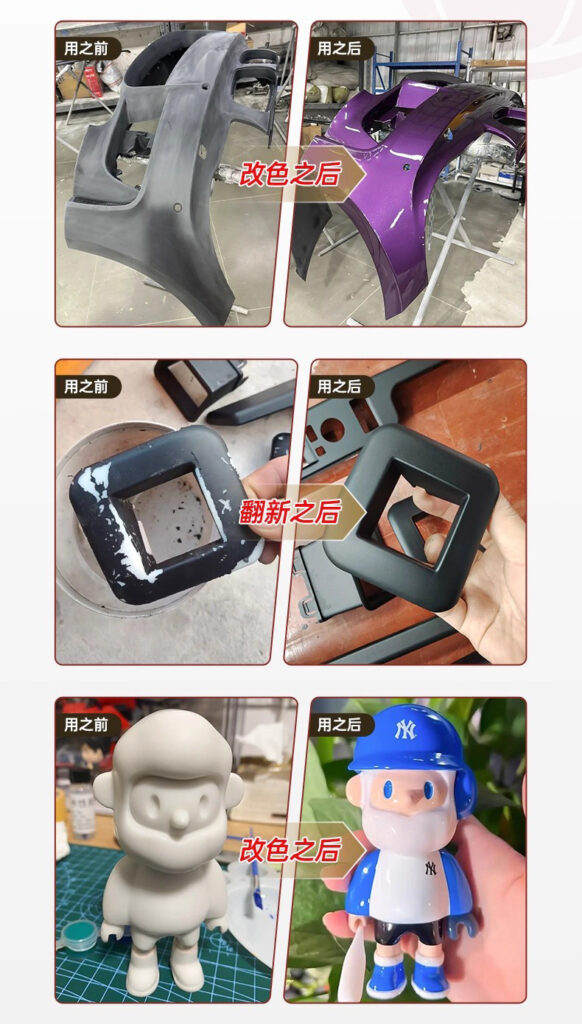
II. Selecting a system based on performance and application: not all plastic coatings are born for the same battlefield.
Plastic coating is not just for "coloring"; first and foremost, it serves the usage scenario.
For example:
- Daily consumer goods: Single-component acrylic paint can meet the requirements for appearance and volume.
- Tool, power supply, and electronic equipment enclosures: require scratch and wear resistance, preferably a four-component PU system
- Outdoor use scenarios: UV-curing systems must be adopted to resist ultraviolet and weathering aging
- Premium Touch and Appearance: Rubber paint, metallic paint, pearlescent paint, and matte systems require dedicated production lines and specialized processes.
Using the wrong system is not "imperfect" — it is bound to fail.
III. Process Determines Success or Failure: Whether It Can Be Mass-Produced Depends Not on the Formula, but on Execution
Even if the right substrate and system are selected, failure can still occur if the spraying and curing process is out of control.
The core process control points for painting plastic parts are mainly of three types:
1) Cleanliness control — Dust-free or low-dust environment to avoid particles being embedded in the paint film
2) Spraying consistency — Spray gun distance, gun travel speed, and film thickness control affect leveling and appearance
3) Cure completeness — Insufficient temperature/time leads to incomplete cross-linking; later paint peeling and bubbling are "delayed errors"
The tragedy of rework in many factories is not that the paint is bad, but that the process has no records, no standards, and is not reproducible.

4. Pre-mass-production validation is the "fuse" — skip the test, and wait for the blowout.
Before any mass production, at least three validations must be passed:
- Cross-hatch adhesion test
Ensure the coating is stably bonded and does not peel off - Alcohol/Sweat/Silicone Oil/Abrasion Resistance Test
Verify long-term reliability in real-world usage environments - Color Difference and Appearance Evaluation under Standard Light Source
Avoid batch variations or invisible defects entering the market
These are not laboratory formalism, but the lowest-cost means of avoiding losses on the order of millions.
V. Conclusion: The right coating choice doubles product value; the wrong one wastes all effort.
Plastic spraying may seem like the "final process," but it is actually the valve that determines whether a product can achieve "commercial-grade quality."
Paint selection = substrate compatibility + performance benchmarking + process feasibility
None of these three can be omitted; any negligence will backfire in the future in the form of costs, complaints, or failures.

When you can examine a project with this scientific paint-selection logic,
what you gain is not just "color,"
but global control over durability, texture, cost, and reputation.