Amid the rapid global development of automotive coating technology, popular car paints in 2026 exhibit three major characteristics: intelligence, functionalization, and sustainability. As consumer demands for vehicle personalization, durability, and environmental performance continue to rise, the automotive paint industry has entered a new cycle centered on high-performance materials, eco-friendly resin systems, digital color matching, and special-effect pigments. This article provides a systematic analysis across five dimensions—technology trends, color trends, coating systems, environmental regulations, and market demand—and conducts SEO reinforcement around the main keyword "popular car paints in 2026" to help coating manufacturers, distributors, and automakers grasp future directions.
1. Core Trends in Popular Car Paints for 2026
1.1 Sustainable Environmental Protection Becomes Mainstream
As global VOC restrictions tighten, waterborne automotive coatings, low-VOC automotive coatings, and renewable resin coatings will become an irreversible trend in 2026. Multiple international automakers have fully adopted waterborne basecoats, and the penetration rate of waterborne systems is expected to exceed 65% in 2026.
- Waterborne automotive coatings reduce VOC emissions by approximately 60%–80% compared with conventional solvent-based paints.
- The proportion of bio-based resin used in varnishes and primers has increased significantly.
For enterprises aiming to enhance their international competitiveness, it is imperative to plan ahead and establish an environmentally friendly production system.
1.2 Functional automotive coatings grow rapidly
In 2026, consumer interest in "special functions" continues to rise, particularly in the following types:
- Self-healing clearcoat (thermally triggered or photo-triggered type)
- Superhydrophobic nano-coating type automotive paint
- Heat-insulating reflective automotive paint
- Scratch-resistant and Wear-resistant Polyurethane Varnish
These coatings enhance the long-term durability of vehicles and represent a new growth point for the future aftermarket refinish sector.
1.3 AI color grading + digital cloud colorant system popularization
AI-based tinting systems can automatically analyze spectral characteristics and match tens of thousands of colors in the database, improving tinting accuracy and first-pass success rate. By 2026, multiple factories will realize "digital tinting rooms," greatly enhancing production efficiency.
II. 2026 Automotive Color Trends: From Metallic Texture to Cyber-Tech Colors
2.1 Future Metallic

High-flash aluminum powder, iridescent mica powder, and novel pearlescent materials will form the mainstream, used to emphasize a futuristic feel:
- cold metal silver
- ice-blue titanium silver
- Midnight Titanium Black (2026 trending color)
These colors are highly consistent with the tech-oriented tone of electric vehicle exterior design.
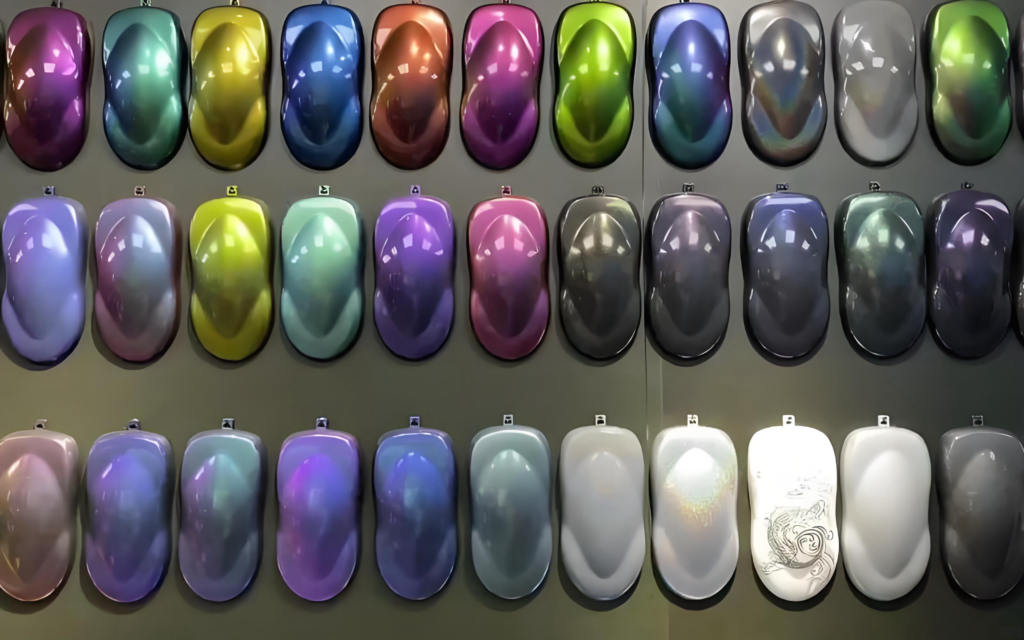
2.2 Cyber Tech Colors
Formed under the influence of the trends in e-sports, new energy vehicles, and AR/VR:
- electro-optic purple
- laser blue
- Quantum Green
- Chameleon paint (purple-green, blue-purple)
Special-effect pigments have become a key factor driving popular automotive coatings in 2026.
2.3 Eco Natural
The eco-friendly concept drives the popularity of soft color tones, such as:
- Forest Green
- sand and gravel rice (sand-coated aggregate)
- rock gray
This type of color is particularly popular in the European and American markets.
III. Material and Process Evolution of Popular Automotive Paints in 2026
3.1 Varnish System Upgrade: High Weather Resistance + Low-Energy Curing
The features of the new-generation clearcoat in 2026 include:
- Low-temperature curing (60–80°C) saves over 40% energy
- Ultra-high UV-resistant PU or two-component system
- The anti-scratch self-healing technology is more mature
3.2 Basecoat System: Finer and More Stable
The new dispersion technology makes pigment particle sizes more uniform, resulting in higher gloss and saturation of the paint film. The application window of the water-based basecoat is broadened, making it more suitable for humid southern environments.
3.3 Popular Special Effects Materials in 2026
- high-refractive-index pearlescent pigment
- bright aluminum silver paste
- bismuth oxide color-changing pigment
- transparent conductive pigment
IV. Market Demand: New Energy Vehicles Drive Industry Explosion
Global NEV sales are projected to exceed 24 million units in 2026, with coating demand rising rapidly. High-end battery electric models are more inclined to adopt premium clearcoat systems and high-saturation colors, driving growth in high-value-added automotive coatings.
V. Conclusion
2026 popular car paints will center on eco-friendliness, water-based formulas, special effects, and smart technology. Whether for factory production or after-sales auto repair, getting ahead of these trends will directly boost market competitiveness.