Introduction: Cathodic Disbondment—the "Invisible Killer" of Anti-Corrosion Coatings
Offshore platforms, buried pipelines, and ship underwater hulls—these steel structures not only have anti-corrosion coatings but are also supplemented by "cathodic protection" (sacrificial anodes or impressed current—pulling the steel potential to 12–14—strong alkali (OH-) "chemically degrades" the chemical bonds at the coating/steel interface—the coating is "alkali-corroded" and peeled from the steel surface—forming a "disbonded zone" expanding outward from the defect—this is cathodic disbondment (CD). Cathodic disbondment is the most隐蔽 and most common failure mode in the "combined use" of anti-corrosion coatings and cathodic protection—especially in deep sea (high O2 concentration) and warm waters (accelerated by high temperature)—mild disbondment (diameter 20 mm)—large-area coating disbondment—the coating system exists in name only.
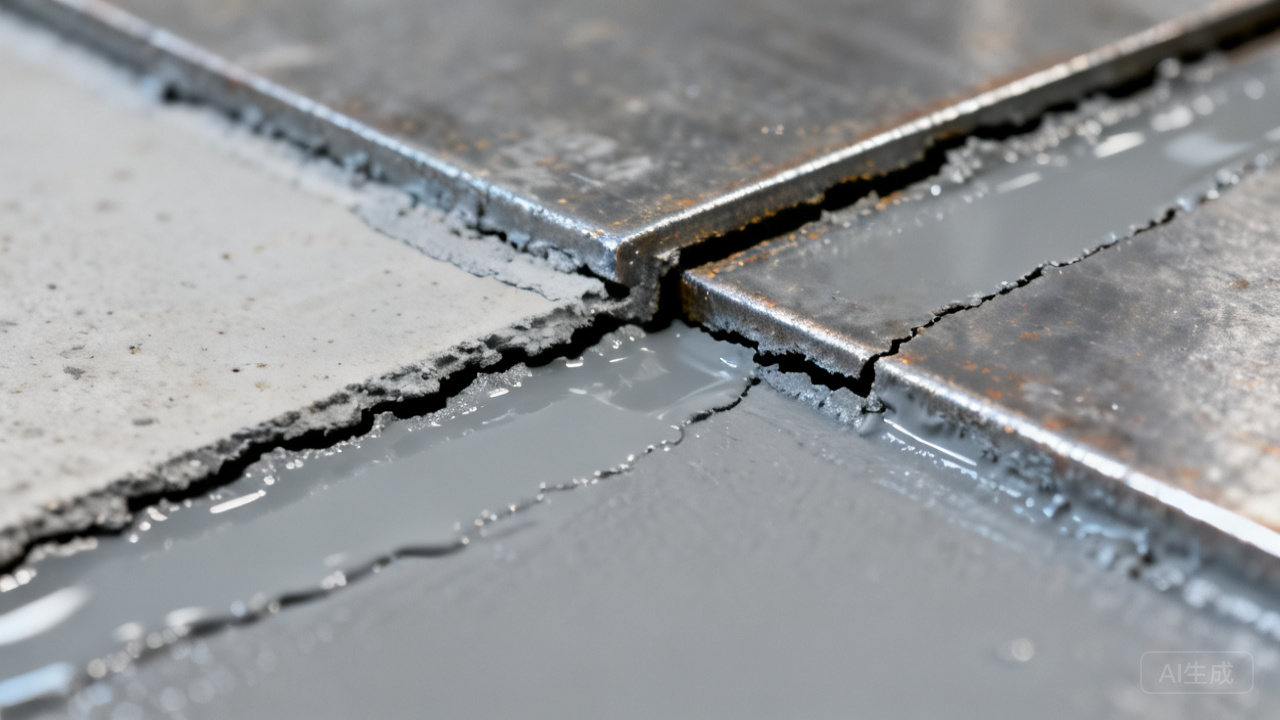
Cathodic disbondment is an electrochemically-chemical synergistic failure phenomenon in which, when a protective coating coexists with cathodic protection—at coating defects—the cathodic reaction O2+H2O+electrons→OH- causes a sharp local pH rise at the coating/steel interface (>12-14)—OH- chemically degrades the interfacial chemical bonds between the coating and steel (hydrolysis of epoxy ester bonds—breakage of acrylic/steel hydrogen bonds)—the coating gradually loses adhesion from the metal surface—forming a disbonded zone expanding outward from the defect. Its driving force is the cathodic protection current—its core medium is the permeation of water/O2 through the coating—and its failure essence is interfacial alkaline degradation.
I. Influencing Factors and Protection Strategies of Cathodic Disbondment
| Influencing Factor | Mechanism of Action | Acceleration/Retardation Effect | Protection Strategy | Quantitative Indicator |
|---|---|---|---|---|
| Cathodic Protection Potential | More negative potential — larger current — higher OH- generation rate | At -1.0V, the disbondment rate is 3-5 times that at -0.85V | Avoid overprotection — control potential between -0.85 and -1.0V | Disbondment diameter/30d (ISO 15711) |
| Coating O2 Permeability | O2 reaching the interface is the reactant for the cathodic reaction — no O2 = no reaction | Low O2-permeability coating — disbondment rate reduced by 5-10 times | Flake fillers (aluminum powder/glass flakes) — increase tortuosity factor of diffusion path | O2 permeability coefficient (mol/m·s·Pa) |
| Coating Adhesion | Ability of interfacial chemical bonds to resist OH- degradation — high adhesion = slow disbondment | Pull-off >8MPa vs <3MPa — disbondment reduced by 3-5 times | Epoxy (high polarity) + silane coupling agent (Fe-O-Si covalent bond) | Pull-off adhesion (ISO 4624/MPa) |
| Ambient Temperature | Arrhenius acceleration — water/O2 permeation and cathodic reaction both accelerated | Disbondment rate at 60°C is 10-20 times that at 25°C | For high-temperature environments, select high Tg resin (Tg higher than service temperature) | Tg (°C) / pull-off adhesion after hot water immersion |
FAQ
Q1: Alkali degradation in cathodic disbondment — what chemical bonds does OH- actually break?Targets of OH- attack (high concentration / high pH > 13): (1) The interface between epoxy coating and steel — the secondary hydroxyl groups (-CHOH-) of epoxy resin form sodium alkoxide (-CHONa) under strong alkali — which is water-soluble — the interfacial chemical anchor points are sheared off — adhesion drops from >8 MPa to epoxy ester > alkyd) and enhance interfacial chemical bonds (silane coupling agent — forms covalent bonds — resists OH- attack).
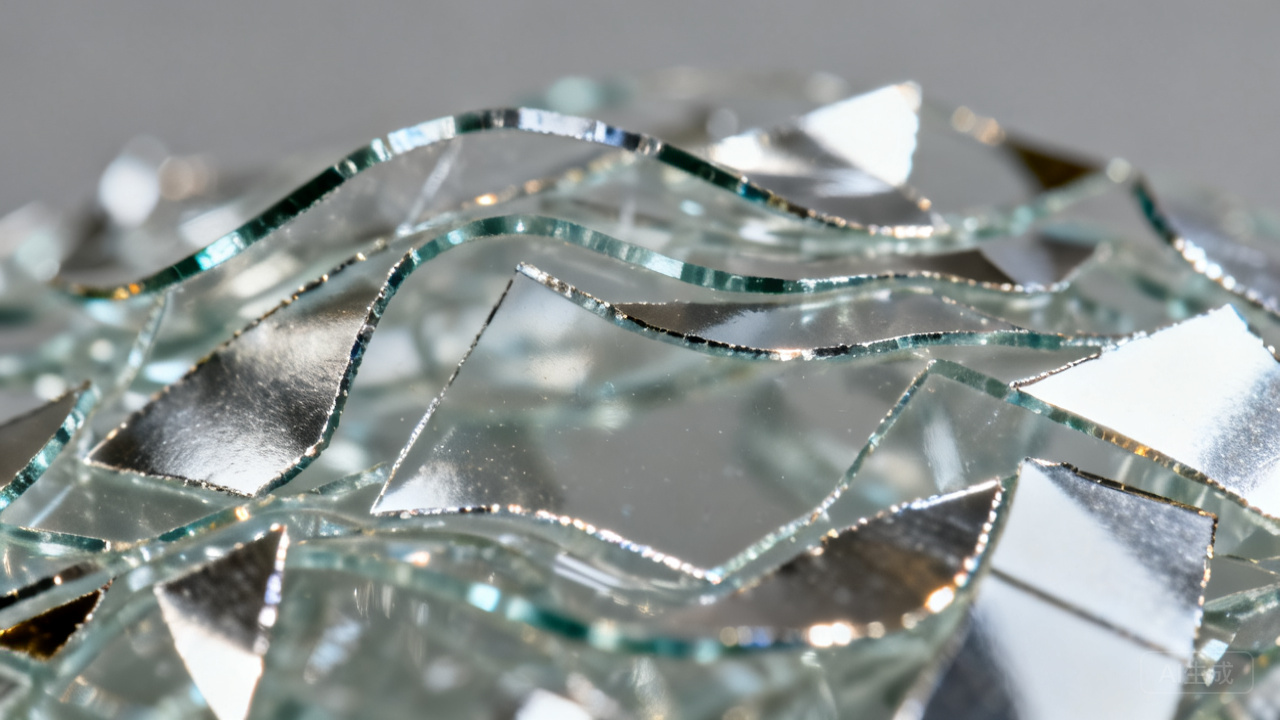
Q2: Flake fillers (aluminum powder/glass flakes) — why can they delay cathodic disbondment by 5-10 times?Flake fillers are arranged parallel inside the coating — forming a maze effect (Tortuosity/tortuosity factor). O2 and water molecules trying to reach the coating/steel interface — cannot pass vertically through the coating — must bypass each flake filler — detour along the horizontal direction of the fillers — the actual diffusion path length is 5-10 times the coating thickness. According to Fick's diffusion law — diffusion flux J = -D × (ΔC/Δx) — Δx increases by 5-10 times — J decreases by 5-10 times — O2 and water reaching the interface are greatly reduced — the cathodic reaction rate decreases accordingly — OH- generation is reduced — disbondment is delayed. Glass flakes (>10μm thick — 100-500μm diameter — chemically inert/alkali resistant) are the standard anti-cathodic-disbondment filler in marine heavy-duty anticorrosive coatings — in ISO 15711 testing — the disbondment diameter of epoxy coating containing 20% glass flakes is 20-30mm.
Q3: Silane coupling agent—the chemical weapon of interfacial covalent bonds against OH-?Silane coupling agents (e.g., KH-560/γ-glycidoxypropyltrimethoxysilane) have an amphiphilic structure—(a) the siloxane end (Si(OCH3)3)—hydrolyzes to form Si-OH—condenses with Fe-OH on the steel surface—forming Fe-O-Si covalent bonds (bond energy >450 kJ/mol—15-20 times stronger than hydrogen bonds at 20-30)—chemically anchoring the coating to the steel; (b) the epoxy end (glycidoxy group)—reacts with the curing agent (amine) of the epoxy resin—forming covalent crosslinks—chemically connecting the coupling agent to the coating network. This steel←covalent bond→coupling agent←covalent bond→coating dual interface—upgrades the coating/steel interface from hydrogen bonds-van der Waals forces to covalent bonds-dual interface—OH- cannot easily hydrolyze covalent bonds—the interfacial alkali degradation resistance is improved by 5-10 times. Silane coupling agent is one of the most effective chemical weapons for anti-cathodic disbondment of anti-corrosion coatings—addition level only 0.5-2% (on resin solids)—yet brings a significant improvement with pull-off adhesion (wet state—after 60°C hot water immersion) retention >5 MPa.
Related Reading
Summary
Cathodic disbondment is the greatest failure risk in the dual-protection synergy of anticorrosive coatings and cathodic protection—cathodic reaction (OH⁻ at the interface creates strong alkalinity, pH > 13)—alkaline degradation of interfacial chemical bonds in the coating—coating debonding and disbondment. Three major protection strategies: flake fillers (labyrinth effect extends O₂ diffusion path by 5–10 times), high-adhesion resins (epoxy—pull-off > 8 MPa) + silane coupling agents (Fe–O–Si covalent bonds—resist alkaline degradation), and avoiding overprotection in cathodic protection potential. ISO 15711 (30 d—disbondment diameter < 10 mm qualifies) is the core standard for evaluating cathodic disbondment resistance. Kexin New Materials provides clients with cathodic-disbondment-resistant coating formulation design and accelerated testing—enabling anticorrosive coatings and cathodic protection to truly synergize rather than backfire.