Wind power is one of the main forces of clean energy, and wind turbine units are steel structures that are "unsupervised in the field for long periods." Onshore wind turbine towers stand in the open wilderness, enduring UV, heat-humidity, and day-night temperature differences; offshore wind turbines directly face C5-M and even harsher marine corrosion. Although blades are mostly composite materials, their leading edges suffer rain droplet and sand-dust erosion during high-speed rotation, and likewise require protective coatings. The core of wind power coating is to translate the life goal of "25 years maintenance-free or low-maintenance" into citable system and film thickness data.
Kexin New Materials (kexinMaterials) has system capability on epoxy zinc-rich, epoxy micaceous iron oxide, and aliphatic polyurethane systems suitable for wind power, covering the protective needs of towers, foundations, and auxiliary steel structures. For the corrosion environment classification itself, you may read in depth ISO 12944 protective paint systems and corrosion environment classification.
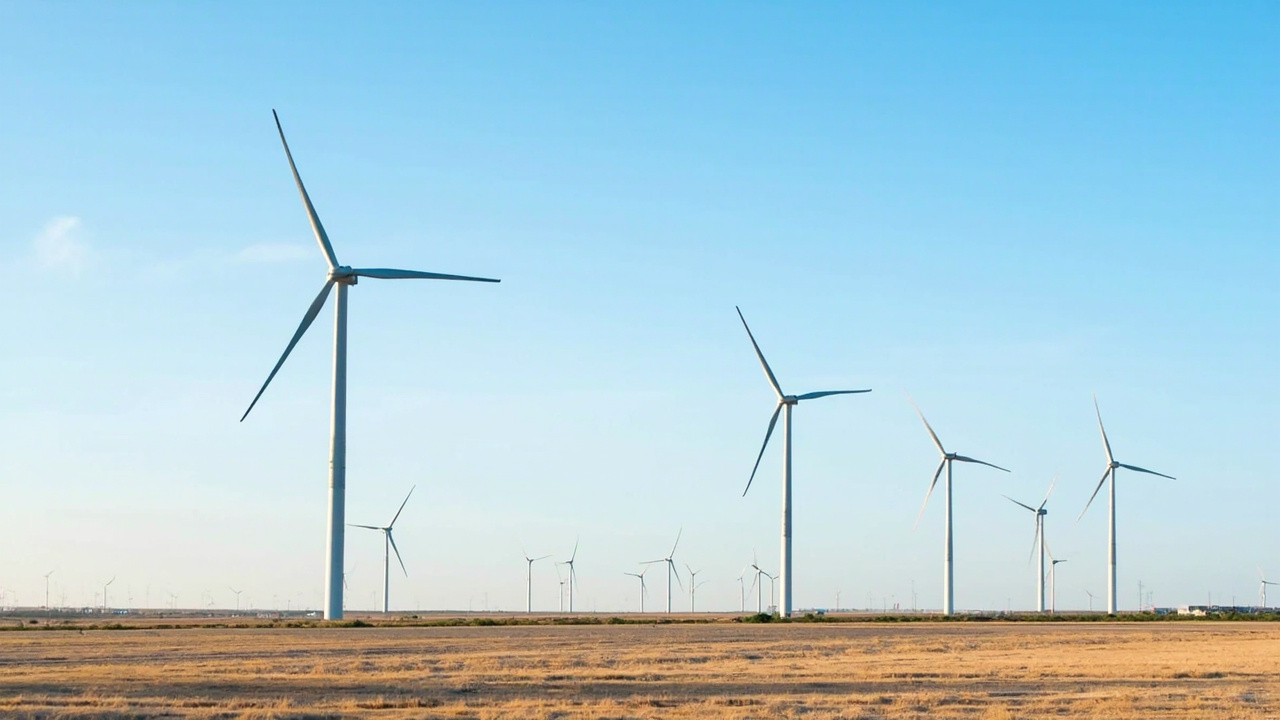
I. Corrosion Environment of Wind Power Structures
Wind power can be divided by site into:
- Onshore wind power: Towers per ISO 12944-2 are mostly C3–C4 (industrial areas/coastal inland higher), and the foundation ring and ground junction may be more severe.
- Offshore wind power: Towers, jacket structures, and foundations are长期处于 C5-M marine environment and splash zone, with the most intense corrosion, often referencing ISO 20340 offshore structure procedures.
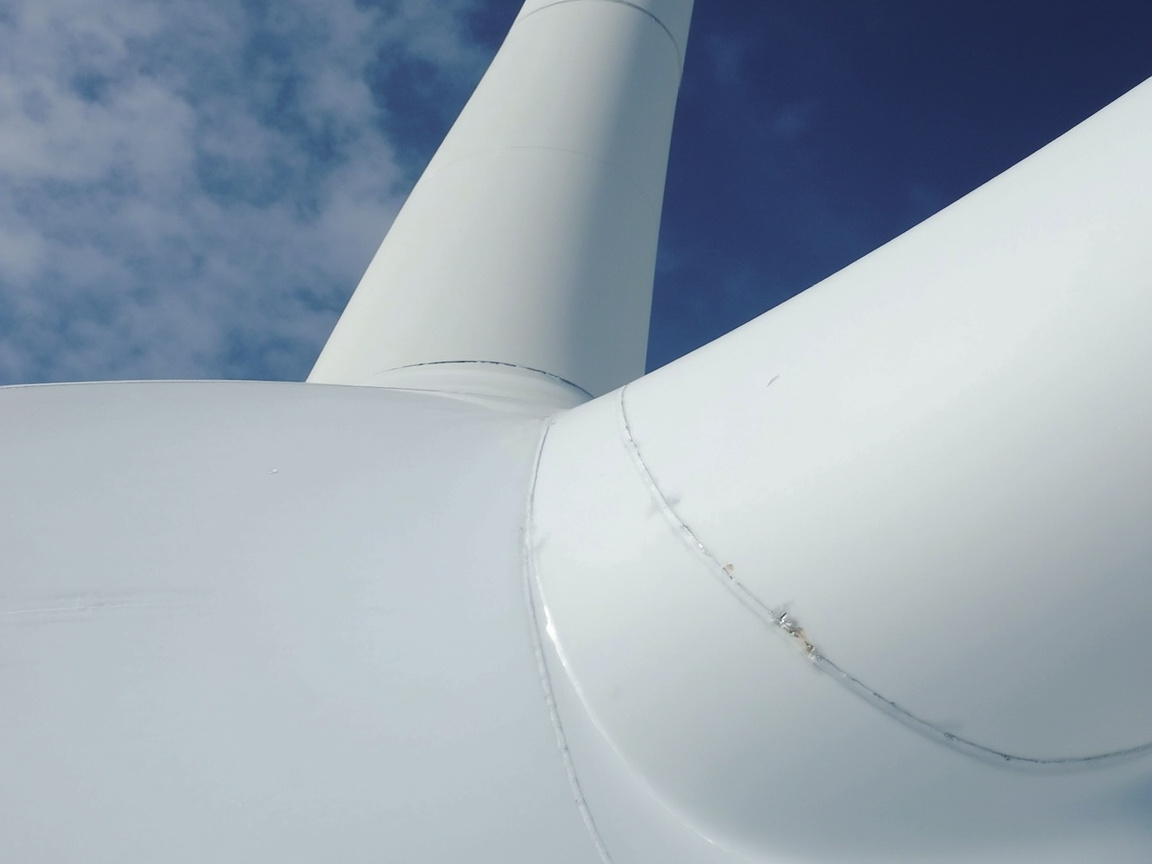
- Blade leading edge: Although not steel structure, leading edge protection (LEP, Leading Edge Protection) is crucial against rain erosion and sand erosion.
This combination of "heavy anti-corrosion of steel structure + composite material leading edge protection" makes wind power coating feature both general heavy anti-corrosion and special-part specialization.
II. Three-Layer System of Tower
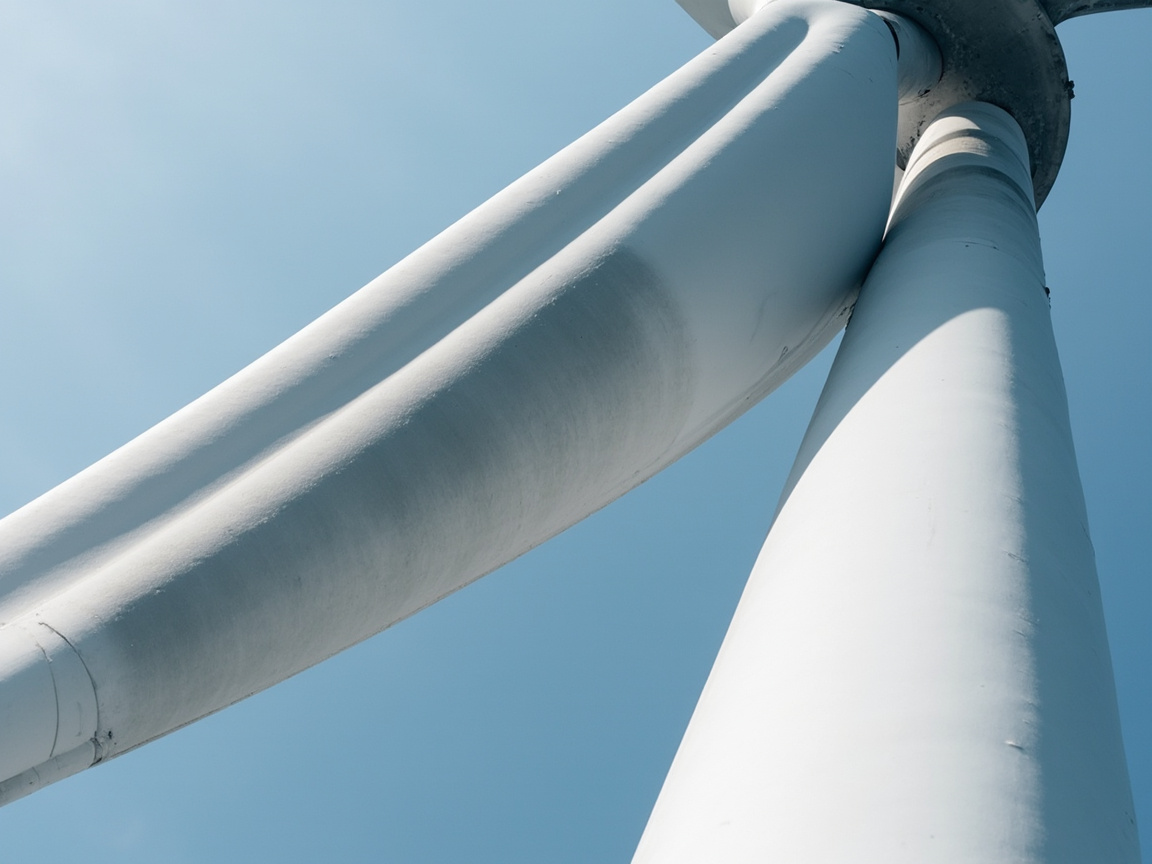
The mainstream system for wind power towers is consistent with general steel structures, following "epoxy zinc-rich primer + epoxy micaceous iron oxide intermediate coat + aliphatic polyurethane topcoat":
- Epoxy zinc-rich primer: Zinc sacrifice provides cathodic protection, covering edge damage during transport and lifting.
- Epoxy micaceous iron oxide intermediate coat: Flake shielding, accumulating thickness.
- Aliphatic polyurethane topcoat: Weather resistance, color retention, determining appearance life of over 12 years.
Per ISO 12944-5 / GB/T 30790.5, total DFT under C4 is usually ≥240 µm, and under C5-M often ≥320 µm (depending on system number). Offshore wind power extremely high-requirement parts often pair with metal thermal spraying or reinforced systems.
III. Onshore and Offshore Classification Comparison
The table below summarizes the classification and system key points of typical wind power parts:
| Part | Environment grade | Recommended system | Typical DFT range | Key control point |
|---|---|---|---|---|
| Onshore tower | C3–C4 | Epoxy zinc-rich + epoxy micaceous iron oxide + polyurethane | 240–320 µm | Weather resistance, film thickness |
| Offshore tower | C5-M | Reinforced epoxy system / metal spraying | ≥320 µm | Marine durability |
| Foundation ring/transition section | C5-M/splash | Heavy anti-corrosion + possible cathodic protection | Per design | Wet-dry alternation |
| Jacket/pile foundation | Immersion/splash | Epoxy + cathodic protection | Per design | Marine organisms, impact |
| Blade leading edge | Rain erosion/sand erosion | Leading edge protection layer (LEP) | Per material | Erosion resistance |
The above DFT is indicative; actual shall follow design documents and product TDS; offshore parts should reference ISO 20340 cyclic aging verification.
IV. ISO 20340 and Offshore Wind Power Verification
Offshore wind power structure life goals often reach 25 years; single salt spray (ASTM B117 / ISO 9227) is insufficient to reflect marine aging. ISO 20340 "Laboratory performance test methods for protective paint systems for offshore and related structures" provides cyclic procedures of UV, salt spray, immersion, and dry alternation, closer to real marine environment mechanism, and is an important basis for offshore wind power system type verification.
It must be clarified: cyclic aging hours and PSPC, ISO 12944-9 and other procedures each have their focus; life judgment should integrate standard durability grades and third-party cyclic corrosion/field panel data, not conclude based on single salt spray duration.
V. Blade Leading Edge Protection (LEP)
During rotation, the blade leading edge endures high-speed erosion from rain droplets and sand-dust, which long-term leads to decreased aerodynamic performance and increased noise. The leading edge protection layer (often elastic polyurethane or dedicated protective film) protects the substrate by absorbing impact energy. Its construction has high requirements for surface cleanliness and environmental cleanliness, and needs compatibility with the blade base coating. In wind turbine O&M, leading edge repair is a high-frequency operation, so the protection scheme should balance durability and repairability.
VI. Surface Treatment and Construction
Wind power towers are mostly manufactured in segments in the factory: steel plate pretreatment (shot blasting + shop primer) → segmented sandblasting to Sa2.5 (ISO 8501-1) → layered spraying → most film thickness completed in factory → site closure joint touch-up. Control key points:
- Roughness and salt: Controlled per ISO 8503, ISO 8502; offshore parts have stricter salt requirements.
- Film thickness management: Wet film immediate control, dry film sampled per 90/90 rule (similar to ISO).
- Environment window: Steel temperature 3℃ above dew point, humidity controlled, avoid condensation.
- Closure joint segment: Welds and damaged parts secondary treatment touch-up, note new-old compatibility.
VII. Offshore Foundation and Cathodic Protection
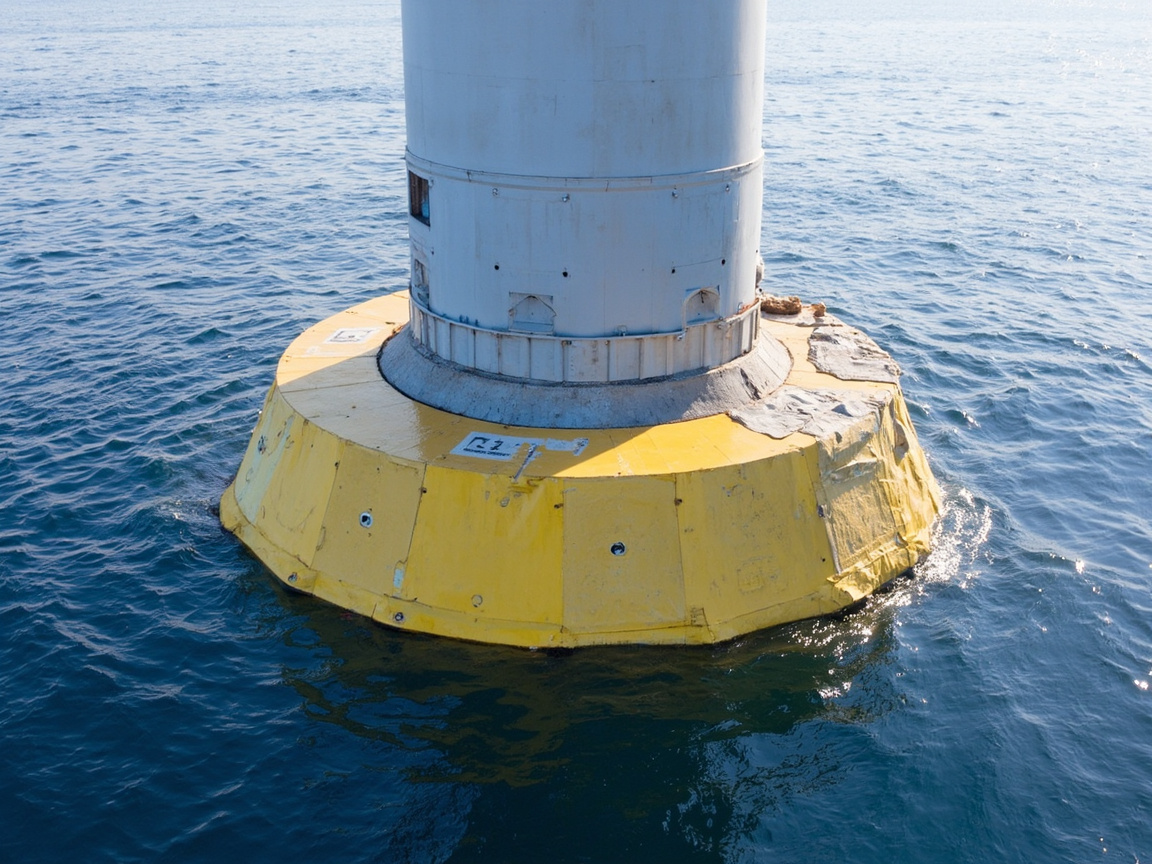
Offshore wind turbine foundations (monopile, jacket, floating, etc.) are long-term immersed and splashed; besides heavy anti-corrosion coating, often paired with cathodic protection (sacrificial anode or impressed current) to form a "coating + electrochemical" dual defense line. Marine organism attachment increases structural load and turbulence, so underwater parts may also involve antifouling or periodic cleaning strategies, similar in thinking to marine antifouling but with different goals.
VIII. Maintenance and Life Management
The "unsupervised" feature of wind power makes maintainability a design core: coating should achieve 20–25 year low-maintenance goal; establish coating archive for each turbine, recording film thickness and adhesion baseline; O&M period inspect tower rust spots, topcoat chalking, and leading edge damage; offshore unit maintenance cost is high, emphasizing "do it right once" and predictive maintenance.
Kexin New Materials (kexinMaterials) suggests clearly stating onshore/offshore classification, DFT of each part, surface treatment grade, and verification procedures (e.g., ISO 20340) in wind power system technical documents, and incorporating blade leading edge protection compatibility and repairability into the scheme, so that design, manufacturing, and O&M parties have a unified standard. For the full picture of the standard system, you may extend reading to industrial coating standard system overview.
IX. Common Selection Misunderstandings
Misunderstanding 1: Onshore wind power corrosion is light. Wrong. Wilderness heat-humidity and UV still reach C3–C4; ignoring leads to early chalking and rust.
Misunderstanding 2: Use onshore system offshore. Wrong. Offshore C5-M must be reinforced or metal sprayed, and paired with cathodic protection.
Misunderstanding 3: Salt spray hours equal life. Wrong. Should be comprehensively judged by cyclic corrosion and durability grade.
Misunderstanding 4: Blade leading edge is unimportant. Wrong. Leading edge erosion directly damages aerodynamic performance, must have dedicated protection.
Misunderstanding 5: Closure joint touch-up can be casual. Wrong. Welds and damaged parts must be secondary treated and compatibility verified, otherwise interlayer peeling.
X. Technical Economy and O&M Coordination of Wind Power Coating
As clean energy infrastructure, wind power coating decisions should be evaluated under the framework of "levelized cost of energy" and "O&M accessibility." Onshore turbines can still be climbed for maintenance; once offshore turbines are in operation, a single offshore operation cost is extremely high and window-limited, so offshore system "do it right once" has decisive economic significance. Applying onshore system to offshore towers and foundations seems to save material cost, but may lead to external corrosion out of control within years, causing expensive shutdown emergency repair, not worth the candle.
From design economy, onshore/offshore graded selection is the optimal solution. Onshore general three-layer system per C3–C4 can already support over 12 years low-maintenance; offshore directly faces C5-M and splash zone, must reinforce system or metal thermal spraying, and often pair with cathodic protection. This grading is not over-design, but precisely directing investment to the highest failure-risk parts, avoiding resource misallocation of "should-be-strong-but-not, should-save-but-not."
The cost-effectiveness of leading-edge protection for blades is often underestimated. Leading-edge erosion directly impairs aerodynamic efficiency, increases noise and power generation losses, while repairs require hoisting or on-site operations, which are costly. The initial investment in dedicated leading-edge protection (LEP) can be recovered by extending the period of aerodynamic performance retention and reducing the number of repairs. In terms of O&M strategy, incorporating leading-edge condition into regular inspections and predictive maintenance allows intervention before damage expands, avoiding continuous efficiency decline.
The cost-effectiveness of construction organization is reflected in "primarily in-plant, supplemented on-site". Tower sections complete most of the film thickness and quality control in the plant, with high efficiency and controllable environment; only closure and touch-up coating are done on site, reducing high-altitude and offshore operations. For offshore foundations, high-quality coating and cathodic protection installation should be completed at the quay prefabrication stage to reduce offshore workload. This forward-shifting strategy directly reduces life-cycle cost.
Digitalization is becoming the core of wind power asset management. The coating archive, film thickness and adhesion baseline, and past inspection and repair records of each turbine should be incorporated into the asset management system to support remaining life assessment and O&M scheduling. Combined with drone inspection, image recognition and other technologies, the surface condition of the tower and blades can be efficiently monitored, shifting maintenance from "scheduled" to "on-demand". For offshore wind farm operators, this data asset can significantly optimize offshore window and spare parts planning, and is a key lever for cost reduction.
Finally, the compliance and sustainability trends of wind power coating cannot be ignored. Cyclic aging verification of standards such as ISO 12944 and ISO 20340 is shifting from "bonus item" to "entry requirement"; low-VOC, high-solid systems also align with global environmental orientation. If selection ignores standards and regulatory trends, it may face retrofit or compliance pressure throughout the asset life cycle. Therefore, wind power coating decisions should be a comprehensive trade-off of "environmental grading + standard verification + O&M accessibility + regulatory foresight".
11. In-depth Reading of Wind Power Coating Formulation and Construction Details
The three-layer system of wind power towers is consistent in formulation with other heavy-duty anti-corrosion steel structures, but its requirements are amplified by the life target. Onshore towers use general epoxy-polyurethane systems to support over twenty years of low maintenance; offshore towers face harsher marine environments and must strengthen the system or use thermal metal spraying, often combined with cathodic protection. In either case, the cathodic protection capability of the primer, the barrier and build-up of the intermediate coat, and the weather resistance and color retention of the topcoat must not exhibit systematic degradation throughout the life cycle, so the formulation's aging and salt spray resistance margin is wider than ordinary projects.
Leading-edge protection of blades is a wind-power-specific technical point. When blades rotate, the leading edge withstands high-speed erosion from raindrops and sand, which over time damages the substrate, reduces aerodynamic efficiency and increases noise. The leading-edge protection layer protects the blade by absorbing impact energy; its material is mostly elastic polyurethane or dedicated protective film, and construction requires high surface cleanliness and environmental cleanliness, and must be compatible with the blade base coating. During O&M, leading-edge condition should be included in regular inspection, with early damage detection and timely repair to avoid continuous efficiency decline and rising repair costs.
The corrosion environment of offshore foundations is the most severe. Monopiles, jacket structures, etc. are long-term immersed and splashed by seawater; in addition to heavy-duty anti-corrosion coating, they are often combined with cathodic protection to form a dual defense of coating and electrochemistry; marine organism attachment increases structural load and turbulence, and the underwater part may also involve antifouling or regular cleaning. Differences in foundation types (monopile, jacket, floating) bring different corrosion and fatigue hot spots; the system design must analyze specific problems rather than apply a single solution, which is why offshore wind power anti-corrosion technology content is higher than onshore.
The "primarily in-plant, supplemented on-site" construction organization has a significant impact on cost-effectiveness. Tower sections complete most of the film thickness and quality control in the plant, with high efficiency and controllable environment; only closure and touch-up coating are done on site, reducing high-altitude and offshore operations. For offshore foundations, high-quality coating and cathodic protection installation should be completed at the quay prefabrication stage to reduce offshore workload. This forward-shifting strategy directly reduces life-cycle cost and also lowers quality risk from construction in harsh sea conditions, and is a mature industry practice.
Digitalization is becoming the core of wind power asset management. The coating archive, film thickness and adhesion baseline, and past inspection and repair records of each turbine should be incorporated into the asset management system to support remaining life assessment and O&M scheduling. Combined with drone inspection and image recognition, the surface condition of the tower and blades can be efficiently monitored, shifting maintenance from scheduled to on-demand. For offshore wind farm operators, this data asset can significantly optimize offshore window and spare parts planning, is a key lever for cost reduction, and also moves wind power coating decisions from experience to data-driven.
The cost-effectiveness of wind power coating is sharply amplified offshore. Onshore turbines can still be maintained by climbing the tower, but once offshore turbines are in operation, a single offshore operation is costly and window-limited, so getting the offshore system right the first time has decisive economic significance. Applying onshore systems to offshore towers and foundations may seem to save material costs, but may lead to out-of-control external corrosion within a few years, resulting in costly shutdown emergency repairs, which is not worth the loss. Graded selection and high-quality coating at quay prefabrication are pragmatic paths to reduce offshore wind power costs.
The cost-effectiveness of leading-edge protection for blades is often underestimated. Leading-edge erosion directly impairs aerodynamic efficiency, increases noise and power generation losses, while repairs require hoisting or on-site operations, which are costly. The initial investment in dedicated leading-edge protection can be recovered by extending the period of aerodynamic performance retention and reducing the number of repairs. In terms of O&M strategy, incorporating leading-edge condition into regular inspection and predictive maintenance allows intervention before damage expands, avoiding continuous efficiency decline. Managing the leading edge as a consumable rather than a subsidiary detail is an important part of improving wind power revenue.
The primarily in-plant construction organization strategy directly affects cost. Tower sections complete most of the film thickness and quality control in the plant, with high efficiency and controllable environment; only closure and touch-up coating are done on site, reducing high-altitude and offshore operations. For offshore foundations, high-quality coating and cathodic protection installation should be completed at the quay prefabrication stage to reduce offshore workload. This forward-shifting strategy reduces life-cycle cost and also lowers quality risk from construction in harsh sea conditions, and is a mature industry practice that should be resolutely implemented in projects.
Digitalization is becoming the core of wind power asset management. The coating archive, film thickness and adhesion baseline, and past inspection and repair records of each turbine should be incorporated into the asset management system to support remaining life assessment and O&M scheduling. Combined with drone inspection and image recognition, tower and blade condition can be efficiently monitored, shifting maintenance from scheduled to on-demand. For offshore wind farm operators, this data asset can significantly optimize offshore window and spare parts planning, is a key lever for cost reduction, and also moves wind power coating decisions from experience to data-driven.
The cost-effectiveness of wind power coating is sharply amplified offshore. Onshore turbines can still be maintained by climbing the tower, but once offshore turbines are in operation, a single offshore operation is costly and window-limited, so getting the offshore system right the first time has decisive economic significance. Applying onshore systems to offshore towers and foundations may seem to save material costs, but may lead to out-of-control external corrosion within a few years, resulting in costly shutdown emergency repairs, which is not worth the loss. Graded selection and high-quality coating at quay prefabrication are pragmatic paths to reduce offshore wind power costs.
The cost-effectiveness of leading-edge protection for blades is often underestimated. Leading-edge erosion directly impairs aerodynamic efficiency, increases noise and power generation losses, while repairs require hoisting or on-site operations, which are costly. The initial investment in dedicated leading-edge protection can be recovered by extending the period of aerodynamic performance retention and reducing the number of repairs. In terms of O&M strategy, incorporating leading-edge condition into regular inspection and predictive maintenance allows intervention before damage expands, avoiding continuous efficiency decline. Managing the leading edge as a consumable rather than a subsidiary detail is an important part of improving wind power revenue.
The primarily in-plant construction organization strategy directly affects cost. Tower sections complete most of the film thickness and quality control in the plant, with high efficiency and controllable environment; only closure and touch-up coating are done on site, reducing high-altitude and offshore operations. For offshore foundations, high-quality coating and cathodic protection installation should be completed at the quay prefabrication stage to reduce offshore workload. This forward-shifting strategy reduces life-cycle cost and also lowers quality risk from construction in harsh sea conditions, and is a mature industry practice.
Digitalization is becoming the core of wind power asset management. The coating archive, film thickness and adhesion baseline, and past inspection and repair records of each turbine should be incorporated into the asset management system to support remaining life assessment and O&M scheduling. Combined with drone inspection and image recognition, tower and blade condition can be efficiently monitored, shifting maintenance from scheduled to on-demand. For offshore wind farm operators, this data asset can significantly optimize offshore window and spare parts planning, is a key lever for cost reduction.
The compliance and sustainability trends of wind power coating cannot be ignored. Cyclic aging verification is shifting from bonus item to entry requirement; low-volatile, high-solid systems also align with global environmental orientation. If selection ignores standards and regulatory trends, it may face retrofit or compliance pressure throughout the asset life cycle. Therefore, wind power coating decisions should be a comprehensive trade-off of environmental grading, standard verification, O&M accessibility and regulatory foresight; only in this way can it both guarantee the over twenty-five-year low-maintenance target and withstand future regulatory scrutiny.
As an important form of clean energy, wind power's metal structures are unattended for long periods in the field and at sea, placing extremely high demands on the self-maintenance capability of coatings. Onshore towers rely on general heavy-duty anti-corrosion systems to support over twenty years of low maintenance, while offshore structures need to combine metal spraying and cathodic protection in harsher environments. Erosion protection of blade leading edges and offshore construction windows of foundations are key variables determining life-cycle cost. Combining environmental grading, standard verification, in-plant front-loading and data asset management, wind power coating can both hold the life target and withstand the dual scrutiny of economy and regulation, providing solid support for the steady development of green energy.
Tracing to the source, what wind power coating guards is the entire process of clean energy being stably converted from natural wind to electricity. Towers stand in the wilderness and ocean for twenty years or even longer, blades cut through wind and rain at high-speed rotation, foundations endure erosion in the surging waves; any protection failure may affect the availability and power generation of the unit. Carrying environmental grading, standard verification, in-plant front-loading and asset management throughout, wind power coating is not just a surface layer, but the invisible pillar of green energy asset reliability. Only in this way can each unit stably contribute clean electricity in the recurring wind, supporting the grand goal of energy transition.
Looking at the long term, wind power is moving from onshore to deep sea, with unit capacity and site scale continuously expanding, and requirements for coating durability and maintainability will only be higher. Pre-emptively consolidating the protection foundation in a standardized and digitalized manner can both reduce life-cycle cost and decrease environmental and safety risks of offshore operations. When anti-corrosion and O&M are truly integrated into the full-cycle management of wind power assets, the competitiveness of clean energy will come not only from the turbines themselves, but also from every invisible yet crucial detail adherence.
The significance of wind power coating ultimately lies in the stable delivery of every kilowatt-hour of clean electricity. Doing protection upfront and leaving data in the present, the journey of green energy will have fewer setbacks and more certainty, letting turbines sing the movement of sustainable development in the wind for a long time.
What wind power coating guards is the stable conversion between wind and electricity. Front-loading protection and precipitating data, green units can stand long in the wilderness and ocean, turning every gust of wind into trustworthy clean energy, and writing a solid and prolonged footnote for energy transition. Only by pushing details to the extreme can the grand narrative of wind power have a solid micro-support.
Wind power coating writes guardianship into every layer of paint film, letting green electricity grow stably in the wind. True quality is seen in details, thus supporting energy transition to proceed steadily and far.
By making every detail of wind power coating solid, the grand vision of green energy gains a reliable micro fulcrum.
FAQ
FAQ
Q: Is there a big difference between onshore and offshore wind power coating requirements?
A: Very big. Onshore towers are mostly C3–C4, with systems mainly general three-layer epoxy-polyurethane; offshore faces C5-M marine environment and splash zone directly, must strengthen the system or use thermal metal spraying, often combined with cathodic protection, and verification mostly uses ISO 20340 cyclic aging procedure, targeting 25 years of low maintenance.
Q: What is the general total film thickness of wind power towers?
A: According to ISO 12944-5 / GB/T 30790.5, under C4 total DFT is usually ≥240 µm, under C5-M often ≥320 µm (depending on system number). Extremely high-requirement offshore parts will be higher, and may adopt metal spraying. Actual shall be subject to design documents and product TDS.
Q: Why does offshore wind power value ISO 20340?
A:For offshore structures with a 25-year service life target, neutral salt spray alone (ASTM B117) is insufficient to reflect real marine aging. ISO 20340 provides a cyclic procedure alternating UV, salt spray, immersion, and drying, whose mechanism is closer to the nearshore environment and serves as an important basis for corresponding type approval.
Q: Why does the blade leading edge need dedicated protection?
A: During blade rotation, the leading edge is subjected to high-speed erosion from raindrops and sand/dust, which over time damages the substrate, reduces aerodynamic performance, and increases noise. The Leading Edge Protection (LEP) layer protects the blade by absorbing impact energy and must be compatible with the substrate and repairable; it is a high-frequency operation point in wind turbine O&M.
Q: How is the foundation of offshore wind power protected against corrosion?
A: In addition to heavy-duty anti-corrosion coating, the foundation (monopile, jacket, etc.) is often combined with cathodic protection (sacrificial anode or impressed current) to form a coating + electrochemical dual defense line; the submerged part may also involve antifouling or periodic cleaning to reduce load. Specifics depend on structural type and design.
Q: What are the surface treatment requirements for wind power?
A: Critical components shall reach Sa2.5 per ISO 8501-1, with control of roughness (ISO 8503) and soluble salts (ISO 8502); offshore components have stricter salt requirements; the environment must meet the 3℃ dew point rule and humidity control to avoid early failure from condensation.
Q: Can salt spray hours indicate wind turbine service life?
A: No. ASTM B117 / ISO 9227 neutral salt spray is an accelerated comparison means; life determination should integrate ISO 12944 durability grades with third-party cyclic corrosion (e.g., ISO 20340) or field panel data, not rely on a single salt spray duration.
Q: What should be noted for closure segment touch-up?
A: Welds and damaged areas must undergo secondary surface treatment (local blasting or grinding to the required grade), then be touched up per the coating system, and verify compatibility between old and new coatings to prevent interlayer delamination. Touch-up quality directly affects the overall tower life.
Q: How is life management of wind power coating performed?
A: Set a 20–25 year low-maintenance target, establish a coating record for each turbine documenting film thickness and adhesion baseline; during O&M inspect rust spots, chalking, and leading edge damage; offshore units have high maintenance costs, emphasizing "do it right the first time" and predictive maintenance.
Q: What is the most common mistake in wind power anti-corrosion?
A: Treating onshore as locally light corrosion and relaxing the system; directly applying onshore systems offshore without cathodic protection; asserting life from salt spray hours; ignoring dedicated blade leading edge protection; and downgrading closure touch-up. The correct approach is graded design by land/sea, strict treatment and verification.
Further Reading
- ISO 12944 Protective Paint System and Corrosivity Environment Classification: Understand how C3–C5-M grading determines wind power coating systems.
- General Anti-corrosion System Design for Steel Structures: Application of primer–intermediate–topcoat three-layer logic on towers.
- Overview of Industrial Coating Standards System: Sorting out the positioning of ISO 12944 and ISO 20340 in the standards hierarchy.
- Food Plant Hygienic-grade Coating: Hygienic Design and Food Contact Compliance
- Urban Utility Tunnel Anti-corrosion: Coating Systems for Enclosed-space Steel Structures and Internal Environment
- Rust-proof Paint System Design: Primer + Intermediate + Topcoat System and Film Thickness Planning