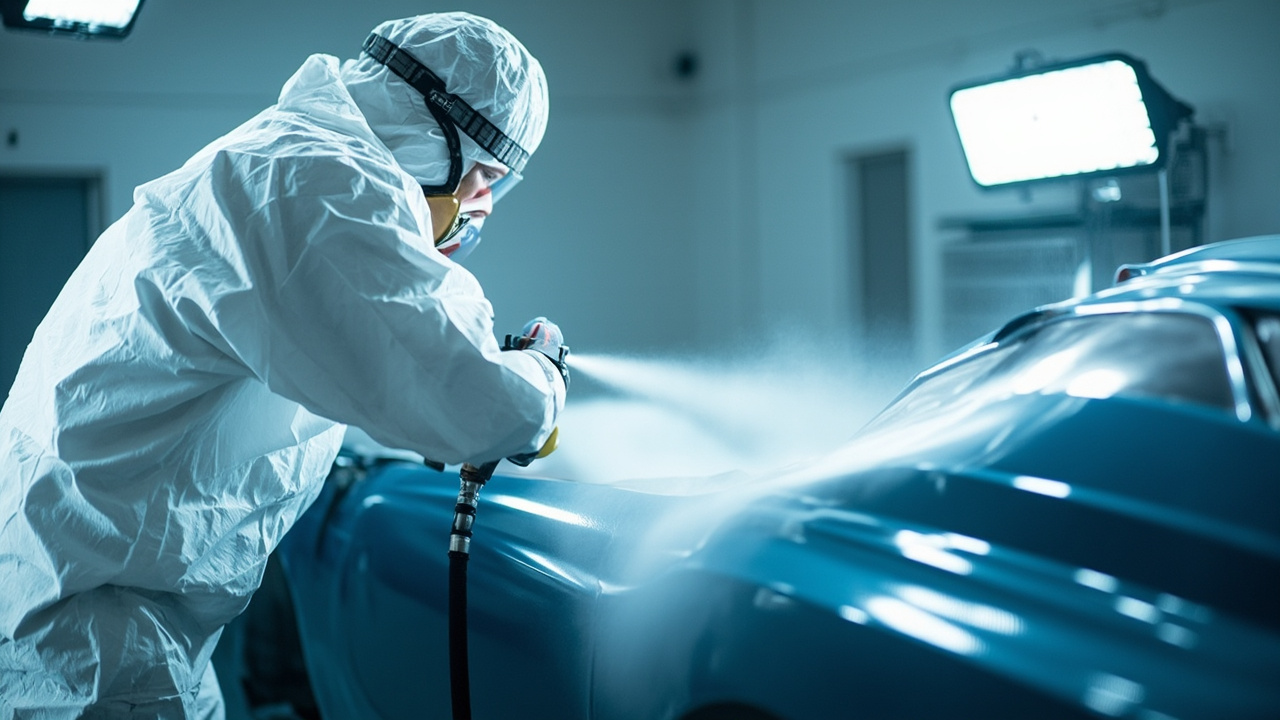
A "Structural Inflection Point" in a $10.7 Billion Market
At the start of 2026, the global automotive refnish paint market continues its strong growth. According to data from the Buyhuasu Research Institute, the global refinish paint market is expected to grow from $10.1 billion in 2025 to $10.74 billion in 2026, with a CAGR of 6.3%. The Chinese market is even more dynamic—the number of new energy vehicles (NEVs) in use has surpassed 60 million, with penetration nearing 57%. This vast existing fleet is gradually entering a peak period for maintenance and repair, and after-sales refnish paint demand is seeing a structural growth window.
For practitioners and procurement professionals focused on the automotive paint sector, 2026 is an unavoidable observation point. As a manufacturer in the industrial and automotive coating fields, Kexin New Materials has outlined three main threads behind this surge: demand upgrade, technology shift, and landscape restructuring.
Thread One: Demand Shifts from "Accident Repair" to "Full Lifecycle Care"
In the past, demand for automotive refnish paint mainly came from collision repairs after accidents. But as vehicle age increases and consumption upgrades, the market is entering a new stage characterized by an "era of refined care"—car owners' awareness of paint surface protection has significantly increased, and high-quality products and services such as invisible car wraps and premium water-based refnish paint are highly sought after.
In mature markets, "self-pleasing consumption" represented by paint surface care and personalized color changes already accounts for over 30% of total refnish paint demand. After the NEV parc crossed a critical threshold, after-sales painting services are upgrading from simple "basic repair" to "full lifecycle quality management." This structural change on the demand side has directly driven up the market share of eco-friendly products such as water-based paint and high-solid coatings.
Thread Two: Technology Shift—Full Water-Based + Low-Temperature Curing Becomes the Mainstream Direction
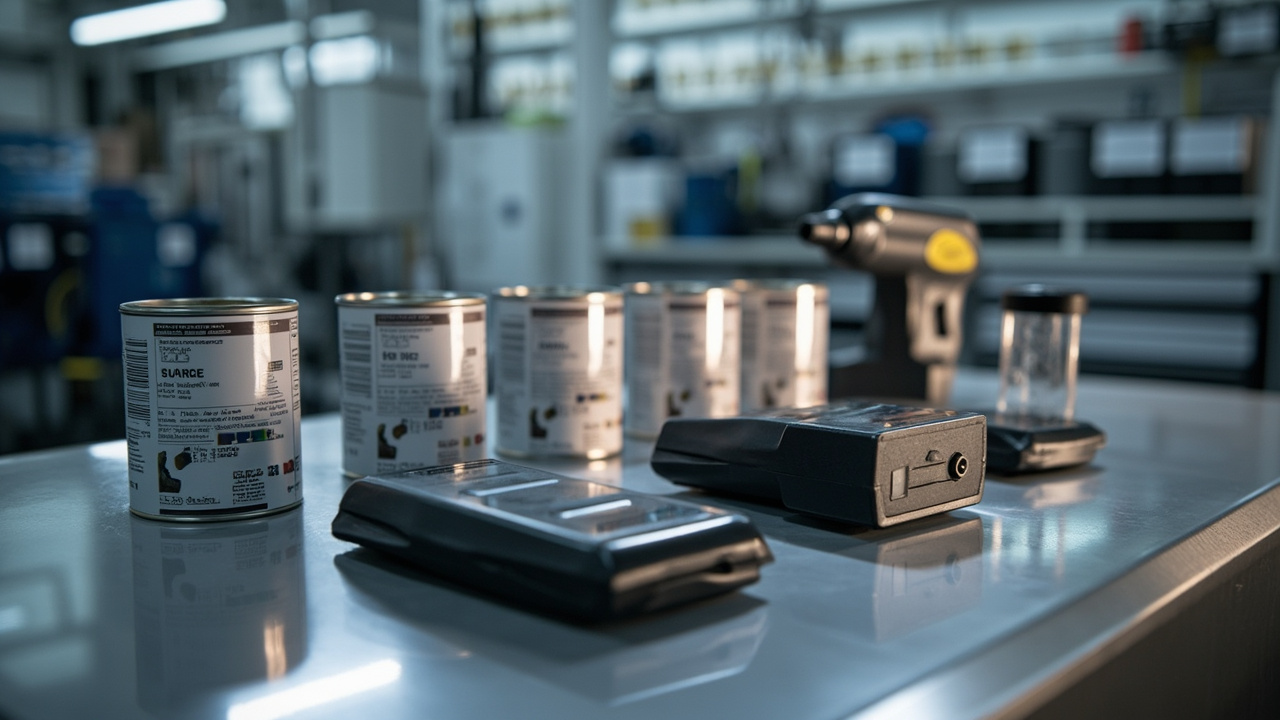
Against the backdrop of tightening environmental regulations, the automotive coating industry is accelerating its transition from "oil-based" to "water-based." As low-VOC emission requirements continue to tighten, some cities have gradually restricted the use of high-VOC automotive refnish paint, and some OEMs have begun pushing authorized 4S stores to switch to water-based refnish paint.
Data shows that the market share of eco-friendly products such as water-based paint and high-solid coatings reached a historic high of 65% in 2025, and is expected to continue rising to over 75% in the next five years. The water-based rate of domestic passenger car original coatings has exceeded 90%, and that of trucks has reached 70%.
In addition to water-based conversion, low-temperature fast curing is regarded by the industry as the most breakthrough key technology in 2026. It can significantly reduce the temperature and time of coating bake curing, while reducing construction carbon emissions and greatly improving terminal refnish efficiency, fundamentally solving the common problems of traditional refnish paint: "high curing energy consumption, long cycle, and limited scenarios." Globally, over 60% of automotive refnish paint patents are concentrated in areas such as water-based resin synthesis, low-temperature fast-dry catalysts, nano self-healing coatings, and digital color matching algorithms.
It is worth noting that NEVs pose higher requirements for refnish paint: in addition to traditional color matching and protective performance, the special performance needs of insulation and flame retardancy for coatings around the three-electric system (battery, motor, electronic control) are growing rapidly, opening new technical space for professional coating companies.
Thread Three: Landscape Restructuring—Domestic Brands Charge Toward the High End
For a long time, the domestic high-end automotive refnish paint market has been firmly controlled by foreign brands such as Axalta (USA), AkzoNobel (Netherlands), BASF (Germany), and PPG, which together hold over half the share. Their advantage lies not only in stable product quality, but also in building a full-chain service system from color prediction and digital tinting to spraying training.
But the landscape is loosening. Domestic brands represented by Yatu Hi-Tech, Donglai Technology, Three Trees, and Sokan have relied on a combination of "cost advantage + rapid response + localized service" to steadily expand in the mid-range market and charge toward the high end. Currently, domestic brands account for nearly 40% of the after-sales high-end paint segment, achieving a qualitative leap compared to five years ago. The deep collaboration between domestic automotive refnish paint companies and NEV manufacturers (e.g., water-based refnish paint entering the supply chain of high-end smart electric brands) has become a landmark event in breaking the foreign monopoly.
Key Market Data
| Indicator | Data | Trend |
|---|---|---|
| Global refnish paint market | 2025 $10.1B → 2026 $10.74B | CAGR 6.3% |
| China NEV parc | Over 60 million, penetration near 57% | Entering maintenance peak |
| Eco-friendly product share | 2025 65%, next 5 yrs → 75%+ | Water-based acceleration |
| Passenger car OEM water-based rate | Over 90% | Mainstream |
| Domestic high-end paint share | Near 40% | Rapid catch-up |
Kexin Perspective: Capture the Dual Dividend of Water-Based Conversion and Efficiency
For end users and channel distributors of automotive refnish painting, opportunities and challenges coexist in 2026. On one hand, the NEV parc maintenance and consumption upgrade bring deterministic demand growth; on the other hand, water-based conversion, low-temperature curing, and digital tinting are raising the technical bar—"the past model of relying on price and channel expansion is shifting toward competition of technical systems."
In the automotive and industrial coating fields, Kexin New Materials insists on providing supporting solutions around customers' real working conditions—from substrate pre-treatment, primer-intermediate coat-topcoat matching, to construction process parameter matching—helping customers balance refnish efficiency and paint quality under compliance. Facing the industry trend of full water-based systems and low-temperature curing, we are also continuously following material iteration, turning technology upgrades into customers' perceivable efficiency and cost advantages.
Further Reading
- Complete Guide to Water-Based Industrial Coating Technical Systems and Painting Processes
- Interpretation of the New National Coating Standard GB 30981 Taking Effect June 2026
- Kexin Automotive Refinish Paint and Primer Products