
A quick colour change in automotive coating is the complete process of switching the paint delivered to an atomiser from one colour to another on a vehicle coating line or in a refinish shop. It has three steps: pushing out the residual charge, flushing the change valve and the pipework, and introducing the new colour. Its direct physical output is two waste streams - purge paint and flush medium. On a passenger-car basecoat line that runs mixed-model orders and has to cover a dozen or more colours per day, a colour change occurs on average every 2-6 bodies. Using the nominal figures in the EU surface treatment reference document, each bell cup loses about 15 ml of colour paint and consumes about 200 ml of flush solvent per change event, while the basecoat sprayed on a single body is only 2.5-3.5 kg. Once the residual-charge and flush streams are accumulated across multiple robots and multiple shifts, they become a line item that cannot be ignored in the paint cost and VOC emission ledger. The same applies on the refinish side: public material from P2 InfoHouse indicates that hand-washing a spray gun can use roughly 3 times the solvent of the same operation on an enclosed washing station. How is colour-change loss quantified, how does production scheduling reduce the number of changes, how far can equipment and recovery push the per-event consumption, and against what criteria are waste paint and waste liquid accepted? This article sets out those criteria in one place, for coatings purchasers and coating managers who have to run cost accounting and audit reconciliation.
1. TL;DR: eight conclusions you can quote directly
- Nominal figures from the vehicle coating section of the EU surface treatment reference document (BREF STI): about 15 ml of colour paint plus about 200 ml of flush medium per bell cup per colour change; the short purge that does not change colour is performed once every 1-5 bodies at about 20-30 ml.
- Waterborne basecoat usage is 2.5-3.5 kg per body. Raising the average colour block from 2 bodies to 6 cuts the change frequency by roughly 1/3 - scheduling is a zero-investment lever.
- Published industry figures put flush-solvent recovery at 80-90%; net flush solvent consumption should be discounted by the recovery rate before it enters a cost model.
- The flush liquid of a waterborne basecoat is typically about 90% water, so the cost centre shifts from solvent purchasing to waste-liquid collection and treatment.
- Equipment makers publish nominal low-loss colour changers at about 10 ml per change, change time under 10 s and capacity within 36 colours; these are vendor claims without third-party verification.
- GB 30981-2020 lists an as-applied VOC content of 200 g/L or less as one of the thresholds for classifying a vehicle coating as low-VOC; solventborne automotive refinish primer/midcoat/solid topcoat is limited to 540 g/L and clearcoat to 420 g/L.
- Commercial-vehicle and truck coating plants commonly hold more than 600 colour codes, and a single change has to displace the residual charge in 5-7 m of robot supply hose - a different order of magnitude from a passenger-car line.
- Cartridge colour change replaces long pipework with refillable cartridges of 0.5-1.0 L per circuit; the reference document states that this materially reduces displacement losses.
2. The physical picture: where the three waste streams come from
On an OEM line the basecoat starts in a central mixing room: each colour runs in a closed loop from storage tank to spray booth - the ring main - continuously feeding the same colour to the change valve at each robot station. To understand colour-change loss you have to separate three streams: residual paint in the pipework, residual paint inside the valve block and the applicator, and the flush medium used to clean those two places.
2.1 Residual charge in the ring main: colour inventory hiding inside pipe segments
When the change valve switches to another colour circuit, the residual charge of the previous colour stays inside the segment between tank and bell cup. The reference document links the benefit of colour grouping directly to the pipe length between the colour tank and the atomiser: the longer the line and the larger the dead volume, the more coloured residual paint is displaced. On passenger-car basecoat lines this segment is usually controlled at the plant-design stage by shortening the distance from mixing room to booth and raising the loop velocity; commercial-vehicle plants often have to displace 5-7 m of robot supply hose.

2.2 The change valve and the applicator interior: the larger part of a single loss
The colour-change valve body itself, the servo nozzle and the feed channel of the rotary bell are pushed out and flushed at every switch. Solventborne systems are flushed with organic solvent; waterborne basecoats use a flush liquid whose water fraction is typically about 90%. Clearcoat is nominally one colour across the whole line and does not participate in colour changes, but when a line offers tinted clearcoats - coloured clear, matte clear - as special finishes, the clearcoat equipment enters the flush cycle as well, and one plant may run two or three clearcoats in parallel for that reason.
2.3 Short purge: the loss that happens even without a colour change
Even when the colour is not switched, a basecoat robot performs a short purge of about 20-30 ml after every 1-5 consecutive bodies, to clear nozzle build-up and hue-drift residue. This loss is directly related to how the pigment pastes settle and re-disperse inside the circulation tank; the mechanism is covered in our article Waterborne basecoat colourant settling and re-dispersion: storage stability and tinting consistency. Poor colourant maintenance raises both the frequency and the volume of short purges.
3. Key nominal values for a single colour change
The table below collects the verifiable nominal values from public reference documents and vendor material, as inputs to the accounting model later in the article. Nominal values are for comparing the order of magnitude of options; they are not acceptance limits.
| Consumption item | Nominal value | Basis of the figure |
|---|---|---|
| Displaced paint per change (per bell cup) | about 15 ml/change | EU BREF STI vehicle coating section, quoting a German engineering guideline |
| Flush medium per change (per bell cup) | about 200 ml/change | As above; for waterborne systems a flush liquid that is about 90% water |
| Short purge (no colour change) | about 20-30 ml/change | Performed once every 1-5 basecoat bodies |
| Basecoat sprayed per body | 2.5-3.5 kg/body | Waterborne basecoat, same table in the reference document |
| Low-loss colour changer (vendor claim) | about 10 ml/change, <10 s, up to 36 colours | Equipment vendor product claim, not third-party verified |
| Cartridge capacity per circuit | 0.5-1.0 L per cartridge | Replaces pipework flushing; the reference document reports a marked loss reduction |
| Commercial-vehicle hose displacement length | 5-7 m per change | Commercial-vehicle and truck coating plants with often more than 600 colour codes |
| Re-use rate of recovered flush solvent | 80-90% | Published industry figure, supported by patents and abatement practice |
4. Data card: ten verifiable reference points
- Displaced colour paint per change: about 15 ml per bell cup (BREF STI nominal value).
- Flush medium per change: about 200 ml per bell cup (BREF STI nominal value).
- Short purge: about 20-30 ml per event, once every 1-5 basecoat bodies.
- Waterborne basecoat per body: 2.5-3.5 kg; combine with our article Film-thickness management in automotive coating: e-coat, primer and clearcoat to work out the ratio of effective paint-on to loss.
- Industry average colour block: 2-6 bodies per block; on some lines the average block is under 2 bodies.
- Water fraction of the flush liquid (waterborne basecoat): about 90%.
- Re-use rate of recovered flush solvent: 80-90%.
- Low-loss colour changer nominal: about 10 ml per change, change time under 10 s, capacity within 36 colours.
- GB 30981-2020 low-VOC threshold for vehicle coatings: 200 g/L or less in the as-applied state.
- Solvent use for hand-washing a gun: up to about 3 times the enclosed-station figure for the same task (P2 InfoHouse public material).
5. Standards and policy framework
5.1 China: GB 30981-2020 and the comprehensive treatment documents
GB 30981-2020, the limit-of-harmful-substances standard for industrial protective coatings, gives as-applied VOC limits across four classes - waterborne, solventborne, solvent-free and radiation-curable. Its vehicle coating entries bear directly on the basecoats and clearcoats involved in colour change; the assessment basis is the mixed material in the as-applied state, and for waterborne systems the water fraction is not counted in the dilution ratio.
| Coating class | Waterborne limit | Solventborne limit |
|---|---|---|
| OEM e-coat primer (passenger cars / goods vehicles) | <= 200 | - |
| OEM midcoat (primer surfacer) | <= 300 | <= 500 (passenger cars) |
| OEM basecoat | <= 420 | <= 520 (effect-pigment coatings <= 580) |
| OEM solid topcoat | <= 350 | <= 500 |
| OEM clearcoat (passenger cars) | - | one-component <= 480; two-component <= 420 |
| Refinish primer / midcoat | <= 200 | <= 540 |
| Refinish basecoat / solid topcoat | <= 380 | <= 540 |
| Refinish clearcoat | - | <= 420 |
On the policy side, the Comprehensive Treatment Plan for Volatile Organic Compounds in Key Industries (Huan Da Qi [2019] No. 53) and GB 37822-2019, the standard for fugitive VOC emission control, require enclosed collection of the mixing, spraying and drying steps. Vehicle manufacturing enterprises must reach an organic exhaust collection rate of no less than 90% by 2025, and other automotive manufacturers no less than 80%. Provincial and municipal plans simultaneously promote compact processes such as three-coat-one-bake, two-coat-one-bake or midcoat-free application, and require that guns used with solventborne coatings be cleaned in enclosed equipment. Some local attainment plans go further and give a tightened figure of no more than 540 g/L VOC in the ready-to-spray state for refinish coatings, with 420 g/L encouraged for basecoats and topcoats - a wording worth citing in contract negotiation.
5.2 European Union: Directive 2004/42/EC and the IED/BREF system
VOC ceilings for decorative coatings and automotive refinish products in the EU are governed by Directive 2004/42/EC, whose sub-categories and phase limits are set out in the annex tables. Emissions from large stationary sources are governed by the reference document on best available techniques for surface treatment using organic solvents (BREF STI) under the Industrial Emissions Directive (IED, 2010/75/EU); the nominal colour-change figures in this article are quoted from the vehicle coating section of that document. One point must be stressed: a BREF is a BAT reference document. Its table values are typical operating levels and review baselines, not contractual acceptance limits. When preparing export packages or auditing a supplier for a European customer, the two must not be mixed.
6. Loss accounting model: from one event to one year
6.1 The three loss equations
- Displaced paint loss = displaced volume per change x number of colour changes x number of bell cups taking part in colour change.
- Flush medium loss = flush volume per change x number of colour changes x number of bell cups taking part x (1 - re-use rate).
- Short purge loss = short-purge volume per event x annual output / purge interval in bodies (take a value between 1 and 5).
6.2 Worked example: block size, change frequency and annual loss
Assume a basecoat station with 8 colour-change robots, annual output of 300 000 bodies, and one colour-change event triggered per body on average (the most conservative assumption, a block of 1 body). Annual colour changes are then of the order of 300 000. Taking average block sizes of 2, 3 and 6 bodies reduces the count to 150 000, 100 000 and 50 000 changes respectively. Using the nominal values in Table 1 for displaced paint and flush medium, and discounting the flush stream at a recovery rate of 85%, gives the table below. This example only illustrates magnitude and the direction of the levers; real inputs should replace the nominal purge volumes with measured figures from your own plant ledger.
| Average block size | Colour changes per year | Displaced paint (L/year) | Gross flush medium (L/year) | Net after 85% recovery (L/year) |
|---|---|---|---|---|
| 1 body/change | 300 000 | 3 600 | 48 000 | 7 200 |
| 2 bodies/change | 150 000 | 1 800 | 24 000 | 3 600 |
| 3 bodies/change | 100 000 | 1 200 | 16 000 | 2 400 |
| 6 bodies/change | 50 000 | 600 | 8 000 | 1 200 |
The management intuition from the example: tripling the block size cuts colour-change loss to about one third; raising the recovery rate from 0 to 85% cuts net flush medium by roughly an order of magnitude. Applied together, colour-change loss moves from "a gap you cannot see" to "a line item you can trace in the report".
7. Scheduling levers: the colour matrix and the average block size
Colour grouping, also called block-to-block scheduling, is the classic measure listed in the reference document: bodies are buffered and re-sequenced after e-coat bake so that trains of the same colour enter the basecoat booth. Six criteria apply when putting it into practice:
- The industry average block is only 2-6 bodies, and mixed-model lines whose colour blocks average under 2 bodies are common - check your buffering positions and re-sequencing capability before scheduling.
- The colour matrix (colour / shift / model) should be fixed inside the APS, with the number of colour switches as one of the optimisation objectives rather than order due dates alone.
- When long colour blocks conflict with delivery commitments, protect the block size of high-volume colours first and concentrate rare colours in the time windows where change cost is lowest.
- As low-loss colour changers spread, the reference document notes that the saving from long colour blocks declines - equipment upgrades can substitute for part of the scheduling constraint.
- The more colours there are, the greater the marginal benefit of block size; commercial-vehicle plants with often more than 600 colour codes should put colour-change loss into the quotation BOM.
- Formula switching and colour-code governance are prerequisites; colour-code lookup, formula distribution and batch retention systems are discussed in our article Automotive refinish colour management: code retrieval, formula and spray technique as a closed loop.

8. Equipment routes: pipework, valve blocks, cartridges and recovery
On the same line, the ceiling on colour-change loss is set by the equipment architecture. Public material allows five routes and their application boundaries to be summarised:
- Dedicated ring main per colour: suited to continuous circulation of high-volume colours; loss correlates with pipe length and dead volume. When switching to a low-frequency colour, a small local supply is preferable.
- Arm-mounted colour changer: vendors publish nominal figures of about 10 ml per change, under 10 s and capacity for 36 colours. At selection, require the vendor to state the number of colours tested and the flush medium type, then align both with your own colour-volume profile; the atomisation step is quantified in our article Transfer efficiency in automotive coating: electrostatic bell, paint resistivity and booth air velocity window.
- Cartridge and pot-in-pot systems: paint is supplied per work order from cartridges of 0.5-1.0 L, which almost eliminates pipework flushing. They suit commercial-vehicle and conversion lines with many colour codes and small batches; the price is cartridge consumables and extra work in the mixing room.
- Flush-solvent recovery: vacuum recovery and segregated re-use are described in full in patents EP0080796 and US6554204, with a published industry re-use rate of 80-90%. A recovery line must be paired with hue inspection, so that mixing colours on re-use does not introduce colour-difference risk.
- Enclosed and in-line cleaning: moving gun and cup cleaning from an open solvent basin to an enclosed washing station, in line with the enclosed-collection requirement of policy.
9. The refinish shop view: the cost of one job, one colour change
A refinish shop changes colour far more often than an OEM line: a single accident car often runs three basecoats in parallel plus clearcoat, so one job triggers several small-volume changes. Loss concentrates in the gun, the pot and the paint hose, so the levers differ: settle the colour on the instrument side at the dispensing machine before the gun ever sees it; on the P2 InfoHouse public basis, hand-washing a gun uses about 3 times the solvent of an enclosed station, so the annual solvent saving of one enclosed recovery washer easily covers its investment; for small-volume mixing, prefer cartridge pots or disposable liner pots and turn "a colour change" into "a pot change". Colour-code governance in the computer-mixing database, together with formulas and batch retention, can be run against our articles Automotive touch-up: computer colour matching and colour-difference control and Automotive refinish application equipment and gun parameters: HVLP, pressure and DIN4 viscosity.
10. Waste paint, waste liquid and compliance acceptance
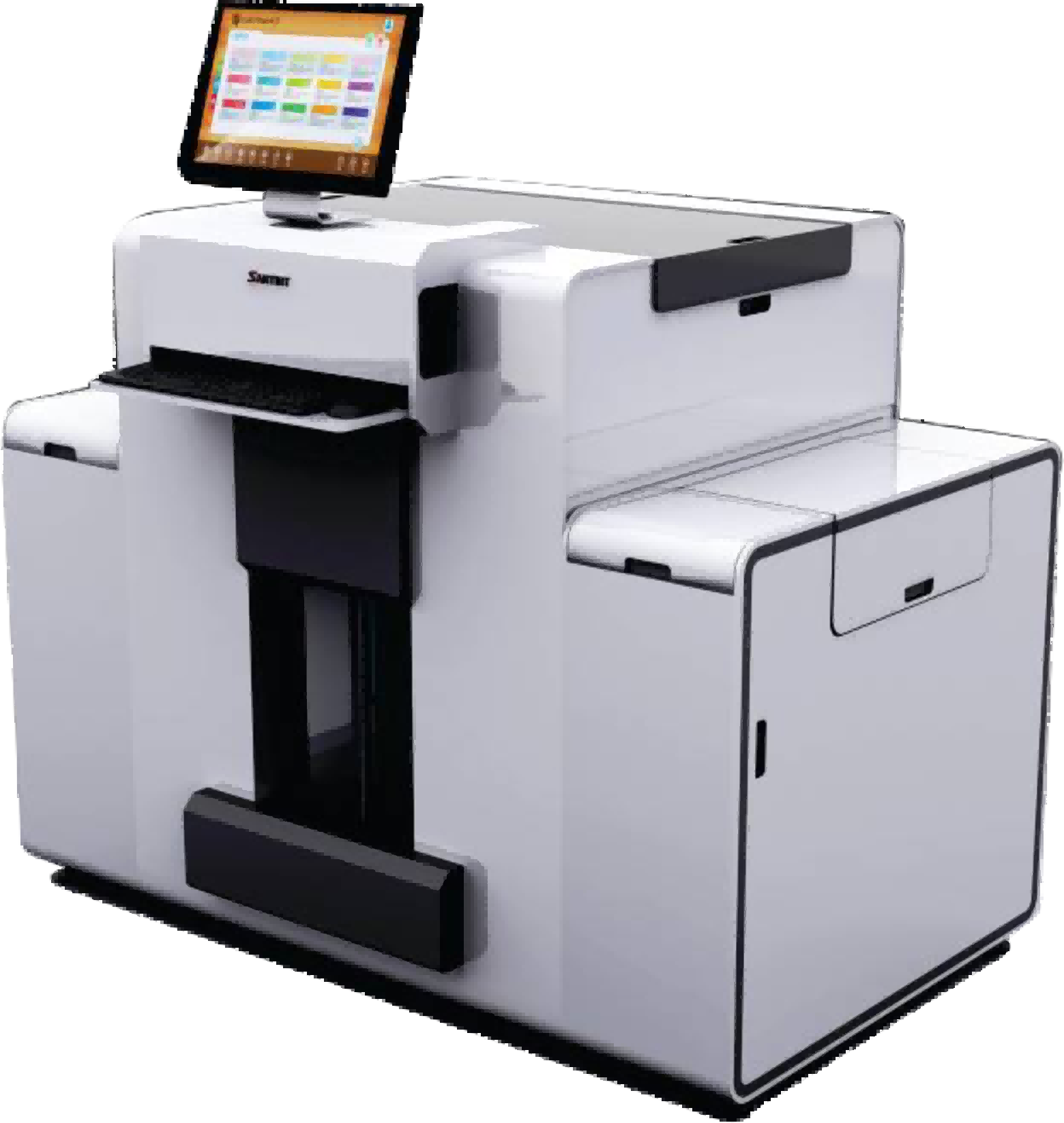
Coloured purge paint and flush waste liquid generated by colour change are coating-process residues, and their disposal basis should be fixed along three lines. First, hazardous-waste classification and the ledger: purge paint and waste solvents follow the National Catalogue of Hazardous Waste and the interpretation of the local ecological environment authority, with transfer documented by manifest. Second, linkage to end-of-pipe treatment: flush and cleaning vapours must be merged into the main collection - paint-mist pre-treatment - concentrate-and-oxidise train used for spraying exhaust; the service-life criteria for dry paint mist arrestor consumables are covered in our article Dry paint mist arrestor and cardboard maze filtration: airflow and consumables. Third, mass-balance audit: turn "paint delivered = effective spray-on + colour-change loss + paint mist and waste liquid + change in stock" into a monthly report with colour-change loss as its own line, so that audits and management-system reviews can cite it directly. Low-VOC substitution (waterborne, high-solids, powder) changes the composition of the flush medium but does not drive the loss to zero; the cost model must be rebuilt at the same time.
11. Common mistakes
- Treating 15 ml / 200 ml as the loss for "the whole station per change": the nominal values are per bell cup. With a dozen or more robots in a basecoat station, the total must be multiplied by the number of cups taking part in the change.
- Watching only colour changes and ignoring short purges: even without a change, 20-30 ml is flushed every 1-5 bodies, and over a year this can be of the same order as the change losses.
- Equating a recovery rate with zero discharge: 80-90% is a re-use figure; hue control of recovered solvent and its compliant storage are new management items.
- Using BREF nominal values as acceptance limits: a reference document gives typical operating levels. Customer commitments and contractual acceptance must rest on measurement and on the official text of the standard.
- Stretching colour blocks without limit in scheduling: the benefit of block size saturates, and when excess buffering collides with delivery commitments, total cost can rise.
12. FAQ: eight frequent questions on colour-change accounting and control
Question 1: What is a "colour change" in automotive coating, and why does it mainly concern the basecoat?
A colour change is the whole process of switching the paint delivered to the atomiser from one colour to another, in three steps: pushing out the residual charge, flushing the valve block and pipework, and introducing the new colour. On an OEM line the e-coat primer usually comes in only one or two colours and the clearcoat is one colour for all models by default; only the basecoat switches frequently among tens of colours, which is why industry figures for colour-change loss almost always refer to the basecoat station. Clearcoat equipment is pulled into the change cycle only when the line introduces tinted clear or matte clear as special finishes, and the reference document then recommends re-computing the loss against the number of parallel colours.
Question 2: How do I estimate what one year of colour-change loss costs my plant?
Use the three loss equations in section 6: divide annual output by the average block size to get the number of colour changes, multiply by the number of bell cups taking part and by the nominal values in Table 1, then discount the flush term by (1 - re-use rate). Price displaced paint at the paint unit cost and the flush medium at solvent or de-ionised water plus treatment cost, and you have the annual loss. A steadier method is to calibrate for one week with the purge collection drums and replace the 15 ml / 200 ml nominal figures with your own coefficients - depending on station layout, pipe length and recovery configuration, the nominal values can be off by a factor of several, and applying them directly will misjudge the order of magnitude of the savings available.
Question 3: Where does colour-change cost differ between waterborne and solventborne systems?
The displaced-paint term is similar for the two; the difference lies mainly in the flush medium. Solventborne systems use organic solvent, which is expensive per unit, counts towards VOC emissions and needs explosion protection and recovery equipment. The flush liquid of a waterborne basecoat is typically about 90% water, cheap to buy, but it carries waterborne resin and additives and must be handled as waste water or waste liquid; pipework must not hold waterborne material for long periods or microbial growth will set in and affect the hue. Taken as a whole, waterborne shifts cost from "solvent purchasing and safety" to "waste-liquid treatment and loop maintenance", and a full life-cycle comparison must cover all four items: medium, energy, compliant disposal and downtime loss.
Question 4: How short does change time have to be before it counts as acceptable, and how is it balanced against takt?
There is no single limit for change time; the engineering basis is its visible effect on line takt. Once a single change, including flushing and returning to colour, approaches or exceeds the spray takt per body, colour change begins to consume capacity - which is exactly where the vendor claim of "under 10 s" has value. The recommended benchmark is to build two of your own bands: log the P50 and P95 change durations and keep the P95 inside 50% of the takt margin. At the same time monitor the colour difference of the first body after returning to colour, with both instrument dE and visual assessment. If faster changes are bought with hue instability, the capacity gain will be eaten by rework.
Question 5: How do I choose between ring main, colour-change valve and cartridge system?
The three answers correspond to three colour-volume profiles. High-volume colours should run on a dedicated ring main with continuous circulation, where the displacement loss per unit is low. Stations with medium colour volumes and many robots are served by arm-mounted colour changers; at selection verify the vendor's stated number of colours tested and the flush volume basis. Plants with several hundred colour codes and small batches - commercial vehicles, conversion work - should use cartridges or pot-in-pot, trading 0.5-1.0 L per circuit for the elimination of long pipework. A hybrid architecture is the practical norm: high-frequency colours on the loop, low-frequency colours in cartridges, with a colour matrix joining the two. Before purchasing, run the split on a full year of colour-volume data.
Question 6: How do I dispose of colour-change waste paint and flush liquid compliantly?
Classify first. Purged colour paint liquid and waste flush solvent normally fall into the hazardous waste categories associated with coating processes; the specific code is determined by the current edition of the National Catalogue of Hazardous Waste and the interpretation of the local ecological environment authority, and where there is uncertainty a third-party identification should be commissioned. Storage must be segregated, sealed against seepage and protected from evaporation, and transfer must run through the electronic manifest. Flush liquid is connected to the waste-water or waste-liquid collection system and must never reach the municipal network untreated. Where material is recovered for re-use, a hue release specification is required. Turn four items into a standing ledger - monthly purge volume, recovery rate, outsourced disposal volume and loss per unit of output - because environmental audits and customer factory inspections normally sample exactly these four.
Question 7: A refinish shop has many colours and small jobs - how do I bring colour-change cost down?
Three levers. First, move the colour decision from the gun to the dispensing machine: validate the computer formula on a small sample before mixing a full pot, so that fewer test sprays are made after the gun is loaded. Second, on the P2 InfoHouse public basis, hand-washing a gun uses about 3 times the solvent of an enclosed station, so fitting one enclosed washer with solvent recovery both saves money and meets the policy requirement for enclosed gun cleaning. Third, run small-batch colours on disposable liner pots or cartridge pots, changing colour by swapping the pot instead of washing it. Add blending and transition technique on top: repair as much of a single panel as possible in one operation, which reduces the number of pot changes per day.
Question 8: Are BREF "nominal values" the same thing as standard limit values?
They are not. A BREF reference document gives typical industry operating levels and a BAT reference; its table values are for comparing options and assessing abatement potential. Mandatory limits such as GB 30981-2020 are the product-access and compliance criteria. The two have different purposes and different bases. The most common error in writing and in negotiation is citing a nominal consumption as a "permitted value", or treating a tightened local attainment figure as the national standard. Recommended order of citation: contracts and technical agreements quote the product standard and the official text of the directive; internal estimates and audit reconciliation may use BREF nominal values, provided the source and year are stated.
13. References and basis of the figures
- European Commission, Reference Document on Surface Treatment Using Organic Solvents (BREF STI, vehicle coating section): the colour-change nominal values are quoted from the tables of the German engineering guideline it cites.
- Directive 2004/42/EC: VOC ceilings for decorative coatings and automotive refinish products; sub-categories and phase limits are per the tables in Annex II.
- GB 30981-2020, limits of harmful substances in industrial protective coatings: as-applied VOC limits for vehicle coatings and the low-VOC classification basis.
- Comprehensive Treatment Plan for VOCs in Key Industries (Huan Da Qi [2019] No. 53) and GB 37822-2019: collection rates, enclosed cleaning and compact-process requirements.
- Colourwise, "What does it cost a car factory to switch from one paint colour to the next" (reviewed 2026-10): public compilation and sourcing of the BREF colour-change nominal values.
- P2 InfoHouse public material on spray-cleaning: solvent comparison between hand gun washing and enclosed washing (the 3 times figure).
- Patents EP0080796 (Ransburg, 1983) and US6554204: vacuum recovery and segregated re-use of displacement solvent.
- Basis note: Tables 1 and 3 are nominal values and a worked example, used for order-of-magnitude comparison; equipment figures are vendor claims and have not been third-party verified. For contracts, product access and audits, use the official text of the standards and directives together with measured data from your own plant ledger.
- Date on which the data in this article were retrieved and checked: 2026-11-27.
14. Version and attribution
Last updated: 2026-11-27. This article is prepared by Kexin New Materials (Guangdong) Co., Ltd. for B2B technical exchange in the coatings and finishing industry. Supply is offered only under bulk trade terms such as EXW and FOB, and retail scenarios are not included. Where third-party standards or public material are referred to, the text published by the originating body governs.