Introduction: The "Number One Complaint" from Repair Shops — Wrong Color
In the field of automotive refinish paint, color complaints account for >60% of total complaints. The car owner's eyes are the "most precise color difference meter"; under specific lighting, a color difference of ΔE=1.0 can be detected by ordinary people. Refinish paint color difference management starts with color code retrieval, goes through formula acquisition and spraying techniques, and ends with multi-light-source color matching—forming a four-step closed loop. Failure at any single step will lead to final color complaints.
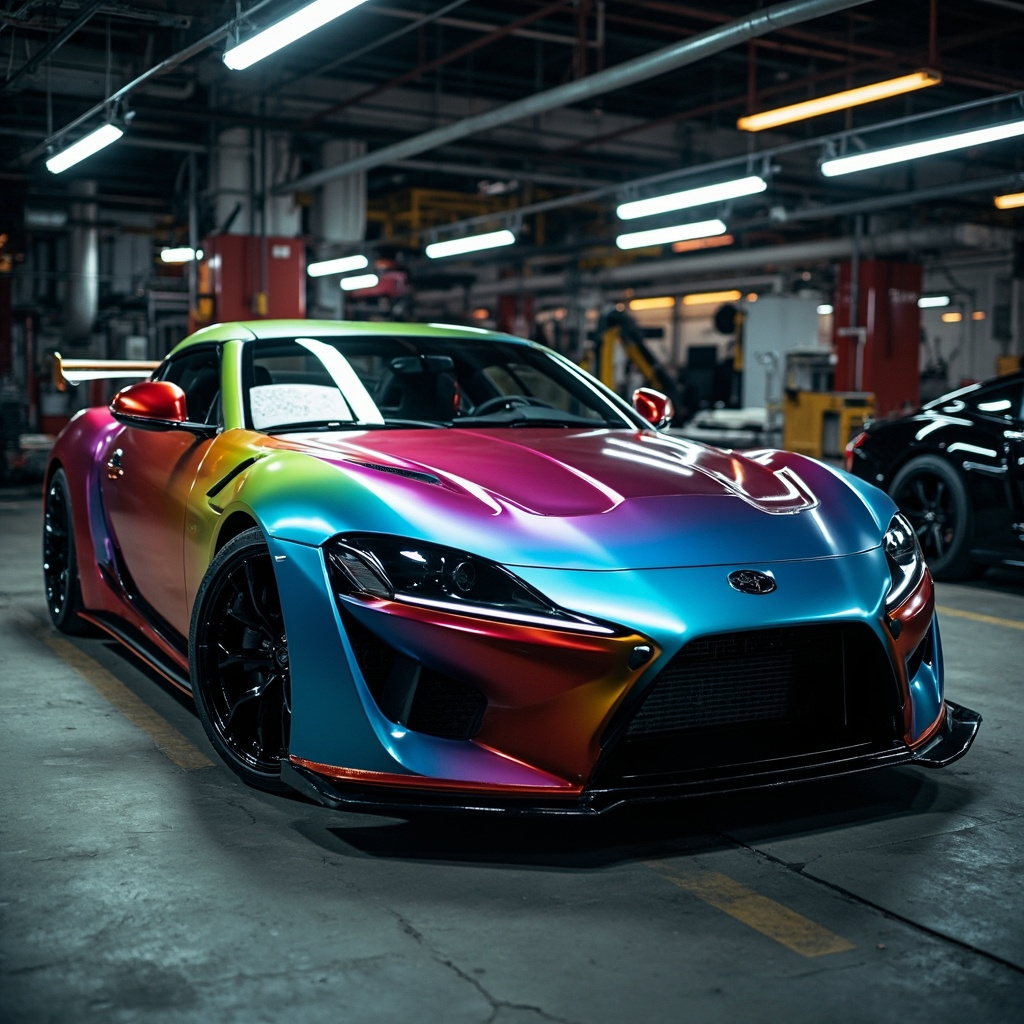
I. Four-Step Closed-Loop Color Difference Management System
| Stage | Tool/Method | Control Objective | Common Failure |
|---|---|---|---|
| 1. Color Code Retrieval | VIN code/fuel cap label/OEM color code database | Correctly identify OEM color code | Same color code with different year variations (same color code, different formulas across years) |
| 2. Formula Acquisition | Color matching software (with >100k formula database) | ΔE<1.0 (D65/multi-angle) | Differences in base applicable to formula (different batches of white base) |
| 3. Spraying Technique | HVLP spray gun/air pressure 2.0-2.5bar/spray distance 15-20cm | Uniform aluminum flake orientation/no cloudiness | Inconsistent flash-off/missing effect coat |
| 4. Multi-light Source Color Matching | D65/A/TL84 three-light source color matching booth | MI<1.0 (metamerism index) | Confirm only under D65/ignore A light and TL84 |
II. Flash-off Time and Spray Parameter Adjustment under Different Environments
| Environmental Conditions | Flash-off Time (min) | Spray Pressure (bar) | Gun Distance (cm) | Thinner Selection |
|---|---|---|---|---|
| Standard (23°C/50%RH) | 10-15 | 2.0-2.5 | 15-20 | Standard Thinner |
| High Temperature (>35°C) | 5-8 | 2.5-3.0 | 20-25 | Slow-drying Thinner |
| Low Temperature (<15°C) | 20-30 | 2.5-3.0 | 12-15 | Fast-drying Thinner |
| High Humidity (>80%RH) | 20-25 | 2.0-2.5 | 15-20 | Blush Retarder Additive |
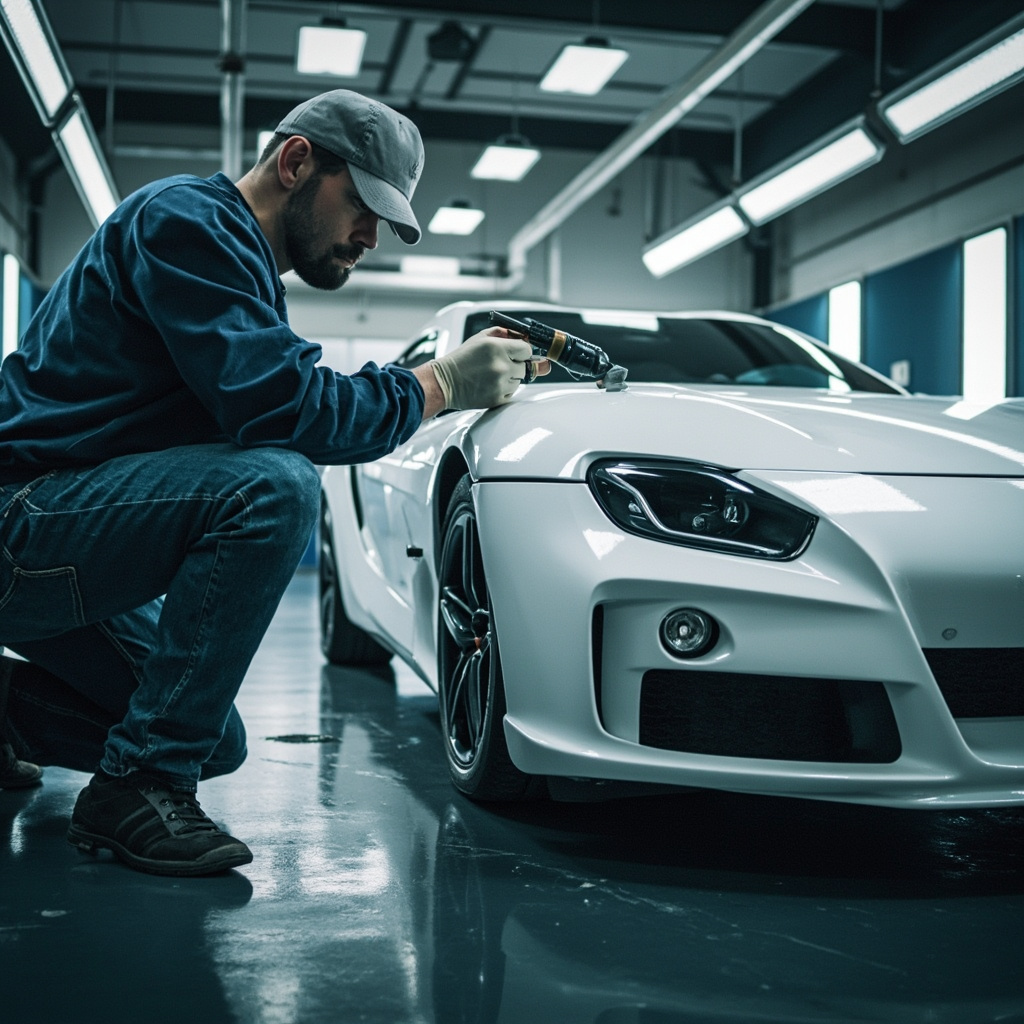
II. Color Difference Dispute Handling Process
Owner raises color dissatisfaction → (1) Use spectrophotometer to perform multi-angle (15°/25°/45°/75°/110°) measurement on the repaired area and adjacent original vehicle area → (2) Calculate ΔE and MI index at each angle → (3) ΔE<1.5 and MI1.5 or MI>1.0 → Repair party bears responsibility → Sand area + re-color matching + repaint.
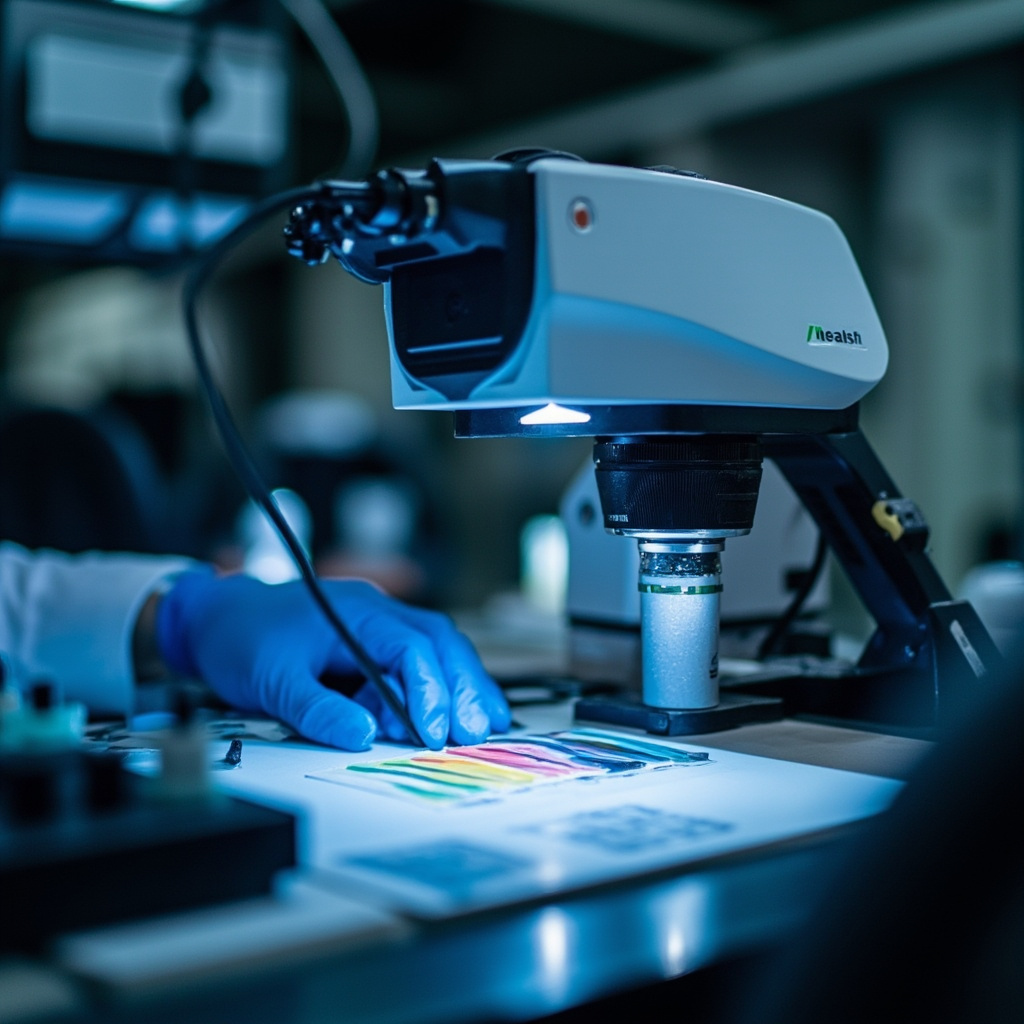
Technical refinement: metrological traceability of automatic batching and metamerism compensation
The "measurement traceability" of the automatic batching system is a core requirement of ISO 9001 and IATF 16949—the accuracy of the weighing sensors for each batch must be traceable to the national measurement standard. For automotive OEM customers—the measurement traceability records of the batching system must be archived for >15 years; this is the legal basis for the factory to prove that the batching accuracy is qualified.
The "metamerism compensation" in color matching: high-end color matching software not only calculates tristimulus value matching—but also calculates the reflectance curve differences under D65+A+TL84 three light sources and automatically calculates compensating pigments. This multi-light-source joint optimization "high-dimensional color matching" algorithm is the core competitiveness of high-end color matching software.
Industry Case: 2 Million Yuan Claim Caused by Metamerism
A home appliance panel coating supplier——the first batch of white baking paint achieved perfect matching under D65 (ΔE=0.5). However, consumers noticed under warm incandescent light (2800K) that the panel "yellowed" and was inconsistent in color with another supplier's coating. Investigation revealed severe "metamerism" between the two batches of coatings (MI=3.5)——the root cause was that the two suppliers used different grades of titanium dioxide——with large differences in reflectance curves. Ultimately, the supplier bore all panel replacement costs + brand compensation, with total losses exceeding 2 million yuan——the lesson being "color matching cannot be qualified under only one light source."
Technical refinement: metrological traceability of automatic batching and metamerism compensation
The "measurement traceability" of the automatic batching system is a core requirement of ISO 9001 and IATF 16949—the accuracy of the weighing sensors for each batch must be traceable to the national measurement standard. For automotive OEM customers—the measurement traceability records of the batching system must be archived for >15 years; this is the legal basis for the factory to prove that the batching accuracy is qualified.
The "metamerism compensation" in color matching: high-end color matching software not only calculates tristimulus value matching—but also calculates the reflectance curve differences under D65+A+TL84 three light sources and automatically calculates compensating pigments. This multi-light-source joint optimization "high-dimensional color matching" algorithm is the core competitiveness of high-end color matching software.
Industry Case: 2 Million Yuan Claim Caused by Metamerism
A home appliance panel coating supplier——the first batch of white baking paint achieved perfect matching under D65 (ΔE=0.5). However, consumers noticed under warm incandescent light (2800K) that the panel "yellowed" and was inconsistent in color with another supplier's coating. Investigation revealed severe "metamerism" between the two batches of coating (MI=3.5)——the root cause was that the two suppliers used different grades of titanium dioxide——with large differences in reflectance curves. Ultimately, the supplier bore all panel replacement costs + brand compensation, with total losses exceeding 2 million yuan——the lesson being "color matching cannot be qualified under only one light source."
FAQ
Q1: How to handle differences in the same color code across different years?During the production cycle, a car manufacturer may switch pigment suppliers (same color code / different years) — resulting in actual color differences of ΔE 0.5-2.0. In the color matching software, the same color code may have multiple "variants" (Variant/Prime/Alternative) — you need to use a spectrophotometer to measure the original car color on-site → the software automatically matches the best variant.
Q2: Why is a multi-angle spectrophotometer essential for metallic paint color matching? The color of metallic paint changes with the observation angle—a single angle (45°) cannot characterize the complete color space. 15° (specular reflection angle/flake effect), 45° (face tone), 75° and 110° (side tone)—five-angle measurement is the minimum configuration for metallic paint color matching.
Q3: How does the basecoat (white/gray/colored) affect the final color?White basecoat → color is brighter/slightly lower chroma. Gray basecoat → color is darker. The color difference of the same formula on white and gray basecoats can be >ΔE 2.0 — wrong basecoat selection is a beginner mistake. The color of the intermediate primer (white/gray/colored) must match the basecoat specified by the formula.
Q4: What is the role of the Effect Coat in color difference control?The effect coat (final light spray / spray distance 25-30cm / fast pass) forms an ultra-thin layer with more uniform aluminum flake arrangement on the surface of the basecoat—compensating for the uneven aluminum flake arrangement from previous passes—significantly improving the color uniformity of metallic flake paintand is the most critical step in determining the final color of metallic paint in automotive refinish coatings.
Q5: How to convince the car owner with data in a color difference dispute?Measure on-site with a multi-angle spectrophotometer → print a color difference report (including 5-angle ΔE and MI index) → compare with industry standards (ASTM D2244 / ΔE<1.5 is acceptable) — the persuasiveness of a digital report is far stronger than verbal explanation.
Q6: How to handle the "boundary" (Blending) between the repaired area and the original vehicle?Gradient spraying (Blending)——clear coat extends from the repaired area to the original vehicle area by 15-30cm——at the junction the clear coat thickness gradually tapers to zero——making the color transition visually "seamless". Blending is the ultimate technique to eliminate the sense of color difference——even if ΔE is slightly >1.0, good Blending can make the owner unable to perceive the color difference.
Q7: What is the difference in color difference control between water-based basecoat and solvent-based basecoat?Water-based basecoat has a longer flash-off time—aluminum flakes have more time for orientation alignment → color stability is better than solvent-based. However, the color of water-based basecoat is more sensitive to substrate color and film thickness—the same formula cannot be interchanged between water-based and solvent-based.
Q8: Maintenance of the refinish paint color formula database?The software supplier (CPS/Spies Hecker/PPG) continuously updates the formula database—adding over 100 new formulas monthly—with automatic updates via network connection. An outdated database that has not been updated may lack the latest color variants for new vehicle models—leading to color matching failure.
Q9: What are the differences in color quality control between a refinish paint tinting center and an OEM painting line?OEM line — continuous spraying / fully automated / color CPK > 1.33. Refinish — small batch / manual spraying / color consistency heavily affected by human factors. The core of refinish paint color quality control is minimizing the variation from manual spraying; standardizing spraying parameters (air pressure / gun distance / flash-off) is the key to compensating for the lack of automation.
Q10: Future Trend — AI + Portable Color Measurement for Touch-up Paint?Smartphone camera + AI color recognition — car owner takes a selfie of the car body color → AI matches the formula → touch-up paint is delivered by courier — fully contactless process — several startups are already testing this. However, the color accuracy of smartphone cameras is far lower than that of spectrophotometers (ΔE error > 2.0) — currently still no substitute for professional equipment.
FAQ: In-Depth Technical Q&A Supplement
Q11: How do the differences in domestic and international standards for this technology affect product export?Domestic standards (GB) differ from ISO/ASTM standards in test methods and acceptance criteria. For example, salt spray testing—GB/T 1771 (equivalent to ISO 7253) has test conditions basically consistent with ASTM B117—but the rating systems (ISO 4628 vs ASTM D610/D714) differ—when providing test reports for exported products, the corresponding international standards must be indicated simultaneously, otherwise overseas customers cannot make a comparative assessment. It is recommended to list both GB and ISO/ASTM dual-standard indicators in the TDS (Technical Data Sheet) of exported products—to enhance the trust of international customers.
Q12: How to verify the long-term service performance of this technology in actual engineering practice?Laboratory accelerated testing (salt spray/QUV/cyclic corrosion) provides comparative data—but cannot fully replace actual outdoor exposure testing. Recommendations—(1) Set up outdoor exposure racks at both the factory location and typical customer locations (e.g., coastal C5-M/industrial C4)—conduct annual inspections of coating appearance/adhesion/film thickness changes—establish a company-owned outdoor service database; (2) Collaborate with universities/research institutes—combine enterprise data with academic research—enhance data credibility.
Q13: What should SMEs pay attention to when purchasing related raw materials/equipment?(1) The batch stability of suppliers is more important than unit price—it is recommended to require suppliers to provide COA data for >10 batches—and evaluate batch variation (CpK); (2) For equipment procurement, visit peers who have used the equipment for >2 years to understand the long-term reliability and after-sales service quality of the equipment—rather than relying only on the demonstration data from equipment suppliers; (3) For key raw materials (resin/curing agent)—maintain at least 2 qualified suppliers to guard against single-supply risk.
Q14: What is the current state and trend of digital transformation in this field?The digital transformation of the coatings industry is evolving from “point-based applications” (automation of individual equipment/processes) to ”system integration” (full-chain ERP+MES+PMS). Currently, the digitalization of small and medium-sized coatings factories sees the ”highest-ROI investment” in automatic batching systems + digitalization of quality control data—with a payback period of 1–3 years—which is the prioritized recommended direction. Future trend—AI + sensors enabling real-time optimization of process parameters—further reducing quality variation between batches.
Q15: How can a newly entered coating engineer quickly master this technology?(1)Combine theory and practiceDo not only read literature without touching actual production—nor rely solely on experience without studying theory;(2)Build a “failure case archive”Every customer complaint/production anomaly/coating failure—record the root cause and resolution process—this is the most effective learning material;(3)Learn from suppliersTechnical personnel from resin/additive/pigment suppliers are carriers of "tacit knowledge" in this field—communicate more with them about solutions to specific problems.
Related Reading
Summary
Four-step closed-loop for automotive refinish paint color difference management: color code lookup → formula retrieval (ΔE<1.0) → spray technique (air pressure/spray distance/flash-off/effect coats) → multi-light-source color matching (D65/A/TL84/MI<1.0). A multi-angle spectrophotometer (minimum 5-angle configuration) is essential equipment for metallic paint color matching. Blending fade-out spraying is the ultimate technique to eliminate the perception of color difference. Kexin New Materials provides customers with a full range of refinish paint products and color difference management technical support.