Introduction: The Color Mixing Center—the "Last Mile" of the Automotive Refinish Paint Industry Chain Is Being Reshaped by Digitalization
A Tesla Model Y gets scraped at an intersection — the repair shop receives the car — the first step is not bodywork — but “color matching” precisely mixing matching touch-up paint based on the original car color — color difference ΔE30 minutes — paint waste rate >20% — technician training cycle >1-3 years — this is a pain point unchanged for decades in the automotive refinish paint industry. However — in 2024-2025 the industry is undergoing a digital ”silent revolution”: BASF launched the Refinity cloud-based full-process platform (ScanR color spectrophotometer 30-second 5-time precise measurement + Alfa CR4/6 fully automatic dispenser), Yinuohang has accumulated >1 million real-car formulas (covering 600+ outlets — AI algorithm generates formula remotely in 20 minutes), Shichuang Technology's MAX system reduced 106 colorants by 26% while still covering 96.2% of market colors — color matching time compressed from >30 minutes to <20 minutes — paint waste rate reduced from 20% to <5%. Based on the latest industry data and cases, this article provides a complete transformation guide from traditional to digital for color matching center operators.
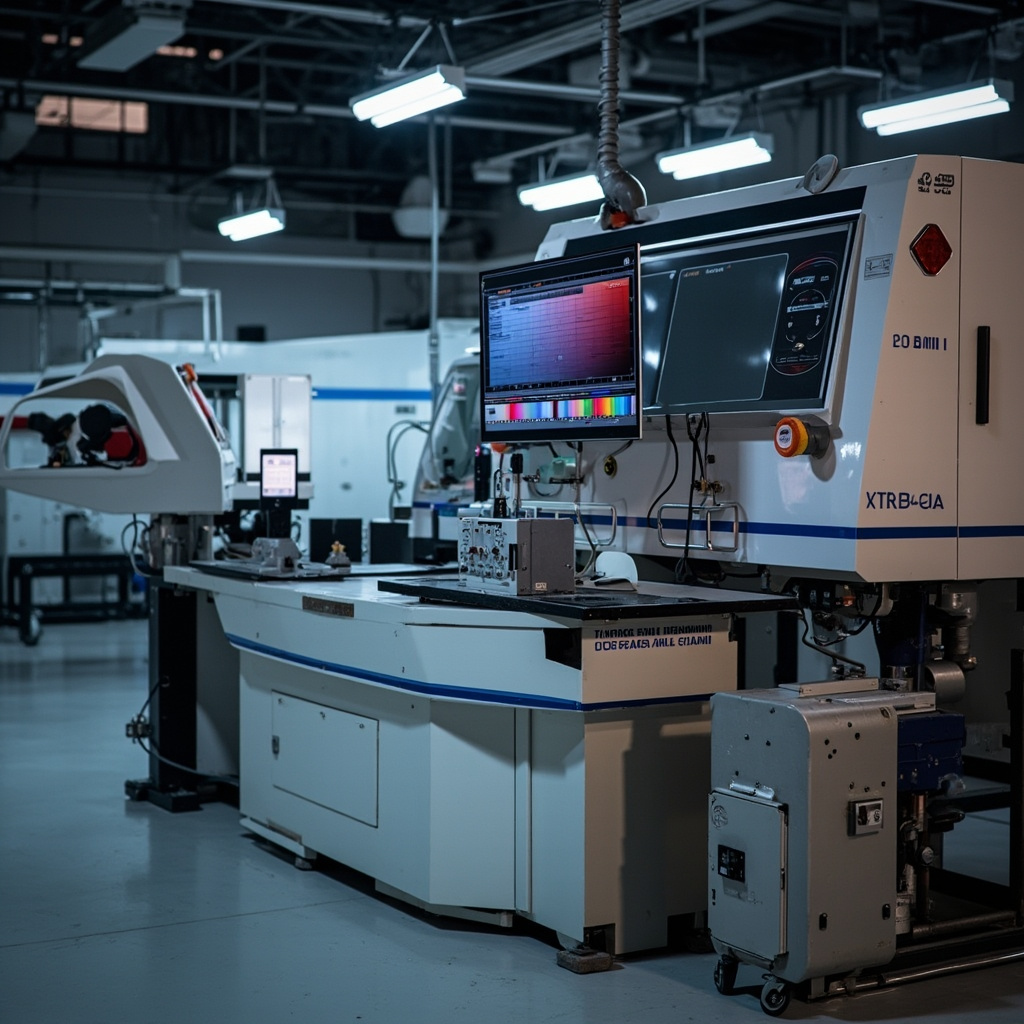
The digital operation of automotive refinish paint color mixing centers refers to the integration of three major components—hardware (spectrophotometers/multi-angle spectrophotometers—such as BASF ScanR/X-Rite), software (cloud-based formula databases + AI color matching algorithms—such as BASF Refinity/Enoch Color Cube/Axalta ColorNet), and automated equipment (fully automatic dispensers—such as Alfa CR4/6)—to upgrade the traditional "technician experience-driven" color mixing process (>30 min/order—paint waste >20%) into a "data + algorithm-driven" digital process (<20 min/order—paint waste <5%)—while simultaneously achieving transparency, traceability, and continuous optimization of the entire color mixing center operation workflow (order → color mixing → spraying → delivery → settlement) through the three major management systems of ERP/MES/WMS.
I. Panorama of Core Hardware and Software Systems in the Digital Color Tinting Center
| System Component | Representative Products/Platforms | Core Functions | Key Performance Indicators | Reference Price (10k RMB) |
|---|---|---|---|---|
| Multi-angle Spectrophotometer | BASF ScanR / X-Rite MA-T12 / X-Rite MetaVue | Multi-angle (15°/25°/45°/75°/110°) measurement——spectrum + effect particles + roughness——automatic VIN/license plate recognition | Measurement time <30s/5 times——accuracy ΔE<0.1——supports metallic/pearlescent paint effect measurement | 5-25 |
| Cloud Formula Database | BASF Refinity / Yinuoxing Color Cube / Axalta ColorNet 2.0 | Cloud storage——real-time update——VIN auto-retrieval of OEM formula——AI-assisted correction | Formula count >70,000-1,000,000+——formula hit rate >85%——AI correction ΔE<0.5 | Annual fee 1-5万/year |
| Fully Automatic Dispenser | BASF Alfa CR4/6 / Sanhua Technology / Fillon Technologies | Automatic weighing——>6 colors simultaneous dispensing——precision ±0.02g——full-process error prevention | Dispensing speed <5-10 min/order——weighing precision ±0.02g——colorant waste <3% | 15-50 |
| Operations Management System | ERP (Enterprise Resource Planning) / MES (Manufacturing Execution) / WMS (Warehouse)——integrated platform | Order management——colorant inventory ABC classification——technician man-hour statistics——cost accounting——customer CRM | Order processing <5 min——inventory turnover >12 times/year——technician efficiency >30 orders/day | 5-20万 (one-time + annual maintenance) |
II. Comprehensive Comparison of Efficiency and Cost: Traditional Color Tinting vs. Digital Color Tinting
| Comparison Dimension | Traditional Experience-based Color Matching (Before 2020) | Semi-Digital (2020-2023) | Full Digital Process (2024-2025) |
|---|---|---|---|
| Single Color Matching Time (including test spray) | 30-45 minutes | 20-30 minutes | 10-20 minutes (Shichuang MAX verified 10 minutes) |
| Paint Waste Rate | >20% | 10-15% | <5% (Shichuang MAX data) |
| First-time Hit Rate (no correction needed) | <40% | 60-70% | >85% (cloud AI assisted) |
| Technician Training Period | 1-3 years (skilled) + 2-3 years (senior) | 3-6 months (software assisted) | 1-4 weeks (digital — AI-guided operation) |
| Service Radius | 15-20 km | 30-40 km | >50 km (remote cloud formula + express color paste delivery) |
| Colorant SKU Count | 80-120 | 60-100 | 106 (Shichuang MAX — reduced by 26% while still covering 96.2%) |
| Formula Database Scale | <5000 entries (paper color cards + technician memory) | 10k-50k entries (local PC) | 100k-1M+ entries (cloud — dynamic update — network-wide sharing) |
| Single Store Annual Operating Cost (including labor) | 500k-800k (3-5 technicians) | 400k-600k (2-3 technicians) | 300k-500k (1-2 technicians + system) |
FAQ
Q1: Why do spectrophotometers need "multi-angle" measurement—why is a single angle (45/0) not enough? The spectral reflection of ordinary solid-color paints is isotropic—a 45/0 single angle is sufficient for accurate measurement. But over 70% of modern automotive paints are metallic or pearlescent paints—containing aluminum flake or mica pearlescent pigments—these flake-shaped pigments reflect significantly different colors and brightness at different observation angles: 15° (near specular reflection—see sparkle)—25° (see face-on color)—45° (see side color)—75° (see grazing color)—110° (see base color). A single-angle colorimeter cannot capture the "color flop" effect (Travel) of metallic paints—the matched color looks consistent face-on—but shows color shift from the side—color difference ΔE>3—visible to the naked eye. "5-angle measurement = color data in 5 dimensions—essential hardware for metallic paint color matching". Both BASF ScanR and X-Rite MA-T12 support 5–12 angle measurement—color difference control ΔE<0.5—covering over 90% of metallic/pearlescent paint formulations.
Q2: Enoch Line's "1 million+" formula database—why is the number of formulas itself a core competitiveness?The formula database is the "knowledge asset" of the tinting center. Each formula = the "color fingerprint" of an actual vehicle. Through 600+ partner outlets, Enoch Line adds hundreds of real-vehicle formulas daily—data is uploaded to the cloud in real time—AI algorithms learn and optimize to "prepare more accurate formulas in advance for the next same-model vehicle." The value of 1 million formulas lies in: (1) Coverage—covering >95% of sold vehicle model colors in the market (including discontinued old vehicles); (2) Timeliness—new energy vehicles undergo "a facelift every six months, a generation change every year," with extremely fast color updates—traditional color cards have an update cycle >1 year—the cloud formula library can capture new colors in <1 month; (3) Regional adaptation—different regional lighting conditions (plateau strong UV vs coastal high humidity) affect color perception—the cloud formula library performs "adaptive fine-tuning" by region. Number of formulas = the tinting center's "data moat": "100k—covers mainstream; 1 million—covers long tail; 10 million = absolute industry leader."
Q3: The counter-intuitive logic of Shichuang Technology's MAX system "26% reduction in colorants" — why do fewer colorants cover more colors?The design logic of traditional colorant systems is "more is better" — fearing incomplete coverage — thus continuously adding special colorants — eventually accumulating to >140 colorants — management costs soar — serious waste from expired colorants (some special colorants are used only a few times a year). Shichuang MAX's countermeasures: (1) Select high-tinting-strength colorants — replace multiple low-tinting-strength colorants with high-tinting-strength ones — "one high-concentration colorant = the combined coverage range of 3-5 dilute colorants in the past"; (2) Optimize the "distribution uniformity" of colorants in the CIELab color space — ensure the distribution of 106 colorants in L*a*b* space is "no gaps — no redundancy" — covering 96.2% of market colors; (3) AI formula engine — automatically calculate the optimal colorant combination based on the target color — "past formulas used 20 colorants — now use 6-8 colorants — same effect — less waste". "Colorant reduction = 26% less inventory capital + 50% less expired waste + faster tinting speed (fewer colorant changes) = annual savings >100k-200k RMB".
Q4: Why is there a "numbers game" with ΔE color difference—software shows ΔE<0.5, but the naked eye still sees a difference?This is the most common source of complaints at color matching centers. There are three reasons: (1) Measurement conditions do not match—the software calculates ΔE under D65 light source/10° viewing angle—but the client views the color under outdoor natural light (a mix of A light source + D65)—if the formula has "metamerism"—the ΔE difference under the two light sources is >2-3—software shows pass—naked eye shows fail; (2) The "effect" of metallic paint does not match—even if hue/saturation/lightness are consistent—if the aluminum powder particle size or arrangement differs—the metallic flake effect and particle roughness differ—the naked eye perceives "inconsistency"—but traditional ΔE only measures color—not "effect"; (3) Human eye sensitivity to specific color zones is higher than the ΔE formula assumes—the yellow zone is extremely sensitive to the naked eye—ΔE=0.5 is visible—the blue-violet zone is tolerant to the naked eye—ΔE=2 may show no perceived difference. Solution: Use the CIEDE2000 (ΔE₀₀) formula (weighted for perceived differences in hue/saturation/lightness)—plus "multi-angle effect measurement"—plus "cross-light-source consistency (metamerism index MI<1) check"—three steps—to ensure—software—and—naked eye—are consistent.
Q5: What is the full "end-to-end digital" process from scanning to painting on the BASF Refinity® platform?Step1: ScanR color spectrophotometer scans the car body — 5 measurements within 30 seconds + automatic VIN/license plate recognition + scratch detection — data uploaded to the cloud. Step2: Refinity cloud — VIN lookup of original factory formula — when hit rate is low — AI algorithm generates corrected formula based on spectral data "formula + fine-tuning plan" pushed together to the color mixing center. Step3: Alfa CR4/6 fully automatic color mixer — automatically weighs according to the formula — 6 colors simultaneously — precision ±0.02g — completes color mixing in 45 minutes to <25 minutes "Refinity = packs the entire color mixing center — into a — tablet".
Q6: After the "technician training" at the color mixing center is digitized, are "master technicians" still needed?Needed—but the role has changed. Traditional technicians are "experience-based," relying on their eyes and feel—cultivated over 1–3 years—departure = knowledge reset to zero. After digitization—technicians become "system operators + quality controllers" (1) Operate color spectrometers and tinting machines—execute according to software guidance—<4 weeks of training to be job-ready (Shichuang / Yinuoxing training data); (2) Responsible for "fine-tuning" AI-generated formulas with ΔE<0.5—but manual fine-tuning is rarely needed (accounting for 3 years to >1 month—this is the prerequisite for the color mixing center's scaled expansion."
Q7: How does the color mixing center ERP/WMS "Colorant ABC Inventory Management Method" reduce inventory capital occupation?Colorants (color pastes) are the largest inventory asset of the color mixing center (>50-80 SKUs——>100,000-300,000 yuan inventory capital). ABC classification method——Class A (>80% of formulas require 5-8 basic colorants——white/black/red/yellow/blue——high inventory——replenish daily——no stockouts allowed——>accounts for 50% of inventory capital); Class B (15% of formulas require 5-10 auxiliary colorants——medium inventory——replenish weekly); Class C (20 special effect colorants——low inventory——order only when used——scrap when expired——accounts for <10% of inventory capital but highest management cost). The digital WMS system automatically tracks each colorant's "consumption rate + shelf life"——when Class A colorant inventory 6 months unused——automatically mark "consider elimination". "ABC + WMS = inventory turnover rate from 12 times/year——inventory capital occupation halved".
Related Reading
Summary
The digital transformation of automotive refinish paint tinting centers is accelerating—three major digital solutions, represented by BASF Refinity (cloud-based full process—ScanR spectrophotometer + Alfa automatic dispenser), Yinuoxing (1M+ formulas—AI remote matching—600+ outlets), and Shichuang MAX (106 toners—96.2% coverage—10-min fast tinting)—are upgrading traditional tinting from "experience-based craft" (>30 min/order—paint waste >20%—technician training >3 years) to "data algorithm" (<20 min/order—paint waste <5%—training <1 month). Three core elements: hardware (multi-angle spectrophotometer—essential for metallic paints), software (cloud formula database + AI color-matching engine—"formulas = data assets"), and talent (shifting from "experienced technician" to "system operation + quality control"). Kexin New Materials provides clients with tinting center digital solution consulting and color-matching system selection support—"let every drop of refinish paint precisely hit every spectral detail of the original vehicle color."