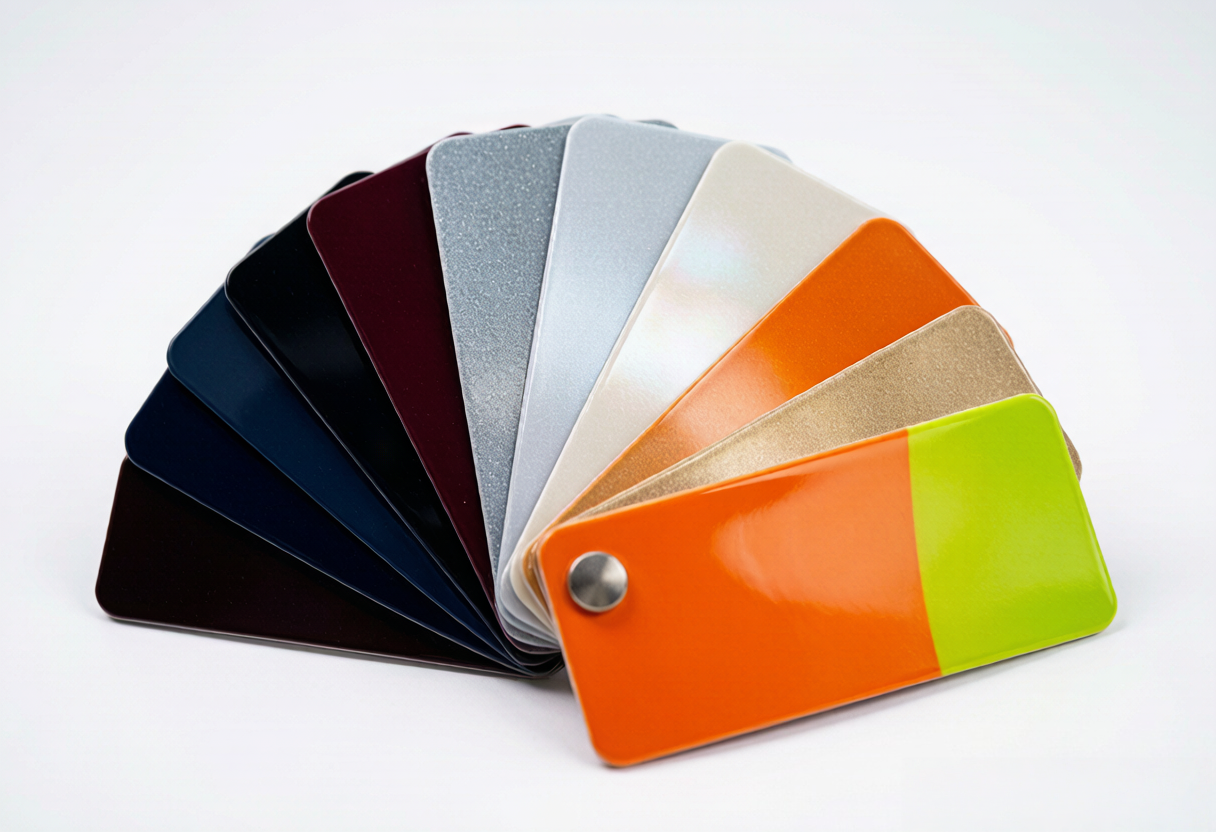
When choosing a car color, salespeople often mention "this is metallic paint" "that is pearl paint". The so-called topcoat (color paint/topcoat) is the layer that determines the body color and appearance. According to its pigment structure, it is mainly divided into four types: solid paint, metallic paint, pearl paint, and pearlescent paint. The difference is not in "whether the color looks good", but in how the pigment causes light to reflect and refract—which directly determines the gloss, sense of depth, price, and difficulty of later maintenance.
I. What is topcoat, and why are there so many types?
The topcoat is a colored layer applied over the primer surfacer and under the clearcoat (see "Analysis of Automotive Paint Coating Structure"). It is not responsible for rust prevention or protection, only for being "good-looking." To give the good looks depth, effect pigments of different forms are added to the formulation, thus dividing it into four categories: solid, metallic, pearl, and mica.
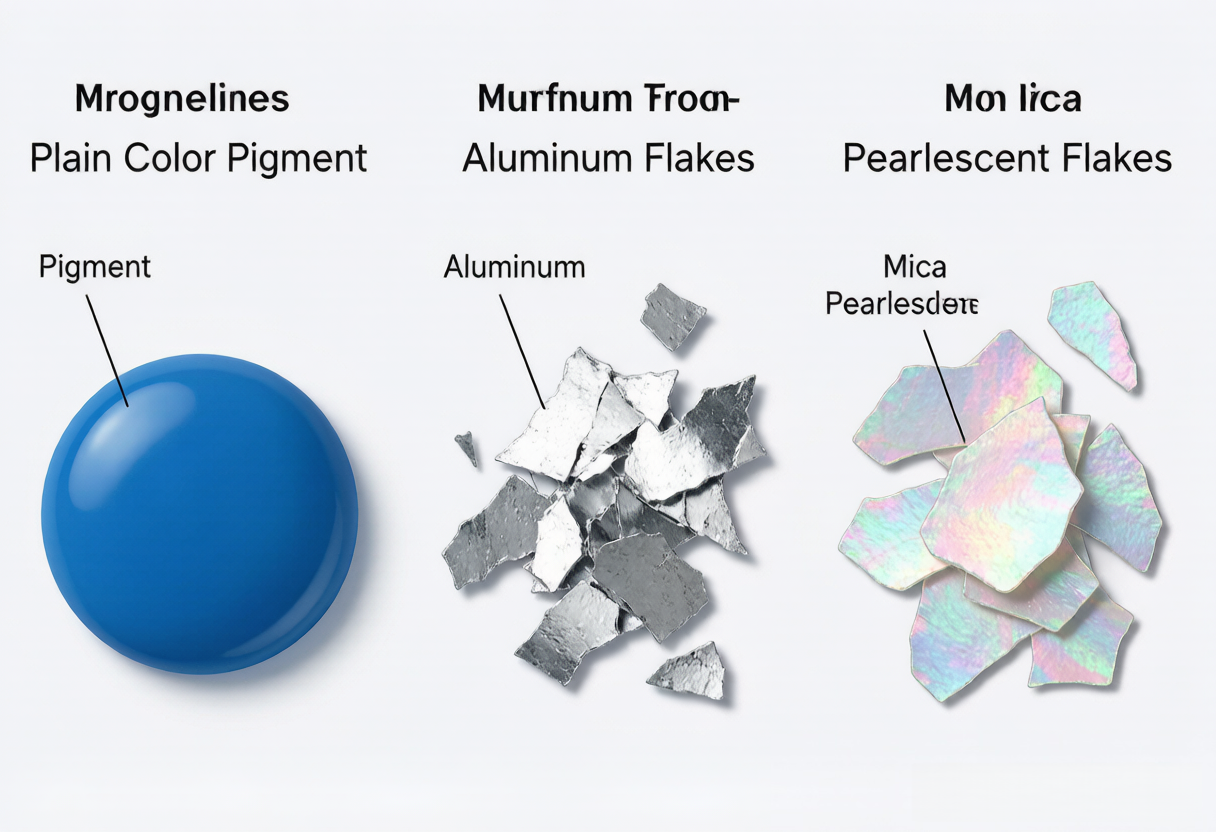
Pigment principles of type II and type IV topcoats
2.1 Solid Color Paint (Solid)
Only ordinary coloring pigments, without metallic or pearlescent flakes. The color is single and uniform, looking the same from any angle. The advantages are easy repair and low cost; the disadvantage is lack of depth.
2.2 Metallic Paint (Metallic)
Add aluminum powder (metallic flakes) to the paint. The aluminum powder acts like countless tiny mirrors, reflecting varying light and dark differences as the viewing angle changes, creating a flip-flop effect that gives the car paint a "sense of depth." The downside is that aluminum powder is easily scratched and shows marks, and color matching is angle-sensitive.
2.3 Pearl Paint (Pearl)
Added mica flakes coated with titanium dioxide pearlescent pigments. Light interferes between multiple thin films, presenting a iridescent, soft color-shifting effect (e.g., blue tint in white, gold tint in red). The layers are more delicate than metallic paint, but the color matching is the most difficult and most expensive.
2.4 Pearlescent Paint
Similar to the principle of pearl paint, it emphasizes a more soft, warm luster, often giving a "silk-like" feel. Commonly seen in high-end and custom car colors.
| Type | Effect Pigment | Appearance Features | Flop (Color Shift by Angle) | Maintenance / Cost |
|---|---|---|---|---|
| Solid Color Paint | None | Uniform, single color | None | Low, easy to repair |
| Metallic Paint | Aluminum powder | Deep, sparkling | Obvious | Medium, shows scratches |
| Pearl Paint | Mica + TiO₂ | Iridescent, fine | Strong | High, hard to match |
| Pearlescent Paint | Mica-type | Soft, silky feel | Medium-strong | High |
III. Differences in Appearance and Properties
- Metallic paint: Strong three-dimensional feel and looks premium, but aluminum particles are exposed, so light scratches are more visible under light and require clear coat protection.
- Solid color paint: Plain and easy on the eyes, with smaller color difference for local touch-ups, it is a common choice for commercial/utility vehicles.
- Pearl / Pearlescent Paint: Offers the strongest sense of premium quality, but the "blend-in" is the most difficult to achieve during touch-up, and it is extremely sensitive to spray angle and film thickness.
IV. Maintenance and Repair Costs
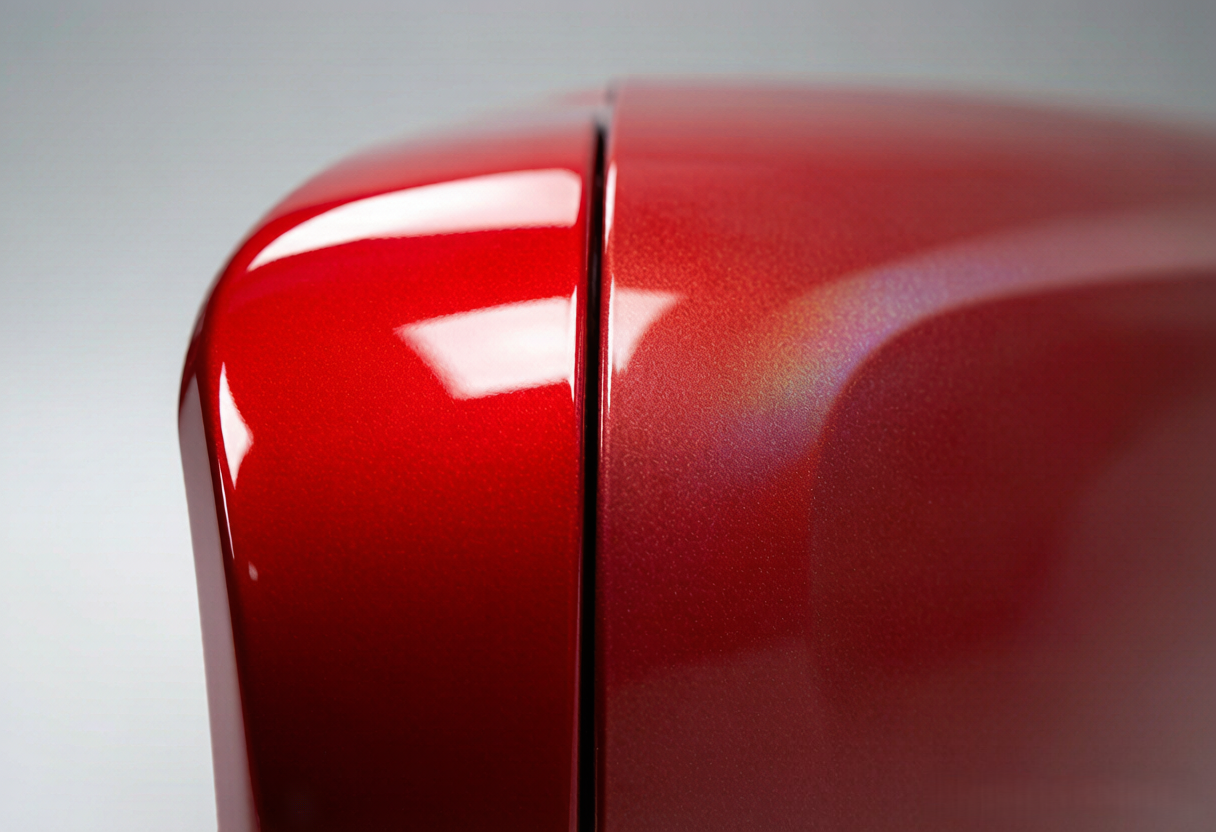
The more "flashy" the paint, the higher the repair threshold: pearl paint requires precise control of film thickness and spray angle, otherwise the color will be inconsistent under direct and side light; metallic paint requires attention to the arrangement direction of aluminum flakes. This is why the repainting cost for pearl/metallic paint is usually higher than that for solid color paint. In terms of daily maintenance, all topcoats rely on the outer layer of clear coat to resist UV rays and scratches (see "The Function of Automotive Clear Coat").
V. Common Misconceptions
Misconception 2:“Pearl paint is just a brighter metallic paint”——The pigment mechanisms of the two are different; pearl relies on mica interference colors, not simply increased brightness.
Misconception 3:“Touch-up only needs the correct color code”——Effect pigments are sensitive to film thickness and angle, so even the same color code may show a difference between face-on and side-on light reflection.
Summary
Automotive topcoat is classified by pigment structure into solid, metallic, pearl, and pearlescent four types: solid relies on pure pigments, metallic relies on aluminum powder to produce angle-dependent color shift, pearl/pearlescent relies on mica flakes to produce iridescent soft luster. Coatings with stronger effect perception appear more premium, but are also harder to color-match and maintain. When choosing a color, simply weigh aesthetics, budget, and later repair costs.
Frequently Asked Questions (FAQ)
{ "@context": "https://schema.org", "@type": "FAQPage", "mainEntity": [ {"@type":"Question","name":"What is the biggest difference between metallic paint and solid paint?","acceptedAnswer":{"@type":"Answer","text":"Metallic paint has aluminum powder added to the pigment, creating light-and-dark variations (flake orientation effect) depending on the viewing angle, with a strong sense of depth; solid paint only contains ordinary coloring pigments, with a uniform and single color. In terms of durability, both rely on the outer clear coat, and the difference lies not in lifespan but in appearance and repair difficulty."}}, {"@type":"Question","name":"Are pearl paint and metallic paint the same thing?","acceptedAnswer":{"@type":"Answer","text":"No. Metallic paint uses aluminum powder to produce sparkle, while pearl paint uses mica flakes coated with titanium dioxide to create interference iridescence, with a more delicate and soft layering. The pigment mechanisms of the two are different, and pearl paint is more difficult to color-match and repair."}}, {"@type":"Question","name":"Why are scratches on metallic paint more noticeable?","acceptedAnswer":{"@type":"Answer","text":"The aluminum powder in metallic paint is distributed within the paint layer; shallow scratches disrupt the aluminum powder arrangement and form visible marks under light. Solid paint has no obvious effect pigments, so minor scratches are less likely to be noticed. Protection still relies on the surface clear coat layer."}}, {"@type":"Question","name":"Which topcoat is easiest to maintain?","acceptedAnswer":{"@type":"Answer","text":"From a maintenance perspective, solid paint is the easiest to repair and the lowest cost; metallic and pearl/iridescent paints look better but are sensitive to film thickness and angle during touch-up, with higher later-stage costs. In daily use, it is recommended to rely on clear coat protection and regular care for all types."}}, {"@type":"Question","name":"Why is it easy to have color mismatch when repairing pearl paint?","acceptedAnswer":{"@type":"Answer","text":"The mica interference color of pearl paint is extremely sensitive to spray film thickness, gun angle, and flash-off time, and the color differs under direct and side light. When repairing, blending is commonly used to treat the transition area, which requires high technician experience."}} ] }