In heavy anti-corrosion projects such as sea-crossing bridges, offshore wind power, and large storage tanks that often require a service life of 25 years or more, what actually causes the anti-corrosion system to fail is often not the large-area paint film, but those inconspicuous joints, bolt holes, and welds. Water vapor and chloride ions always seep in quietly along these gaps, corroding the steel from the inside. Butyl tape is a sealing material born to block this "last mile"—it uses butyl rubber (IIR) as the base, and with its extremely low air permeability and excellent self-adhesiveness, puts an "invisible armor" on the weak points of the steel structure.
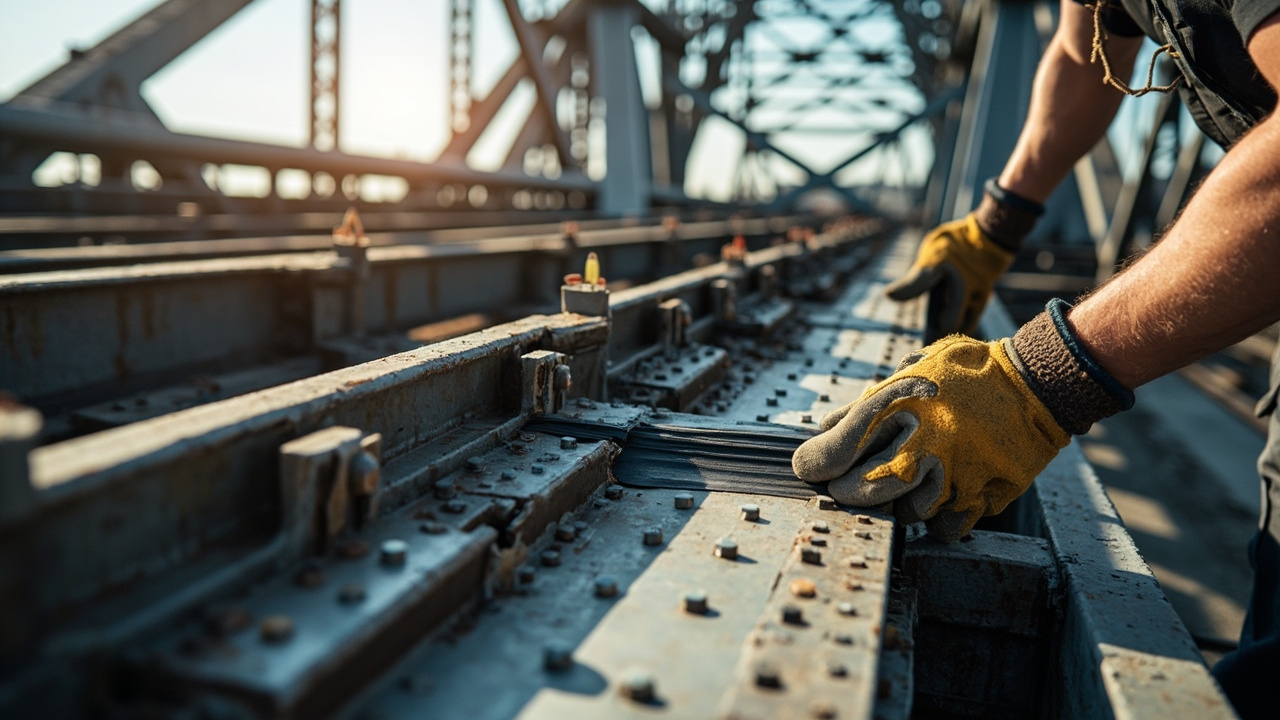
I. Why Butyl Tape Can Achieve Long-Term Sealing
The core value of butyl tape comes from the unique molecular structure of butyl rubber. Its main chain has high saturation and tightly arranged side groups, making it extremely difficult for gas molecules to penetrate, which is also the fundamental reason why butyl rubber is used for automobile inner tubes and vaccine bottle stoppers. When used for steel structure anti-corrosion, it brings four key properties:
- Extremely low air permeability: The water vapor transmission rate of butyl rubber is only about 1/20 of that of natural rubber, which can block the penetration of water vapor, oxygen, and chloride ions over a long period, cutting off the medium required for electrochemical corrosion from the source.
- Persistent self-adhesion, cold application: The self-adhesive layer on the back does not require heating to cure and takes effect upon fitting, while also possessing excellent "cold flow", which can slowly fill the microscopic unevenness of the substrate to achieve truly seamless fitting.
- Wide-temperature weather resistance: Maintains elasticity and adhesion in the range of -40℃ to +90℃, resistant to ultraviolet rays and ozone aging, and does not easily harden or crack under long-term outdoor exposure.
- Resistance to chemical media: Has good tolerance to most acid, alkali, and salt solutions, especially suitable for coastal high-salt-spray and chemical corrosion environments.
II. Reference for Key Technical Parameters
When selecting, the following core indicators should be considered; actual values are subject to the specific product specification sheet:
| Item | Typical Indicator | Description |
|---|---|---|
| Thickness specification | 1.0 / 1.5 / 2.0 mm | Select thicker for higher corrosion grade |
| Operating temperature | -40℃ ~ +90℃ | Covers most outdoor working conditions |
| Elongation at break | ≥ 400% | Adapts to thermal expansion and contraction deformation of substrate |
| Water vapor transmission rate | ≤ 1.0 g/(m²·24h) | Lower value means better barrier property |
| Peel strength | ≥ 15 N/25mm | Ensures long-term non-detachment |
| Salt spray resistance | ≥ 2000 h | Important indicator for coastal engineering |
III. Typical Applications in Steel Structure Anti-Corrosion
- Sealing of bridge steel structure joints: The splicing joints of steel box girders and steel arch ribs are weak points in anti-corrosion. After butyl tape is applied, it forms a continuous sealing layer, and combined with the anti-corrosion paint system, it can significantly extend the maintenance cycle and reduce later high-altitude repair costs.
- Waterproofing of bolted connections: Micro-gaps are easily generated between the nut and washer of high-strength bolts, and water accumulation causes crevice corrosion. Wrapping with butyl tape can achieve seamless encapsulation of the bolt head, preventing "spot rust" from expanding into "sheet rust".
- Weld anti-corrosion protection: On-site welds are the weakest link in anti-corrosion. After slag cleaning and rust removal, butyl tape is applied, and then matched with anti-corrosion coating to form a "paint film + tape" dual protection.
- Pipe flanges and wall-penetrating nodes: The inlet and outlet pipes of storage tanks and flange connections are prone to cracking due to vibration and temperature differences; the high elasticity of butyl tape can absorb deformation and maintain sealing.
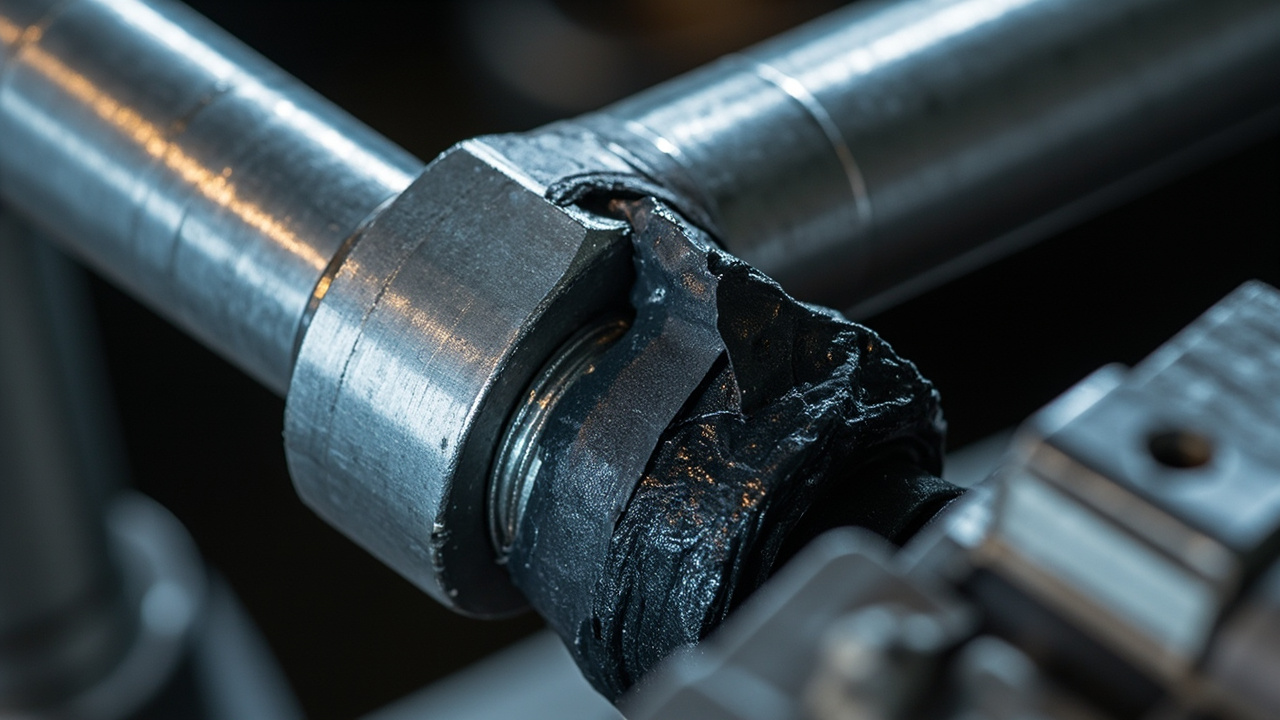
IV. Combined Use with Anti-Corrosion Coatings
Butyl tape itself does not have active rust prevention capability; it plays the role of a "physical barrier" and must work synergistically with the anti-corrosion coating system to maximize its value. The typical "sandwich" structure is as follows:
- Primer layer (cathodic protection): After sandblasting and rust removal to Sa2.5 grade, apply epoxy zinc-rich or inorganic zinc-rich primer (such as inorganic zinc-rich primer), relying on the sacrificial anode effect of zinc powder to provide electrochemical protection.
- Sealing layer (physical barrier): Wrap butyl tape around weak points such as joints, bolts, and welds to form an airtight barrier.
- Topcoat layer (weather-resistant decoration): Apply polyurethane or fluorocarbon topcoat overall to resist ultraviolet rays and provide color decoration.
This combination of "primer + tape + topcoat" is a recognized classic anti-corrosion scheme for harsh environments such as sea-crossing bridges, offshore wind power, and coastal storage tanks, taking into account both active protection and passive sealing defense lines.
V. Key Points for Selection and Construction
- Thickness matched to corrosion grade: Generally, 1.0mm for C3 environment, 1.5mm for C4, and 2.0mm is recommended for C5-M (marine atmosphere) and immersed parts.
- Surface treatment is the key to success: The substrate must be clean, dry, free of oil and loose rust; excessive moisture content will severely weaken the bonding strength, and dehumidification treatment should be applied first if necessary.
- Overlap width no less than 10mm: Ensure sufficient overlap when wrapping or splicing to eliminate exposed gaps, and compact the joint with a hand roller to expel air.
- Preheat for low-temperature construction: When the ambient temperature is below 5℃, the activity of the self-adhesive layer decreases; a hot air gun can be used to slightly preheat the back of the tape to improve initial tack.
- Compact and expel air: After application, be sure to fully roll with a pressure roller to expel interfacial air and avoid "blistering" that leads to later water seepage.
VI. Comparison with Traditional Sealing Materials
Before the popularization of butyl tape, steel structure joint sealing mostly relied on asphalt tape, polyethylene tape, or on-site injected sealant, each with shortcomings, which is why butyl tape has gradually become the mainstream:
| Comparison item | Butyl tape | Asphalt tape | Polyethylene tape | On-site sealant |
|---|---|---|---|---|
| Water vapor barrier | Excellent | Medium | Good | Good |
| Self-adhesion and cold flow | Excellent (auto gap-filling) | Average | Poor (requires adhesive) | Requires curing |
| Temperature range | -40~+90℃ | Easy to flow at high temp | -30~+60℃ | Depends on sealant type |
| Aging resistance | UV/ozone resistant | Prone to cracking and embrittlement | Medium | Depends on sealant type |
| Construction efficiency | High (apply and use immediately) | Medium | Medium | Low (requires curing) |
| Overall life | 15 years or more | 3–5 years | 5–8 years | 5–10 years |
Asphalt tape easily softens and flows at high temperatures and becomes brittle and cracks at low temperatures, with a short life; polyethylene tape has acceptable barrier property but lacks self-adhesion and cold flow, leaving gaps on the fitting surface; on-site sealant requires curing and maintenance, has a long construction cycle, and its quality is greatly affected by manual work. With its comprehensive advantages of "apply and use immediately, automatic gap-filling, long-term stability", butyl tape has an obvious substitution trend in the heavy anti-corrosion field, especially valuable in hard-to-repair areas such as high altitude and underwater.
VII. Storage, Transportation, and Construction Acceptance
Material management and acceptance links are often overlooked, but they directly affect the final sealing quality, and a standardized process should be established:
- Storage conditions: Should be stored in a cool, dry, ventilated, and light-proof warehouse, with ambient temperature recommended at 5–35℃, away from heat sources and solvent vapors, rolls placed upright to avoid compression deformation, general shelf life is 12–24 months.
- Transportation protection: Avoid sun exposure, rain, and scratches from sharp objects during transportation to prevent premature detachment of release paper causing adhesive layer contamination or adhesion.
- Incoming inspection: Verify thickness, width specification, and batch, sample test peel strength and self-adhesiveness, check whether the adhesive layer is uniform and free of bubbles and impurities.
- Process acceptance: During construction, check whether the overlap width meets the standard, whether there is blistering or edge lifting, and whether the pressure roller is properly rolled; concealed work should retain image records.
- Finished product protection: Before topcoat construction after application, avoid trampling, scratching, and oil contamination, and set up temporary protective signs if necessary.
Standardized storage, transportation, and acceptance, combined with the aforementioned surface treatment and compaction/exhaust points, can truly implement the theoretical performance of butyl tape into engineering practice.
VIII. Frequently Asked Questions (FAQ)
Q: Can butyl tape be used alone as an anti-corrosion layer?Not recommended. It is a sealing auxiliary material and needs to be used together with zinc-rich primer and topcoat to form a complete system. Used alone, it cannot provide cathodic protection and also lacks an anti-UV top layer.
Q: What is the service life of butyl tape? With the protection of a matching topcoat and avoidance of long-term direct UV exposure, high-quality butyl tape can have the same service life as the main anti-corrosion system, reaching over 15 years.
Q: Can butyl tape be applied directly on old coating surfaces? The adhesion of the old coating must first be assessed; construction can only proceed after removing flaking and chalking parts and sanding and cleaning, otherwise the seal will fall off together with the old paint.