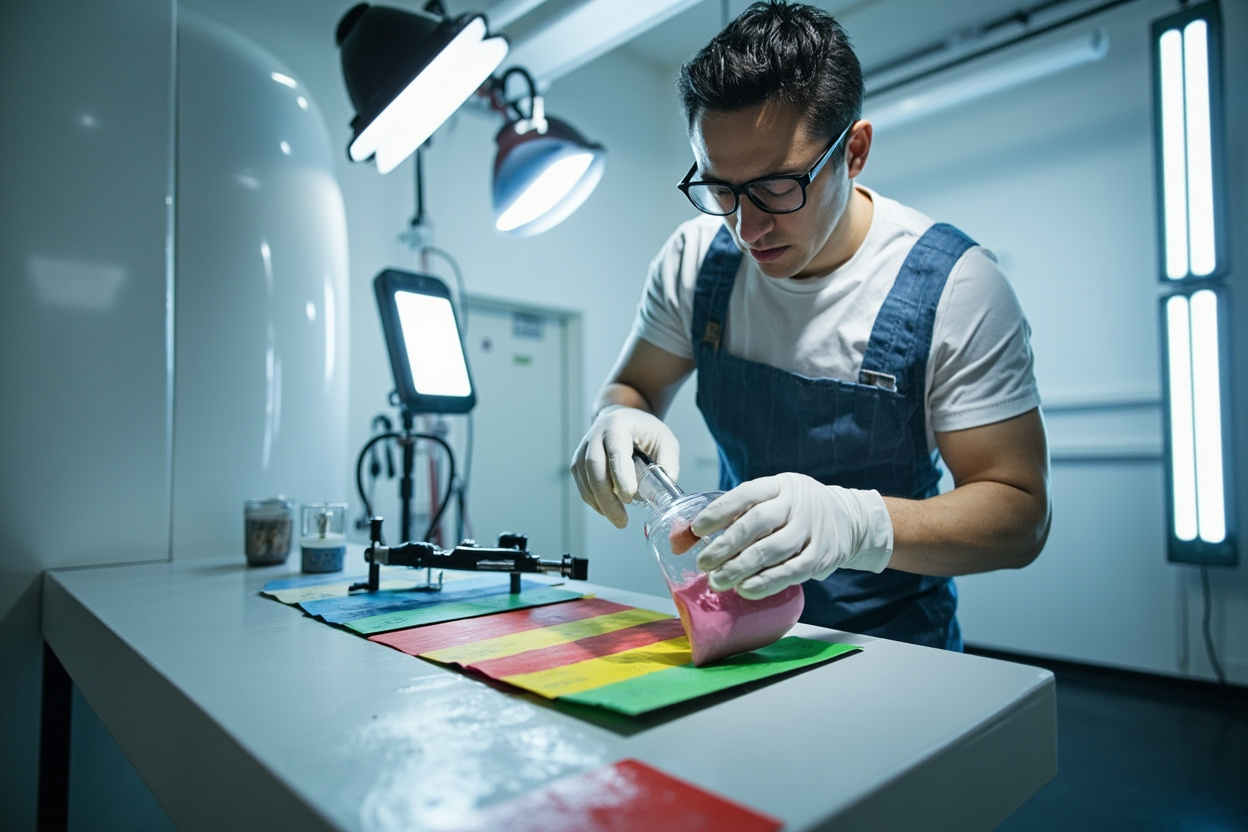
In automotive refinish paint color matching, metallic flakes (aluminum paste) and pearl pigments are two core technologies. They determine the final visual effects of metallic and pearl coatings—from sparkling metallic luster to multi-angle color-shift effects—and correct use enables seamless blending of repaired areas with the original factory finish. This article details the characteristics, mixing methods, and spraying techniques of metallic flakes and pearl pigments.
I. Basic Knowledge of Metal Particles (Silver Powder)
1.1 What are metal particles?
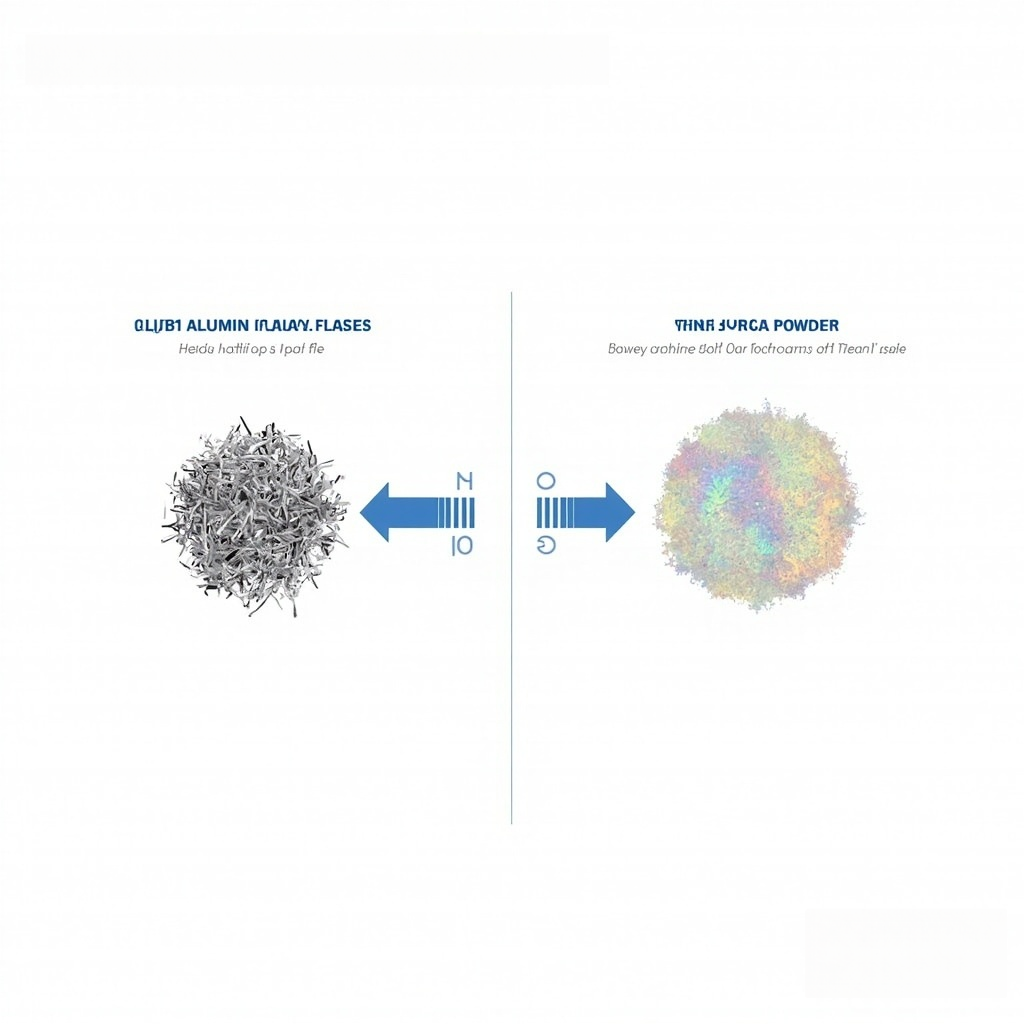
Metallic particles, also known as silver powder, are a type of aluminum pigment with a flake-like structure. When uniformly dispersed in coatings, they reflect light and produce a metallic-like sparkle effect.
1.2 Classification of Metal Particles
| Type | Particle Size | Effect |
|---|---|---|
| Fine Silver Powder | 10-15μm | Fine texture, high coverage |
| Medium Silver Powder | 15-25μm | Standard metallic luster |
| Coarse Silver Powder | 25-40μm | Coarse, strong sparkle effect |
II. Basic Knowledge of Pearl Powder (Pearl Pigment)
2.1 What is pearl powder?
Pearl effect pigment is a pigment composed of mica substrate surface coated with titanium dioxide or iron oxide, producing a pearl-like multi-angle color-shift effect through light interference.
2.2 Classification of Pearl Powder
| Type | Effect |
|---|---|
| White Pearl | White interference color, understated pearl luster |
| Blue Pearl | Blue interference color, cool and stunning effect |
| Gold Pearl | Gold interference color, warm and luxurious feel |
| Red Pearl | Red interference color, vivid and dynamic |
| Purple Pearl | Purple interference color, individualistic and fashionable |
III. Techniques for Blending Metal Particles with Pearl Powder
3.1 Mixing Principles
- Adjust the aluminum/pearl powder first, then adjust the color.
- Add in small, repeated portions: each time add 5–10% and stir thoroughly.
- Comparison light source: Compare the effect under natural light and fluorescent lamp.
- Retain sample chips: record the mixing ratio for each batch.
3.2 Silver Paint Mixing Process
- Select base color masterbatches (white, black, yellow, blue, etc.)
- Add silver powder (typically 15-30%)
- Adjust the side tone (if the side appears bluish/yellowish, add the corresponding tinting paste).
- Adjust the face tone (if the face appears greenish/reddish, add the corresponding colorant).
- Fine-tune precisely in comparison with the original body paint.
3.3 Pearl Paint Mixing Procedure
- First, adjust the base color (the base color of pearl paint determines the final effect).
- Add pearl powder (typically 10-20%)
- Adjust interference color (blue pearl toward blue, gold pearl toward gold)
- Spray-out panel comparison (both dry spray and wet spray must be tested)
- fine-tune to match
IV. Spraying Techniques
4.1 Key Points for Silver Paint Spraying
- Spray gun distance: 15-20 cm
- Spray pressure: 1.5–2.0 bar
- Number of coats: 2–3 coats, wet spray
- Flash-off time: 5–10 minutes between coats
- Key points: Maintain a uniform spray gun travel speed to avoid metallic flake buildup.
4.2 Key Points for Pearl Paint Spraying
- Base color requirement: The base color must be uniform and free of color difference.
- Pearl layer spraying: apply in thin, wet coats with evenly distributed pearl powder.
- Clearcoat: The pearl layer must be clearcoated after it is completely dry.
- Key point: Pearl powder tends to settle; stir thoroughly before use.
V. Practical Case Studies
Case: Toyota White Pearl Paint Mixing
- Base color: 80% white + 20% pearl white
- Pearl powder: white pearl 15%
- Fine-tuning: front side slightly yellow with a touch of blue, side view slightly cyan with a touch of red.
- Effect: milky white from the front, light blue from the side, with an obvious multi-angle color-shifting effect.
Conclusion
The correct use of metallic flakes and pearl powder is the core technique in automotive refinish paint color matching. By mastering the mixing principles and familiarizing yourself with spray techniques, you can achieve repair results indistinguishable from the original factory finish. Kexin New Materials provides a complete automotive paint product line and color-matching system support; feel free to contact us for more information.
For further technical guidance, please feel free to contact us at any time.
Further Reading:Differences and Selection between 1K and 2K Color Tinters · Spray Gun Nozzle Size Selection: 1.3mm vs 1.5mm