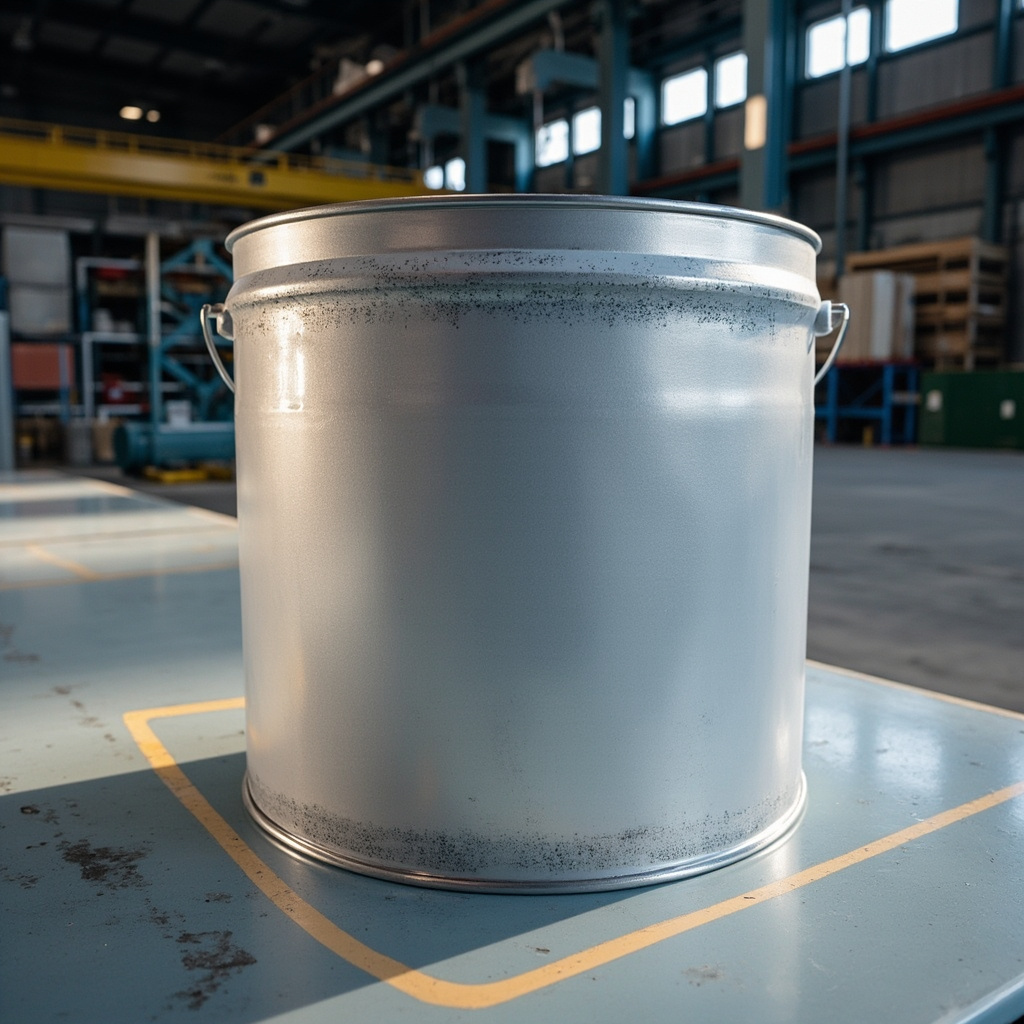
Introduction: The Science and Engineering of Epoxy Zinc-Rich Primer as the "First Line of Defense" in Steel Structure Corrosion Protection
In heavy-duty anti-corrosion coating systems, epoxy zinc-rich primer is recognized as the “first line of defense”
for steel structures. Its core anti-corrosion mechanism is not simple ”barrier isolation”, but electrochemical cathodic protection
— the zinc powder in the coating (content ≥80wt%) acts as a sacrificial anode, preferentially oxidized before the corrosive medium reaches the steel substrate, protecting the steel from corrosion by means of ”self-sacrifice”. This mechanism endows epoxy zinc-rich primer with >15-25 years of long-term protection capability
in extreme corrosive environments such as offshore platforms (C5-M/CX environments), sea-crossing bridges, petrochemical storage tanks, and wind turbine towers. However, the quality of epoxy zinc-rich products on the market varies greatly — insufficient zinc content, unreasonable formulations, and non-standard construction are the three main causes of anti-corrosion failure. Based on the latest standard HG/T 3668-2020 "Zinc-rich Primer", the international specification ISO 12944-5, and industry engineering practice, this article provides a complete engineering technical guide from formulation chemistry, zinc powder electrochemistry, construction technology to quality acceptance.
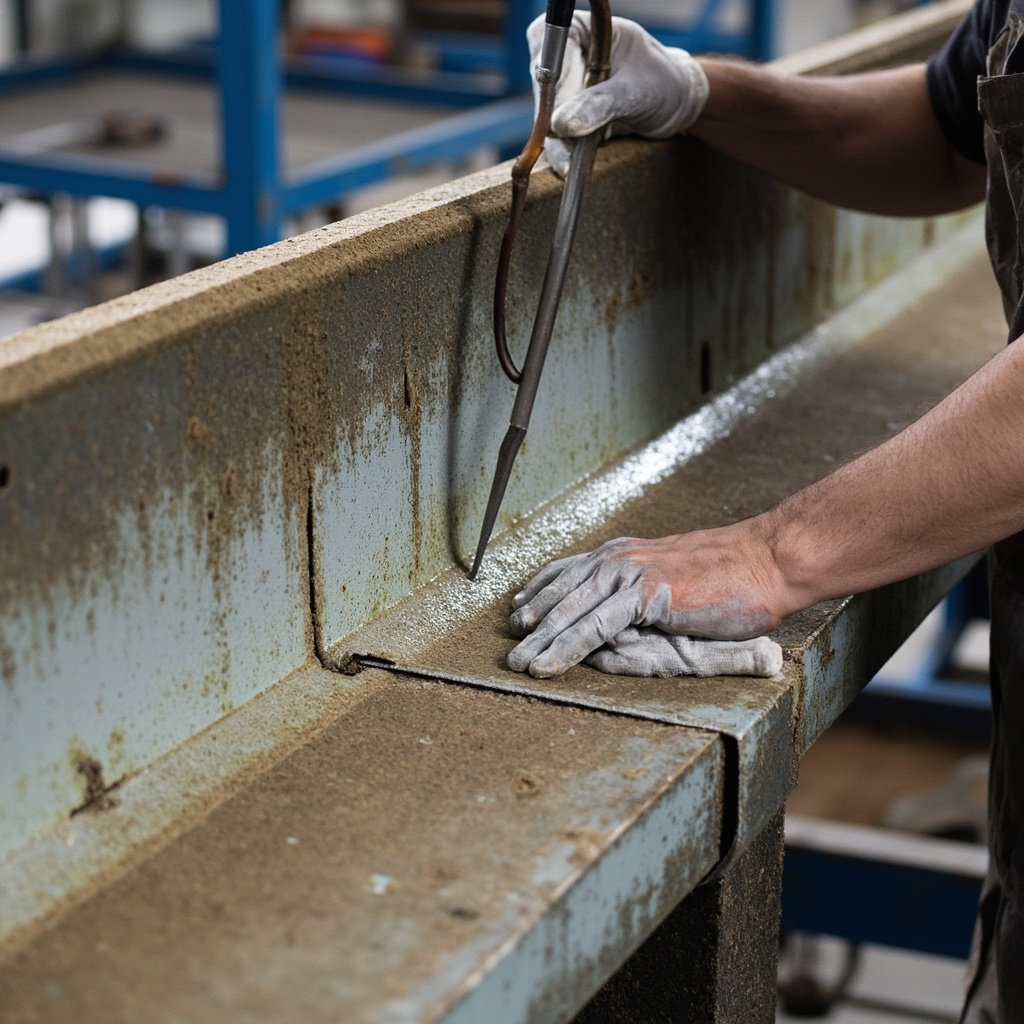
Epoxy zinc-rich primer is a two-component heavy-duty anti-corrosion primer using epoxy resin as the binder, high-purity zinc powder (metal zinc in dry film ≥60-80wt%) as the functional filler, and polyamide/phenalkamine as the curing agent. Its anti-corrosion mechanism is divided into two stages—Stage 1 (cathodic protection): zinc powder particles form electrical contact with each other and with the steel substrate—zinc acts as a sacrificial anode and corrodes preferentially—protecting the steel; Stage 2 (barrier protection): zinc corrosion products (ZnO/basic zinc salts) fill the coating pores—forming a dense barrier layer—blocking electrolyte penetration. According to the HG/T 3668-2020 standard—classified by metal zinc content in non-volatile matter into three grades: Type I (≥80%—highly corrosive environments), Type II (≥70%—moderately corrosive), and Type III (≥60%—low corrosion). Suitable for long-term anti-corrosion of steel structures under C3 to CX corrosion categories as specified in ISO 12944-2.
I. Epoxy Zinc-Rich vs Inorganic Zinc-Rich vs Cold Spray Zinc — A Comprehensive Comparison of the Three Major Zinc-Based Anticorrosive Primers
In engineering selection, the most common confusion is "epoxy zinc-rich, inorganic zinc-rich, cold spray zinc—what exactly is the difference between the three, and which one should be chosen?" The following table provides a systematic comparison across 12 dimensions:
| Comparison Dimension | Epoxy Zinc-Rich Primer | Inorganic Zinc-Rich Primer | Cold Spray Zinc |
|---|---|---|---|
| Film-Forming Substance | Epoxy resin + polyamide/phenalkamine curing agent | Ethyl silicate (moisture-cured)/silicate alkali metal salt | High-purity zinc powder + solvent-based resin (single component) |
| Metallic Zinc Content in Dry Film | 60-80% (HG/T 3668-2020 Grade 3) | 70-85% | ≥96% (extremely high—close to hot-dip galvanizing) |
| Anti-Corrosion Mechanism | Cathodic protection (first stage) + zinc corrosion product barrier (second stage) | Cathodic protection + chemical bonding (Si-O-Fe covalent bond) | Pure cathodic protection (zinc powder in direct electrical contact) |
| Adhesion (Pull-off Method) | ≥6MPa (physical + chemical adsorption) | ≥6MPa (chemical bonding—stronger) | 3-5MPa (mainly physical adhesion) |
| Salt Spray Resistance (Single Layer) | 1000-1500h | 1500-3000h | 2000-4000h (thickest zinc layer) |
| Heat Resistance | ≤120°C (limited by epoxy resin Tg) | ≥400°C (SiO₂ inorganic skeleton) | ≤150°C |
| Flexibility | Excellent (flexible epoxy resin / less prone to cracking) | Poor (pure inorganic—brittle—prone to cracking) | Medium |
| Surface Preparation Requirement | Sa 2.5 (some low-surface tolerance) | Sa 2.5-Sa 3 (extremely strict requirement) | Sa 2.5-St 3 (power tool acceptable) |
| Application Environment | ≥5°C/RH<85%/high tolerance | RH≥65% (moisture-cured—humidity acts as curing agent) | ≥5°C/RH<85% |
| Recoat Interval (23°C) | 1.5h-7 days (wide window—user-friendly application) | 2-4h (extremely narrow window—MEK test required) | 2h-24h |
| Compatible Topcoat | Directly apply epoxy micaceous iron oxide + PU topcoat | Need to spray sealer/mist coat first—otherwise blistering and pinholes | Can be directly topcoated or used alone |
| Repairability | Easy to repair | Difficult—prone to delamination | Easy to touch up |
| Typical Application Scenarios | General steel structures/bridges/tank exteriors/workshops | Offshore platforms/sea-crossing bridges/tank interiors (anti-static)/high-temperature pipelines | Bolts/welds/irregular parts/galvanized layer repair |

II. Zinc Content Classification and Key Performance Indicators in HG/T 3668-2020
| Item | Type I (High Zinc) | Type II (Medium Zinc) | Type III (Standard) | Test Method |
|---|---|---|---|---|
| Metal zinc content in non-volatile matter (wt%) | ≥80% | ≥70% | ≥60% | DSC method (arbitration)/chemical analysis/EDTA titration/XRF |
| Applicable corrosion environment (ISO 12944-2) | C4/C5/CX (High-Extreme corrosion) | C3/C4 (Medium-High corrosion) | C2/C3 (Low-Medium corrosion) | — |
| Non-volatile matter (solid content) (%) | ≥70 | ≥65 | ≥60 | GB/T 1725 |
| Drying time (surface dry / hard dry — 23°C) | ≤2h/≤12h | ≤2h/≤12h | ≤2h/≤12h | GB/T 1728 |
| Adhesion (pull-off method) | ≥6MPa | ≥5MPa | ≥4MPa | ISO 4624/GB/T 5210 |
| Salt spray resistance (single coat — scribed cross) | ≥1000h no red rust | ≥600h no red rust | ≥300h no red rust | ISO 9227-NSS/GB/T 1771 |
| Impact resistance | ≥50kg·cm | ≥50kg·cm | ≥40kg·cm | GB/T 1732 |
| Storage stability (50°C × 30 days) | Soft sediment layer, redispersible — no hard caking | GB/T 6753.3 | ||
| Pot life (after mixing — 23°C) | ≥6-8h | — | ||
FAQ
Q1: Does "≥80%" zinc powder content refer to metallic zinc content or zinc powder content? Why can't the two be confused?
This is the most easily confused concept in epoxy zinc-rich primer. Zinc powder content refers to the mass percentage of zinc powder (including impurities such as metallic zinc and zinc oxide) in the dry film—usually No. 0 zinc powder (metallic zinc purity about 96%) is used—therefore dry film zinc powder content 80% ≈ dry film metallic zinc content 76.8%
. HG/T 3668-2020 clearly stipulates that "metallic zinc content in non-volatile matter" is used as the classification basis—not "zinc powder content"—because only metallic zinc (Zn⁰) can provide cathodic protection—zinc oxide (ZnO) has no electrochemical activity. "Zinc powder content 80% ≠ metallic zinc content 80%—the two differ by about 3-5 percentage points—this is the number most easily misread on test reports."
Q2: Why does the "two-stage model" of cathodic protection show that the protective capability of epoxy zinc-rich coatings "not decrease but increase" in the later service period?
According to research from the Technical University of Denmark (Weinell & Rasmussen) — the anti-corrosion of epoxy zinc-rich coatings is divided into two stages: (1) Initial stage — zinc powder particles form an electrical contact network between themselves and with the steel substrate — zinc acts as a sacrificial anode and corrodes preferentially — providing "active" cathodic protectionOpen circuit potential is maintained between -0.8 and -1.0V vs SCE
— proving the cathodic protection is operating effectively. This stage typically lasts >2-5 years (depending on zinc powder content and corrosive environment); (2) Long-term stage — zinc corrosion products (ZnO/Zn(OH)₂/basic zinc carbonate) gradually fill the pores and micro-cracks inside the coating — forming a dense "secondary barrier layer" even though the electrical contact between zinc particles weakens due to accumulation of corrosion productsthe coating instead becomes denser due to the "self-filling effect" — barrier protection replaces cathodic protection as the dominant mechanism
. This is the unique aging curve of epoxy zinc-rich coatings "becoming denser with longer service" — which is exactly opposite to ordinary epoxy coatings that gradually degrade with aging.
Q3: PVC/CPVC=0.95-1.05——Why must zinc-rich epoxy primer be designed near the "critical point"?
The ratio of PVC (pigment volume concentration) to CPVC (critical pigment volume concentration) determines the density and conductivity of the coating. PVC/CPVC1.1——insufficient resin——coating develops voids——although electrical contact between zinc particles is ensured——mechanical properties and barrier performance of the coating severely decline——adhesion <3MPa. PVC/CPVC=0.95-1.05 precisely ensures "zinc particles contact each other (conductive path formed) + resin just fills the voids (mechanical properties not reduced)" achieving the "dual-optimal balance" of cathodic protection and physical barrier. This golden ratio was derived from decades of formulation trials and electrochemical impedance spectroscopy (EIS) verification: "deviating from 0.95-1.05——means——a formulation slide from anti-corrosion to corrosion."
Q4: Why must epoxy zinc-rich primer be used with "epoxy micaceous iron oxide intermediate paint + polyurethane topcoat" to form a three-layer system—and "cannot be used alone"?
As an organic zinc-rich coating, the epoxy resin in epoxy zinc-rich primer slowly degrades in UV and moisture environments—when used as a single layer—(1) UV breaks the C-C/C-O bonds of the epoxy—the coating chalking—zinc powder exposed—rapid consumption—cathodic protection life shortened from >5-10 years to <2 years; (2) moisture penetration—accelerates zinc powder consumptionthe corrosion products of zinc (white zinc rust/Zn(OH)₂) expand in volume by >3 times
—generates internal stress inside the coating—the coating blisters and cracks. Epoxy micaceous iron oxide intermediate paint (contains flake-like micaceous iron oxide—labyrinth extends O₂/H₂O diffusion paths) provides the first barrier—polyurethane topcoat (UV resistant—weather resistant) provides the second protectionthe three have clear functional division: primer = sacrificial anode (active anti-corrosion) + intermediate paint = barrier (passive blocking) + topcoat = weather resistance (outer protection)—missing any layer—the service life of the overall system is shortened by >50%.
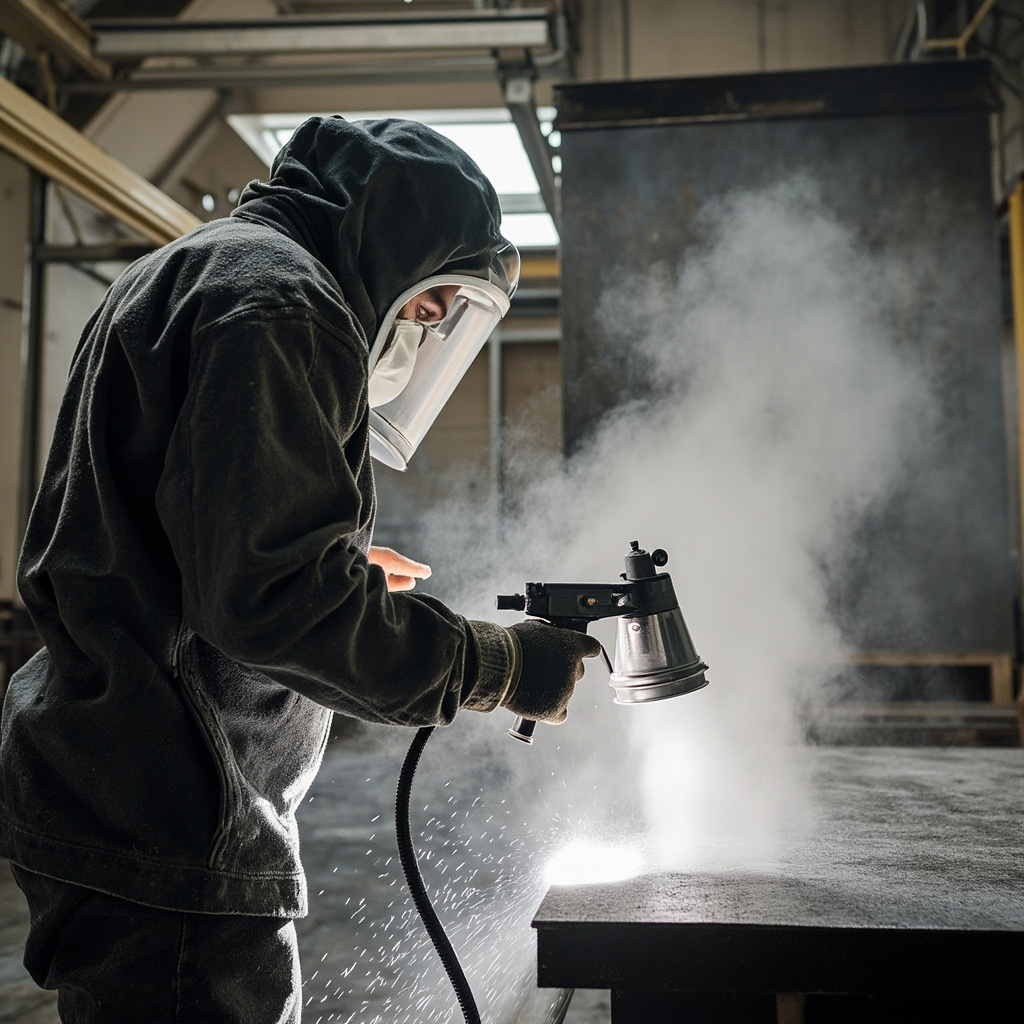
Q5: Surface Treatment—Why is "Sa 2.5" the "line between life and death" for epoxy zinc-rich primer?
Sa 2.5 (near-white grade—ISO 8501-1) requires that after abrasive blasting—more than 95% of the steel surface area is free of visible grease, dirt, mill scale, rust, and coatings—only slight shadow-like residues are permitted. The "low tolerance" of epoxy zinc-rich for surface preparation is lower than that of inorganic zinc-rich—but it is by no means "fine without treatment." The key of Sa 2.5 is to provide: (1) Cleanliness—remove mill scale and rust—so that zinc powder can achieve direct electrical contact with the steel substrate—"mill scale is an insulator—zinc powder/mill scale/steel—open circuit—cathodic protection = zero"; (2) Anchor roughness—Rz > 50 μm—provides mechanical anchoring for the coating—pull-off adhesion > 6 MPa. If surface preparation only reaches St 3 (power tools—visible rust residue to the naked eye)—the adhesion of epoxy zinc-rich may drop to < 3 MPa—cathodic protection area < 50%—"money saved on surface treatment = half the coating service life."