Introduction: Not All "Fires" Are the Same — The Vast Difference Between Building Fires and Chemical Plant Fires
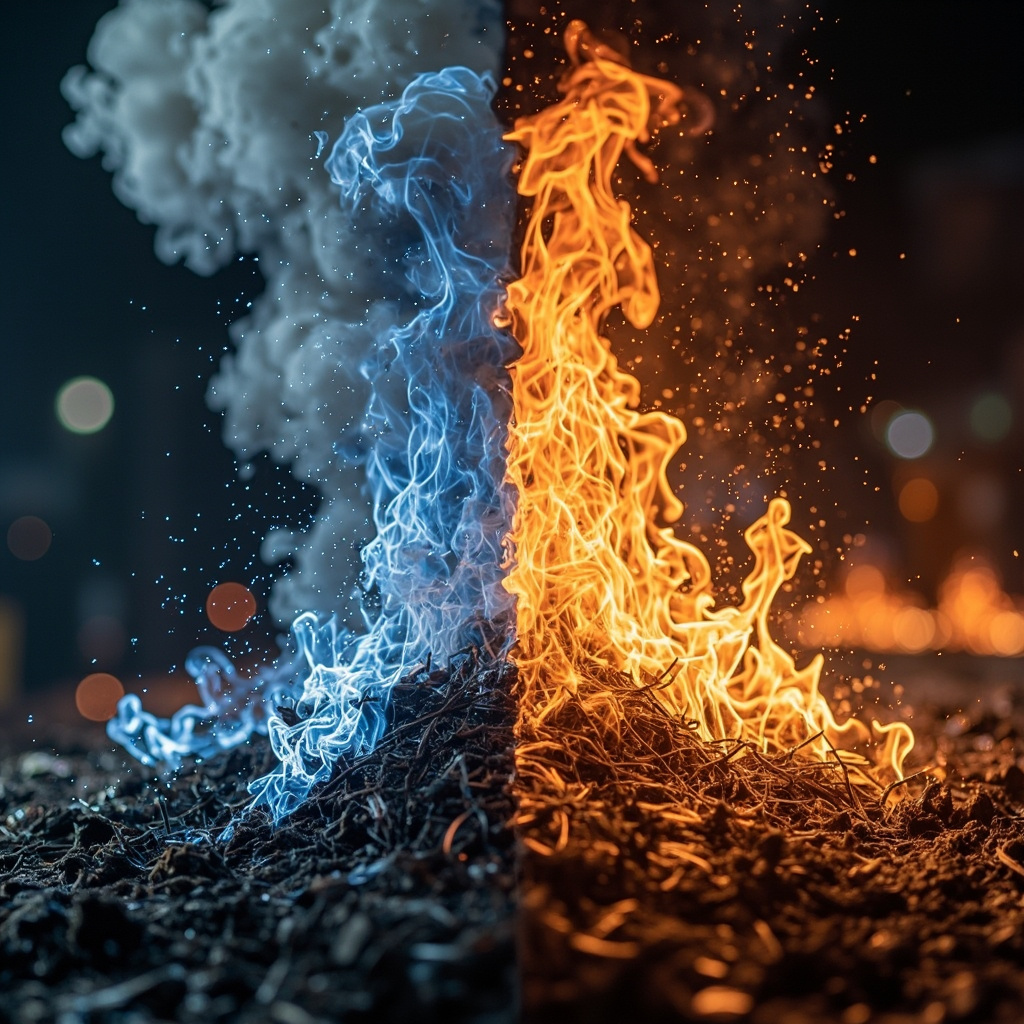
Fire resistance design for buildings (ISO 834/GB 9978) and fire protection for petrochemical facilities (UL 1709) have completely different fire temperature-rise curves. ISO 834 (cellulosic fire) — simulates the combustion of wood/paper/textiles — slow temperature rise — reaches 821°C at 30 min — provides longer response time for personnel and fire protection systems. UL 1709 (hydrocarbon fire) — simulates the combustion of oil/natural gas/chemicals — extremely rapid temperature rise reaches 1093°C within 5 min — exceeds 1100°C within 10 min. Under such a fast temperature rise, steel structures reach the critical temperature (550°C) in a very short time — requiring the fireproofing coating to build an insulating char layer within the shortest time, at the highest expansion rate. Intumescent coatings qualified under ISO 834 may fail within 30–60 minutes under UL 1709, because the expansion and charring speed of the coating cannot keep up with the temperature rise rate of the hydrocarbon fire — before the coating completes its "expansion" — the steel substrate has already reached the critical temperature — fire protection fails.
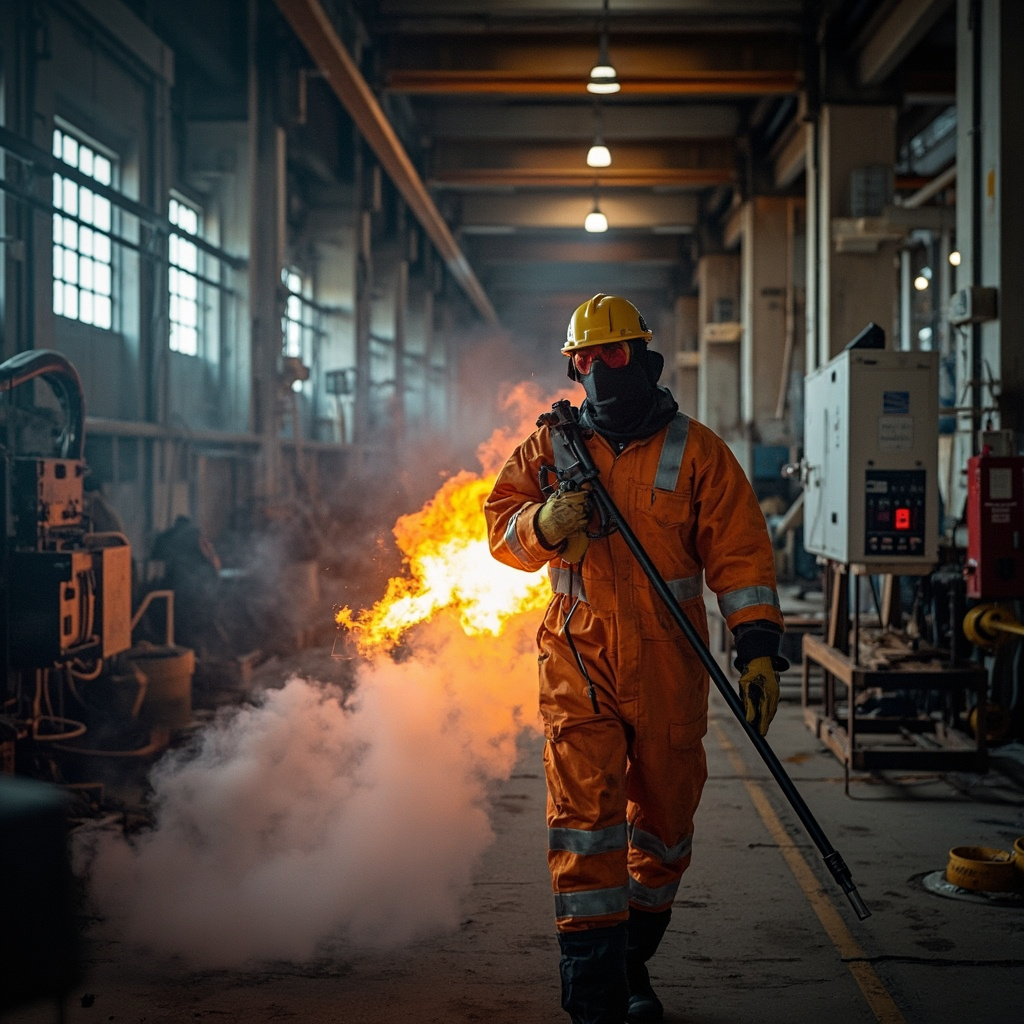
I. Comparison of Heating Curves between ISO 834 (Cellulose Fire) and UL 1709 (Hydrocarbon Fire)
| Time (min) | ISO 834 Temperature (°C) | UL 1709 Temperature (°C) | Temperature Difference (°C) | Challenge to Coating |
|---|---|---|---|---|
| 5 | 576 | 1093 | 517 | UL 1709——coating must complete expansion within <5 min——extremely short window |
| 10 | 678 | >1100 | >422 | ISO 834——coating's expansion can last >30 min |
| 30 | 821 | >1100 (stable) | >279 | UL 1709——>1100°C constant temperature / long-term thermal stability of char layer |
| 60 | 925 | >1100 | >175 | ISO 834——temperature rises slowly / continues to rise |
FAQ
Q1: Why is the "5min to 1093°C" of UL 1709 an extreme challenge for intumescent coatings?The intumescent process of intumescent coatings (APP/PER/MEL) — (1) APP (ammonium polyphosphate) decomposes and releases phosphoric acid (catalyzing the esterification and charring of PER — >200°C); (2) MEL (melamine) decomposes and releases gases such as NH₃/CO₂ (foaming — >250°C); (3) PER dehydrates under phosphoric acid catalysis → charring — forming an expanded char layer (>300°C). The total time of these three reactions is 2-5min under the heating of ISO 834 — from 0→576°C (5min) — the temperature window is sufficient for the coating to complete expansion. But under UL 1709 — 0→1093°C in only 5min — the coating's APP/PER/MEL are "skipped" within seconds from the optimal reaction temperature — incomplete reaction — incomplete expansion — insufficient char layer — steel reaches critical temperature in 10-15min — fire protection failure.
Q2: Why is dipentaerythritol (DPER) more suitable than monopentaerythritol (PER) for hydrocarbon fires?PER's melting point (approx. 260°C) and char-forming temperature (>300°C/under phosphoric acid catalysis)——after coking it produces a carbonaceous skeleton. DPER (dimer/two PER molecules linked by one oxygen) has a higher carbon content (approx. 45% vs PER 41%), and the char layer formed after carbonization is more dense/higher strength under sustained high temperatures >1100°C——the char layer's ablation rate is slower——fire protection service life is extended. DPER is the "standard char-forming agent" for hydrocarbon fire intumescent coatings; PER is only suitable for cellulose fires.
Q3: Why does microencapsulated APP improve the fire performance against hydrocarbon fires?Ordinary APP under rapid heating >300°C — the decomposition products of APP (phosphoric acid/polyphosphoric acid) are unevenly distributed in the char layer (local volatilization/local excess) — resulting in non-uniform char layer quality. Microencapsulated APP (APP particles surface-coated with melamine-formaldehyde MF resin) — (1) APP is "protected" inside the MF capsule from early thermal degradation — it is released only when the coating temperature rises above >350°C — the release timing is more precise (exactly within the active window of PER char formation); (2) the decomposition products of the MF capsule shell (nitrogen-containing gases) — act as an additional blowing agent to enhance the expansion ratio.
Q4: What is the difference between Jet Fire (Jet Fire/ISO 22899-1) and Pool Fire (Pool Fire/ISO 20041-1)?Jet Fire——High-pressure gas/liquid ejects at high speed from a pipe/container rupture with high-speed ejection + combustion, flame temperature >1300°C——and there is also erosion from high-speed airflow (>100m/s) (mechanical impact + high-temperature oxidation). Under the dual attack of "heat + erosion" from jet fire, the charred layer of the coating may be physically "blown away" by the airflow, causing fireproofing failure. Pool Fire——Liquid fuel forms a "flame pool" on the ground, temperature >1100°C——but without erosion from high-speed airflow——the challenge to the coating is "only" high temperature——the requirement for charred layer strength of intumescent coating is lower than that for jet fire. Jet Fire is the highest-level test for coating fireproofing in petrochemical and offshore platform applications.
Q5: How is the "char layer ablation rate" of hydrocarbon fire coatings measured?Under UL 1709 heating conditions—every >10min—(1) stop heating—> measure the residual char layer thickness; (2) use SEM to analyze the microstructure of the char layer (pore size/wall thickness—evaluate its thermal insulation performance)—plot the "residual thickness-time" curve—extrapolate the time of "complete char layer ablation" (residual thickness = 0)—which is the coating's "fire resistance limit".
Q6: What are the formulation differences between epoxy intumescent (suitable for hydrocarbon fires) and acrylic intumescent (suitable for cellulosic fires)? Epoxy intumescent — epoxy resin (heat resistance >150°C) + curing agent (amine/acid anhydride) — the coating already has higher Tg and mechanical strength at room temperature; the char layer strength in fire is > acrylic type — suitable for hydrocarbon fires (>1100°C/requires high-strength char layer). Acrylic intumescent — acrylic emulsion (single component/easy application) — low Tg (<50°C) — softens early in fire — expands rapidly — but char layer strength and thermal stability are weaker than epoxy type — suitable for cellulosic fires (<950°C).
Q7: Engineering practice of "passive fire protection" (PFP/Passive Fire Protection) for hydrocarbon fires on offshore platforms?Offshore platforms (drilling/production)——(1) Steel structure columns and supports——Epoxy intumescent (PFP/DFT>10mm)——UL 1709/120min (hydrocarbon fire/2h)——Coating thickness >10mm (extremely thick——requires multiple spray applications); (2) Equipment (separator/compressor)——Intumescent + cement vermiculite spray (dual protection layer); (3) Escape routes——Epoxy intumescent (>60min fire resistance). The total weight of offshore PFP coating can reach >50kg/m²——which has a significant impact on platform structural load——and must be considered at the design stage.
Q8: Fireproofing requirements for coatings under tunnel fire (RWS curve / Dutch standard)?RWS (Rijkswaterstaat / Netherlands) tunnel fire curve——simulates tanker truck fire inside a tunnel>1200°C/120min——more severe than UL 1709. Tunnel fireproofing coatings——(1) Extremely high char layer thermal stability——prevent excessively fast ablation of the char layer at >1200°C; (2) "repairability" after fireproofing——after a tunnel fire, damaged areas of the coating can be locally repaired——no need for full replacement.
Q9: How does the "section factor" (Hp/A/Section Factor) in fireproof coating engineering affect the coating thickness design?Hp/A = the ratio of exposed perimeter to cross-sectional area of steel structure. The larger the ratio — the faster the temperature rise of the steel member — the greater the required fireproof coating thickness. For example — I-beam (I/H-section steel, very large Hp/A — thin flanges — extremely fast heating) compared to box section steel (small Hp/A — thick plates — slow heating) — the coating thickness required for the former may be more than 2 times that of the latter. The TDS of fireproof coating must provide a "recommended thickness table under different Hp/A values", based on which engineers design the fire protection scheme for steel structures.
Q10: Will the "validity period" expansion function of fireproof coating decay?Intumescent coatings' APP slowly reacts with moisture and CO₂ in the air during long-term service (>10 years)——partially hydrolyzes into ammonium hydrogen phosphatelosing expansion catalytic ability——expansion ratio decays >30%——fireproof performance declines. Every 5-8 years requires "expansion ratio random inspection" (GB 14907) for the fireproof coating: take coating samples and burn them in the lab at >500°C——measure the ratio of expanded thickness to original thickness——if 50 times)——judge expansion ability decayed——need to recoat the fireproof coating.
Related Reading
Summary
The difference in heating curves between hydrocarbon fires (UL 1709 / reaching 1093°C in 5 min) and cellulosic fires (ISO 834 / reaching 821°C in 30 min) is the most important "fire scenario" variable in fireproof coating formulation design. The core of hydrocarbon-fire coatings—high-melting-point charring agent (DPER), microencapsulated APP, and epoxy matrix—provides fire protection of over 120 min at temperatures above 1100°C. Kexin New Materials provides customers with a full range of intumescent fireproof coating products and engineering support for both cellulosic and hydrocarbon fires.