Introduction: Fireproof Coatings — Enabling Steel Structures to Withstand Critical 180 Minutes in Raging Fire
The fatal weakness of steel structures (high-rise buildings/bridges/petrochemical facilities)When the temperature rises above 500°C—the yield strength of steel is halved—above 600°C—load-bearing capacity is lost—structural collapse
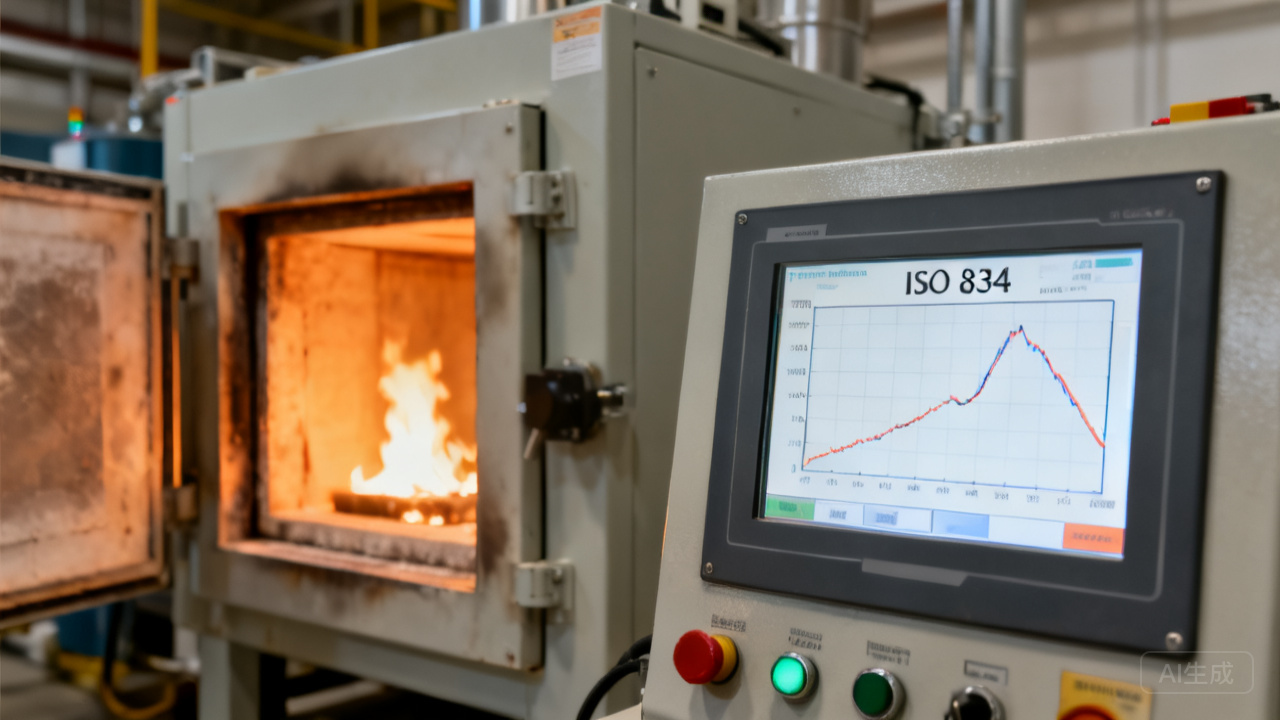
—The direct cause of the collapse of the 9/11 World Trade Center—not the plane impact—but the burning of aviation kerosene (>1000°C)—failure of the fireproof coating on the steel structure—softening of the steel—"pancake-style" collapse of the floors. The mission of fireproof coatingUnder the standard fire curve (ISO 834/room temperature → >500°C/5min → >800°C/30min → >1000°C/120min)—delay the temperature of the steel structure from >1000°C to 60-180 minutes of "golden time"
—This is where the value of fireproof coating lies in "using a few millimeters of coating—to exchange for hundreds of lives."
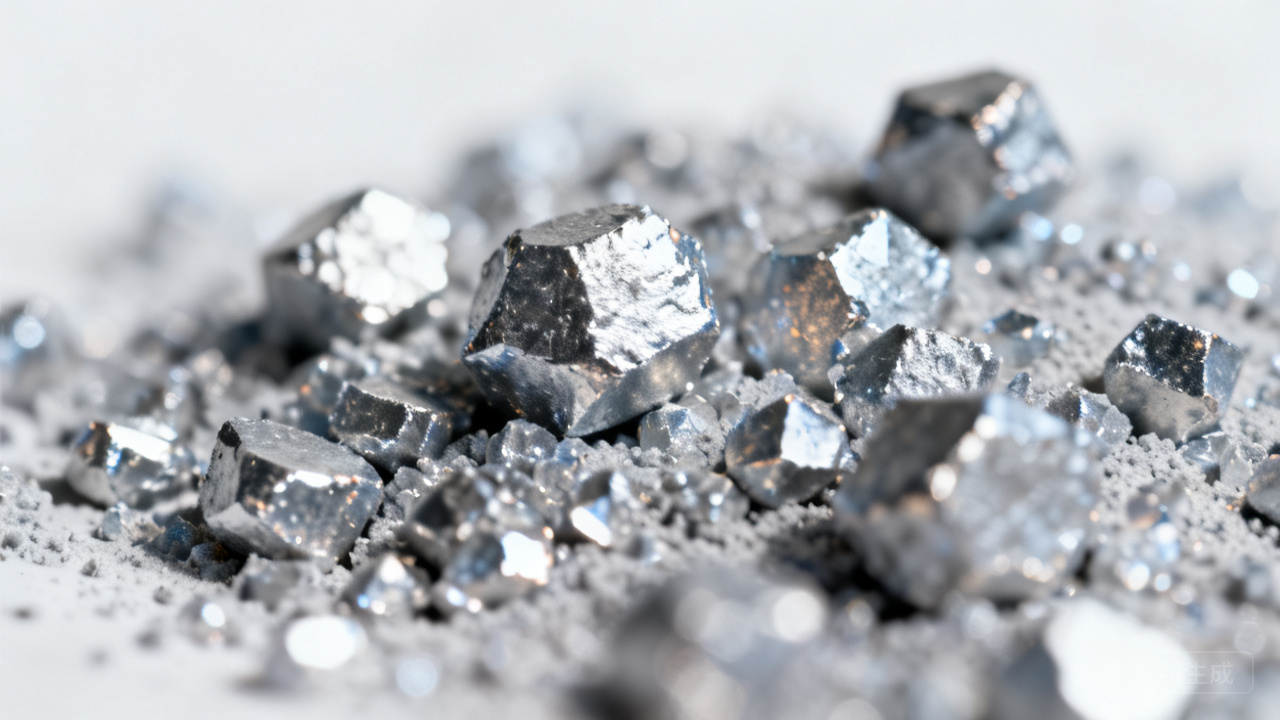
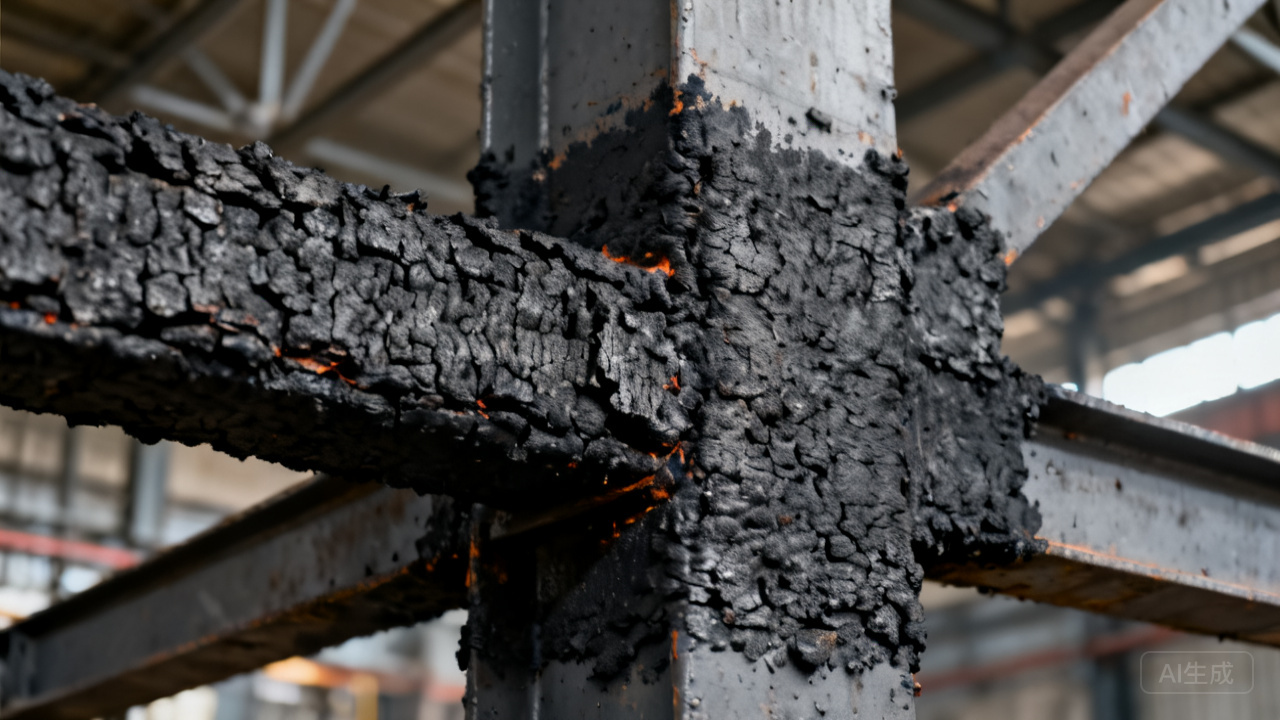
Intumescent fireproof coating is a class of special functional coating composed of three key functional components—acid source (ammonium polyphosphate APP—catalyzes dehydration and charring), carbon source (pentaerythritol PER—provides carbon skeleton), and blowing agent (melamine MEL—foaming and expansion)—combined with binder resin (epoxy/acrylic/alkyd). Under high temperature in fire (>200°C), through a three-step reaction of "acid-catalyzed dehydration → carbonization → gas blowing expansion", the coating expands >50–100 times, forming a porous foam carbon layer >2–5 cm thick (thermal conductivity <0.1 W/m·K), keeping the temperature of the underlying steel structure within a safe range (<140°C) for 60–180 minutes, thereby protecting the integrity of building structures and the safety of personnel.
I. The "Three-Source" Chemical System of Intumescent Fire-Resistant Coatings
| Component | Representative Compound | Decomposition Temperature (°C) | Mechanism of Action | Typical Formulation (%) | Key Quality Indicators |
|---|---|---|---|---|---|
| Acid Source (Dehydrating Agent) | APP (Ammonium Polyphosphate / Polymerization Degree >1000) | >215°C——Releases polyphosphoric acid | Polyphosphoric acid catalyzes dehydration and esterification of -OH in carbon source (PER)——Forms phosphate ester——Further pyrolysis——Carbonization "Dehydration and carbonization catalyst" | 25-35 | Polymerization degree >1000 (water-resistant / non-migrating) / P₂O₅ content >55% / Water solubility <0.5g/100ml |
| Carbon Source (Carbonific) | PER (Pentaerythritol / Dipentaerythritol) | >250°C (when coexisting with APP——Esterification occurs earlier) | Polyhydroxy (-OH) esterifies with polyphosphoric acid——Dehydration——Carbonization——Forms graphitized carbon layer ("Carbon skeleton") | 10-15 | Purity >98% / Hydroxyl content (theoretical OH% = 58.8%) / Fineness <50μm |
| Gas Source (Spumific) | MEL (Melamine) | >300°C——Sublimation + Decomposition | Upon heating, sublimates + decomposes——Releases inert gases such as NH₃ / N₂ / CO₂——"Blows up" the molten carbon layer into foam——Expansion ratio >50×——Carbon layer thickness >2-5cm | 10-15 | Purity >99% / Narrow decomposition temperature range (300-350°C "Concentrated foaming") |
| Base Resin | Epoxy / Acrylic / Alkyd | Variable (>150°C softening) | At low temperature——Provides physical integrity and adhesion of the coating——At >200°C——Resin softens——Becomes "Molten carrier" allowing gas source to blow up——Carbon source / acid source react within the resin | 25-40 | Tg / Softening point——Matched with reaction temperature of APP / PER / MEL "Synchronized with three sources" |
FAQ
Q1: The classic ratio of APP/PER/MEL (3:1:1) — why this ratio — what happens if it shifts?
3:1:1 (APP:PER:MEL — weight ratio) is the "optimal synergy" derived from >40 years of optimization and countless formulation trials (1) APP dominates (>50% of total three sources) — because sufficient polyphosphoric acid is needed — to catalyze the esterification of all PER's -OH — insufficient APP — some PER remains unesterified — cannot carbonize — carbon layer "loose skeleton" expansion ratio <20 — fire resistance time <30min
; (2) PER 10-15% — sufficient carbon "skeleton" but not excessive — too much PER — carbon layer too dense — gas source difficult to blow up "poor expansion" — insufficient PER — carbon layer too thin "blown through" no insulation; (3) MEL 10-15% — provides appropriate amount of gas — too much MEL "excessive foaming" carbon layer too thick but "porous and fragile" low structural strength — carbon layer "cracks and falls off" under flame erosion — insufficient MEL "insufficient foaming" thin carbon layer — no insulation. Formulation shift ±2% — fire resistance may drop >30% "three sources" ratio — is the "life formula" of fireproof coatings.
Q2: Why is the "thermal conductivity" of the intumescent char layer such that a char layer >2cm thick can reduce 1000°C to <140°C?
Intumescent char layer — foam structure (closed-cell/open-cell — >90% porosity) — filled with N₂/CO₂ inert gas — thermal conductivity of gas (>0.01-0.03W/m·K — far lower than steel >50 — carbon >5) overall effective thermal conductivity of char layer <0.1W/m·K — 1/500 that of steel
. (1) Fourier's law — steady-state heat flow through char layer Q=(k/δ)×(T_fire-T_steel) — k=0.1 — δ=0.03m (>3cm char layer) — temperature difference ΔT≈900°C — Q≈3000W/m² — while steel structure dissipates heat to surroundings — can withstand this heat flux — steel temperature stabilizes at <140°C; (2) char layer 3× — steel >500°C — failure. Char layer "thickness" determined by expansion ratio (>50× — initial 50μm DFT — expands → >2.5cm char layer — 5cm char layer). "Thickness is life" — this is why fireproof coating DFT needs >0.5-5mm — 10-100× thicker than conventional anti-corrosion coatings.
Q3: Epoxy, acrylic, or alkyd — which binder is most suitable for APP/PER/MEL systems?
(1) Epoxy — excellent chemical resistance + adhesion — but epoxy does not "soften" at >200°C and directly degrades — carbonizes — the carbon layer is "hard and brittle" and "cracks brittlely" under flame impingement, making fire resistance unstable — usually requires adding a "toughening agent" (phosphate ester — solid plasticization — improves carbon layer toughness) — epoxy systems are suitable for indoor / no UV
(storage tanks — petrochemical — chemical environments "epoxy fireproofing — thick-coat type"); (2) Acrylic — low Tg — softening temperature (>100-150°C) — matches the reaction window with APP/PER/MEL "best melt carrier" uniform carbon layer — stable expansion ratio — excellent weather resistance — outdoor steel structures"
— is the mainstream binder for current fireproof coatings (>60% market share) — but chemical resistance < epoxy — not suitable for strong acid/alkali environments; (3) Alkyd — slow drying — oxidative crosslinking — forms relatively thick film — but alkyd contains unsaturated C=C — at >200°C — oxidative degradation — loose carbon layer structure "large expansion ratio but poor strength" highly fluctuating fire resistance — currently <10% market share in fireproof coatings
— mainly replaced by acrylic.
Q4: What are the construction differences between "thick-coat type" fireproof coating with DFT >2mm and "thin-coat type" with DFT <0.5mm?
Thick-coat type (epoxy-based——DFT>2-5mm)——(1) Requires multiple coats (each coat 5 coats——interval between coats >6h (surface dry)
; (2) Application tools——trowel / two-component spray / "airless spray pump——pressure >250bar——because coating viscosity is extremely high (>2000mPa·s)——contains large amount of solid phase APP/PER/MEL (>60% by weight——solid "sandy"——pipe blockage——requires >1/2 inch pipe diameter + mortar pump"; (3) Curing——>7-14 days——ambient temperature >5°C——humidity <85% "epoxy crosslinking complete——only then fire resistance test——not fully cured——fire performance severely degraded". Thin-coat type (acrylic——DFT<0.5mm)——(1) Single coat (>0.2mm) or double coat——ordinary airless spray" easy application——good appearance——can serve as architectural decoration"; (2) But fire resistance limit thick-coat type——can be >180min (>3mm DFT). "Thin coat——aesthetic——short fire resistance——buildings/malls——thick coat——industrial——long fire resistance——petrochemical——tunnels".
Q5: What is the relationship between GB 14907-2018 (Fire-resistant coating for steel structures) and ISO 834 (standard fire temperature-time curve)?
The ISO 834 curve ”standard fire — time-temperature — T=20+345×log₁₀(8t+1) — t=minutes — 1h→945°C — 2h→1033°C — 3h→1082°C — 4h→1114°C” is a universal building fire temperature rise model — the standard fire source curve for global fire resistance testing”. GB 14907-2018 — China mandatory — (1) references ISO 834 as the heating condition (equivalent to ”heating condition — GB/T 9978 — ISO 834″) — (2) adds — fire resistance rating — R (load-bearing)/E (integrity)/I (insulation) — >0.5h — 1h — 1.5h — 2h — 2.5h — 3h — six grades — aligned with the fire resistance grades of GB 50016 (Code for Fire Protection Design of Buildings). GB ”equivalent to ISO — consistent test conditions — fire resistance rating — Chinese format — R/E/I”.
Related Reading
Summary
Intumescent fireproof coating — acid source (APP — catalytic dehydration) + carbon source (PER — carbon skeleton) + gas source (MEL — foaming) — under fire >200°C undergoes the three-step reaction of "acid-catalyzed esterification dehydration — carbonization — gas blowing expansion" — the coating's "0.5–5 mm thickness" expands into a >2–5 cm foam carbon layer — thermal conductivity <0.1 — locks steel structure temperature below 60–180 minutes for life rescue. Kexin New Materials manufactures various fireproof coatings — GB 14907 certified — "silent at peace — yet — battles upon fire — millimeter coating — the chemical 'armor' that trades for life time."