
A New National Standard Redraws the Compliance Red Line for the Coating Industry
On June 1, 2026, two mandatory national standards—GB 30981.1-2025 "Limits of Harmful Substances in Coatings Part 1: Architectural Coatings" and GB 30981.2-2025 "Limits of Harmful Substances in Coatings Part 2: Industrial Coatings"—officially came into effect. This is not an ordinary standard revision, but an integration of the harmful substance control requirements for coatings previously scattered across 7 standards into a unified system with full coverage of the two major categories of "architectural + industrial", marking that China's coating industry environmental control has entered a new stage of refinement and systematization.
For coating manufacturers and downstream painting users, this compliance red line drawn from June 1 means that a batch of products must exit the market, while another batch must step up. As a manufacturer deeply engaged in the industrial coating field, Kexin New Materials hopes that this interpretation will help procurement and engineering managers see the real impact of the new regulations.
Core Changes: VOC Limits Tightened Significantly, Control Criteria Stricter and More Detailed
The most direct impact of the new national standard is the general tightening of harmful substance limits. According to publicly available standard highlights, the key indicator changes in the industrial coating field are as follows:
| Control Indicator | Old Standard | New Standard (GB 30981-2025) | Direct Impact |
|---|---|---|---|
| VOC Limit | ≤670 g/L | ≤420 g/L | Large area of solvent-based coating fails to meet standard |
| Formaldehyde Limit | ≤100 mg/kg | ≤50 mg/kg | Some water-based formulations need improvement |
| Benzene Series | ≤300 mg/kg | ≤200 mg/kg | Requirements more stringent |
| Heavy Metals | By product category | Uniformly tightened | Pigment selection restricted |
In addition to the tightening of values, the new national standard has also done three major things in terms of control logic:
First, breaking down classification barriers. In the architectural coating field, various products such as wall paint, floor coating, latex, and wood coating are brought into unified control, ending the previous situation of scattered standards and inconsistent criteria for different types of architectural coatings, and adding control requirements for semi-volatile organic compounds (SVOC).
Second, focusing on human health. The industrial coating field has for the first time added the category of "coatings for consumer products in close contact with the human body", proposing stricter requirements for specific harmful substances in topcoats and varnishes, especially clarifying stricter heavy metal and formaldehyde limits for wood coatings and toy coatings that directly contact skin.
Third, forcing a switch in technology routes. According to industry estimates, after the implementation of the new national standard, a large amount of solvent-based coating will fail to meet the standard, and the water-based ratio of industrial coating is expected to increase from the current about 40% to over 60%. In other words, water-based has changed from an "option" to a "must".
Policy Overlay: From National Standard to Environmental Tax, Pressure Is Systemic
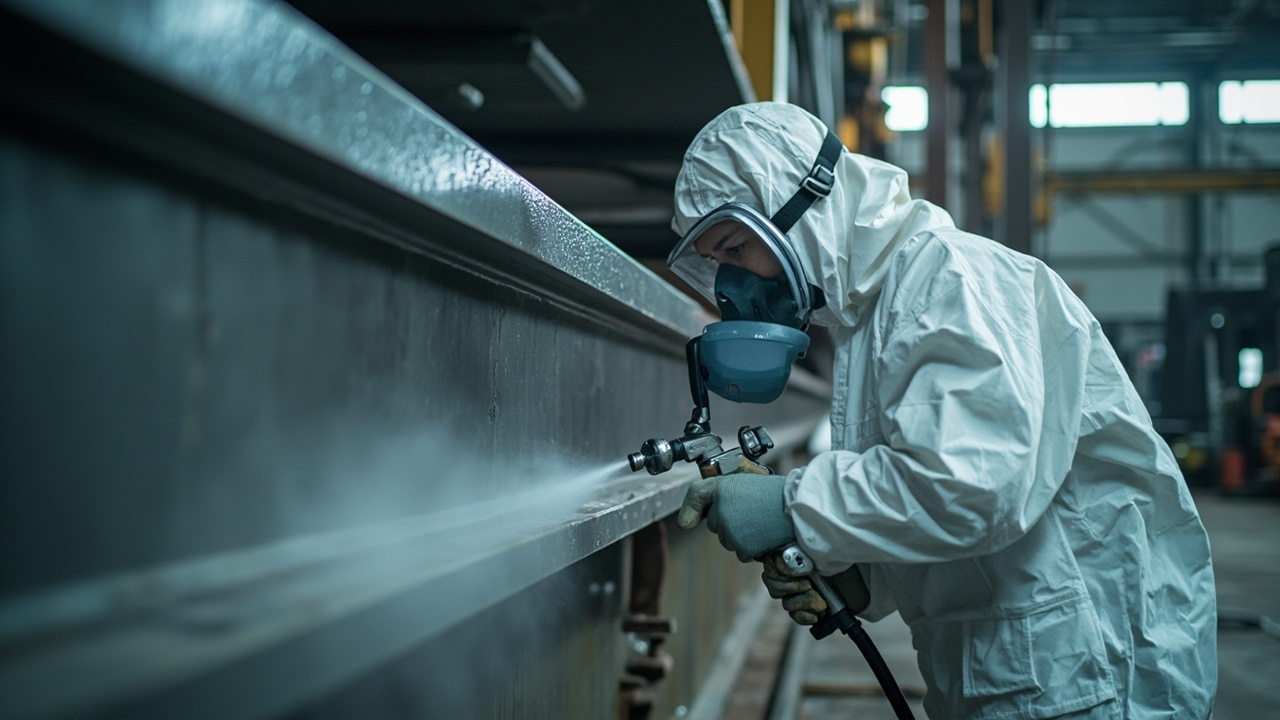
It is worth noting that GB 30981 is not an isolated event, but a link in a whole set of tightening environmental policies. In the revised draft for comments of the "Emission Standard of Air Pollutants for Coatings, Inks and Adhesives Industry" issued by the Ministry of Ecology and Environment in 2026, the VOCs emission limits were further tightened, and the VOCs emission concentration of solvent-based coating is proposed to be reduced from the original standard of 100 mg/m³ to 60 mg/m³. At the same time, the implementation of dual control of carbon emissions, the expansion of VOCs environmental tax pilot, and the implementation of new solid waste control regulations, with multiple pressures superimposed, have made green transformation change from a "bonus item" to a "survival item" for enterprises.
For export-oriented enterprises, the pressure also comes from overseas. The EU REACH regulation's Substances of Very High Concern (SVHC) list has exceeded 230 items, and some traditional coating additives and solvents have been included; the VOC emission limits in some EU industries will be further reduced by about 30% in 2026. Water-based is becoming the "doorstep brick" for entering the EU market.
Market Votes with Data: Water-Based Industrial Coating Growth Leads
The transmission of policy has already appeared on the market side. Data from the China National Coatings Industry Association shows that in the first quarter of 2026, domestic water-based coating output increased by 12.4% year-on-year, and its proportion of total coating output exceeded 40% for the first time. Among them, the growth rate of water-based industrial coating reached 18.2%, far higher than the 6.8% increase of architectural coating—this clearly reflects that in the industrial painting field where environmental pressure is most concentrated, water-based transformation is accelerating.
More importantly, many local industry and information departments have included water-based paint production projects in the green manufacturing demonstration list, and eligible enterprises can enjoy up to 30% of technical transformation subsidies, and industrial painting enterprises using water-based paint can also apply for special rewards for environmental emission reduction. This means that water-based transformation is not only "costing money", but also has real financial support on the policy side.
Kexin Perspective: Water-Based Is Not "Adding Water", But Systematic Capability
Facing the new national standard, the first reaction of many factory managers is anxiety—worrying that water-based paint "performs worse than oil-based". This is actually a cognitive misunderstanding that needs clarification. In recent years, with the mass production and application of high-performance materials such as silicon-modified acrylic water-based resin, the outdoor weather resistance life of water-based paint has been improved to more than 15 years, and the three long-term pain points of weather resistance, adhesion, and construction adaptability have been successively solved, and the comprehensive product performance has approached the level of traditional solvent-based coating. The low-temperature fast-drying water-based paint developed for low-temperature construction scenarios in the north can achieve surface drying at 5℃, without additional heating and baking.
But it needs to be emphasized that, the success or failure of water-based transformation depends on the systematic capability of selection and process, rather than simple product replacement. Substrate pre-treatment, environmental temperature and humidity control, spraying parameters, flash evaporation and baking process—failure of any link may lead to failure. This is also the engineering thinking consistently advocated by Kexin New Materials: based on substrate, corrosion environment, performance requirements and construction conditions for systematic selection, providing customers with a complete supporting scheme for water-based industrial paint, rather than simply selling a bucket of paint.
For enterprises planning water-based transformation, our suggestion is: complete the water-based resin replacement test in advance during the new regulation transition period to avoid quality fluctuations caused by temporary switching; at the same time, incorporate the process parameters and environmental control of the painting line into the transformation plan, so that compliance and performance are implemented simultaneously.
Further Reading
- Water-Based Industrial Coating Technology System and Painting Process Encyclopedia: From Resin Mechanism to Construction Implementation
- Heavy Anti-Corrosion Coating System Design, Selection and Engineering Application
- Kexin Industrial Coating Product Center