Introduction: Graphene—a "dual-functional" nanofiller combining conductivity and corrosion resistance
Chemical storage tank inner wall coatings face a dual challenge: corrosion resistance + electrostatic dissipation. Traditional solutions use epoxy + conductive carbon black (addition level 15%-25%), which can meet electrostatic dissipation requirements (surface resistance 10⁶-10⁹Ω), but the high addition level severely degrades coating density and corrosion resistance. Graphene—a single-layer carbon atom sp²-hybridized 2D material—can build a conductive network in the coating (geometric percolation effect) with an ultra-low addition level of 0.5%-2.0%, while its sheet structure provides excellent physical barrier (extending permeation paths).
I. Performance Comparison between Graphene and Other Conductive Fillers
| Conductive Filler | Typical Addition Level (%) | Surface Resistance (Ω) | Impact on Corrosion Protection | Cost (RMB/kg coating) |
|---|---|---|---|---|
| Conductive Carbon Black | 15-25 | 10⁴-10⁷ | Negative (high PVC degrades density) | 3-8 |
| Graphite (micron-sized) | 10-20 | 10³-10⁶ | Slightly negative | 2-5 |
| Carbon Nanotubes (MWCNT) | 0.5-2 | 10³-10⁶ | Neutral (small addition has no effect) | 15-40 |
| Graphene (1-5 layers) | 0.5-2 | 10³-10⁶ | Positive (enhances shielding) | 20-50 |
| Conductive Mica Powder | 20-30 | 10⁵-10⁸ | Neutral to slightly negative | 5-15 |
II. Comparison of Graphene Dispersion Process Parameters
| Dispersion Method | Ultrasonic Dispersion | Ball Milling Dispersion | High-Speed Shear |
|---|---|---|---|
| Dispersion Efficiency | High (5-15 min) | Medium (30-60 min) | Low (requires multiple passes) |
| Risk of Lamellae Damage | Low | Medium | High (lamellae tearing) |
| Suitable Batch (kg) | <50 | 50-500 | >500 |
| Equipment Cost (10k CNY) | 5-15 | 10-30 | 5-20 |

II. Key to the Dispersion of Graphene in Epoxy Resin
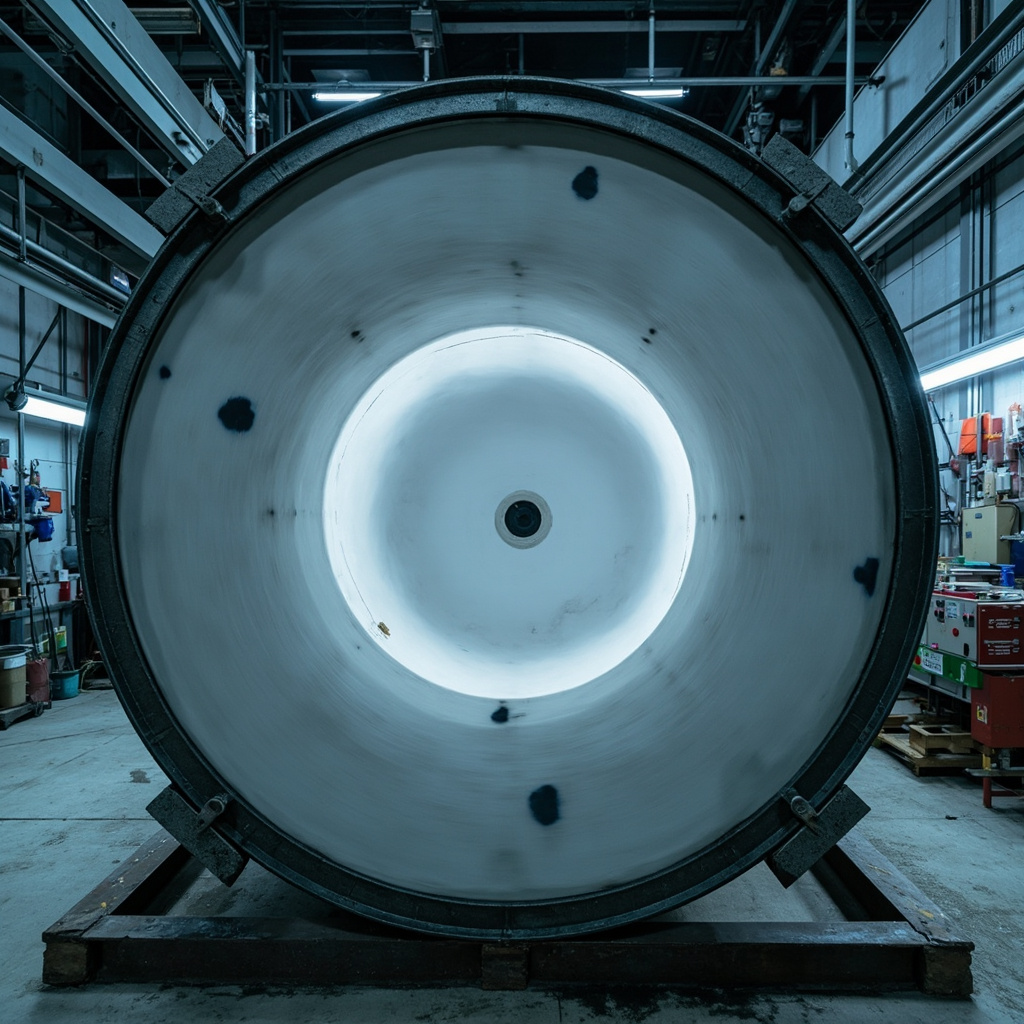
The dispersion of graphene is the first technical threshold for the success or failure of the formulation. The π-π stacking interaction between graphene sheets is strong, making them highly prone to agglomeration. Effective dispersion strategies: (1) Solvent pre-dispersion method: graphene is first dispersed in a solvent (xylene/n-butanol mixed solvent) with ultrasonic assistance (20 kHz / 30 min) to prepare a 0.5%–2% graphene slurry, then added to the epoxy resin and mixed; (2) Dispersant anchoring: use a polymeric dispersant containing pyrene anchoring groups—the pyrene structure strongly adsorbs to the graphene surface via π-π stacking, while the solvated chains provide steric hindrance to prevent re-agglomeration; (3) Low-shear long-time stirring (200–500 rpm / 60–90 min)—high shear may tear the graphene sheets and reduce their aspect ratio, thereby affecting conductivity and shielding performance.
Technical deepening: systematic optimization methods for process parameters (DOE experimental design)
The optimization of coating production processes should not rely on the "trial-and-error method" but should adopt the scientific method of DOE Experimental Design. Taking the dispersion process as an example—factors affecting quality (linear velocity/time/filling rate/temperature), 4 factors each at 3 levels—a full factorial requires 81 experiments—DOE uses orthogonal experiments L9 (9 times) or response surface methodology (27 times) to greatly reduce the number of experiments—while simultaneously obtaining the main effects and interactions of each factor. For example, it is found that "the interaction of linear velocity × time is significant": high linear velocity + short time and low linear velocity + long time can achieve the same dispersion effect—but the former saves over 20% energy.
In DOE analysis, interpretation of the P-value — P95% confidence). DOE ultimately outputs a set of prediction models (polynomial regression equations) — input line speed/time/temperature → predict fineness/viscosity/gloss — providing formulation engineers with a "digital formulation optimization" tool.
Industry practice: from "master craftsman's feel" to "parameter standardization"
The common challenge in the coatings industry—when experienced veteran workers retire, their "feel" (mixing resistance / fineness gauge scraping / visual inspection of wet film gloss) is taken away—new employees cannot replicate it. Transform the "feel" into quantifiable standard parameters (1) mixing resistance → viscometer reading; (2) fineness gauge scraping → fineness gauge reading (μm); (3) wet film gloss → gloss meter (GU value). The "standard parameter card" for each process is posted next to the equipment—new employees operate according to the "card" rather than "by feel". "Parameter standardization" is a key step for coating factories to move from "workshop" to "factory".
FAQ
Q1: What is the percolation threshold of graphene in epoxy?Depends on the aspect ratio of graphene (typical value 100:1~1000:1). The higher the aspect ratio, the lower the percolation threshold—graphene with an aspect ratio of 1000:1 can have a percolation threshold as low as 0.2% volume fraction. The percolation threshold for industrial-grade graphene (3-5 layers, aspect ratio 100-300:1) is typically 0.5%-1.5%. Beyond the percolation threshold, resistivity drops sharply (10¹²→10⁶ Ω·cm), and further increasing the graphene content yields limited improvement in conductivity.
Q2: Does the antistatic property of the graphene coating meet the requirements of GB 13348?GB 13348-2009 requires the surface resistance of the coating on the inner wall of storage tanks to be 10⁵-10⁹Ω. Epoxy coatings with 1%-2% graphene addition have a surface resistance in the range of 10⁵-10⁸Ω, which fully complies with the standard, and their anti-corrosion performance is far superior to that of the conductive carbon black system (carbon black requires 15%-25% addition for equivalent conductivity).
Q3: Will graphene affect the coating color? Yes. Graphene (black) at an addition level >0.5% can make the coating appear dark gray to black. For storage tanks requiring light colors (food grade/pharmaceutical), the antistatic requirement and color limitation need to be weighed—or a substitute such as conductive mica powder (light gray) can be used.
Q4: What is the difference between graphene oxide (GO) and reduced graphene oxide (rGO)?GO contains a large number of oxygen-containing functional groups (-OH, -COOH, -C=O), has good dispersibility in water but poor electrical conductivity (insulator). rGO is the product after GO is chemically/thermally reduced to remove most of the oxygen-containing functional groups, with restored electrical conductivity but still lower than that of pristine graphene. It is recommended to use high-quality pristine graphene (prepared by liquid-phase exfoliation) in coatings to obtain the best overall electrical conductivity and shielding performance.
Q5: How is the salt spray resistance of graphene/epoxy coatings?Epoxy coatings with 1% graphene added can withstand salt spray for 1500-2000h in salt spray testing (ASTM B117) (comparable to traditional zinc-rich primers), which is 3-4 times that of ordinary epoxy coatings (400-600h). The nano-platelets of graphene extend the permeation paths of water molecules and Cl⁻ ions by dozens of times (maze effect).
Q6: What are the differences between the construction of graphene coating and ordinary epoxy?(1) Slightly higher viscosity (thickened by graphene), need to adjust diluent by 5%-10% to maintain application viscosity; (2) Graphene slurry needs to be thoroughly stirred (20-30min) before use to ensure uniform re-dispersion of graphene; (3) Airless spraying is not recommended (high pressure may cause directional alignment of graphene sheets leading to electrical anisotropy) — airless spraying with high pressure and moderate spraying pressure (12-15MPa) is recommended.
Q7: Upper limit of operating temperature for graphene anti-corrosion coating?Graphene itself has extremely high temperature resistance (>2000°C in inert atmosphere), but the epoxy resin matrix limits the operating temperature of the coating—standard epoxy ≤80°C, phenolic epoxy ≤120°C, silicone-modified epoxy ≤200°C. The addition of graphene does not change the temperature limit of the resin matrix.
Q8: Is graphene coating more difficult to repaint than traditional coatings? There is such a tendency. Graphene has low surface energy and is chemically inert; after curing, the surface of the graphene coating needs to be sanded (180#-240# sandpaper) for mechanical roughening before it can be properly repainted. It is recommended to use the graphene coating as a primer/intermediate coat, and then apply a regular topcoat (non-graphene) as the outermost layer to facilitate future maintenance and repainting.
Q9: What is the performance difference between multilayer graphene and few-layer graphene in coatings?Few-layer graphene (1-5 layers) has a high aspect ratio, low percolation threshold, and good shielding effect, making it the preferred choice for coating applications but at a higher cost. Multilayer graphene (5-10 layers) has moderate performance but lower cost (about 30%-50% of few-layer). For cost-performance-oriented industrial applications, 3-8 layer "industrial-grade graphene" is the best balanced choice.
Q10: Safety of graphene in coatings?The safety of graphene during production and use is still under research and evaluation. Current recommendations: (1) Use graphene slurry form (rather than dry powder) to reduce the risk of dust inhalation; (2) Production operators should wear N95 or higher-grade dust masks; (3) Wear full-face supplied-air respiratory protection during spray application; (4) Pay attention to the latest OSHA and ECHA regulations on occupational exposure limits for graphene/nanomaterials.
FAQ: In-Depth Technical Q&A Supplement
Q11: How do the differences in domestic and international standards for this technology affect product export? There are differences between domestic standards (GB) and ISO/ASTM standards in test methods and acceptance criteria. For example, salt spray testing—GB/T 1771 (equivalent to ISO 7253) test conditions are basically consistent with ASTM B117—but the rating systems (ISO 4628 vs ASTM D610/D714) differ—export products must also indicate the corresponding international standards when providing test reports, otherwise overseas customers cannot make a comparative assessment. It is recommended to list both GB and ISO/ASTM dual-standard indicators in the TDS (Technical Data Sheet) of export products—to enhance the trust of international customers.
Q12: How to verify the long-term service performance of this technology in actual engineering?Laboratory accelerated testing (salt spray/QUV/cyclic corrosion) provides comparative data—but cannot fully replace actual outdoor exposure testing. Recommendations—(1) Set up outdoor exposure racks at both the factory location and typical customer locations (e.g., coastal C5-M/industrial C4)—conduct annual inspections of coating appearance/adhesion/film thickness changes—establish a company-owned outdoor service database; (2) Collaborate with universities/research institutes—combine enterprise data with academic research—enhance data credibility.
Q13: What should SMEs pay attention to when purchasing related raw materials/equipment?(1) The batch stability of suppliers is more important than unit price—it is recommended to require suppliers to provide COA data for >10 batches—and evaluate batch variation (CpK); (2) For equipment procurement, visit peers who have used the equipment for >2 years to understand the long-term reliability and after-sales service quality of the equipment—rather than relying only on the demonstration data from equipment suppliers; (3) For key raw materials (resin/curing agent)—maintain at least 2 qualified suppliers to guard against single-supply risk.
Q14: What is the current state and trend of digital transformation in this field?The digital transformation of the coatings industry is evolving from “point-based applications” (automation of individual equipment/processes) to ”system integration” (full-chain ERP+MES+PMS). Currently, the digitalization of small and medium-sized coatings factories with the ”highest ROI investment” is the automatic batching system + digitalization of quality control data — payback period of 1-3 years — which is the prioritized recommended direction. Future trend — AI + sensors enabling real-time optimization of process parameters — further reducing quality fluctuations between batches.
Q15: How can a newly entered coating engineer quickly master this technology?(1)Combine theory and practiceDo not only read literature without touching actual production—nor rely solely on experience without studying theory;(2)Build a “failure case archive”Every customer complaint/production anomaly/coating failure—record the root cause and resolution process—this is the most effective learning material;(3)Learn from suppliersTechnical personnel from resin/additive/pigment suppliers are carriers of "tacit knowledge" in this field—communicate more with them about solutions to specific problems.
Related Reading
Summary
Graphene-modified heavy-duty anti-corrosion conductive coating achieves both a surface resistance of 10⁵–10⁸ Ω (compliant with GB 13348) and salt spray resistance of 1500–2000 h (3–4 times that of ordinary epoxy) at an ultra-low addition level of 0.5%–2.0%, resolving the conflict in traditional conductive carbon black systems where high loadings (15%–25%) degrade anti-corrosion performance. Precise control of graphene dispersion (solvent pre-dispersion + ultrasonication + pyrene-based anchoring dispersant) and the percolation threshold (0.5%–1.5%) is key to the formulation's success.