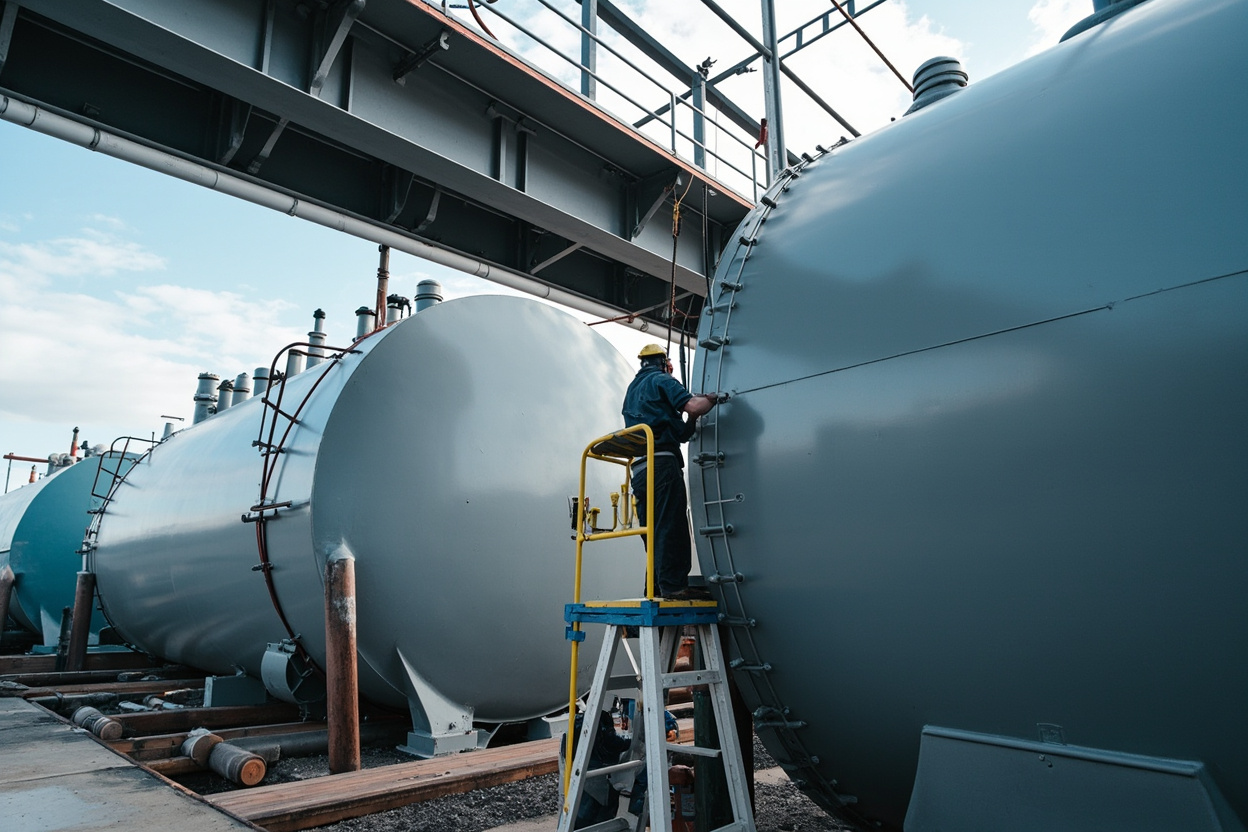
Introduction: Corrosion is a chronic cancer of industrial assets”
The economic losses caused by corrosion are shocking. According to public research estimates, the global annual direct economic losses caused by corrosion account for about 3%-4% of GDP; in China, this figure is also in the hundreds of billions. What is even more subtle is that corrosion is gradual-the steel box girder of a cross-sea bridge, the storage tank of a chemical plant, and a buried pipeline often quietly thin without warning until leaks, collapses or shutdown occur, the cost far exceeds the initial protection investment.
Heavy-duty Protective Coatings are a type of high-performance protection system developed to deal with severe corrosive environments such as C4, C5, CX and immersion. The fundamental difference between it and ordinary industrial paints is not that a certain paint is stronger, but that it issystematized-through the scientific combination of primer, intermediate paint, and topcoat, a composite barrier with complementary functions is formed. Starting from the corrosion mechanism, this paper will systematically explain standards, supporting materials, surface treatment, film thickness, construction and cases, and help engineering decision makers establish feasible heavy-duty corrosion selection capabilities.
Kexin New Materials (Foshan, Guangdong) focuses on industrial protective coatings and provides a complete matrix of heavy-duty anticorrosive products from water-based/solvent-based epoxy, polyurethane, fluorocarbon to inorganic zinc-rich, and supports free proofing verification according to environmental levels.
Chapter 1 Corrosion Mechanism: What exactly is the coating preventing
To choose the right coating, you must first understand the nature of corrosion. The corrosion of steel in the natural environment is mainlyelectrochemical corrosion:
- Countless tiny primary cells are formed on the steel surface due to uneven composition/stress;
- Iron in the anode region loses electrons (Fe → Fe² +2e), and oxygen and water in the cathode region gain electrons to form OH;
- Finally, Fe(OH) ˇ → Fe(OH) → Fe ˇ O·nH ˇ O (rust) is formed;
- Rust is loose and porous and unprotected, and corrosion continues to advance inward.
There are three paths for coating protection:
- Shielding effect: The dense paint film blocks water, oxygen and ions from reaching the steel surface (physical barrier).
- Corrosion inhibition: Anti-rust pigments (zinc phosphate, aluminum tripolyphosphate, etc.) react with metals to form a passive film.
- Cathodic protection: Zinc in zinc-rich primers is more active than iron, giving priority to corrosion and sacrificing itself to protect steel (electrochemical protection).
A truly excellent heavy-duty anti-corrosion system often adopts a three-pronged approach: zinc-rich primer provides cathodic protection + epoxy intermediate paint provides barrier thickening + polyurethane/fluorocarbon topcoat provides weather-resistant end sealing. It is difficult for a single-layer product to take into account all three at the same time.
Chapter 2 ISO 12944: A common language for heavy corrosion protection”
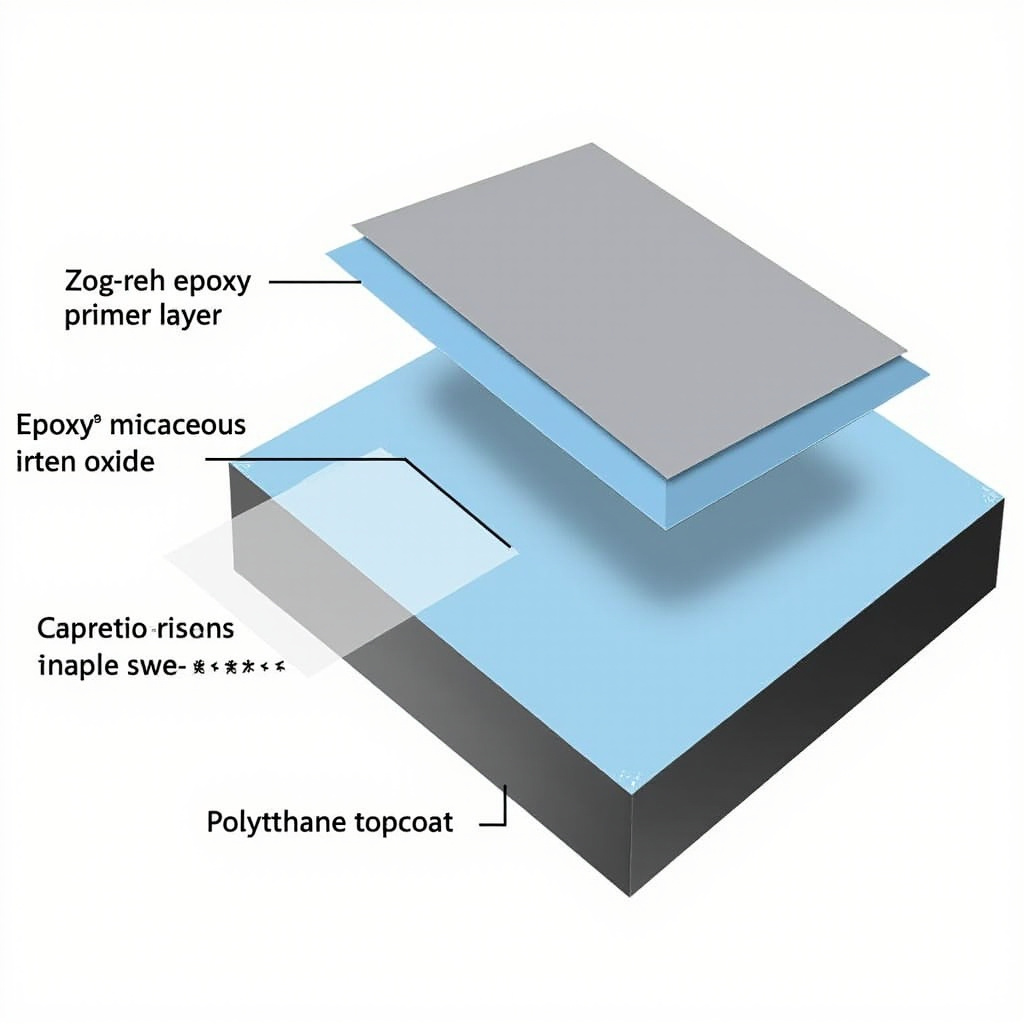
The International Organization for Standardization'sISO 12944 "Paints and Varnishes-Corrosion Protection of Steel Structures by Protective Coating Systems" is the global benchmark framework for heavy-duty corrosion design and acceptance. It answers three core questions: How bad is the environment? How long will it take to protect? What system is used?
2.1 Corrosion environment classification (C1-CX)
| level | environment description | typical scenario | Example Annual corrosion rate (carbon steel) |
|---|---|---|---|
| C1 | Low (drying room) | Clean factory, office | < 1.3 μm/a |
| C2 | Low (rural) | rural architecture | 1.3–25 |
| C3 | Medium (urban/industrial) | Urban facilities, workshops | 25–50 |
| C4 | High (Industrial/Coastal) | Chemical plants, coastal facilities | 50–80 |
| C5-I | Very high (industrial high humidity) | high-pollution industrial | 80–200 |
| C5-M | Very high (ocean) | Cross-sea bridges and docks | 80–200 |
| CX | Extreme (sea/polar) | Ocean platforms, polar regions | > 200 |
| Im1 | Immersion (fresh water soil) | buried water pipe | - |
| Im2 | Immersion (sea water) | Underwater steel structures, ports | - |
| Im3 | Burial ground (soil) | Underground storage tanks, pipelines | - |
2.2 Protective durability and film thickness
ISO 12944-2 defines durability evaluation levels: low (L,>2 years), medium (M, 5 - 15 years), high (H, 15 - 25 years), and very high (VH,>25 years). Film thickness design is directly related to durability-taking C5-M as an example, the total dry film thickness (DFT) for high durability often requires 240 - 320 μm, rather than simply brushing a layer of epoxy.
Engineering Mistake: Many projects use a coat of paint to deal with the C5 environment, resulting in rust for 2 - 3 years. There are no shortcuts for heavy corrosion prevention, and the film thickness and supporting materials are hard indicators.
Chapter 3 Supporting system design: bottom-middle-face three-level logic
The heavy anti-corrosion gold structure is supported by three layers, and the responsibilities of each layer are clear:
3.1 Primer: Foundation
- Epoxy zinc-rich primer: zinc content ≥70%(high-performance source ≥80%), cathodic protection + strong adhesion, is the first choice primer for heavy corrosion protection. Applicable to C4-CX, Im2. Disadvantages: High requirements for surface treatment and inability to make topcoats (not weatherproof).
- Water-based inorganic zinc-rich: temperature resistance of 400℃+, wear resistance, super corrosion resistance, suitable for cross-sea bridges and high-temperature pipelines.
- Epoxy zinc phosphate primer: zinc-free environmentally friendly, moderate corrosion and maintenance.
3.2 Intermediate: Barrier and thickening
- Epoxy micaceous iron intermediate paint: filled with flake mica iron oxide to extend the water and vapor diffusion path (labyrinth effect). It is extremely cost-effective and is the backbone of heavy corrosion protection.
- Sometimes thick paste epoxy (no mica iron) is used directly to make high film thickness intermediate/primer.
3.3 Topcoat: Weather-resistant end sealing
- Polyurethane topcoat (aliphatic): weather-resistant, light-retaining color, and UV resistant. It is the mainstream of C4-C5 topcoat.
- Fluorocarbon top coat (FEVE/PVDF): ultra-weather resistant (20 - 30 years), self-cleaning, high-end curtain walls and cross-sea projects.
- Polysiloxane topcoat: High solid content, low VOC, excellent weather resistance, and the choice for environmental protection trends.
Classic supporting example (C5-M, Class H):
Water-based/solvent-based inorganic zinc-rich substrate (75 μm)+ epoxy micaceous iron middle (2×100 μm)+ polyurethane surface (2×40 μm)= DFT about 315 μm, design life of 25 years.
Chapter 4 In-depth analysis of resin system technology
4.1 Epoxy resin
Bisphenol A/F epoxy resin + amine curing agent, high crosslinking density, strong adhesion and excellent chemical resistance. The glass transition temperature (Tg) and the degree of crosslinking determine heat resistance and resistance. Used for primer and intermediate paint.
4.2 Polyurethane
Hydroxyacrylic acid/polyester + aliphatic isocyanate (HDI trimer), weather resistance comes from the difficulty of photolysis of the aliphatic structure. NCO/OH ratio affects curing and performance.
4.3 Fluorocarbons
FEVE fluoroolefin-vinyl ether copolymer has extremely high C-F bond energy (485 kJ/mol), giving it superior weather resistance. Solid content and constructability are engineering concerns.
4.4 Polysiloxane
Inorganic-organic hybrid, Si-O network provides weather resistance and hardness, high solid content and low VOC, and is a new star in environmentally friendly and heavy corrosion protection.
Chapter 5 Surface Treatment: 50% Determine Success or Failure
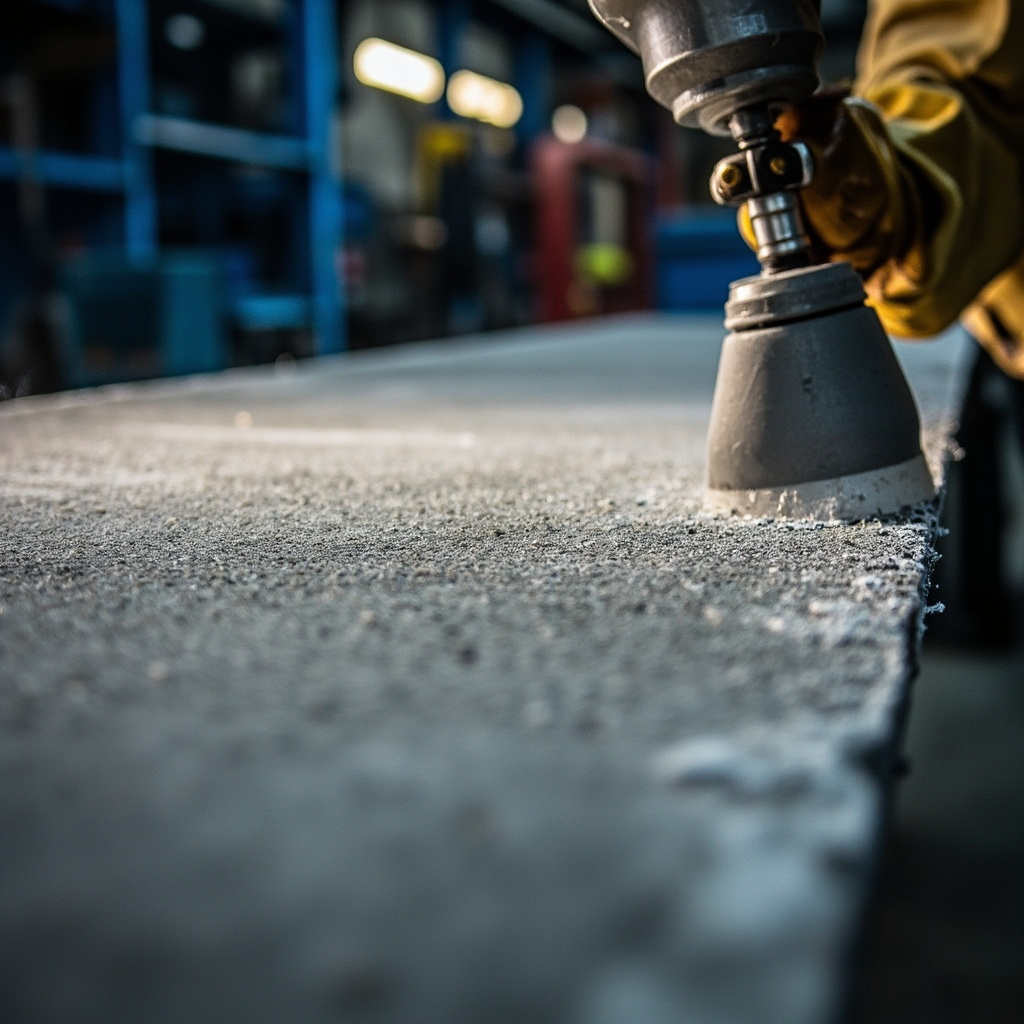
Industry consensus: Half of coating life depends on surface treatment. 8221; No matter how good the paint is, it will be in vain if it is not handled properly.
5.1 Blast rating (ISO 8501-1 / GB 8923)
- Sa1: Mild treatment, only loose attachments are removed.
- Sa2: Handle it thoroughly, leaving only spots.
- Sa2.5 (near white level): Mandatory requirement for heavy corrosion protection, 95% of the surface is metallic.
- Sa3: White level, 100% metallic color, extreme environment.
5.2 Roughness
Surface roughness (contour depth) after sandblasting usually requires Ry 40 - 75 μm (GB/T 13288) to provide mechanical bite. Too thick will easily leave bubbles, and too thin will have insufficient adhesion.
5.3 Cleanliness
- Soluble salt: Chloride ion residues (from sea breeze and hand sweat) will penetrate the coating and induce osmotic pressure foaming. Heavy corrosion protection requires surface salt ≤ 20 - 50 mg/m² (tested in accordance with ISO 8502-6/9), and flushing with high-pressure fresh water if necessary.
- Oil/dust: Must be removed, otherwise shrinkage cavity and adhesion will fail.
5.4 New surface treatment technologies
- Ultra-high pressure water jet (UHP): dust-free, retains anchor patterns, suitable for maintenance of in-service facilities, but needs to be combined with a quick-drying primer to prevent flash rust.
- Laser cleaning: Precise, environmentally friendly, and declining costs.
Chapter 6 Film thickness design principles
- The total DFTis determined by environmental rating and durability (see Chapter 2).
- Single pass film thickness: Due to the limitation of hanging, epoxy micaceous iron can be 80 - 150 μm for single pass, and top coat is 40 - 60 μm.
- Measurement: The wet film card controls the construction, and the magnetic/eddy current thickness gauge conducts random inspection of the dry film at least 1 point every 10 m2, complying with the 90/10 rule (90% of the measuring points ≥ the design value, and the rest ≥ 90% of the design value).
- Corner strengthening: Steel corners and weld film thickness are likely to be insufficient and require stripe coat.
Chapter 7 Construction and Quality Control
7.1 Environmental window
- Substrate temperature ≥ 5℃ and 3℃ higher than dew point (anti-dew condensation);
- Relative humidity ≤ 85%(zinc-rich primers are sometimes required to ≤ 75%);
- Moderate wind speed to avoid the watch drying too fast.
7.2 Coating method
- Airless spraying (mainstream, high efficiency, uniform film thickness);
- Mixed gas spraying (high decorative topcoat);
- Brush/roll coating (corners, maintenance).
7.3 recoating interval
The layers must be completed within the minimum-maximum recoating interval. If the interval is too short, the solvent stays, and if it is too long, it will require galling. The lower the temperature, the longer the interval (especially in winter).
7.4 Curing and maintenance
The epoxy/polyurethane takes 7 - 28 days (affected by temperature) to fully cure, during which time contact with chemicals and mechanical damage is avoided. Water-based systems have a longer maintenance period.
Chapter 8 Typical Engineering Cases
Case 1: Cross-sea bridge steel box girder (C5-M, VH level)
Matching: inorganic zinc-rich base (75 μm)+ epoxy micaceous iron medium (2×120)+ fluorocarbon surface (2×40), DFT is about 395 μm. Sand blasting Sa2.5, salt ≤ 20 mg/m², dew point +3℃. 2000 h cyclic salt spray + 5000 h QUV verification. The design life is 30 years, and the maintenance-free cycle is 15 years.
Case 2: Coastal chemical storage tank outer wall (C5-I)
Matching: epoxy zinc-rich base (75)+ epoxy micaceous iron medium (150)+ polyurethane surface (80), DFT 305 μm. The difficulty lies in explosion-proof and high-altitude operation in the tank area. Airless spraying + explosion-proof equipment is used, and the construction period window avoids high humidity in the rainy season.
Case 3: Buried oil pipeline (Im3)
Outer wall: fused epoxy powder (FBE) or epoxy coal tar pitch + cathodic protection; inner wall: epoxy anti-wear and drag-reducing coating. Pay attention to the quality of cathode stripping and joint filling.
Case 4: Desulfurization tower of thermal power plant (high temperature and high humidity + chemical)
Flue gas desulfurization (FGD) environment contains SO ˇ, Cl, high humidity, and large temperature fluctuations. Use high-temperature resistant vinyl ester flake coating or special epoxy, emphasizing penetration resistance and thermal shock resistance.
Chapter 9 Maintenance and Repainting Strategies
Heavy anti-corrosion does not last forever. Scientific maintenance includes:
- Regular inspection: Visual inspection + thickness measurement + adhesion random inspection every 1 - 3 years to establish asset corrosion files.
- Early maintenance: timely and locally polish and reapply rust points when found to prevent expansion.
- Recoating decision: When the corrosion area is greater than 5%-10% or the film thickness loss is greater than 30%, start comprehensive recoating.
- Surface treatment level: Pre-recoating treatment can be lower than that of new construction (such as Sa2/St3), but loose old paint and rust must be removed.
Chapter 10 Life Prediction and Digital Trends
- Corrosion rate model: Estimated remaining life based on environmental data (temperature and humidity, Cl, SO).
- Painting digitalization: BIM + coating management system, full life cycle tracking.
- Smart coating: Embedded sensing fiber/conductive network to monitor corrosion and peeling in real time.
- Green and heavy-duty corrosion protection: High solid content, solvent-free, water-based, taking into account performance and VOC compliance.
Chapter 11 Selection Decision Tree
- Environmental level? (C1-CX / Im) → Determine durability and film thickness
- Is it weather-resistant and exposed?→ Select PU/fluorocarbon/silicone topcoat
- Is it resistant to chemicals/immersion?→ Epoxy is mainly based
- Is it high temperature?→ Inorganic zinc rich/organic silicon
- Surface treatment accessibility?→ Decide on primer type and matching
- Construction conditions (temperature, humidity, equipment)?→ Fixed solvent/aqueous
- Budget and life trade-off → Fluorocarbons are expensive but have a long life
Chapter 12 Quantitative Perspective on Corrosion Electrochemistry
Understanding corrosion rates helps scientific grading. The empirical formula for the corrosion rate of carbon steel in seawater can be determined with reference to linear polarization or weight loss methods. Taking the average salinity of seawater of 3.5% and dissolved oxygen of about 6 - 8 mg/L as an example, the corrosion rate of bare steel often reaches 80 - 200 μm/a, which means that a 10-mm thick steel plate may rust through for 50 - 100 years in the CX environment. -But this is only bare steel; when there is a qualified heavy corrosion protection system, the corrosion is suppressed until it almost stops.
Cathodic protection potential is the theoretical foundation of zinc-rich primers. The standard electrode potential of zinc is about-0.76 V (vs SHE), and that of iron is about-0.44 V. Zinc is more negative and therefore serves as a sacrificial anode. When the coating is partially damaged and exposed the steel, the surrounding zinc powder continues to provide electrons through conductive paths in the coating, polarizing the iron surface to the corrosion free area (usually the steel protective potential ≤-0.85V vs CSE). This is the reason why the damaged area is stainless, and it is also the reason why the zinc-rich primer is irreplaceable in harsh environments.
Chapter 13 In-depth analysis of coating failure modes
Heavy corrosion prevention failure is rarely a single reason for poor coating quality, and is mostly a coupling of multiple factors:
- Blistering: osmotic pressure foaming (surface salt/soluble matter)+ cathode stripping foaming (zinc rich + moisture). Countermeasures: Control salt, select low moisture permeability topcoats, and be cautious in supporting cathodic protection.
- Creepage: After a scratch, it spreads from the damaged edge to under the healthy coating. It is strongly related to adhesion and primer type, and zinc rich can significantly inhibit it.
- Dueling/loss of light: insufficient weather resistance of topcoat (epoxy bare, acrylic acid degradation), UV degradation and film formation. Countermeasures: Use aliphatic PU/fluorocarbon.
- Cracking: The film thickness is too high, the substrate is deformed, and the thermal expansion and contraction exceed the coating extension. Countermeasures: control single film thickness, select high extension finish.
- Interlayer peeling: Overtime of recoating interval, interlayer contamination, incompatibility. Countermeasures: strictly observe the interval, clean, do matching verification.
- Zinc salt/white rust: zinc-rich paint in high humidity zinc reaction to form zinc salt (basic zinc carbonate), volume expansion jacking coating. Countermeasures: Control the film thickness and curing, and apply paint in time.
Chapter 14 Overview of testing and acceptance standards
Heavy duty corrosion protection is a project that is accepted by data. Key standard families:
- Surface treatment: ISO 8501-1 (rust removal level), ISO 8503 (roughness), ISO 8502 (surface cleanliness/salt), NACE/SSPC (benchmarking level).
- Coating properties: ISO 12944-6 (laboratory performance), ISO 9227 (salt spray), ISO 4624 (pull adhesion), ASTM D4587 (QUV), GB/T 1771 (salt spray).
- Film thickness: ISO 2808, GB/T 13452.2, in accordance with 90/10 or 85/15 rules.
- Leak point detection: holiday test is necessary for the inner wall of storage tanks and pipelines. The voltage is set according to the film thickness (such as 5 V/μm experience).
- Inspection qualifications: NACE CIP, FROSIO certified inspectors, mandatory third-party supervision of major projects.
A point that is often ignored:salt spray test ≠ actual life . Salt fog only simulates a single salt environment, and cyclic corrosion (corrosion + UV) is closer to reality. When selecting models, you should look at the cyclic salt spray + aging combination report, rather than the isolated 1000-hour salt spray data.
Chapter 15 Collaboration between cathodic protection and coating
In submerged (Im1-Im3) and marine environments, heavy-duty anticorrosive coatings are often used in conjunction withimpressed current cathodic protection (ICCP) or sacrificial anodesto form a dual defense line with coating as the main and cathodic protection as the bottom. At this time, the requirements for the coating change:
- The coating needs low moisture permeability and high insulation (reducing protective current);
- Care should be taken when coordinating zinc-rich primers with applied current (may cause hydrogen embrittlement/overprotection), and zinc-free epoxy is often used;
- Leak detection and regular potential measurement have become the key needs of operation and maintenance.
This composite solution of organic coating + electrochemical protection is a standard practice for cross-sea pipelines, terminal steel pipe piles, and ballast tanks (IMO PSPC specifications).
Chapter 16 Construction Equipment and Parameter Practice
- Airless spraying machine: pressure ratio 1:28 - 1:45, output pressure 150 - 350 bar, nozzle 0.38 - 0.53 mm (0.43 - 0.48 is commonly used for heavy anti-corrosion thick pastes). Insufficient pressure → poor atomization and uneven film thickness; too high → rebound waste.
- Two-component proportional pump (Graco ProMix, etc.): The epoxy/PU two-component ratio is accurate (error < 2%), and the A/B components are dynamically mixed to avoid poor curing.
- Surface treatment equipment: sandblasting tank (0.5 - 3 m³), ultra-high pressure water (UHP 1000 - 2500 bar), vacuum recycled sandblasting (environmentally friendly).
- Environmental monitoring: Temperature and humidity meter + dew point meter + surface thermometer, three parameters are recorded in real time, and the window stops.
- Film thickness and leak detection: wet film card, magnetic thickness gauge, electric spark leak detector, on-site inspection.
Chapter 17 Economics and Life Cycle Costs (LCC)
Heavy corrosion prevention decisions should be based on full-life costs rather than the price of paint per square meter:
LCC = Materials + Construction + Shutdown Loss + Maintenance + Repainting + Residual Value
For example: For the C5-M cross-sea facility, Scheme A uses a low unit price of ordinary epoxy supporting equipment (DFT 200 μm, life span of 8 years), but it needs to be re-coated 3 times in 30 years, and the loss per shutdown is huge; Scheme B uses zinc-rich + epoxy + fluorocarbon (DFT 320 μm, life span of 25 years) has a high unit price, but only re-coated once in 30 years. General ledger B is often lower and the risk is more controllable. This is why more expensive and longer life are often the smarter options in the field of heavy corrosion protection.
Chapter 18 More Engineering Case Data
Case 5: LNG storage tank outer tank (low temperature + atmosphere)
The outer wall is tested by low temperature shrinkage and the ocean atmosphere. Epoxy zinc-rich + epoxy micaceous iron + polyurethane is used, focusing on low-temperature flexibility and interlayer adhesion, and supporting low-temperature bending test (no cracking at-40℃).
Case 6: Offshore wind power tower (CX, splash area)
Corrosion is the most severe in splash areas (alternating dry and wet + high salt +UV). The lower part of the tower barrel is made of super epoxy glass flakes + polyurethane, and a sacrificial anode is connected below the waterline; the bolt connections are pre-coated and sealed with sealant to prevent crevice corrosion.
Case 7: Urban bridge maintenance (in service, restricted space)
Use UHP water jet (dust-free, anchor-retaining pattern) instead of sandblasting, and use quick-drying epoxy primer (30 minutes surface dry) to shorten closed traffic time; the topcoat is made of low-VOC silicone, which combines environmental protection and weather resistance.
Chapter 19 Opportunities and challenges for water-based heavy corrosion protection
With the tightening of VOC regulations, water-based heavy-duty corrosion protection has moved from alternative to mainstream. Its technical route:
- Waterborne epoxy zinc-rich/epoxy base: C4-C5 level protection has been achieved, and its adhesion and chemical resistance are close to solvent type. It is a breakthrough for water-borne heavy-duty corrosion protection.
- Water-based inorganic zinc-rich: The performance is comparable to that of solvent-based materials, with excellent temperature resistance and corrosion resistance, but the construction window and curing are more restricted by humidity.
- Waterborne polyurethane/fluorocarbon surface: weather resistance meets the standard, and curing requires temperature and humidity control.
The challenge is that the film forming temperature and flash rust of water-based systems are more prominent in high-humidity marine environments, and on-site temperature and humidity control must be in place; in addition, water-based heavy corrosion protection requires even higher surface treatment and construction discipline than solvent-based systems. However, its advantages of safety (non-combustible), low taste, and low hazardous waste make it rapidly penetrate into the maintenance of bridges, ships, and storage tanks. Kexin New Materials 'water-based heavy-duty anti-corrosion series products have been verified in many coastal projects and can provide complete water-based packages according to ISO 12944 levels.
Chapter 20 List of Common Type Selection and Construction Errors (Guide to Avoiding Pit)
- Use a layer of paint to cope with the C5 environment → Three layers of matching should be made on the bottom and middle surfaces to meet the design DFT.
- Use zinc-rich primer bare as top coat → must be powdered and must be capped with paint.
- Surface salt is not detected → osmotic pressure foaming, Cl
- Overcoating interval expires → peeling between layers, and strictly adhere to the technical specification window.
- Forced construction at low temperatures in winter → Epoxy curing is extremely slow or even fails, so the temperature must be increased or a low-temperature curing formula must be used.
- Ignore pre-coating on corners → If the cornea on the weld edge is not thick enough, it will rust first, and strip coat must be applied.
- Wrong Test standard → Isolated salt spray data misleading, should look at the combination of cyclic corrosion + aging.
- It only compares unit price → calculates full-life costs, making long-life supporting facilities more economical.
- The primer and topcoat are not matched → bottom biting and peeling must be verified by the same system.
- Rich in zinc during high-humidity construction → white rust/zinc salt, control humidity or choose quick-drying type.
Post this list at the painting site to avoid 80% of common failures.
Chapter 21 Quick Check Table for Recommended Supporting Packages in Different Industries
| Industry/Location | environment | Recommended matching (bottom → middle → surface) | Target DFT | life target |
|---|---|---|---|---|
| Cross-sea bridge steel box girder | C5-M | Inorganic zinc-rich 75 + epoxy micaceous iron 2×100 + fluorocarbon 2×40 | 315 μm | 25 - 30 years |
| Chemical storage tank outer wall | C5-I | Epoxy zinc-rich 75 + epoxy mica iron 150 + polyurethane 80 | 305 μm | 15 - 20 years |
| Steel structure of coastal factory building | C4 | Epoxy zinc rich 60 + epoxy medium 120 + polyurethane 60 | 240 μm | 15 years |
| buried oil pipeline | Im3 | FBE Epoxy Powder 300 - 500 (Outer Wall)+ Cathodic Protection | - | 30 years |
| Desulfurization Tower (FGD) | Chemical + heat | Vinyl ester scale 2×1000+ | ≥ 2 mm | 10 - 15 years |
| Thermal power plant cooling tower | C4–C5 | Epoxy zinc-rich + epoxy mica iron + polyurethane (weatherproof) | 280 μm | 15 years |
| Ocean platform splash area | CX | Super epoxy glass flakes + polyurethane | 400 μm+ | 20 years |
| Urban bridges (maintenance) | C4 | UHP water jet + quick-drying epoxy + silicone | 240 μm | 15 years |
Three rules of thumb for supporting design:
- The harsher the environment, the heavier the primer (preferably zinc-rich/inorganic zinc-rich) and the thicker the film thickness;
- Aliphatic PU/fluorocarbon/polysiloxane must be used for exposed weather-resistant topcoats, and epoxy bare surfaces must never be used;
- The immersion/chemical environment is dominated by epoxy, and the topcoat focuses on dense impermeability rather than weather resistance.
Chapter 22 Frontier and Future of Heavy Anti-corrosion Technology
- Graphene modified coatings: A small amount of graphene (< 1%) can greatly extend the water-oxygen diffusion path and improve shielding and corrosion inhibition. It is a current research hotspot, but dispersion stability and cost are still engineering thresholds.
- Self-healing coating: Microencapsulated corrosion inhibitors (such as 8-hydroxyquinoline) are released for repair after scratches; or thermally triggered self-healing is achieved using reversible bonds (Diels-Alder).
- Intelligent monitoring coating: Embedded conductive nanowires/optical fibers, real-time alarms of damage and corrosion, and moving towards a talking coating.
- Ultra-high solid content/solvent-free: Solid content> 95% or even 100%, almost zero VOC, can reach thick films at a single time, which is the main direction of green heavy corrosion protection.
- Biobased resins: Cardanol and vegetable oil derivatives replace petroleum-based compounds to reduce carbon footprint.
- Digital twin operation and maintenance: BIM + corrosion model + inspection data to predict remaining life and optimize repainting timing.
These technologies are moving from laboratories to engineering. Heavy corrosion prevention in the next decade will be a triple evolution of performance × green × intelligence.
Conclusion: Heavy corrosion protection is the system rather than the product”
The success or failure of heavy-duty anti-corrosion coatings never lies in the individual performance of a certain paint, but in the full chain closed loop ofenvironmental grading-supporting design-surface treatment-film thickness control-construction discipline-maintenance management. The slack in any link will be ruthlessly amplified by corrosion.
Kexin New Materials provides a complete matrix and technical support of heavy-duty anti-corrosion products, from inorganic zinc-rich, epoxy zinc-rich, epoxy micaceous iron to polyurethane, fluorocarbon, and polysiloxane topcoats. It can customize supporting solutions for you according to ISO 12944 level, and supports free proofing and salt spray verification. Put protection first and allow assets to serve for an extra ten years.
If you need further technical selection support, please contact us at any time.
Further reading:Comprehensive guide for industrial anticorrosive paints: How to choose the right supporting system for steel structures, storage tanks, and pipelines? ·Water-based industrial coatings technical system and coating process