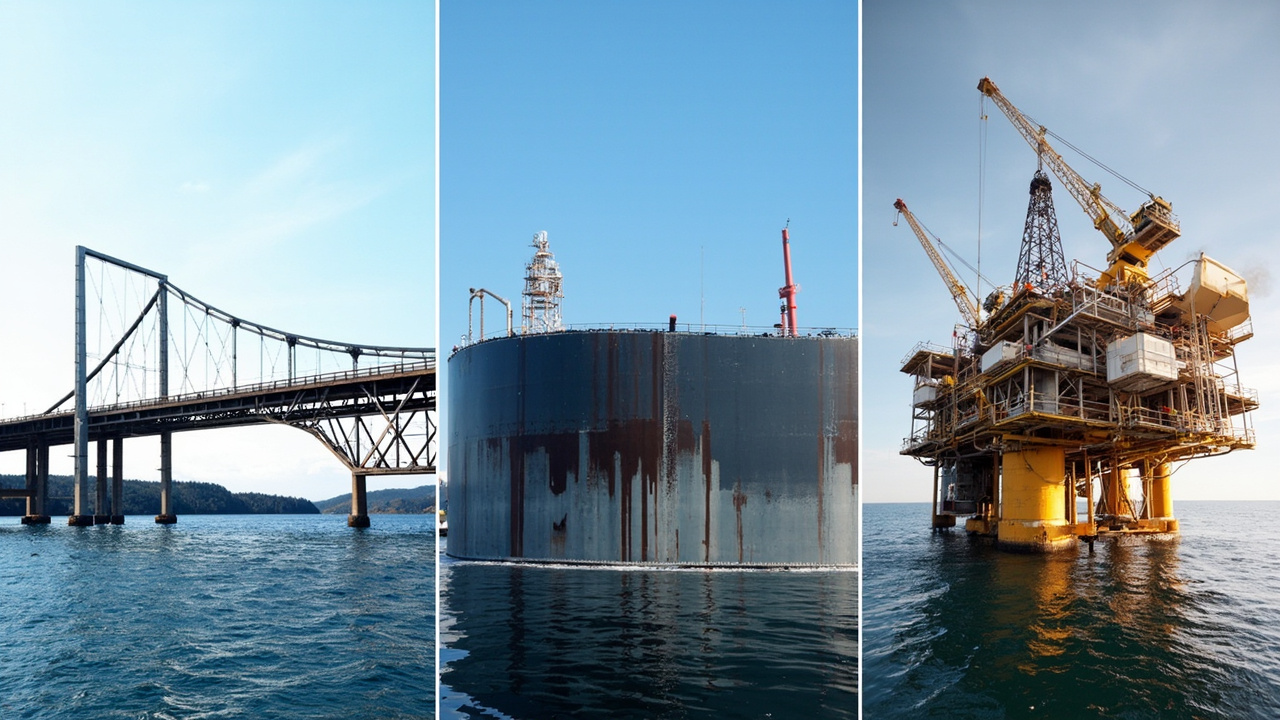
Anti-corrosion protection of steel structures is never as simple as "buy a can of good paint and brush it on." The same can of epoxy zinc-rich primer can steadily last through the design service life on an inland bridge, yet may rust through early on an offshore platform in the splash zone—because the corrosion environments of these three types of structures are simply not on the same scale. To make the coating truly "worth the money," you must first design differentiated systems according to corrosion grade, then implement film thickness, application, and environmental control. The essence of steel structure anti-corrosion systems is to map the three-layer logic of "primer for anti-corrosion, intermediate coat for barrier, topcoat for weather resistance" onto the corrosion intensity of each type of working condition, and provide a practical coating solution.
As a technical supplier of industrial protective coating systems, Kexin New Materials (kexinMaterials) has long provided "primer–intermediate–topcoat" systems and process cards for bridges, storage tanks, and marine facilities. Our core approach is differentiated design based on the corrosion grades of ISO 12944, rather than using one solution for all projects. If you are evaluating resin systems and VOC compliance at the selection stage, you may also refer to our thoughts on water-based industrial coating selection to consider the system solution and environmental thresholds together.
This article first clarifies the corrosion grades and the three-layer mechanism, then separately presents three comparable system tables for bridges (C4–C5), storage tanks (internal Im1–Im2), and marine structures (CX), and supplements practical points such as high-solid content, application control, and safe storage. The goal is to enable you, when receiving a design proposal, to judge whether its "system is reasonable."
I. Why "One System for All" Is Wrong
The root cause of coating failure can almost always be traced to "mismatch between environmental grade and system strength." Applying a thin-film system designed for dry warehouses to the box girders of a sea-crossing bridge, salt spray and condensation will cause it to blister and peel within a few years; conversely, applying a marine CX-grade extra-heavy anti-corrosion system to ordinary plant steel structures is a double waste of cost and application difficulty.
The differences come from three aspects: first, the intensity of corrosive media (chloride ion concentration, humidity, temperature); second, the mode of action of the media (atmospheric, immersion, splash); and third, the maintainability and design life of the structure. The international standard ISO 12944-2018 quantifies such differences precisely through "corrosion grades," giving system design a common language—which is also the basis of the system tables below.
II. ISO 12944 Corrosion Grades and System Logic
ISO 12944-2018 classifies atmospheric corrosion environments from C2 (low) to C5 (very high), plus CX (extreme, offshore/marine), and separately classifies immersion environments as Im1–Im3. The higher the grade, the more severe the corrosion, and the higher the required dry film total thickness (DFT) and durability grade of the system.
| Corrosion Grade | Typical Environment | System Design Orientation |
|---|---|---|
| C2 (low) | Dry inland, low-pollution indoor | Thin film, conventional epoxy/polyurethane sufficient |
| C3 (medium) | Urban, general industrial atmosphere | Primer + topcoat, moderate film thickness |
| C4 (high) | Coastal, chemical plant areas | Zinc-rich primer + intermediate coat + topcoat |
| C5 (very high) | High-salt coast, heavy industrial areas | Heavy anti-corrosion system, high film thickness |
| CX (extreme) | Offshore, splash zone | Ultra-high-solid zinc-rich + thick barrier + weather-resistant topcoat |
| Im1–Im3 | Immersion (fresh water/seawater/buried) | Select system by immersion medium, heavy anti-corrosion |
Once you understand this table, the "why" of the system solutions becomes clear: bridges are mostly C4–C5, tank interiors belong to immersion Im1–Im2, and offshore platforms as a whole fall under CX. Their corrosion mechanisms differ, so their systems naturally cannot be the same.
III. The Three-Layer Mechanism of Systems: Primer, Intermediate, and Topcoat Each Handle Their Own Role
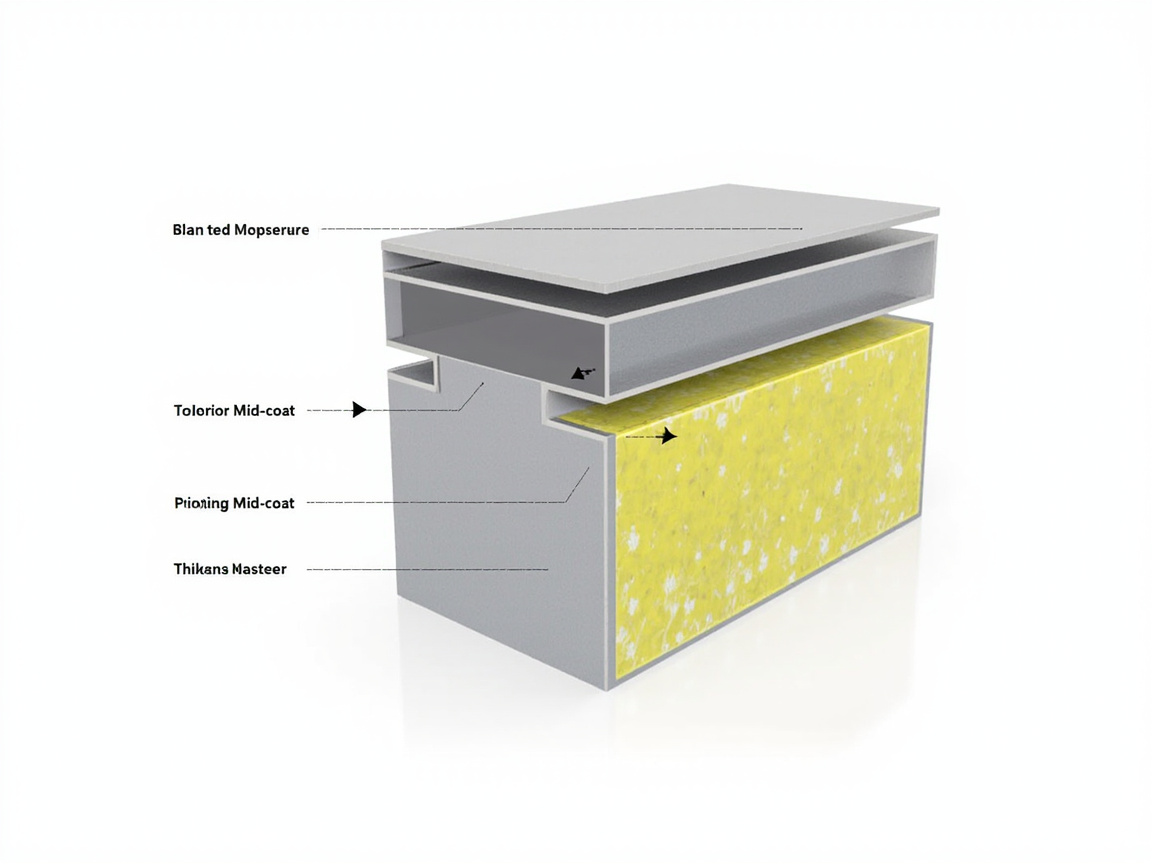
An industrial protective system usually consists of "primer + intermediate coat + topcoat," with each layer taking on a different function and having a different mechanism.
3.1 Primer: Anti-corrosion and Adhesion, Cathodic Protection
Heavy anti-corrosion primers commonly use epoxy zinc-rich, whose core is the cathodic protection mechanism—zinc dust in the film (dry film zinc content ≥80% by mass) acts as a sacrificial anode, corroding preferentially to protect the steel substrate. This mechanism is especially critical at film defects such as scratches and pinholes, and is what distinguishes zinc-rich primers from ordinary anti-rust paints. The primer is also responsible for high adhesion to blasted substrate, serving as the foundation of the entire system.
3.2 Intermediate Coat: Thickening and Barrier
Intermediate coats mostly use epoxy micaceous iron oxide, whose core is the barrier effect—flake particles of micaceous iron oxide (MIO) overlap layer by layer in the film, like a "maze" extending the path for water, oxygen, and chloride ions to diffuse toward the substrate. The intermediate coat also undertakes the thickening task, building up total film thickness with relatively economical material, enhancing barrier while controlling cost.
3.3 Topcoat: Weather Resistance and Decoration
The outermost layer mostly uses polyurethane topcoat (aliphatic HDI system), responsible for resisting UV, retaining gloss and color, resisting chalking, and providing decorative appearance. Its weather resistance determines whether the system, after years outdoors, still "looks good and remains intact."
One sentence for the system principle: primer handles anti-corrosion and adhesion, intermediate coat handles thickening and barrier, topcoat handles weather resistance and decoration. Each layer has its own role; missing or mismatching a layer will reduce overall service life.
IV. Typical System Film Thickness Baseline
The general system film thickness of industrial protective coatings can serve as a baseline for scheme design (data from domestic epoxy-polyurethane topcoat system parameter summaries and industry technical archives): primer 70–80 µm (1 coat), intermediate coat 100–150 µm (1–2 coats), topcoat 100–120 µm (2 coats). The three-layer total DFT is usually in the range of 270–350 µm, corresponding to general heavy anti-corrosion needs of C4–C5.
| Coating | Coats | Single/Range Film Thickness | Function |
|---|---|---|---|
| Epoxy zinc-rich primer | 1 coat | 70–80 µm | Cathodic protection, adhesion |
| Epoxy MIO intermediate coat | 1–2 coats | 100–150 µm | Barrier, thickening |
| Polyurethane topcoat | 2 coats | 100–120 µm | Weather resistance, decoration |
| Total | — | approx. 270–350 µm | Heavy anti-corrosion system |
This is the "baseline formula"; the three systems below will add or subtract from it according to environmental grade.
V. System A: Bridge Steel Structures (C4–C5)
Bridges are exposed to outdoor atmosphere for long periods, subject to both industrial pollution and coastal salt spray, and box girders may also have condensation; corrosion grades are mostly C4–C5. The system mainly uses "epoxy zinc-rich primer + epoxy MIO intermediate + polyurethane topcoat," with total film thickness at the middle-to-upper end.
| Item | System Solution (Bridge C4–C5) |
|---|---|
| Corrosion grade | C4 (general bridge) to C5 (sea-crossing/heavily polluted bridge) |
| Primer | Epoxy zinc-rich primer, 70–80 µm, 1 coat (cathodic protection) |
| Intermediate coat | Epoxy MIO intermediate coat, 100–150 µm, 1–2 coats (barrier thickening) |
| Topcoat | Aliphatic polyurethane topcoat, 100–120 µm, 2 coats (weather-resistant color retention) |
| Total DFT | approx. 270–350 µm |
| Application method | Airless spray preferred; dead corners inside box girders may be supplemented by brush |
| Environmental control | Temperature 5–35℃, relative humidity ≤80%, substrate temperature at least 3℃ above dew point |
The focus of the bridge system is "weather resistance + edge protection": the topcoat should be aliphatic polyurethane to resist yellowing and retain gloss; edges and corners prone to water accumulation such as inside box girders, bolt joints, and welds should have increased film thickness or touch-up, because salt spray corrosion often starts from these places.
VI. System B: Storage Tanks (Internal Im1–Im2)
Storage tanks are divided into external (atmosphere, similar to C4–C5) and internal (contact with medium, belonging to immersion environment Im1–Im2). Internal systems must be selected for the stored medium: Im1 is fresh water/no specifically polluted water immersion, Im2 is seawater or saline environment immersion. Internals often require higher chemical resistance and density, and with long maintenance windows, the system must be "right the first time."
| Item | System Solution (Tank Internal Im1–Im2) |
|---|---|
| Corrosion grade | Im1 (fresh water immersion) / Im2 (seawater/saline immersion) |
| primer | epoxy zinc-rich or epoxy anti-rust primer, 70–80 µm, 1 coat |
| intermediate coat | epoxy micaceous iron oxide / high-build epoxy intermediate coat, 150 µm grade, 1–2 coats |
| topcoat | food/media-compatible epoxy or polyurethane topcoat, 100–120 µm, 2 coats |
| Total DFT | usually higher than atmospheric systems, approx. 300–350 µm or above |
| Key control | media compatibility, solvent-free / high-solid to reduce porosity, weld reinforcement |
| Environmental control | temperature 5–35℃, relative humidity ≤80%, dew point difference ≥3℃ |
The core of the internal tank scheme is "media compatibility + low porosity". When storing drinking water and food-grade media, the topcoat must meet corresponding hygiene requirements; when storing chlorine-containing media, the film thickness and density must be higher. Stress concentration points such as welds and manholes are corrosion breakthrough points, and should be locally thickened and subjected to spark testing.
VII. Scheme C: Marine Steel Structures (CX, Offshore / Splash Zone)
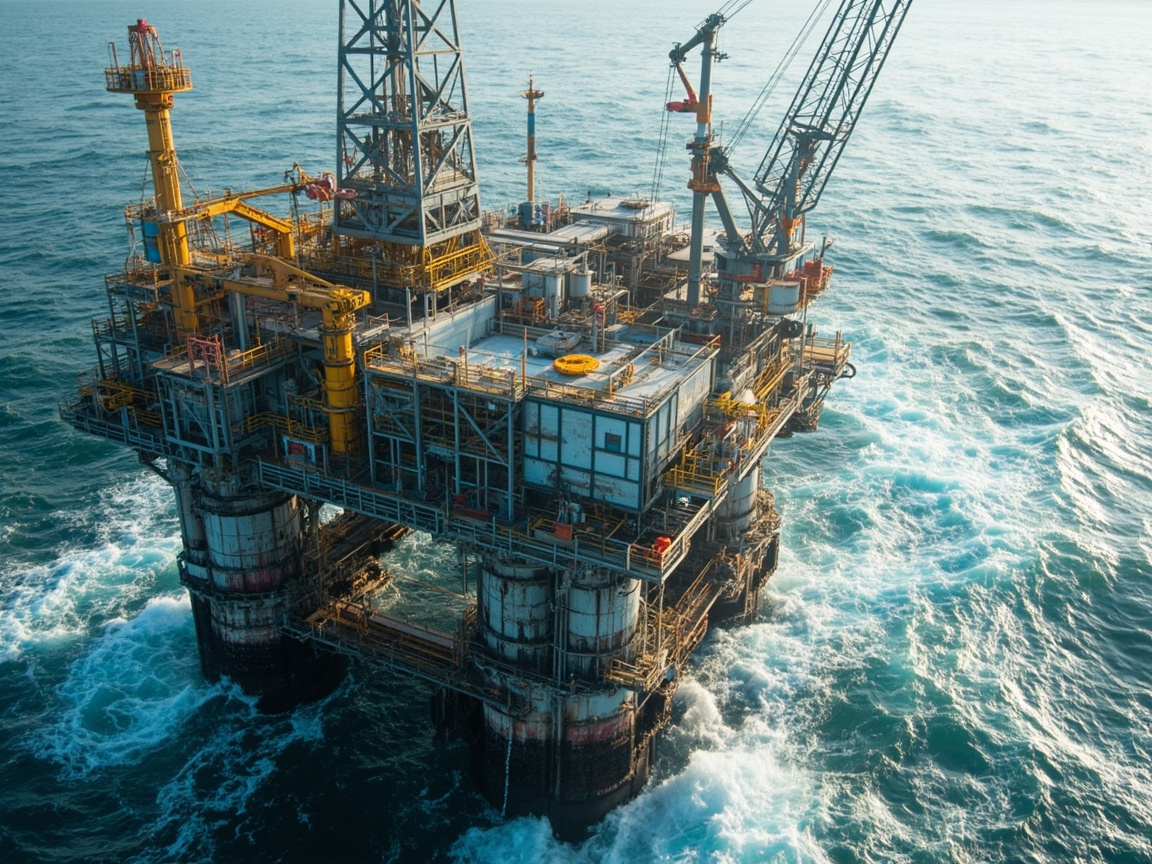
Offshore platforms, jacket structures, and splash zones are at the CX extreme grade of ISO 12944, where salt spray, wet-dry alternation, UV and mechanical impact coexist, representing the most severe conditions for industrial protection. Such projects impose higher requirements on the solid content of zinc-rich primer, the thickness of the barrier layer, and the weather resistance of the topcoat, and tend to adopt ultra-high-solid systems to reduce the number of coats and porosity.
Taking ultra-high-solid epoxy zinc-rich primer (refer to Jotun Barrier 80 UHS type 6XW system, data from public TDS) as an example: two-component polyamine-cured epoxy, VOC mass fraction <10%, weight solid content 95 ± 2 %, volume solid content 85 ± 2 %; VOC (per GB 30981 / GB/T 34682) approx. 134 g/L; zinc powder complies with ASTM D520 Type II, meets SSPC Paint 20 Level 2 and ISO 12944-5 composition requirements; DFT 60–150 µm, theoretical spreading rate 14–5.6 m²/L; in ISO 12944-6 testing achieved "Very High (VH)" durability under C5, suitable for corrosion environments below CX. This type of ultra-high-solid zinc-rich primer is the preferred primer for CX nearshore systems.
| Item | System Scheme (Marine CX) |
|---|---|
| Corrosion grade | CX (extreme, offshore / splash zone) |
| primer | ultra-high-solid epoxy zinc-rich (e.g. Barrier 80 UHS type), 60–150 µm, mainly cathodic protection |
| intermediate coat | high-build epoxy micaceous iron oxide, 150 µm grade or above, 1–2 coats, strong barrier |
| topcoat | aliphatic polyurethane / polysiloxane topcoat, 100–120 µm, 2 coats, weather-resistant |
| Total DFT | usually ≥350 µm, splash zone may be higher |
| Special requirements | ultra-high solid, low VOC, resistance to wet-dry cycling, impact resistance |
| Environmental control | temperature 5–35℃, relative humidity ≤80%, dew point difference ≥3℃; offshore construction window limited |
The key point of the marine scheme is the triple combination of "ultra-high solid + thick barrier + weather-resistant topcoat". Primers like Barrier 80 UHS, with 95% weight solid content and low VOC of 134 g/L, not only meet the CX-grade anti-corrosion strength but also comply with the limits of GB 30981-2020 for industrial protective paint, making them a pragmatic choice for nearshore heavy anti-corrosion.
VIII. High-Solid and VOC Compliance: An Inevitable Line for Modern Systems
With the implementation of GB 30981-2020 "Limits of Harmful Substances in Industrial Protective Coatings", VOC of industrial protective paint is no longer an "option" but a mandatory threshold. High-solid (e.g. volume solid 85% grade) and ultra-high-solid (weight solid 95% grade) systems, while reducing solvent and VOC, can also reduce the number of coats through single-coat thick application—this is especially cost-effective for large-area, hard-to-maintain structures such as bridges and marine works.
Taking ultra-high-solid epoxy zinc-rich (Barrier 80 UHS type) as an example, its VOC is about 134 g/L, far lower than traditional solvent-based zinc-rich, yet its weight solid content is as high as 95 ± 2 %. This means fewer coats and lower solvent emissions at the same film thickness, with better density. In system design, optimizing "solid content—VOC—coats—film thickness" as a set of linked parameters is the way to meet standards economically.
IX. Construction and Environmental Control: The Key to Scheme Implementation
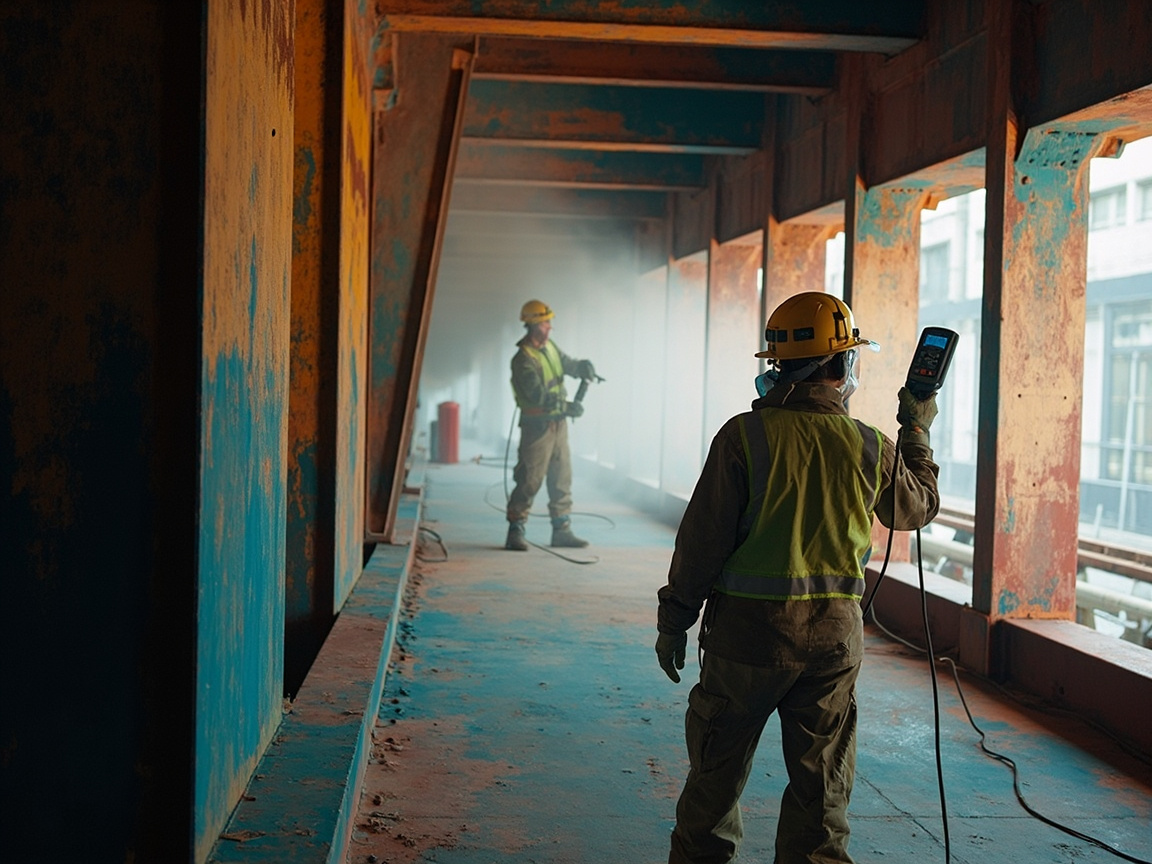
No matter how good the system is, out-of-control construction will waste all previous efforts. General construction requirements (based on summary of epoxy polyurethane topcoat system parameters): construction environment temperature 5–35℃, relative humidity ≤80%, substrate temperature must be at least 3℃ above dew point; priority on high-pressure airless spray or air spray, brush and roller only for small-area repair; two-component systems must be mixed strictly by ratio and used within pot life.
Substrate preparation is the prerequisite: carbon steel blasted to Sa 2½ (ISO 8501-1), roughness 30–75 µm, surface free of oil and dust. Film thickness verified zone by zone with magnetic thickness gauge, focusing on edges, welds, bolt holes. Intercoat application should be completed after the previous coat is surface-dry and before it is through-dry, to avoid intercoat delamination. Work should stop when environment is non-compliant (rain, snow, high humidity, condensation), otherwise even salt-spray systems will fail early.
X. Film Thickness Design and Inspection Acceptance
Film thickness is the "hard indicator" of the system. Total DFT should set a lower limit by environmental grade: C4 approx. 240–280 µm, C5 approx. 280–340 µm, CX usually ≥350 µm. Acceptance uses magnetic thickness gauge to take points by statistical rules (several points per m², take average and minimum), checking both whether the average meets the standard and whether the minimum is sufficient—insufficient minimum equals local "downgrade", precisely the breakthrough point for salt spray.
System acceptance should also combine salt spray, adhesion and aging data (see testing articles for details). It is recommended to write "corrosion grade—total film thickness—individual test results—pass line" into the technical agreement, and accept by drawing and trace by numbers later. The curing and maintenance time after construction also directly determines final performance; two-component systems must be given a complete curing window before being put into use (for general mechanisms of coating drying and curing, refer to Drying and Curing of Water-based Coating for principle comparison; although systems differ, the logic of "ratio—curing—performance" is similar).
XI. Safety and Storage: Red Lines for Two-Component Systems
Industrial heavy anti-corrosion systems are mostly two-component epoxy/polyurethane, containing isocyanate curing agent, so construction safety cannot be vague. According to system safety instructions: contains isocyanate curing agent, harmful if inhaled, requires ventilation + respirator + goggles + chemical-resistant gloves; no open flame, no smoking at site; waste paint and drums handled as hazardous waste.
For storage: base and curing agent stored separately in a cool, ventilated place at 5–35℃; curing agent easily reacts with moisture in air and fails, must be strictly sealed and moisture-proof; common packaging base 20 kg + curing agent 4 kg, shelf life about 12 months. Use measuring tools for on-site mixing rather than by feel; leftover two-component cannot be stored long.
XII. Leave the Scheme to Us
Back to the opening statement: there is no "universal solution" for steel structure anti-corrosion systems. Bridges look at C4–C5 weather resistance and edge protection, tank interiors look at Im1–Im2 media compatibility, marine looks at CX ultra-high solid and thick barrier—the three must be designed differently.
Kexin New Materials (kexinMaterials) when delivering epoxy zinc-rich primer, epoxy micaceous iron oxide intermediate coat and polyurethane topcoat systems, will provide corresponding film thickness and process cards according to ISO 12944 corrosion grades, and include VOC compliance (GB 30981-2020), construction environment window and safe storage into the delivery package, so that design institutes, contractors and owners align on the same set of data. For readers needing to weigh between water-based and solvent-based, you can also combine Selection Comparison of Water-based and Solvent-based Coating to balance performance, compliance and cost.
XIII. Common System Misconceptions
Misconception 1: All steel structures use the same paint. Wrong. C4, C5, CX, Im1–Im2 differ by an order of magnitude in corrosion intensity; systems and film thickness must be graded.
Misconception 2: Thicker film is safer, just pile it on. Wrong. Too thick causes cracking, sagging, waste, and two-component has pot life limits; film thickness should be designed by grade and verified with thickness gauge.
Misconception 3: Higher zinc content in zinc-rich primer is better, can be added infinitely. Wrong. Zinc powder dry film content ≥80% is the effective range for cathodic protection; excess instead affects construction and intercoat; the key is system design and film thickness.
Misconception 4: Topcoat chosen casually, just needs to cover. Wrong. Outdoor topcoat must be aliphatic polyurethane for yellowing resistance, gloss and color retention, otherwise it chalking and loses gloss in a few years.
Misconception 5: VOC doesn't matter, as long as performance is good. Wrong. Industrial protective paint is subject to mandatory limits of GB 30981-2020; high-solid/ultra-high-solid systems can comply while maintaining performance.
XIV. System Failure Review: Typical Pitfalls of Three Structure Types
A good scheme on paper can still fail in execution. Tracing the typical failures of three structure types back to system design is a practical way to avoid repeating mistakes:
| Structure Type | Typical Failure | Root Cause | System-level Countermeasure |
|---|---|---|---|
| Bridge (C4–C5) | Box girder inner corners, bolt nodes early rust | Insufficient edge corner film thickness, loss of control over recoat interval | Pre-coat/thicken edge corners, strict intercoat window |
| Storage tank (Im1–Im2) | Pitting perforation near welds | Welds not reinforced, medium compatibility error | Local thickening at welds + spark test, select topcoat by medium |
| Marine (CX) | Large-scale spalling in splash zone | Insufficient solids/film thickness, poor resistance to wet-dry cycling | Ultra-high solids zinc-rich + thick barrier, total DFT ≥ 350 µm |
| General | Topcoat chalking and loss of gloss after a few years | Used aromatic/non-weather-resistant topcoat | Switch to aliphatic polyurethane or polysiloxane topcoat |
| General | Intercoat delamination, whole-sheet peeling | Loss of control over surface treatment or recoat window | Blast cleaning Sa 2½, control dew point difference and intercoat interval |
This table shows: most on-site failures are not due to "poor coating itself", but to a breakdown in one link of the配套 design, film thickness distribution, or construction control. At the scheme stage, separately marking film thickness and process for "stress concentration points" such as edges/corners, welds, and splash zones saves far more trouble than later repair.
15. Cost Logic of配套 Design: Thicker and More Expensive Is Not Always Better
配套 design is often misinterpreted as "stack up film thickness, select higher grade for safety". But cost is linked: each step up in total DFT raises material, number of coats, schedule, and rework risk. The rational approach is to optimize using the four parameters of "corrosion grade—required film thickness—acceptable number of coats—VOC compliance".
Taking marine CX as an example, using ultra-high solids epoxy zinc-rich (such as Barrier 80 UHS type, 95% weight solids level) can achieve single-coat thick application and reach high film thickness with fewer coats, satisfying heavy-duty anti-corrosion while reducing VOC and schedule; if a traditional low-solids system is used, achieving the same DFT requires more coats, with higher solvent emission and labor. Thus "high solids" is not just an eco-friendly selling point, but a balance point of cost and reliability. The designer should clearly explain this linkage in the technical agreement, so the owner understands "why this配套 is both compliant and not wasteful".
16. Closed Loop of配套 Scheme and Inspection Acceptance
Good scheme writing does not mean good delivery; good delivery does not mean strict acceptance. Connecting "design—construction—inspection—acceptance" into a closed loop is the key to avoiding accidents in steel structure anti-corrosion.
Design side must give clear corrosion grades (C4/C5/CX, Im1–Im2), lower limit of total DFT, film thickness ranges of each layer and individual test pass lines (salt spray duration, aging discoloration/chalking grade, cross-cut grade). The vague phrase "heavy-duty anti-corrosion配套" cannot be traced later.
Construction side must record substrate blast cleaning grade, actual DFT distribution, temperature/humidity and dew point, paint mixing ratio and curing conditions. These records are the basis for defining "coating problem or construction problem" during acceptance. Without process records, only mutual blame after failure.
Inspection side should provide third-party reports corresponding to the design scheme: salt spray per GB/T 1771 / ISO 9227, aging per GB/T 1865, adhesion per GB/T 9286, and note panel info and test duration. The pass lines of the three schemes above (bridge/C4–C5, tank/Im1–Im2, marine/CX) should be directly written into the inspection commission form.
Acceptance side judges by the four-item closure of "average film thickness + minimum point film thickness + individual test + VOC compliance". Only when all four links match does the配套 truly land. This closed-loop thinking is also what Kexin New Materials (kexinMaterials) insists on when delivering primer—intermediate—topcoat配套: not just providing coating, but providing a "verifiable data chain", so the owner gets not a paper promise, but a set of reviewable evidence.
17. From配套 to Full Life: Consider Maintenance at Design Stage
配套 design should not only focus on "first coating compliance", but also consider the maintainability of the structure throughout its life. Many failures are not wrong配套 selection, but no room left for maintenance at design: box girder interior inaccessible for touch-up, no access for splash zone inspection, no reserved local reinforcement at welds, causing small rust spots to drag into major repairs.
Full-life perspective配套 design considers at least three points: first, accessibility, reserve inspection access and scaffolding conditions for parts that must be maintained; second, repairability, each layer of the配套 should select a system compatible with recoating, avoiding later "old layer does not stick to new paint"; third, film thickness margin, at design stage mark film thickness higher than average for vulnerable edges/corners, welds, splash zones, rather than uniformly taking the lower limit.
Factoring maintenance cost into initial selection is often more economical than "save a bit first, repair repeatedly later". This is why marine and sea-crossing bridge projects increasingly emphasize the trinity of "design life—配套 grade—maintenance window": using the strength of first-time配套 to buy ease of later maintenance. For owners, the truly cost-effective配套 is the one with fewer shutdowns and fewer repairs in twenty years.
It should be added that the full-life perspective does not reject low-cost schemes—for general industrial plants and pipe racks at C3 and below, over-designing CX-grade配套 is wasteful. The correct approach is to first do "environment grading" using ISO 12944 corrosion grades, then decide配套 strength and film thickness, so every budget is spent on corresponding corrosion risk. With accurate grading, the配套 will not "over-config waste, under-config fail", which is the core of differentiated design.
From projects served by Kexin New Materials (kexinMaterials), owners who aligned "environment grading +配套 film thickness + maintenance window" at once upfront had significantly better rework rates and comprehensive costs later; projects that graded while constructing and arbitrarily compressed film thickness often entered a repeated repair cycle after two or three years. The corrosion environment will not show mercy because you "saved one coating"; the rigor of配套 design will ultimately be written on the structure's life bill.
FAQ
1. What is steel structure anti-corrosion配套, and why divide into primer/intermediate/topcoat?
Steel structure anti-corrosion配套 is a coating combination of "primer + intermediate coat + topcoat" designed per corrosion environment. Primer handles anti-corrosion and adhesion (zinc-rich primer relies on zinc sacrificial anode cathodic protection), intermediate coat handles thickening and barrier (micaceous iron oxide flake extends corrosion medium path), topcoat handles weather resistance and decoration. Each layer manages its own, missing one or wrong matching shortens life.
2. Which corrosion grade for bridge, tank, marine respectively?
Bridges mostly at C4–C5 (sea-crossing or heavy pollution take C5); tank exterior similar to C4–C5, interior contacting medium is immersion environment Im1 (fresh water) or Im2 (seawater/saline); marine platform, splash zone falls in CX (extreme). The three have different corrosion intensities, so配套 and film thickness must be differentiated.
3. What is typical配套 film thickness?
General baseline: epoxy zinc-rich primer 70–80 µm (1 coat), epoxy micaceous iron intermediate 100–150 µm (1–2 coats), polyurethane topcoat 100–120 µm (2 coats), total DFT about 270–350 µm, corresponding to C4–C5 heavy-duty. C5/CX and immersion environments should be thickened on this basis.
4. Why recommend ultra-high solids epoxy zinc-rich for marine CX grade?
CX grade has coexisting salt spray, wet-dry cycling and UV, most severe. Ultra-high solids epoxy zinc-rich (such as Barrier 80 UHS type) with 95 ± 2 % weight solids, VOC about 134 g/L, zinc powder per ASTM D520 Type II, reaches "Very High (VH)" durability in ISO 12944-6 C5 test, applicable below CX, satisfying both heavy-duty anti-corrosion and GB 30981-2020 low VOC requirement.
5. What to note for tank interior (Im1–Im2)配套?
Focus on medium compatibility and low porosity. When storing drinking water/food medium, topcoat must meet hygiene requirements; chlorine-containing seawater (Im2) requires higher film thickness and density. Stress concentration points like welds, manholes locally thickened and spark tested; long maintenance window demands "right first time".
6. Why is dew point difference of construction environment important?
Substrate temperature must be above dew point by 3℃ or more, otherwise invisible water film condenses on surface, paint film adhesion and density drop sharply, prone to blistering and peeling later. Temperature 5–35℃, relative humidity ≤80% are also general control lines; stop work if environment not met.
7. What does VOC limit mean for industrial protective paint?
Industrial protective coatings execute GB 30981-2020 "Limit of Harmful Substances in Industrial Protective Coatings", setting mandatory upper limits for VOC and heavy metals. High solids/ultra-high solids systems (such as 85% volume solids, 95% weight solids) reduce emission while keeping performance, a compliance premise of modern配套.
8. What safety red lines for two-component配套 construction?
Contains isocyanate curing agent, harmful if inhaled, need ventilation +防毒 mask + goggles + chemical gloves; no fire, no smoking; waste paint and drums as hazardous waste. Curing agent must be tightly sealed against moisture, metered ratio, used within pot life.
9. Is average film thickness enough for acceptance?
Not enough. Besides average compliance, also check minimum point—insufficient minimum equals local "under-config", a breach for salt spray corrosion. Take points per statistical rules, dual control of average and minimum.
10. Can water-based industrial paint replace these solvent-based配套?
For most C3–C4 atmospheric environments yes, with lower VOC and more compliant; but for extreme conditions like CX splash zone, Im2 immersion, ultra-high solids solvent-based epoxy zinc-rich is still more reliable. Selection should integrate corrosion grade, compliance threshold and maintenance conditions, not simple substitution.
Further Reading
- How to Select Water-based Industrial Paint under Oil-to-Water Background: Resin System and Applicable Conditions: extends the "corrosion grade—配套" thinking of this article to water-based systems, balancing performance and VOC compliance. How to choose between water-based paint and oil-based paint: a systematic comparison from performance to cost: Compare the trade-offs between water-based and solvent-based industrial coatings in durability, application, and cost to support related decision-making.
- Formulation science and application practice of water-based wood coatings: Gain cross-category understanding of water-based resin systems and application logic to build a broader material knowledge framework.