Introduction: Steel structures fail at 550°C — the mission of the coating is to "buy time"
Steel structures lose strength as temperature rises in a fire—reaching critical failure at 550°C. The core of fireproof coatings is not "fire prevention", but "passive fire protection" to delay the time for steel to reach the critical temperature, buying 30–180 minutes for evacuation and rescue. Intumescent (>/50x expansion/thin coating) and non-intumescent (cement thick coating/non-combustible) are the two main routes.
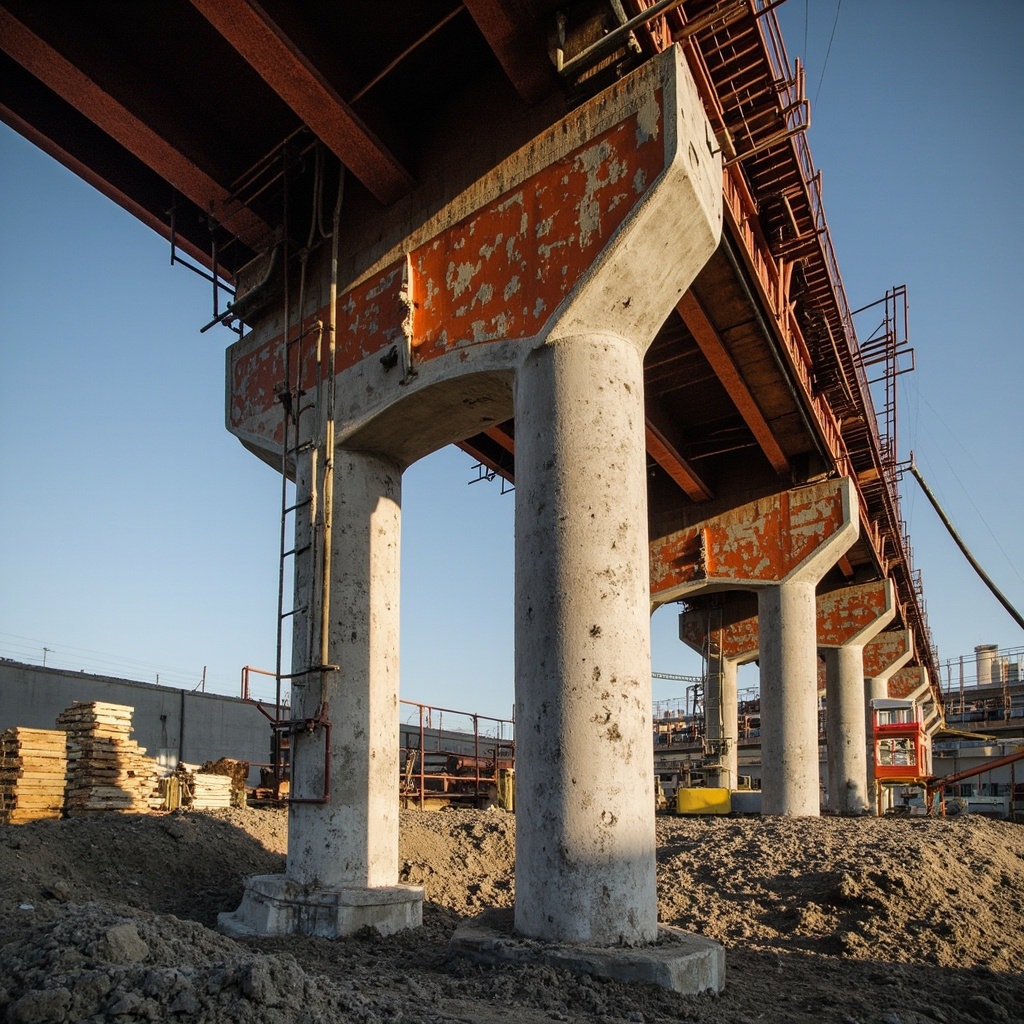
I. Intumescent vs. Non-intumescent Comparison
| Dimension | Intumescent | Cementitious |
|---|---|---|
| Mechanism | APP/PER/MEL expands >50x at 200-300°C forming insulating char layer | Cement-based/vermiculite/mineral fiber inherently non-combustible + low thermal conductivity |
| Coating thickness (mm) | 1-3 (thin film) | 10-40 (thick coating) |
| Fire resistance rating | 0.5-2h | 2-3h (can be longer) |
| Appearance | Colorable / aesthetic | Rough / not aesthetic |
| Application | Indoor decorative steel / visible columns and beams | Outdoor / concealed steel / industrial plants |
| Cost (RMB/m²) | 150-400 | 50-150 |
II. Requirements for Fireproof Coating Thickness of Structural Steel with Different Fire Resistance Ratings
| Fire Resistance Rating (h) | Intumescent Thickness (mm) | Non-intumescent Thickness (mm) | Steel Section Factor (m⁻¹) |
|---|---|---|---|
| 0.5 | 0.5-1.0 | 5-10 | >200 |
| 1.0 | 1.0-1.5 | 10-15 | 150-200 |
| 1.5 | 1.5-2.0 | 15-25 | 100-150 |
| 2.0 | 2.0-3.0 | 20-30 | 80-100 |
| 3.0 | 3.0-4.0 | 30-45 | <80 |
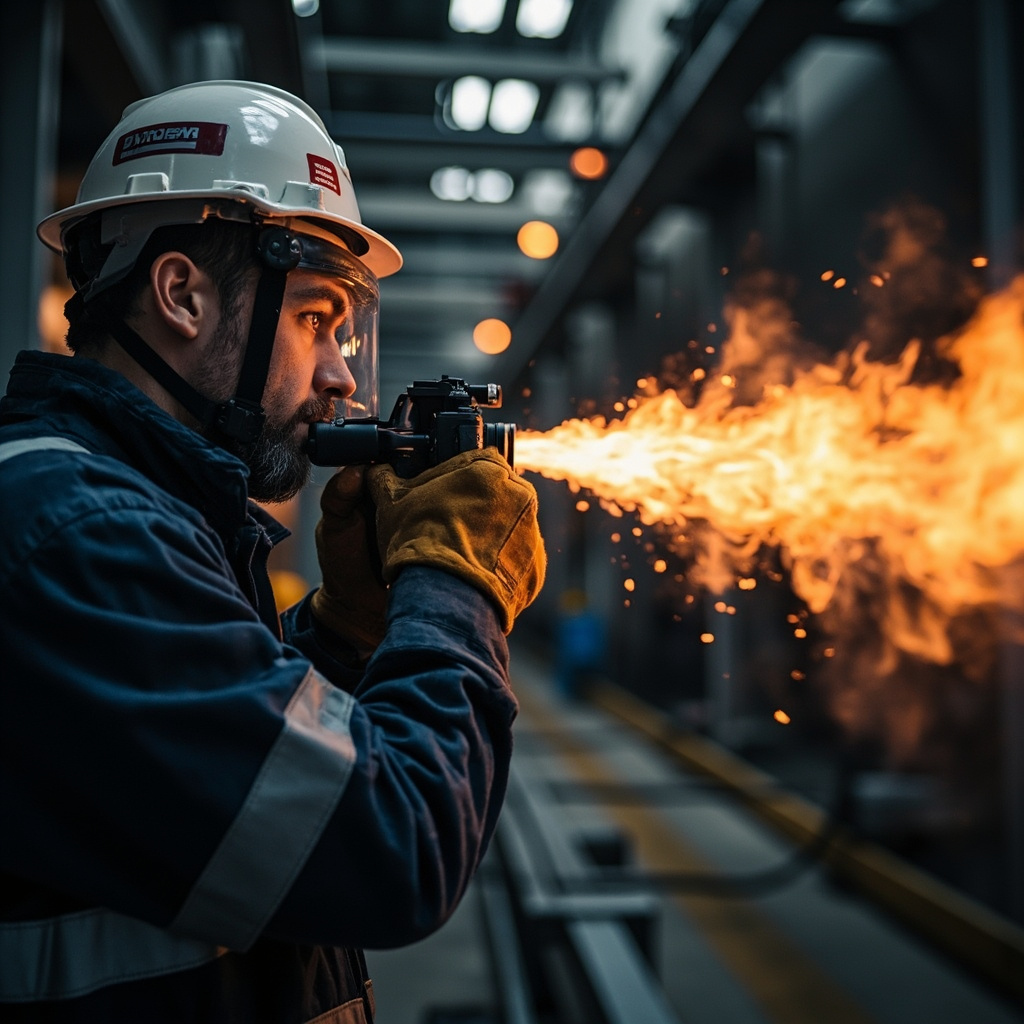
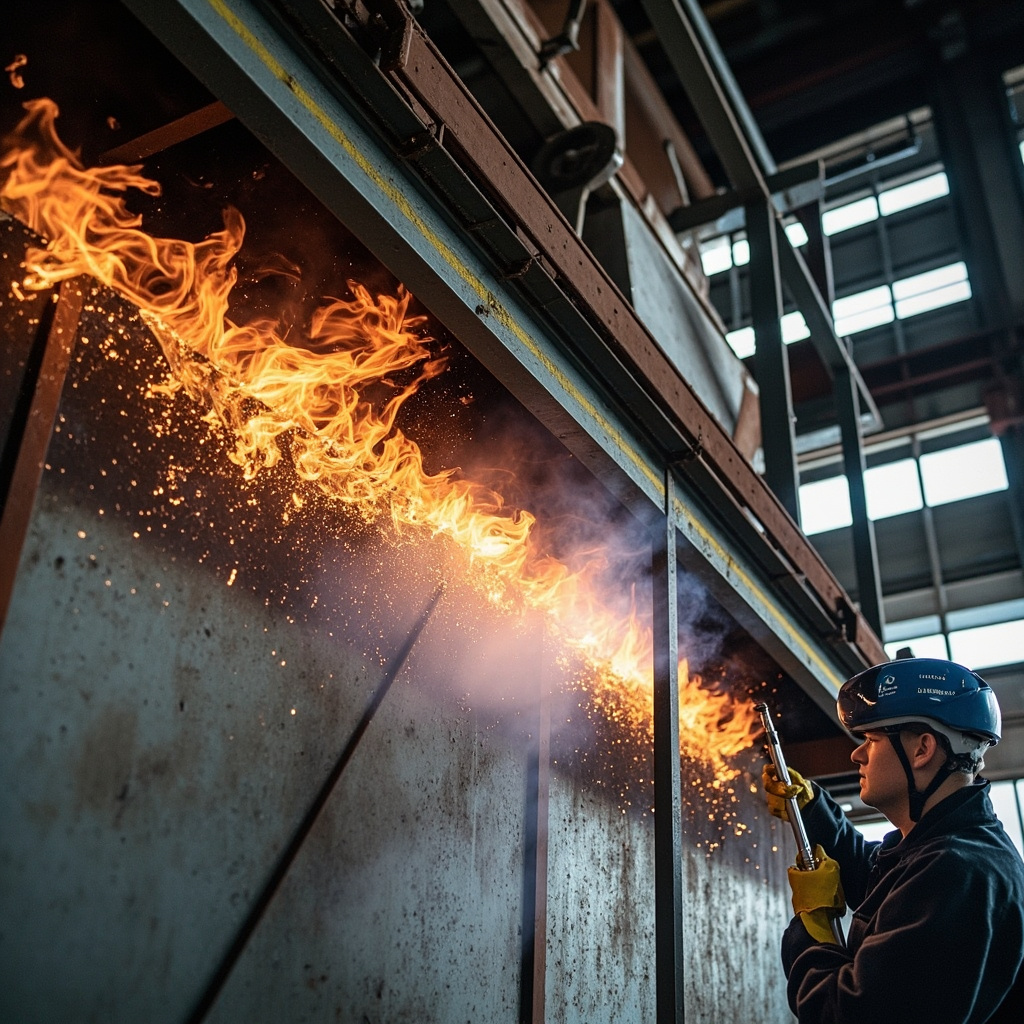
Technical deepening: systematic optimization methods for process parameters (DOE experimental design)
Coating production process optimization should not rely on the "trial-and-error method" but should adopt the scientific method of DOE experimental design. Taking the dispersion process as an example—factors affecting quality (linear velocity/time/filling rate/temperature), 4 factors each at 3 levels—full factorial requires 81 experiments—DOE uses orthogonal experiment L9 (9 times) or response surface methodology (27 times) to greatly reduce the number of experiments—while obtaining the main effects and interactions of each factor. For example, it is found that "the interaction of linear velocity × time is significant": high linear velocity + short time and low linear velocity + long time can achieve the same dispersion effect—but the former saves energy by >20%.
In DOE analysis, interpretation of the P-value — P95% confidence). The final output of DOE is a set of prediction models (polynomial regression equations) — input line speed/time/temperature → predict fineness/viscosity/gloss — providing formulation engineers with a "digital formulation optimization" tool.
Industry practice: from "master craftsman's feel" to "parameter standardization"
The common challenge in the coatings industry—when experienced veteran workers retire, their "feel" (mixing resistance/fineness gauge scraping/wet film gloss visual inspection) is taken away—new employees cannot replicate it. Transform the "feel" into quantifiable standard parameters (1) mixing resistance → viscometer reading; (2) fineness gauge scraping → fineness gauge reading (μm); (3) wet film gloss → gloss meter (GU value). The "standard parameter card" for each process is posted next to the equipment—new employees operate according to the "card" rather than "by feel". "Parameter standardization" is a key step for coating factories to move from "workshop" to "factory".
FAQ
Q1: What are the differences between GB 14907 and ISO 834/GB 9978?GB 14907 is a coating product standard that tests expansion ratio and char layer strength. ISO 834 is a fire resistance test for steel structures where steel members coated with fireproof paint are placed in a test furnace and heated according to a standard temperature-time curve—measuring the time to reach 550°C.
Q2: Does the intumescent coating need to be fully recoated after a fire?Yes! The charred layer is completely failed—must be entirely removed to the substrate + re-blasted + recoated.
Q3: Why can't intumescent types be used outdoors?APP slowly hydrolyzes in water → loses intumescent capability. Non-intumescent (cement-based) has no hydrolysis issue — suitable for outdoor use.
Q4: Why is post-construction curing important?Intumescent types require 7-14 days (23°C) to cure residual solvents—otherwise the coating may flake off from steam during the initial stage of a fire. Non-intumescent types require 28 days for cement hydration.
Q5: Fireproof coating "shelf life"? 1 year in the can. The functional service life of the coating has no fixed term — expansion ratio is spot-checked every 3–5 years → if reduced to 50% of original value → recoat.
Q6: Will the topcoat reduce the fireproofing effect?The topcoat delays the intumescent layer by about 5-10 seconds—impact on 0.5-3h fire resistance rating is <1%. However, topcoat DFT must be <120μm.
Q7: What is the difference between sprayed fireproofing (Sprayed) and coating fireproofing (Coatings)? Sprayed fireproofing — thick application 10-50mm — constructed by professional fireproofing engineering companies. Coating fireproofing — factory coating products — constructed by painting contractors. The contractors and qualifications are different.
Q8: Impact of fire water on the expanded charred layer?Sudden cooling → local cracking of the charred layer over 15%-25% of the area — re-inspection and re-coating are required after sprinkling.
Q9: New testing trends for fireproof coatings?Traditional ISO 834 standard heating curve. New standards — ISO 22899-1 jet fire (>1100°C) and RWS tunnel fire — impose higher temperature resistance requirements on intumescent formulations.
Q10: Cost-effectiveness of fireproof coatings? Accounts for 2%-5% of total steel structure cost. However, fire protection is a "compliance cost" mandated by GB 50016 — not optional.
FAQ: In-Depth Technical Q&A Supplement
Q11: How do the differences in domestic and international standards for this technology affect product export?Domestic standards (GB) differ from ISO/ASTM standards in test methods and acceptance criteria. For example, salt spray testing—GB/T 1771 (equivalent to ISO 7253) has test conditions basically consistent with ASTM B117—but the rating systems (ISO 4628 vs ASTM D610/D714) differ—when providing test reports for exported products, you must simultaneously indicate the corresponding international standards, otherwise overseas customers cannot make a comparative assessment. It is recommended to list both GB and ISO/ASTM dual-standard indicators in the TDS (Technical Data Sheet) of exported products—to enhance the trust of international customers.
Q12: How to verify the long-term service performance of this technology in actual engineering?Laboratory accelerated testing (salt spray/QUV/cyclic corrosion) provides comparative data—but cannot fully replace actual outdoor exposure testing. Recommendations—(1) Set up outdoor exposure racks at both the factory location and typical customer locations (e.g., coastal C5-M/industrial C4)—conduct annual inspections of coating appearance/adhesion/film thickness changes—establish a company-owned outdoor service database; (2) Collaborate with universities/research institutes—combine enterprise data with academic research—enhance data credibility.
Q13: What should SMEs pay attention to when purchasing related raw materials/equipment?(1) The batch stability of suppliers is more important than unit price—it is recommended to require suppliers to provide COA data for >10 batches—and evaluate batch variation (CpK); (2) For equipment procurement, visit peers who have used the equipment for >2 years to understand the long-term reliability and after-sales service quality of the equipment—rather than relying only on the demonstration data from equipment suppliers; (3) For key raw materials (resin/curing agent)—maintain at least 2 qualified suppliers to guard against single-source supply risk.
Q14: What is the current state and trend of digital transformation in this field?The digital transformation of the coatings industry is evolving from “point-based applications” (automation of individual equipment/processes) to ”system integration” (full-chain ERP+MES+PMS). Currently, for small and medium-sized coatings factories, the digitalization with the ”highest ROI investment” is automatic batching systems + digitalization of quality control data—with a payback period of 1-3 years—which is the prioritized recommended direction. Future trend—AI + sensors enabling real-time optimization of process parameters—further reducing quality fluctuations between batches.
Q15: How can a newly entered coating engineer quickly master this technology?(1)Combine theory and practiceDo not only read literature without touching actual production—nor rely solely on experience without studying theory;(2)Establish a“failure case archive”Every customer complaint/production anomaly/coating failure—record the root cause and resolution process—this is the most effective learning material;(3)Learn from suppliersTechnical personnel from resin/additive/pigment suppliers are carriers of "tacit knowledge" in this field—communicate more with them about solutions to specific problems.
Engineering Application and Implementation Recommendations
Pre-construction preparation and risk assessment
Before formal construction, the three prerequisite tasks must be completed: (1) Substrate condition confirmation — inspect the moisture content of the substrate (concrete <4% / steel with no visible water film), surface preparation grade (abrasive blasting Sa2.5 / manual St3), and salt contamination (chlorides dew point +3°C) — construction may proceed only when all three are satisfied — any exceedance will cause irreversible defects during coating curing; (3) Coating batch verification — check the coating batch number, production date, and COA test report — confirm that the coating is within its shelf life and that key indicators (viscosity / fineness / curing time) meet requirements.
Key control points during the construction process
During construction, it is necessary to continuously monitor and record the following parameters: (1) Wet film thickness (WFT) of each coat (wet film thickness gauge / at least 5 points per 10m²) — the conversion relationship between WFT and target dry film thickness (DFT) is DFT = WFT × volume solids (%) — adjust spraying parameters immediately if WFT deviation is found; (2) Drying/curing time of each coat — epoxy system requires surface dry (2-4h/23°C) → hard dry (6-12h) → full cure (7 days) — the application of the next coat must be within the optimal recoat window of the previous coat (usually 4-24h after surface dry) — recoating too early → interlayer solvent penetration and lifting / recoating too late → reduced interlayer adhesion; (3) Continuous recording of construction environmental conditions — record temperature/humidity/dew point every 2h — archived as part of the completion documentation.
Quality Acceptance and Completion Documentation
The final acceptance of the coating system shall be based on the acceptance criteria specified in the contract (e.g., ISO 12944 / SSPC-PA 2 / GB 50205) — key acceptance items include: (1) Dry film thickness (DFT / ≥5 points per 10m² / any single point ≥80% of nominal value / average within 100–120% of nominal value); (2) Holidays detection (wet sponge method for DFT 500μm / zero holidays); (3) Adhesion (pull-off method ISO 4624 / ≥ design value / failure mode preferably cohesive failure); (4) Visual inspection (no sagging / no orange peel / no particles / uniform gloss). All acceptance inspection data shall be compiled into as-built documentation including inspection reports + construction records + paint batch numbers + environmental records — serving as the data baseline for the 25-year warranty period of the coating system — with an archival period of ≥5 years.
Related Reading
Summary
Intumescent (1-3 mm / 0.5-2 h / indoor decorative) and non-intumescent (10-40 mm / 2-3 h / outdoor concealed) are selected based on fire resistance rating, environment, and appearance. Kexin New Materials provides a full range of fireproof coatings and testing technical support.