Introduction: The Ocean—the Most Severe Corrosive Environment on Earth
Offshore platforms, sea-crossing bridges, and offshore wind turbine foundations—these steel structures are exposed to the most corrosive environments on Earth: salt spray (Cl⁻ >20,000 mg/m²·day, over 100 times that of inland areas), high humidity (>85% RH year-round), intense UV (UV index >12 in tropical waters), cyclic wet-dry alternation (twice-daily tides), and biofouling. ISO 12944-2018 classifies marine corrosion into C5-M (high corrosivity—coastal) and CX (extreme corrosivity—offshore platforms). In CX environments, a complete anti-corrosion coating system is required to have a design service life of >15–25 years. A marine heavy-duty anti-corrosion coating system is not a single coating applied thicker—it is a four-layer structure: primer (sacrificial anode) + intermediate coat (labyrinth barrier) + topcoat (weather-resistant) + splash zone reinforcement—four layers working in precise synergy.
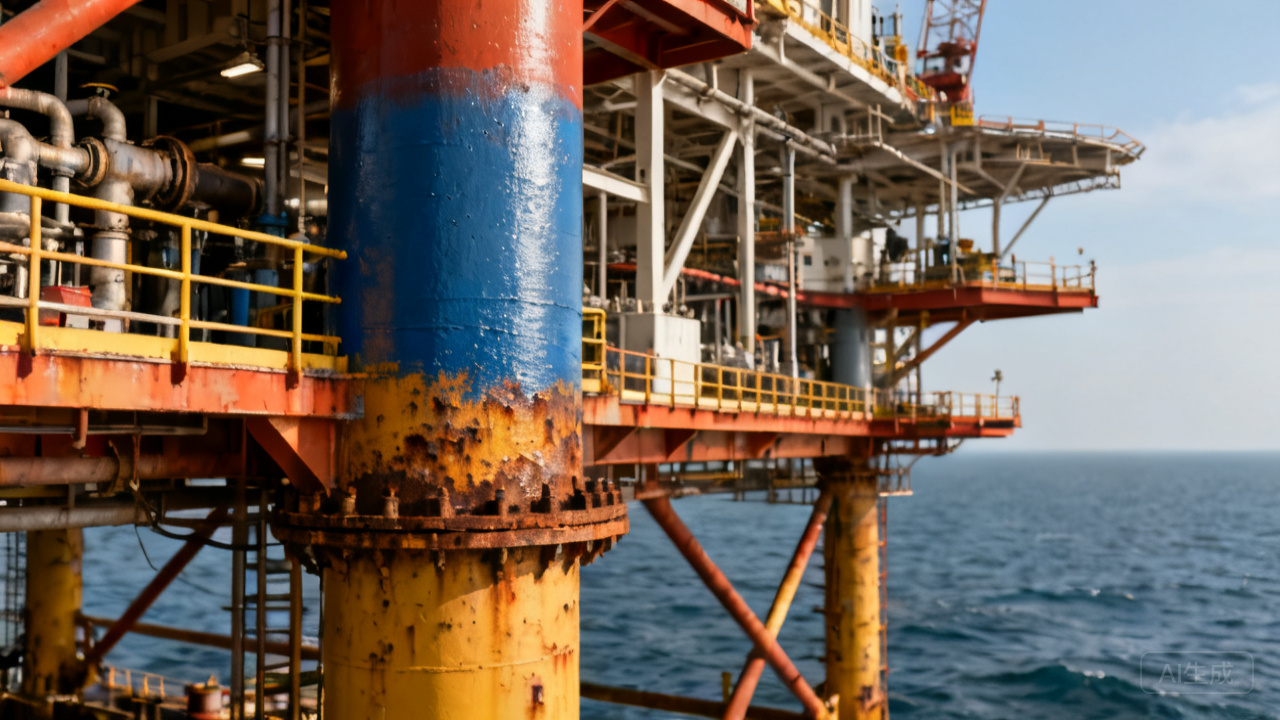
Marine engineering heavy-duty anti-corrosion coating system based on ISO 12944-2018 CX and NORSOK M-501 standards—adopting a four-layer system design of inorganic zinc-rich primer (cathodic protection) + epoxy glass flake intermediate paint (maze barrier) + polysiloxane topcoat (weather resistance / low surface energy) + thick-film reinforcement in the splash zone—combined with cathodic protection—achieving a design service life of >15–25 years.
I. Functions of Each Layer in the Four-Layer Marine Anti-Corrosion Coating System
| Layer | Coating Type | DFT(μm) | Core Function | Key Indicators |
|---|---|---|---|---|
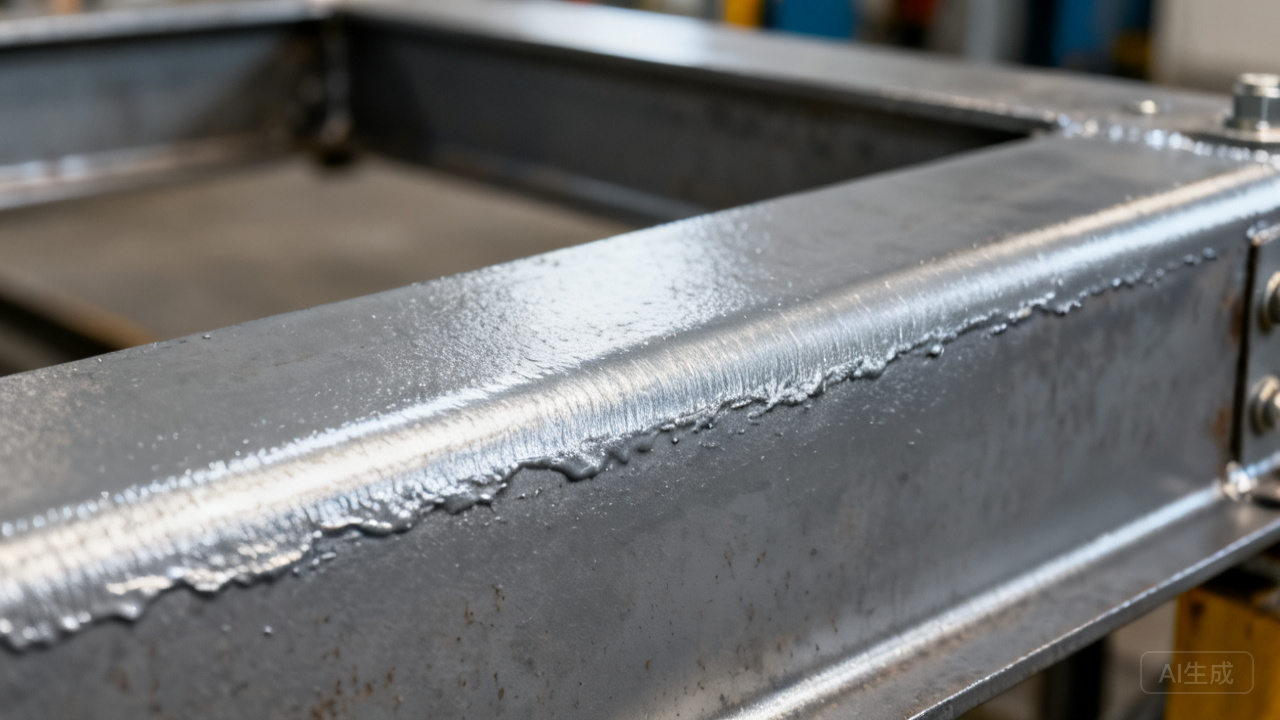
| Primer | Inorganic zinc-rich (ethyl silicate / zinc powder >80wt%) | 75-100 | Cathodic protection (Zn sacrifice → protects steel) + high adhesion | Zinc powder >80% / salt spray resistance >1000h |
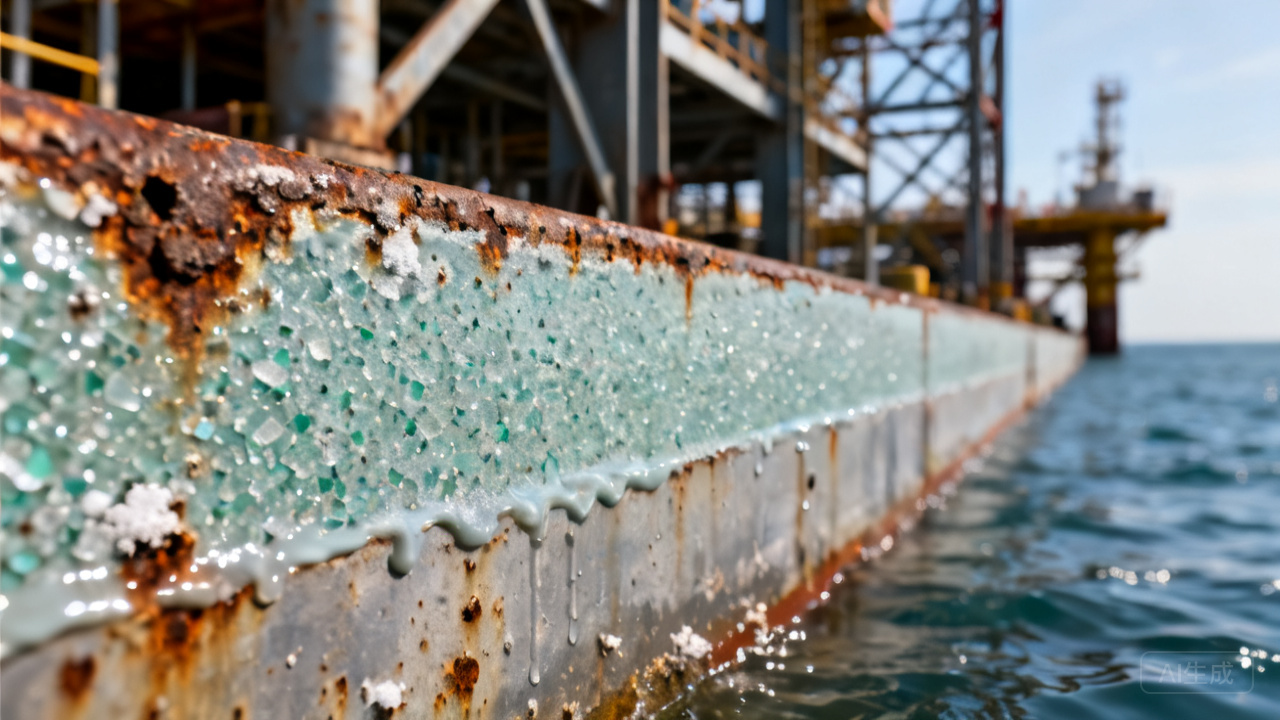
| Intermediate Coat | Epoxy glass flake | 200-400 (splash zone >800) | Labyrinth barrier (extends O2/water diffusion 5-10 times) | Glass flake >20% |
| Topcoat | Polysiloxane / PU | 50-80 | Weather resistance (UV non-chalking) + low surface energy (anti-fouling) | QUV 5000h ΔE<3 |
| Splash Zone | High-build epoxy + glass flake | Total DFT >1500 | Resist wave impact / floating debris mechanical damage | Sand impact no penetration |
FAQ
Q1: Why is zinc powder >80% a critical threshold for inorganic zinc-rich primer? Cathodic protection relies on electrical contact between zinc powder particles to form a conductive network. At >80wt%, the volume fraction of zinc powder exceeds 60vol%—surpassing the percolation threshold—particles contact each other—cathodic protection current >1mA/m2—effectively protecting the steel. At <70wt%, particles are isolated by the resin—conductive pathways break—zinc-rich becomes zinc-poor—performance drops sharply by 3-5 times.
Q2: Why is polysiloxane topcoat the next-generation super-weather-resistant topcoat?Si-O-Si bond energy >445 kJ/mol (27% higher than C-C) — completely non-absorbing to UV — theoretically never yellows; no isocyanate curing required — non-toxic; surface energy 2 times — lower total life-cycle cost. Already standard on sea-crossing bridges and offshore wind power.
Q3: Why is the splash zone the most dangerous?Twice-daily wet-dry cycles—when submerged, O2 is abundant (corrosion rate is 3-5 times that of full immersion); when exposed, salt spray deposits form a hygroscopic salt layer; splash causes continuous mechanical damage. Coatings require thick film (>1000μm) + high toughness—and need regular inspection (5-year intervals).
Q4: How is the labyrinth effect of epoxy glass flakes quantified?Flake-shaped glass flakes are arranged parallel within the coating—O2 and water molecules must bypass each flake to reach the steel interface—the actual diffusion path is 5-10 times the coating thickness. According to Fick’s law J=-D×ΔC/Δx—Δx increases by 5-10 times—J decreases by 5-10 times—cathodic reaction rate decreases by 5-10 times—delamination is delayed by 5-10 times. Epoxy containing 20% glass flakes shows a delamination diameter of 20mm.

Related Reading
Summary
Marine heavy-duty anti-corrosion four-layer system: inorganic zinc-rich primer (Zn>80%/sacrificial anode) → epoxy glass flake intermediate coat (maze barrier) → polysiloxane topcoat (super weather-resistant/low surface energy) → splash zone thick film (>1000 μm). Designed for CX extreme marine environments per ISO 12944/NORSOK M-501, with a service life of >15–25 years. Kexin New Materials provides a full range of marine anti-corrosion products and system design support.