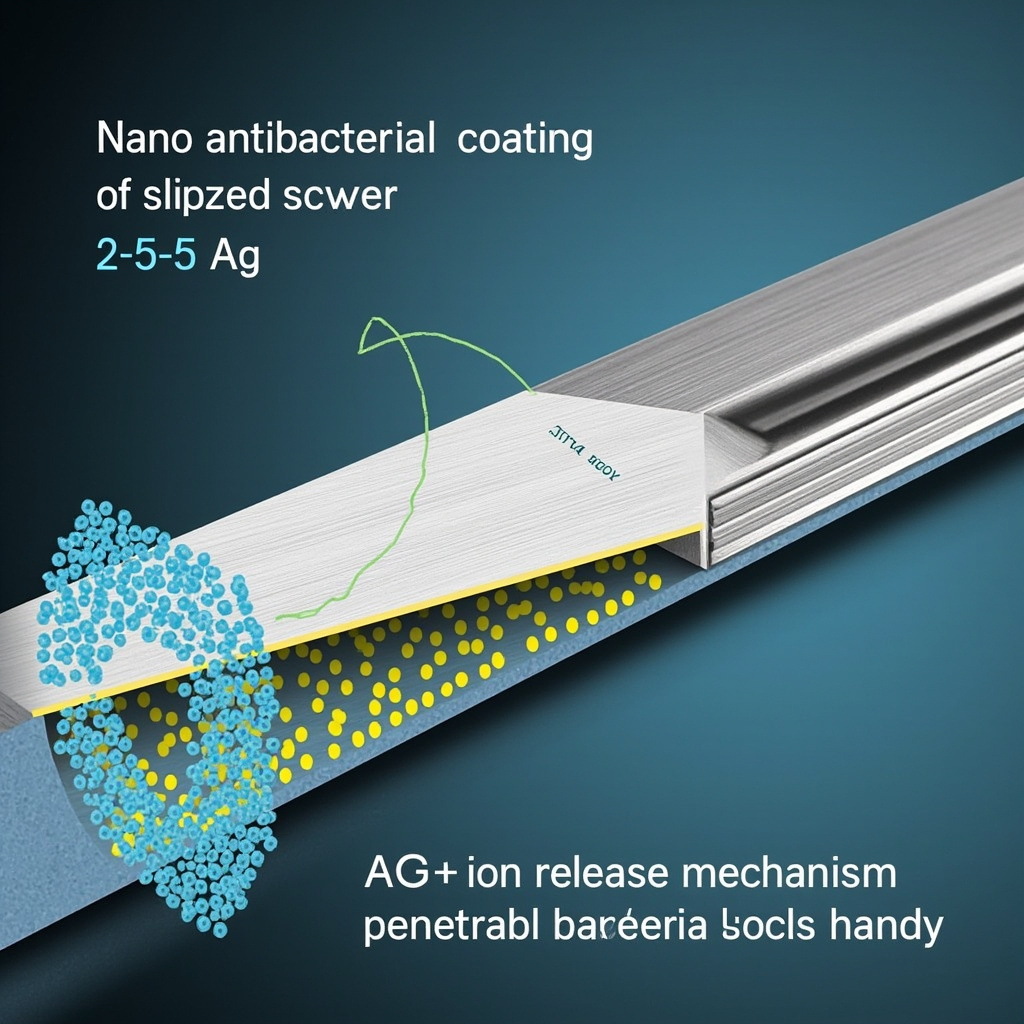
Medical-grade stainless steel surgical instruments (AISI 420 martensitic stainless steel / 316L austenitic stainless steel) with anti-blood-stain nanocoatings are fabricated by constructing silver-doped (2–5 wt% Ag) transition metal nitride (TiN:Ag, CrN:Ag) or high-entropy nitride (TiTaZrNbN)Agx antibacterial functional layers on the instrument surface via physical vapor deposition (PVD). Ag+ ions are slowly released from the coating (release rate 0.5–5 mcg/cm2/day), penetrate bacterial cell membranes, and bind to sulfur-containing proteins and DNA bases, disrupting cellular metabolism and replication. As reported in ACS Applied Bio Materials in 2025, the (Ag-TiTaZrNbN) high-entropy nitride coating exhibits excellent bactericidal efficacy against Pseudomonas aeruginosa and approximately 50% inactivation of SARS-CoV-2. Oerlikon Balzers BALIMED ARGENTA (TiN:Ag): hardness 25–29 GPa (ISO 14577), ASTM 2180 antimicrobial test Log3 reduction (after 50 autoclave cycles), ISO 10993-5 non-cytotoxic. RSC Advances (2025) review: biocompatibility of AgNP-polymer nanocomposites depends on particle size/shape/concentration/ion release kinetics. Global antimicrobial medical device coating market was USD 548 million in 2022 and is projected to reach USD 697 million by 2029 (CAGR 3.5%), with silver-based coatings growing at 12–15% per year. FDA/CE new antimicrobial coating approval: 18–24 months, with per-product filing cost up to USD 500,000. Compliant with ISO 13485 medical device quality management system and ISO 14971 risk management standard.