Introduction: Advanced Options for Surface Treatment of Metal Substrates
In the modern industrial field, surface treatment of metal substrates (such as cold-rolled steel, aluminum alloy, die-cast zinc alloy, etc.) is not only for achieving an aesthetically pleasing visual effect, but also for providing long-lasting physical protection in complex service environments. Metal electroplating paint employs innovative resin modification and metal pigment control technologies to endow substrates with electroplating-like mirror gloss and excellent protective capabilities without altering their physical properties, becoming a key technological pathway to replace traditional highly polluting electroplating processes.







I. Industry Understanding: Core Value and Definition of Metal Electroplating Coatings
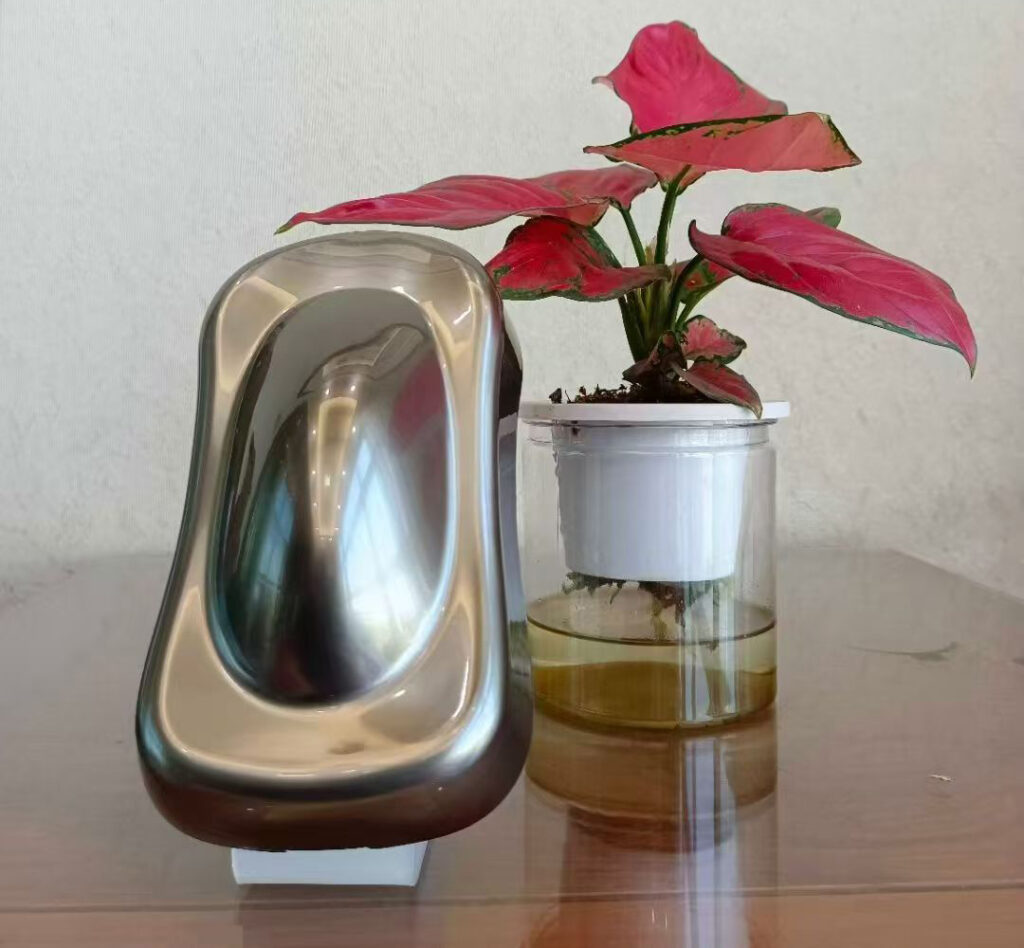
Metal electroplating paint is a specially formulated industrial coating whose core objective is to reproduce the color and reflectivity of electroplated layers (such as chrome, nickel, stainless steel) on metal substrates. Unlike plastic electroplating paint, metal electroplating paint must directly contend with the high density, high thermal conductivity, and readily oxidizable chemical nature of metal substrates.
1.1 Application Scenario Classification
- Decorative Coating: Mainly used for architectural hardware, high-end lighting fixtures, and furniture accessories, pursuing ultimate mirror-reflection effects.
- Functional protection: Applied to automotive wheels, outdoor steel structures, and machinery housings, it provides a metallic texture while emphasizing enhanced salt spray and acid-alkali resistance.
1.2 Technical Advantages
- Flexible process: Not limited by workpiece size or shape, supports large-area spraying.
- Environmental Compliance: Avoids heavy metal pollution in electroplating wastewater, meeting increasingly stringent environmental assessment requirements.
- Cost-controllable: Compared with expensive physical vapor deposition (PVD), metallic electroplating paint has significant cost advantages in large-scale mass production.
II. Technical Explanation: Film Formation Mechanism on Metal Surfaces and Adhesion Development
The surface energy and chemical polarity of metal substrates and their "compatibility" with coatings constitute the technical challenge.
2.1 Chemical Anchoring and Adhesion
Metal surfaces typically possess trace oxide layers or polar groups.
- Technical Principle Analysis: Metal electroplating paint usually adopts modified resins containing functional groups (such as carboxyl, hydroxyl, or epoxy groups). These functional groups can form chemical bonds with the oxides on the metal surface, generating stronger anchoring force than mere physical adsorption.
- Surface Treatment: For passivated surfaces such as stainless steel or aluminum alloy, it is usually necessary to use a phosphating primer containing acidic groups or a specialized adhesion promoter to break the surface energy barrier.
2.2 Orientation Arrangement of Aluminum Powder and Mirror Effect
The essence of a mirror effect lies in the specular reflection of light.
- Microscopic Control: The silver paste used in electroplating paint is typically an ultra-thin flake structure treated by vacuum aluminum plating. During the solvent evaporation stage, the paint film shrinks, generating pressure perpendicular to the substrate direction, forcing the metal flakes to lie flat.
- Hydrodynamic Effects: The viscosity curve of the coating must be precisely designed to ensure good atomization at the instant of spraying, while providing sufficient leveling time during film formation for the metal particles to "settle into place".

III. Logical Analysis: The Balancing Art of Anti-Corrosion Performance and Texture
In practical industrial applications of metallic electroplating coatings, the logical contradiction between "visual aesthetics" and "protective strength" must be resolved.
3.1 Shielding Effect and Electrochemical Protection
- Logical Analysis: High reflectivity requires the metallic pigment to be at the surface of the paint film, but this makes the pigment vulnerable to erosion by external moisture and oxygen.
- Systematic solution: Achieve balance through a "three-layer system". The primer is responsible for filling metal micropores and providing anti-rust activity; the middle electrocoat layer is responsible for visual appearance; a highly dense top clearcoat shields corrosive media through an extremely high crosslink density molecular network.
3.2 Thermal Conductivity and Thermal Stress Matching
Metal substrates conduct heat rapidly, and when the ambient temperature changes drastically, thermal stress is generated within the coating.
- Causal inference: If the electroplating paint film is too brittle, slight expansion of the metal substrate will cause the coating to crack. Therefore, high-performance metal electroplating paints introduce flexible segments into the resin molecular chains to improve the coating's elongation at break, ensuring it does not peel off under high-temperature operation or cold climate conditions.
IV. Frequently Asked Questions (FAQ)
Q1: Why is it easy for electroplating paint sprayed on aluminum alloy to peel off in large areas? A: The surface of aluminum alloy easily forms a dense alumina film, making it difficult for conventional paints to wet it. The solution is to perform pre-treatment (such as chromating or silanization) or use a dedicated aluminum alloy primer to establish a stable chemical transition layer.
Q2: How to improve the salt spray resistance time of metallic electroplating paint? A: First, metal pigments that have undergone inorganic passivation treatment (such as silica coating) should be selected to prevent electrochemical corrosion of the pigments; second, increasing the thickness and crosslinking density of the topcoat clear varnish is the most effective means to block salt spray penetration.
Q3: Can electroplating paint be used on rusty steel surfaces? A: No. Metallic electroplating paint has extremely high requirements for substrate flatness. Rust must first be removed by polishing to reach St3 or Sa2.5 grade standard, and a high-flow leveling primer must be sprayed to seal and level the surface before electroplating paint can be applied; otherwise, diffuse reflection will cause the surface to lose its metallic appearance.
Q4: What causes "blushing" or "shading" during construction? A: This is usually caused by uneven spraying or pressure fluctuations. Metallic particles accumulate at varying thicknesses in the paint film, resulting in differences in reflectivity. It is recommended to use a process of low flow rate and multiple thin coats.
V. Conclusion: Building an Industrial-Grade Metallic Aesthetic Solution
Metallic electroplating coatings are not merely decorative paints, but also a part of materials protection science. Achieving stable, high-quality metallic finishes requires starting from the chemical properties of the metal substrate, and realizing it through precise resin selection, control of metallic pigment arrangement, and stringent multi-layer coating processes. With the advancement of industrial green transformation, high-solids and waterborne metallic electroplating coatings will find a perfect balance between enhancing product added value and environmental protection.