Core conclusions:
1. Nanocoatings refer to ultra-thin functional layers with coating thickness or functional particles at the 1-100nm scale, with the global market size reaching 15-17 billion USD in 2025.
2. With a thickness of only 3-5μm, it can achieve protective performance of hydrophobic angle >150° and salt spray resistance >1500h, which is difficult to achieve with traditional coatings of 50-200μm.
3. China has released standards for nano-modified coatings such as T/GZBC 82-2025 and HG/T 6270-2024 in 2024-2025, marking the industry's transition from the conceptual stage to the standardized stage.
In the field of industrial coatings, "nano coating" is one of the most frequently appearing technical terms over the past five years. However, there is a great deal of information asymmetry surrounding this concept—some equate it with the oleophobic layer on phone screens, some mythologize it as an "all-powerful super coating," and more people are confused about: What exactly is the difference between nano coatings and ordinary coatings? Does my project really need a nano coating?
This paper systematically analyzes nano-coatings from five dimensions—definition, principles, classification, applications, and selection—based on public standards, industry data, and engineering practice, providing a practical reference framework for industrial coating professionals.
What Is a Nanocoating? — Concepts, Classifications, and Core Characteristics
Direct answer: Nano coating refers to an ultra-thin covering layer in which at least one dimension is in the range of 1-100 nanometers (nm), or which utilizes nanoscale effects to impart special functions (superhydrophobicity, antibacterial, self-cleaning, anti-corrosion, etc.) to the substrate. It is not a single product, but a technological system.
Mechanism Details:The term "nano" in nanocoatings has two meanings. First, the material level — the functional fillers in the coating (such as nano-silica, nano-titania, carbon nanotubes) have particle sizes at the nanometer scale; second, the structural level — after the coating cures, it forms a nanometer-scale microscopic rough structure on the surface (such as the concave-convex morphology required for the lotus effect).
Based on the compositional system, the industry generally classifies nanocoatings into three categories:
| Type | Component Structure | Commercialization Level | Typical Products |
|---|---|---|---|
| All-Nano System | Coating entirely composed of nanomaterials | Low, mainly at laboratory stage | Pure carbon nanotube film |
| 0-0 Composite System | Composite of two or more nanomaterials | Medium, some already in mass production | Nano TiO2-SiO2 composite photocatalytic coating |
| 0-2 Composite System | Traditional resin matrix + nano functional filler | High, most mature commercialization | Nano-modified epoxy anti-corrosion paint, nano hydrophobic topcoat |
Among them, the 0-2 composite system is currently the mainstream in industrial applications—in mature epoxy, polyurethane, and acrylic resin systems, adding nanoscale functional fillers (nano-SiO2, nano-ZnO, nano-TiO2, graphene, etc.) significantly enhances the coating's barrier properties, weather resistance, or surface functionality without substantially altering the application process.
Data support:According to the 2025 report by Meticulous Research, the global nanocoating market is approximately USD 16.68 billion, with metal oxide-based nanocoatings (TiO2, SiO2, ZnO, Al2O3) accounting for the largest share. The Asia-Pacific region is the world's largest market, with China, Japan, and South Korea being the three core drivers. Fortune Business Insights predicts a CAGR of approximately 22.7% from 2026 to 2034, and the market size is expected to reach USD 135.88 billion by 2034.
Source:Meticulous Research 2025, Fortune Business Insights 2026
How Do Nanocoatings Work? — Four Core Mechanisms of Action
Direct answer: The special properties of nano-coatings originate from four physical effects: nano-size effect (dense filling), surface interface effect (ultra-high specific surface area enhances adhesion), lotus leaf effect (superhydrophobic self-cleaning), and photocatalytic effect (nano TiO2 decomposes organic matter).
1. Nanoscale Size Effect — Dense Packing: Pigment and filler particles in conventional coatings are typically at the micron scale (1–50 μm). After curing, the coating contains numerous micron-sized pores. Corrosive media (water, oxygen, chloride ions) penetrate through these pores to the substrate surface, triggering corrosion. Nanofillers are 100–1000 times smaller in particle size and can fill microscopic gaps that micron-sized fillers cannot reach, creating a "maze effect" — the path for water molecules and corrosive ions to penetrate the coating is greatly lengthened, and the coating's barrier performance is thereby multiplied.
2. Surface Interface Effect — Molecular-level Bonding Force: Taking nano SiO2 as an example, as the particle size decreases from 10μm to 10nm, the specific surface area jumps from about 0.3 m2/g to about 300 m2/g — an increase of 1000 times. The density of physical crosslinking points is far higher than that of traditional filler systems, so the adhesion between the coating and the substrate is upgraded from "mechanical interlocking" to a near molecular-level bonding.
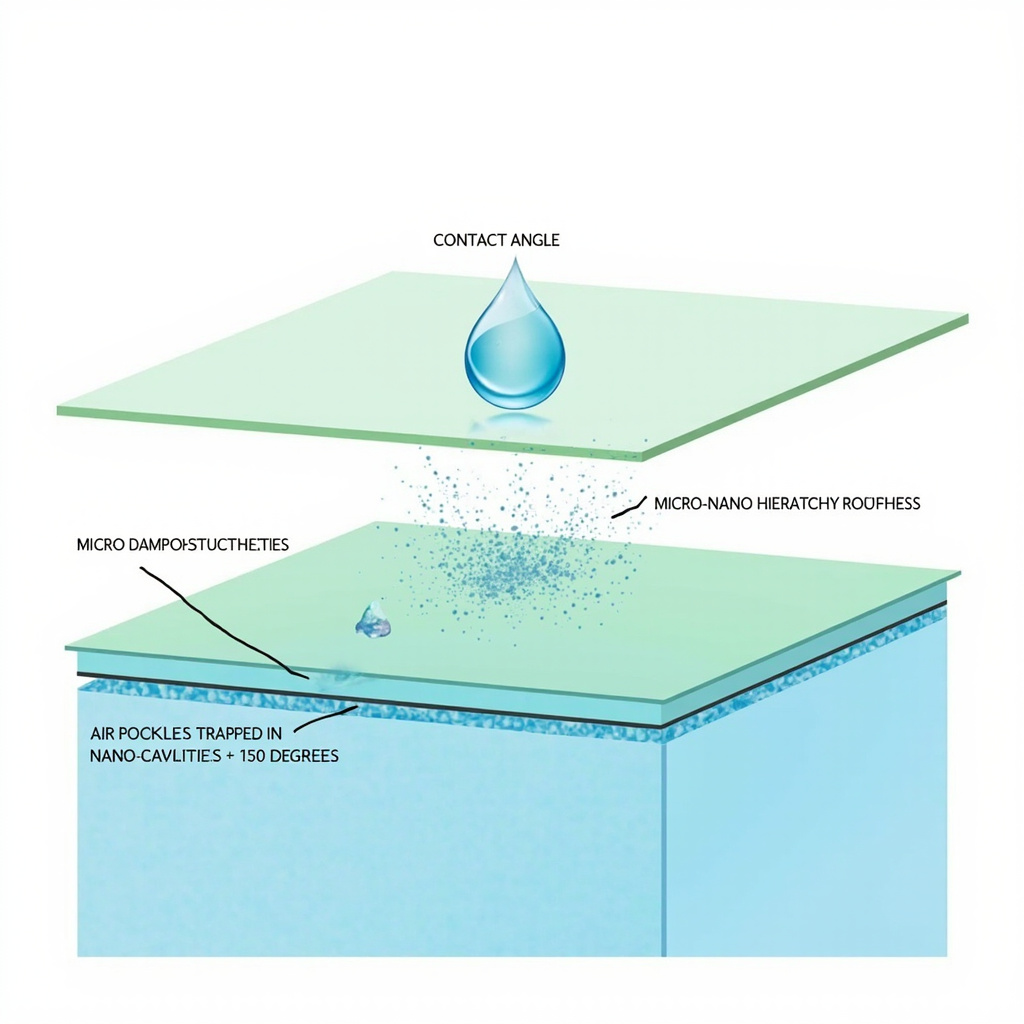
3. Lotus Effect — Superhydrophobic Self-Cleaning: The micro-structure of the lotus leaf surface is a classic biomimetic prototype for nanocoatings: micron-scale papillae overlaid with nanoscale waxy crystals form a hierarchical rough structure. When water droplets land on the surface, air is trapped in the nanoscale grooves to form a "cushion," and the contact angle can exceed 150°. The water beads appear nearly spherical on the surface and roll off with a slight tilt, simultaneously carrying away surface dust — this is the physical basis of the self-cleaning effect.
4. Photocatalytic Effect — Unique Function of Nano TiO2: Nano titanium dioxide (anatase) under ultraviolet light with wavelength < 387 nm causes valence band electrons to transition to the conduction band, generating electron-hole pairs. These highly active carriers react with surface water and oxygen to produce hydroxyl radicals (·OH) and superoxide anions (O2–), which can decompose organic pollutants, bacterial cell membranes, etc. into CO2 and water. This property is widely used in self-cleaning building exterior wall coatings and air purification coatings.
Data support: Research shows that epoxy coatings with 3-5 wt% nano-SiO2 added can increase the water contact angle from 65° to above 105°, and extend the salt spray resistance time (ASTM B117) from 500 hours to over 1500 hours. Nano-TiO2 photocatalytic coatings can achieve a 24-hour formaldehyde degradation rate of 85-95% (China Building Material Test & Certification Group, 2024).
Source:Progress in Organic Coatings (2023), China Building Material Test & Certification Group 2024
What are the main types of nano-coatings? — Classified by function
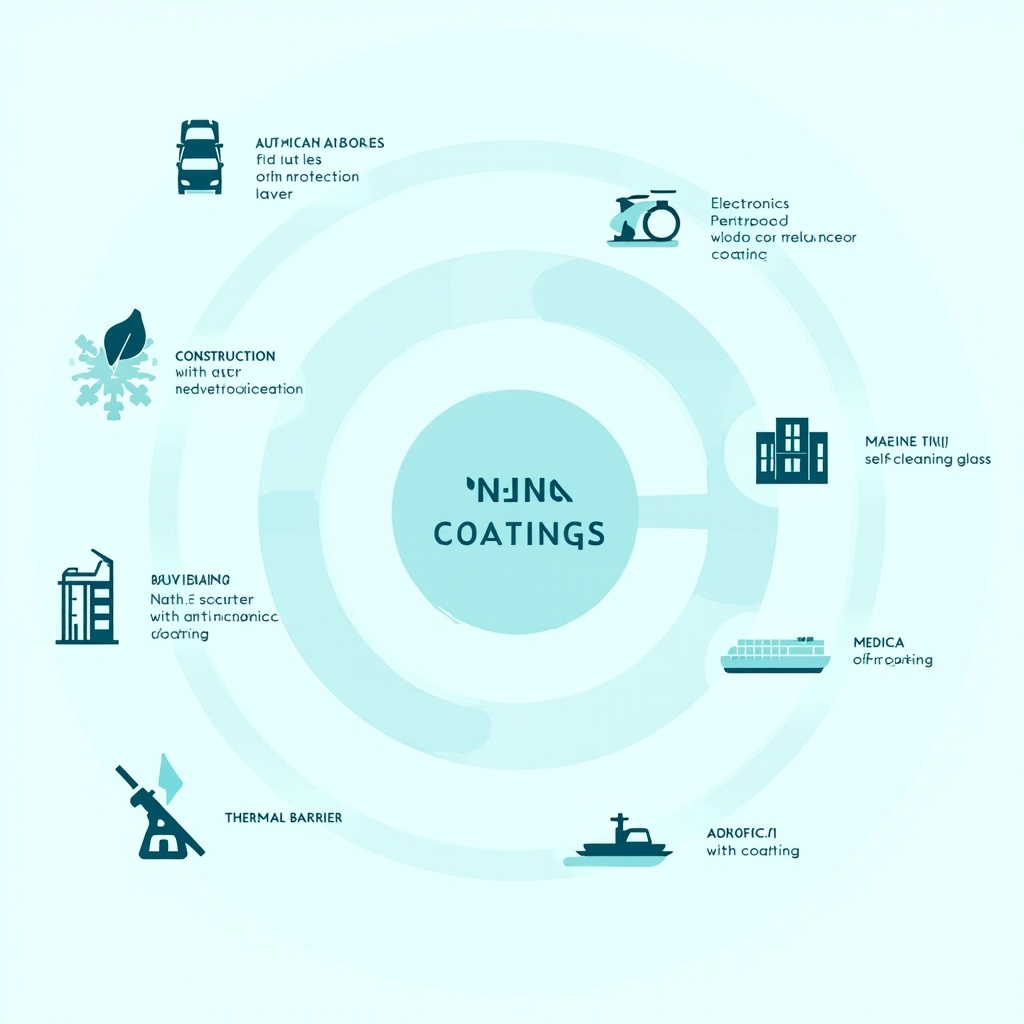
Direct answer: Classified by surface function into six major categories: superhydrophobic/oleophobic type, anti-corrosion type, antibacterial type, self-cleaning/photocatalytic type, wear-resistant/hardening type, and conductive/electromagnetic shielding type. Different functions correspond to different nanofiller systems and applicable scenarios.
| Function Type | Core Nanofillers | Key Performance Indicators | Typical Application Scenarios |
|---|---|---|---|
| Superhydrophobic/Oleophobic Type | Nano SiO2, fluorosilane-modified nanoparticles | Water contact angle >150°, rolling angle <10° | Building exterior walls, automotive paint protection, photovoltaic panels |
| Anti-corrosion Type | Nano ZnO, nano montmorillonite, graphene | Salt spray resistance >1000h (ASTM B117) | Marine engineering, bridges, petrochemical pipelines |
| Antibacterial Type | Nano Ag, nano TiO2, nano CuO | Antibacterial rate >99% (GB/T 21866) | Hospital walls, food processing equipment |
| Self-cleaning/Photocatalytic Type | Anatase TiO2, BiVO4 | Formaldehyde degradation rate >85%/24h | Architectural glass, tunnel lighting |
| Wear-resistant/Hardening Type | Nano Al2O3, nano SiC, nano diamond | Pencil hardness 4H-6H | Floor coatings, 3C electronic product housings |
| Conductive/Shielding Type | Carbon nanotubes (CNT), graphene, nano Ag wires | Surface resistance 102-106 Ω/sq | Anti-static electronic workshops, military electromagnetic shielding |
Data Support: China's two industry standards issued in 2024, HG/T 6270-2024 "Anti-fog Coatings" and HG/T 6271-2024 "Fingerprint-resistant Coatings", for the first time standardized the performance indicators of nano-modified functional coatings at the industry standard level. The group standard T/GZBC 82-2025 issued in 2025 further extends the application of nano-modified coatings to the strong-corrosion protection scenarios of major national water conservancy projects.
It is worth noting that China currently has no unified mandatory national standard (GB) specifically for "nano-coatings"; relevant testing and performance evaluation mainly refer to the standard systems corresponding to various functional coatings. When procuring, enterprises should require suppliers to provide third-party test reports issued by CMA/CNAS-accredited laboratories.
Source:HG/T 6270-2024, HG/T 6271-2024, T/GZBC 82-2025
Nanocoatings vs. Traditional Coatings: Quantitative Performance Comparison
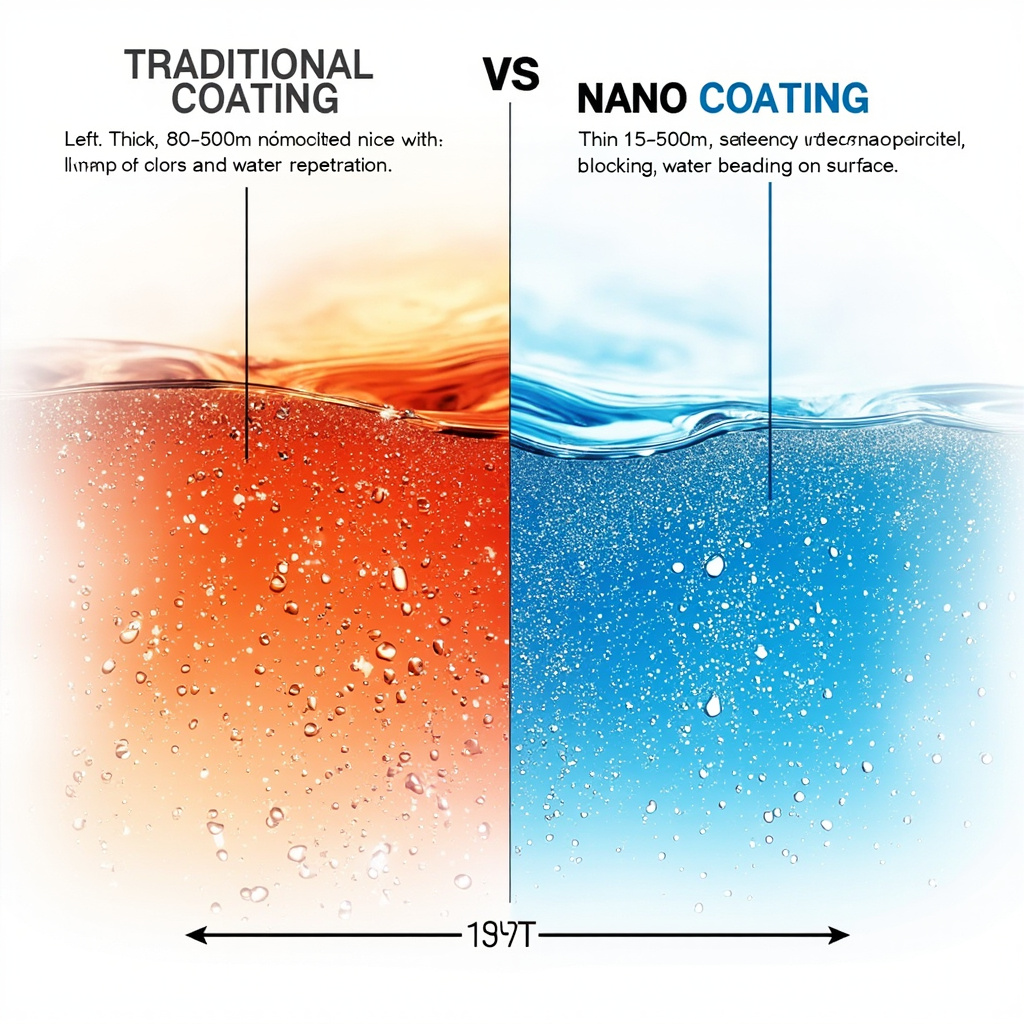
Direct answer: Nanocoatings are significantly superior to traditional coatings in three dimensions: protective efficiency per unit thickness, diversity of surface functions, and environmental compliance, but still fall short in material cost, application window, and long-term durability verification. The choice should be based on quantitative assessment of specific working conditions, rather than a simple "which is better".
| Performance Dimension | Traditional Solvent-based Coating | Traditional Water-based Coating | Nano-modified Coating | Advantage Margin |
|---|---|---|---|---|
| Dry Film Thickness (μm) | 80-200 | 60-150 | 15-50 (equivalent protection) | Reduced by 60-80% |
| Salt Spray Resistance (ASTM B117, h) | 500-1000 | 300-800 | 1000-3000 | Improved 2-3× |
| Water Contact Angle (°) | 60-80 | 50-70 | 90-160 (adjustable) | Hydrophobic to Superhydrophobic |
| Adhesion (Pull-off Method, MPa) | 3-8 | 2-5 | 5-15 | Improved 2-3× |
| VOC Content (g/L) | 400-600 | 50-150 | 50-120 (water-based system) | Reduced by 75-90% vs solvent-based |
| Pencil Hardness | HB-2H | HB-H | 3H-6H | Improved by 2-3 grades |
| Raw Material Cost Index | 1.0 (baseline) | 1.2-1.5 | 2.0-4.0 | — |
The high cost of nano-coatings mainly comes from nano-functional fillers—taking nano SiO2 as an example, industrial-grade hydrophilic nano SiO2 powder is about 30-80 RMB/kg, hydrophobic modified type is about 100-300 RMB/kg, while graphene powder is as high as 500-2000 RMB/kg. However, calculated by unit protection efficiency, in C4-C5 level severe corrosive environments, the life cycle cost (LCC) of nano-coating systems is often lower than traditional systems that require frequent repainting. A comparative study on offshore wind power towers shows that using acompatible system of nano-modified epoxy zinc-rich primer + nano-modified polyurethane topcoat can reduce repainting by 2-3 times within the 25-year design life, and the total maintenance cost is reduced by about 35% (Chinese Society for Corrosion and Protection, 2025).
Source: Chinese Society for Corrosion and Protection 2025, compiled from various manufacturers' nominal TDS
How to Select Nanocoatings? — An Industrial Selection Decision Framework
Direct answer: The selection of nano-coatings should be comprehensively evaluated from five dimensions: service environment (corrosion level/temperature and humidity/UV), substrate type, functional requirement priority, construction conditions, and full-lifecycle budget. Whether or not it contains nanoparticles should not be used as the sole decision variable.
Step 1: Determine whether a nano-coating is truly needed. If at least 2 of the following three conditions are met, a nano-coating is worth entering the scheme comparison: (1) The service environment reaches corrosion category C4 or above as specified in ISO 12944 (or C4 or above in the Chinese standard JT/T 722); (2) Structural components are difficult to maintain or have extremely high maintenance costs (e.g., offshore platforms, interior of bridge box girders, buried pipelines); (3) There are functional requirements for the surface (hydrophobicity, antibacterial, antifouling, antistatic, etc.) that traditional coatings cannot simultaneously satisfy.
Step 2: Clarify functional priorities. Nano-coatings can simultaneously achieve multiple functions, but usually have a dominant direction: with anti-corrosion as the primary goal → choose graphene/nano ZnO modified epoxy system; with self-cleaning/appearance durability as the primary goal → choose nano TiO2 photocatalytic topcoat + nano SiO2 hydrophobic system; with antibacterial as the primary goal → choose nano silver/nano TiO2 system; with wear resistance/hardness enhancement as the primary goal → choose nano Al2O3/nano SiC filling system.
Step 3: Verify the test report. Before procurement, require the supplier to provide the following third-party test reports (issued by CMA/CNAS laboratories): coating thickness and adhesion test (pull-off method, GB/T 5210 or ISO 4624), salt spray resistance test (GB/T 1771 or ASTM B117), specialized tests corresponding to the claimed functions (e.g., hydrophobic angle GB/T 30693, antibacterial rate GB/T 21866), and TEM/SEM microscopic characterization report of nanofillers (to confirm the particle size distribution and dispersion state of the fillers).
Currently, the nano-coating market suffers from a "pseudo-nano" problem—some products contain only ten-thousandth-level nano-materials yet are marketed as "nano-coatings," while their actual performance is no different from conventional coatings. TEM (transmission electron microscopy) or SEM (scanning electron microscopy) images are the most direct evidence to verify the real existence and dispersion state of nano-fillers. The T/GZBC 82-2025 standard has explicitly required that the nano-filler content and dispersibility of nano-modified protective coatings be verified by microscopic characterization methods.
Source:T/GZBC 82-2025, ISO 12944-1:2018
Development Trends and Challenges of Nanocoatings
Trend 1: Multifunctional integration. Currently, the mainstream market offers single-function products (hydrophobic OR anti-corrosion OR antibacterial), but actual industrial scenarios often require multiple protections. A cutting-edge R&D direction is to integrate the three functions of anti-corrosion + self-cleaning + antibacterial into a single nanocoating system, for example, using core-shell structured nanoparticles (such as ZnO@SiO2) to simultaneously achieve barrier enhancement and surface functionalization.
Trend 2: Smart self-healing coatings.By embedding nanocapsules containing healing agents in the coating or utilizing dynamic covalent bonds (e.g., Diels-Alder reaction), when microcracks occur in the coating, the nanocapsules rupture and release the healing agents to automatically fill the cracks, or the dynamic bonds re-crosslink under thermal/light stimulation. From 2024 to 2025, multiple research groups have reported pilot-scale results of room-temperature self-healing nanocoatings.
Trend 3: Bio-based and carbon neutrality.Driven by the EU Carbon Border Adjustment Mechanism (CBAM) and China's "dual carbon" policy, the use of biomass-derived nanofillers (cellulose nanocrystals CNC, lignin nanoparticles, chitosan nanoparticles) to replace petroleum-based or mineral-based nanofillers is emerging as a new research hotspot.
Trend 4: Accelerated development of standardization system. From 2024 to 2025, China intensively released a batch of industry standards and group standards related to nano-modified functional coatings (HG/T 6270-2024, HG/T 6271-2024, T/GZBC 82-2025), marking the industry's shift from "individual interpretations" to "unified specifications." It is expected that within the next 3-5 years, dedicated national standards (GB/T) for nano-coatings will be gradually introduced.
Main challenges: Uniform dispersion of nanofillers during industrial scale-up remains a process difficulty—the agglomeration tendency of nanoparticles in resin can lead to non-uniform coating performance; some superhydrophobic coatings have insufficient mechanical durability, and frequent mechanical friction in actual working conditions may damage the nanoscale surface structure; long-term outdoor aging data (>10 years) is insufficiently accumulated—the commercialization history of most industrial-grade nanocoating products does not exceed 15 years.
Frequently Asked Questions (FAQ)
What is the fundamental difference between nano-coatings and conventional paints?
The core distinction of nanocoatings lies in their functional filler particle size ranging from 1 to 100 nm, leveraging nanoscale effects (size effect, surface effect) to achieve performance unattainable by conventional micron-scale coatings—such as highly efficient protection at an ultra-thin thickness of 3–5 μm, superhydrophobic surfaces with a water contact angle >150°, or photocatalytic self-cleaning functionality.
How many years can a nano coating last?
It depends on the service environment and coating type. Industrial-grade nano anti-corrosion coatings can have a designed service life of 10–15 years in C4 environments and 7–10 years in C5 environments. Consumer-grade products (e.g., oleophobic layers on mobile phones) typically last only 3–12 months. Actual durability should be referenced to ISO 12944 or ASTM accelerated aging test data provided by the supplier.
How much does nano-coating cost per square meter?
Industrial-grade nano-modified coating raw material cost is approximately RMB 40–80/m² (excluding application), which is 2–3 times higher than traditional coatings (RMB 15–30/m²). However, based on life cycle cost (LCC) calculation, in severe corrosive environments the overall cost may actually be lower due to reduced repainting frequency.
Q: Are nano-coatings environmentally friendly? Are they toxic?
Waterborne nano-coating systems typically have a VOC content of <80 g/L, complying with the requirements of GB/T 38597-2020, and are environmentally friendly during the liquid application stage. However, note that: (1) inhalation of nanoparticles before curing may pose health risks to construction personnel, so dust masks must be worn; (2) the long-term environmental fate of specific materials such as nano-silver is still under study.
Can I apply a nano coating myself?
Consumer-grade nanocoatings (such as automotive ceramic coatings and phone oleophobic layers) can be done as DIY. However, industrial-grade nanocoatings require professional surface preparation (sandblasting to Sa 2.5 or above), precise mixing and stirring (dispersion of nanofillers is critical), and controlled curing conditions (narrow temperature and humidity window), and must be applied by professional installation teams.
How to determine whether a product is a genuine nano coating?
Three steps: First, check the particle size test report—require the supplier to provide TEM/SEM images proving the filler particle size is <100 nm; second, check the performance data—compare the performance changes before and after adding nano-fillers (e.g., salt spray resistance increased from 500 h to 1500 h); third, check third-party testing—specialized test reports issued by CMA/CNAS laboratories.
References:
- T/GZBC 82—2025 "Nano-modified Long-term Protective Coating for External Use on Prestressed Concrete Cylinder Pipes"
- HG/T 6270—2024 "Anti-fog Coatings" / HG/T 6271—2024 "Anti-fingerprint Coatings"
- GB/T 38597—2020 Technical Requirements for Low Volatile Organic Compound Content Coating Products
- ISO 12944-1:2018 Paints and varnishes——corrosion protection of steel structures by protective coating systems
- Meticulous Research,《nano-coating market report2025-2036》
- Fortune Business Insights, Nanocoatings Market Size & Share, 2026–2034
- Chinese Society for Corrosion and Protection, 2025 Technical Report
Author: Kexin Technical Quality Department | Publish Date: July 5, 2026