Introduction: The Dual Nature of TiO₂ — Pigment and Photocatalyst
Rutile TiO₂ is the most important white pigment and UV shielding agent in coatings. However, TiO₂ is also a highly efficient photocatalyst that generates strongly oxidizing hydroxyl radicals (·OH) and superoxide radicals (·O₂⁻) under UV irradiation. These radicals attack the organic resin matrix in the coating indiscriminately, causing chalking and degradation. This "dual nature" means that untreated TiO₂, while providing hiding power, is also slowly "devouring" the coating itself.
The photocatalytic suppression of TiO₂ is achieved by coating its particle surface with a dense inorganic shell of Al₂O₃, SiO₂, or ZrO₂, physically isolating TiO₂ from the organic resin and preventing free radicals from diffusing from the TiO₂ surface to the resin matrix.
I. Comparison of Inorganic Coating Processes on TiO₂ Surface
| Coating Type | Coating Amount (%) | Density | Photocatalytic Inhibition Efficiency (%) | Effect on Whiteness | Cost Increase (%) |
|---|---|---|---|---|---|
| Uncoated (Bare TiO₂) | 0 | — | 0 (Baseline) | Baseline | 0 |
| Single-layer Al₂O₃ Coating | 2-4 | Medium | 70-85 | Slight decrease | 10-20 |
| Single-layer SiO₂ Coating | 2-5 | Medium | 60-80 | Slight decrease | 8-15 |
| Al₂O₃/SiO₂ Double-layer Coating | 3-6 | High (Recommended) | 90-98 | Slight decrease | 20-35 |
| Al₂O₃/ZrO₂/SiO₂ Triple-layer | 5-8 | Extremely high | >99 | Decrease by 1-2 percentage points | 35-50 |
II. Overview of Technical Parameter Comparison
| Technical Indicator | Standard Requirement | Premium Level | Test Method |
|---|---|---|---|
| Adhesion | ≥3MPa | ≥5MPa | ISO 4624 Pull-off Method |
| Salt Spray Resistance | ≥500h | ≥1000h | ASTM B117 |
| Weathering (QUV) | ≥1000h gloss retention >50% | ≥3000h gloss retention >80% | ISO 16474-3 |
| VOC Content | Compliant with GB standard | 50% below limit | GB/T 23985 |
| Application Window | 5-35°C | -10~40°C (wide temperature range) | TDS Recommended Conditions |
II. Optimization of Addition Amount
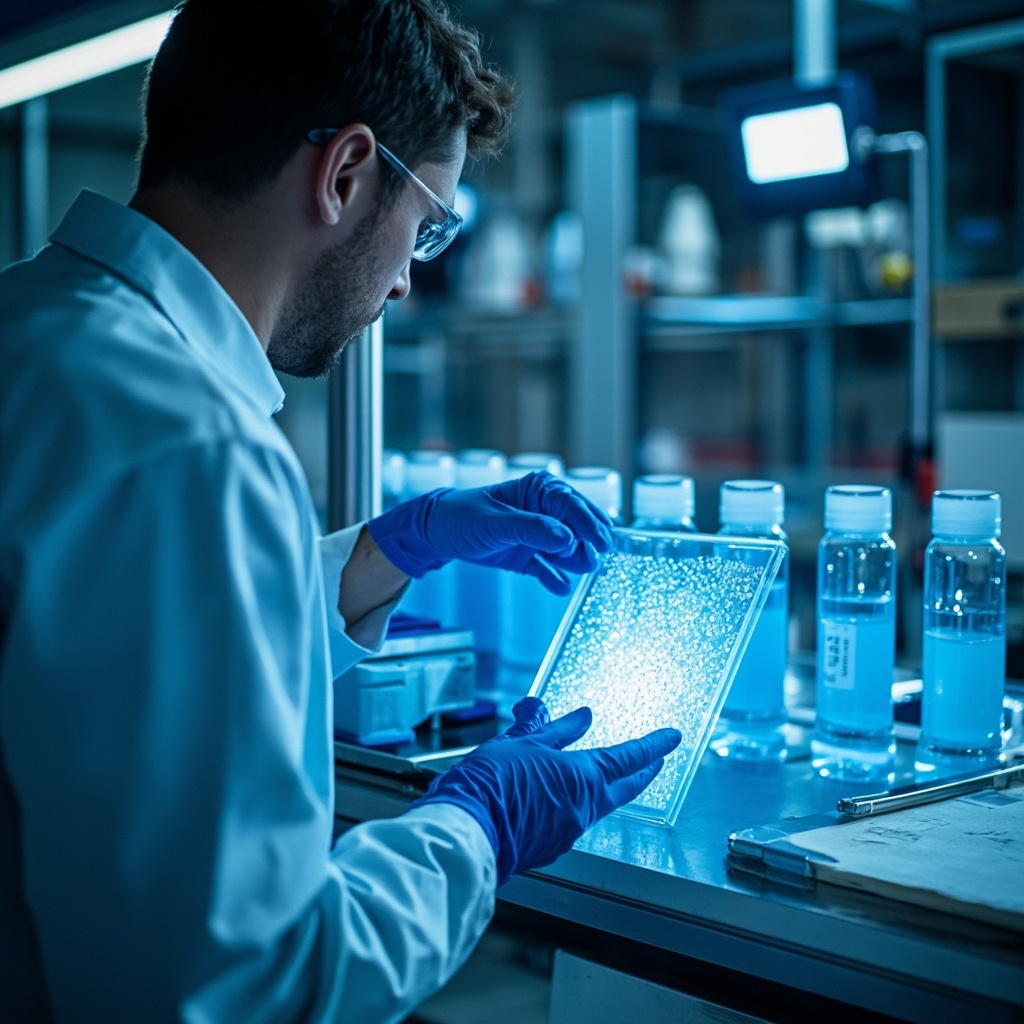
The recommended addition level of TiO₂ in anti-corrosion topcoats is 10%-15% (corresponding to approx. 10%-18% by pigment volume concentration, PVC). Below 8%, hiding power and UV shielding are insufficient; above 20%: (1) cost increases excessively; (2) even with coating protection, the absolute amount of TiO₂ still produces measurable photocatalytic activity; (3) PVC approaching CPVC leads to decreased coating density. For white/light-colored weather-resistant topcoats (building exterior walls, steel structures), Al₂O₃/SiO₂ double-layer coated rutile TiO₂ (12%-15% addition level) is the most cost-effective solution.
Coating integrity testing: (1) Acid solubility test—uncoated TiO₂ dissolves in concentrated sulfuric acid, while TiO₂ with intact coating exhibits acid dissolution resistance >99% (ASTM D476); (2) Photocatalytic activity test—monitor the fading rate of a dye (e.g., methyl orange) under UV irradiation; slower fading indicates a dense coating; (3) XPS surface elemental analysis—detect the signal intensity of Al/Si/Zr on the TiO₂ surface to confirm coating coverage (>95% is acceptable).
Technical deepening: systematic optimization methods for process parameters (DOE experimental design)
The optimization of coating production processes should not rely on the "trial-and-error method" but should adopt the scientific method of DOE Experimental Design. Taking the dispersion process as an example—factors affecting quality (linear velocity/time/filling rate/temperature), 4 factors each at 3 levels—a full factorial requires 81 experiments—DOE uses orthogonal experiments L9 (9 times) or response surface methodology (27 times) to greatly reduce the number of experiments—while simultaneously obtaining the main effects and interactions of each factor. For example, it is found that "the interaction of linear velocity × time is significant": high linear velocity + short time and low linear velocity + long time can achieve the same dispersion effect—but the former saves over 20% energy.
In DOE analysis, interpretation of the P-value — P95% confidence). The final output of DOE is a set of prediction models (polynomial regression equations) — input line speed/time/temperature → predict fineness/viscosity/gloss — providing formulation engineers with a ”digital formulation optimization” tool.
Industry practice: from "master craftsman's feel" to "parameter standardization"
The common challenge in the coatings industry — when experienced veteran workers retire, their "feel" (mixing resistance / fineness gauge scraping / visual inspection of wet-film gloss) is taken away — new employees cannot replicate it. Transform the "feel" into quantifiable standard parameters (1) mixing resistance → viscometer reading; (2) fineness gauge scraping → fineness gauge reading (μm); (3) wet-film gloss → gloss meter (GU value). The "standard parameter card" for each process is posted next to the equipment — new employees operate according to the "card" rather than "by feel". "Parameter standardization" is a key step for coating factories to move from "workshop" to "factory".
FAQ
Q1: How to quickly determine whether a TiO₂ has an effective coating?Dissolve TiO₂ powder in an aqueous solution containing methyl orange indicator and irradiate with a UV lamp (365 nm) for 30 min. A well-coated TiO₂ solution shows almost no color change (methyl orange is not degraded), while a bare or poorly coated TiO₂ solution shows obvious decolorization. This is the simplest rapid screening method in the laboratory.
Q2: Which has higher photocatalytic activity, anatase TiO₂ or rutile TiO₂?The photocatalytic activity of anatase is 10-100 times that of rutile. This is why coatings can only use rutile TiO₂! Even after coating treatment, the photocatalytic activity of anatase is still difficult to completely suppress, and it is not recommended for outdoor coatings. Anatase is only suitable for indoor or completely light-free scenarios.
Q3: What is the functional difference between nano-TiO₂ (5-50nm) and pigment-grade TiO₂ (200-300nm) in coatings?Pigment-grade TiO₂ mainly provides hiding power (optimal particle size for white light scattering is about 250nm); nano-TiO₂ is transparent due to its particle size being much smaller than the visible light wavelength, and is mainly used as a UV absorber (strong absorption of UVB/UVA). Nano-TiO₂ achieves "transparent UV protection" in clear varnishes, but it should be noted that its photocatalytic activity is stronger (specific surface area is tens of times larger), and the coating requirements are more stringent.
Q4: Will coated TiO₂ affect the tinting of paint?The refractive index of the coating layer (Al₂O₃/SiO₂) (~1.5-1.6) is lower than that of TiO₂ (2.7), which will slightly reduce the hiding efficiency of TiO₂. Practical impact: To achieve the same hiding power, the addition amount of coated TiO₂ may need to be increased by 1%-2%, but this cost is far less than the loss caused by premature chalking of the coating due to uncoated TiO₂.
Q5: Does TiO₂ photocatalysis have different effects on water-based and solvent-based paints?Water-based paints are more affected—because water is one of the essential media for the generation of ·OH radicals by photocatalysis. The photocatalytic efficiency at the TiO₂/water/resin three-phase interface in water-based paints is the highest. This is also why water-based outdoor paints have stricter requirements for TiO₂ coating quality.
Q6: Besides Al₂O₃/SiO₂ coating, what other photocatalytic suppression strategies are there?(1) Adding radical scavengers—hindered amine light stabilizers (HALS) capture already generated ·OH radicals (passive defense); (2) Using ZnO to replace part of TiO₂—ZnO also has photocatalytic activity but generates different types and activities of radicals, and mixed use with TiO₂ can be complementary; (3) Adding 0.1%–0.5% manganese/cerium/zinc organic salts as photocatalytic inhibitors (disrupting the separation of TiO₂ electron-hole pairs).
Q7: Will coated TiO₂ fail during storage in paint?Under normal storage conditions (sealed, <40°C), coated TiO₂ is very stable. However, problems may occur under the following extreme conditions: (1) Long-term contact with strongly acidic or alkaline environments at pH 11 may damage the coating layer; (2) If the paint contains strong chelating agents (such as acetylacetone), they may complex and dissolve Al³⁺ in the coating layer; (3) Excessive high shear during grinding and dispersion (>25 m/s linear velocity) may mechanically wear the coating layer.
Q8: How to improve the UV shielding efficiency of TiO₂ through formulation?(1)Use TiO₂ together with flake fillers (talc/mica) — the maze effect of flake fillers increases the probability of UV photons colliding with TiO₂; (2)Multi-layer coating design (primer containing TiO₂ + topcoat containing UVA) — graded shielding; (3)Concentrate TiO₂ in the upper layer of the coating rather than uniform distribution — can be naturally achieved through the layered drying effect during application (called "floating effect").
Q9: Impact of chlor-alkali process TiO₂ and sulfuric acid process TiO₂ on anti-corrosion paint?Chlor-alkali process TiO₂ has high purity (>93% TiO₂) and few impurities (Fe₂O₃91% TiO₂) and may retain trace sulfate radicals that accelerate coating blistering. For outdoor weather-resistant anti-corrosion paint, it is recommended to use chlor-alkali process Al₂O₃/SiO₂ double-layer coated rutile-type TiO₂.
Q10: The "self-cleaning" application of the TiO₂ photocatalytic effect?The photocatalytic TiO₂ is beneficial in certain scenarios—such as self-cleaning exterior wall coatings for buildings (using photocatalysis to decompose organic pollutants on the surface). This is achieved by using uncoated or only SiO₂-coated anatase nano-TiO₂. The TiO₂ selection for anti-corrosion paint and self-cleaning paint is completely opposite—anti-corrosion paint uses "coated and suppressed type", while self-cleaning paint uses "uncoated and activated type".

Related Reading
Summary
Rutile TiO₂ plays a dual role in anti-corrosion topcoats as both a white pigment and a potential source of photocatalytic degradation. Al₂O₃/SiO₂ dual-layer inorganic surface treatment can suppress photocatalytic activity by 90%–98% while maintaining the whiteness and UV-shielding function of TiO₂. An addition level of 10%–15% is the optimal window for anti-corrosion topcoats. For outdoor anti-corrosion topcoats, rutile TiO₂ produced by the chloride process with Al₂O₃/SiO₂ dual-layer coating is recommended. Kexin New Materials strictly selects TiO₂ grades according to the above standards in coating formulations to ensure long-term weather-resistant service of the coating.