In nature, the water-repellent and self-cleaning ability of the lotus leaf surface originates from its unique micro-nano composite structure. Modern industry, through breakthroughs in materials science, has introduced this "lotus effect" into the coating field. Nano waterproof and anti-fouling paint no longer relies merely on chemical hydrophobicity, but instead alters the physical morphology and molecular energy levels of the coating surface, endowing the substrate with extremely strong hydrophobic, oleophobic, and anti-staining properties. This coating demonstrates very high industrial value in reducing maintenance costs and extending equipment lifespan.


I. Industry Understanding: Definition and Core Scope of Nano Coatings
Nano waterproof and anti-fouling paint refers to a specialty coating that uses nanoscale functional materials (such as silica, titania, carbon nanotubes, etc.) to modify the film-forming resin, or directly constructs a nanoscale rough surface.
1.1 Technical Core
Unlike traditional paint films that rely on density to "block water", nano paint achieves repulsion through surface geometric structure control. It can construct microscopic "peak-valley" structures on macroscopically smooth substrates, trapping air to form a stable air cushion layer.
1.2 Key Application Scenarios
- Construction Field: Curtain walls of super high-rise buildings, stone facades, reducing the frequency of manual cleaning and preventing mold growth.
- Power facilities: Anti-pollution flashover of transmission line insulators, preventing the formation of electrical conduction paths caused by moisture and dust.
- Rail Transit: High-speed train head and body, reducing air resistance and minimizing dirt adhesion during high-speed operation.
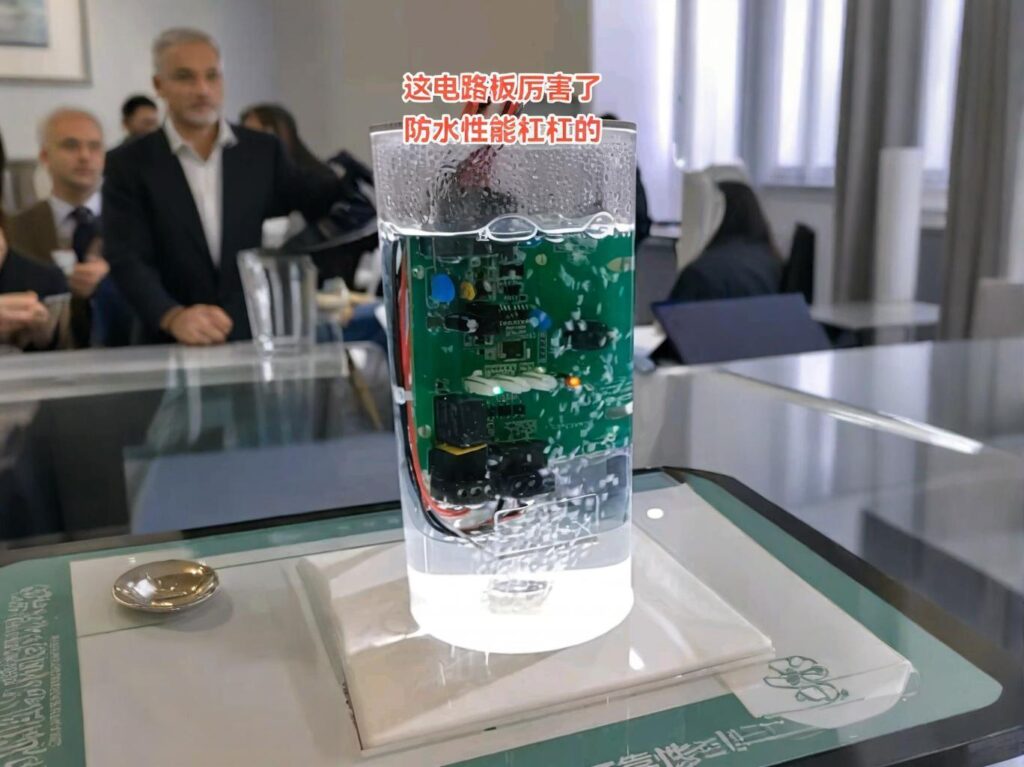
- Precision Electronics: PCBA board nano-coating, providing thin and efficient waterproof and moisture-proof protection.
II. Technical Explanation: Hydrophobic Mechanism and Film-Formation Logic of Nanostructures
The reason nano coatings can achieve "water beading" and remove dirt lies in complex surface physicochemical phenomena.
2.1 Young's Equation and Contact Angle
- Technical Principle Analysis: When a liquid lands on a solid surface, its shape is determined by the surface tensions of the gas, liquid, and solid phases. Nano paint significantly increases the contact angle ($theta$) between water droplets and the coating by reducing the surface free energy (Surface Energy).
- Superhydrophobic standard: When the contact angle $theta > 150^circ$ and the sliding angle is less than $10^circ$, the coating enters a superhydrophobic state, and water droplets roll very easily under gravity.
2.2 Three-dimensional network of nanoparticles
- Modification logic: Nanoparticles (typically at the $10-100$ nm scale) are uniformly dispersed in a high-performance resin (such as fluorosilicone resin). During the film-forming drying process, these particles spontaneously migrate to the surface layer and aggregate, forming a "nail bed"-like array.
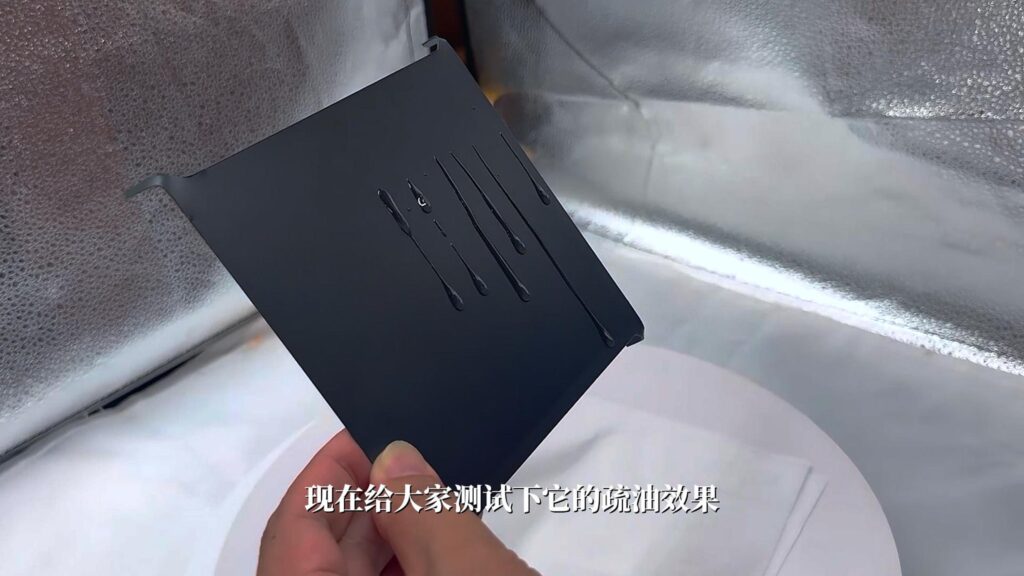
- Self-cleaning mechanism: Dust and grease find it difficult to enter the gaps between nanoparticles and can only float on the air cushion layer. When washed by rainwater, spherical water droplets wrap up the contaminants and carry them away, achieving the so-called "self-cleaning".
III. Logical Analysis: The Deep Trade-off between Weatherability and Functionality
Although nano-coatings exhibit exceptional performance, their inherent limitations must be addressed through systematic logical design for large-scale industrial applications.
3.1 Trade-off between Mechanical Strength and Functionality
- Causal Analysis: Although the microscopic protrusions formed by nanoparticles provide superhydrophobicity, their delicate structure tends to be fragile, and wear resistance is their main bottleneck.
- Industrial Solutions: Modern advanced nano-coatings adopt hybrid technology, anchoring nanoparticles onto the polymer backbone via covalent bonds. This "rigid-flexible combined" design ensures microscopic roughness while leveraging the toughness of the resin to provide scratch resistance.
3.2 Long-term Stability Logic
- Performance evolution: If the nanocoating is exposed to strong ultraviolet light, resin aging will cause the nanostructure to collapse or peel off.
- Optimized approach: By introducing nano-titanium dioxide (anatase or rutile type used in a controlled manner) or nano-zinc oxide into the formulation, ultraviolet rays can be synergistically absorbed to protect the resin matrix from degradation, thereby maintaining long-term antifouling performance.

IV. Frequently Asked Questions (FAQ)
Q1: Can nano waterproof coating be directly sprayed on all surfaces?
A: Most nano-coatings exhibit good compatibility with substrates, but surface preparation is critical. The substrate must be thoroughly degreased and dedusted. For highly absorbent materials (such as certain porous stones), it is generally recommended to first apply a sealing primer to prevent the nano-active components from being absorbed by the substrate and failing to form a film on the surface.
Q2: Is this coating toxic, and does it meet environmental protection standards?
A: Professional industrial-grade nano coatings are shifting toward water-based and alcohol-based formulations. High-quality products are free of heavy metals and substances of very high concern (SVHC). However, due to the fineness of nanoparticles, professional protective masks must be worn during application to prevent inhalation of nano-scale suspended particles.
Q3: How long does the effectiveness of nano anti-fouling paint last?
A: In indoor or non-extreme friction environments, the effect can last for several years. In harsh outdoor conditions (e.g., sandstorm impact, frequent wiping), performance slowly degrades as the microstructure wears. Periodically spraying the "nano-enhancement liquid" is a common maintenance strategy to sustain long-term performance.
Q4: Why does some nano paint appear whitish after spraying?
A: This is usually caused by excessive agglomeration (coagulation) of nanoparticles due to over-thick spraying. Nano-coatings pursue a "thin and uniform" structure, and typically only a few microns in thickness are sufficient to function. It is recommended to strictly follow the process logic of low flow rate and multiple spraying passes.
V. Conclusion: Nanotechnology Empowers the Future of Surface Engineering


The emergence of nano waterproof and anti-fouling coatings marks a leap in surface treatment technology from "macro covering" to "micro design". It not only addresses the pain points of traditional coatings being easily soiled and difficult to clean, but also provides new possibilities for the stable operation of industrial equipment in harsh environments. When selecting nano coatings, environmental wear frequency, UV intensity, and substrate characteristics should be comprehensively considered. With the maturation of nanocomposite material processes, such intelligent "functional shells" will become the mainstream choice for future industrial painting.