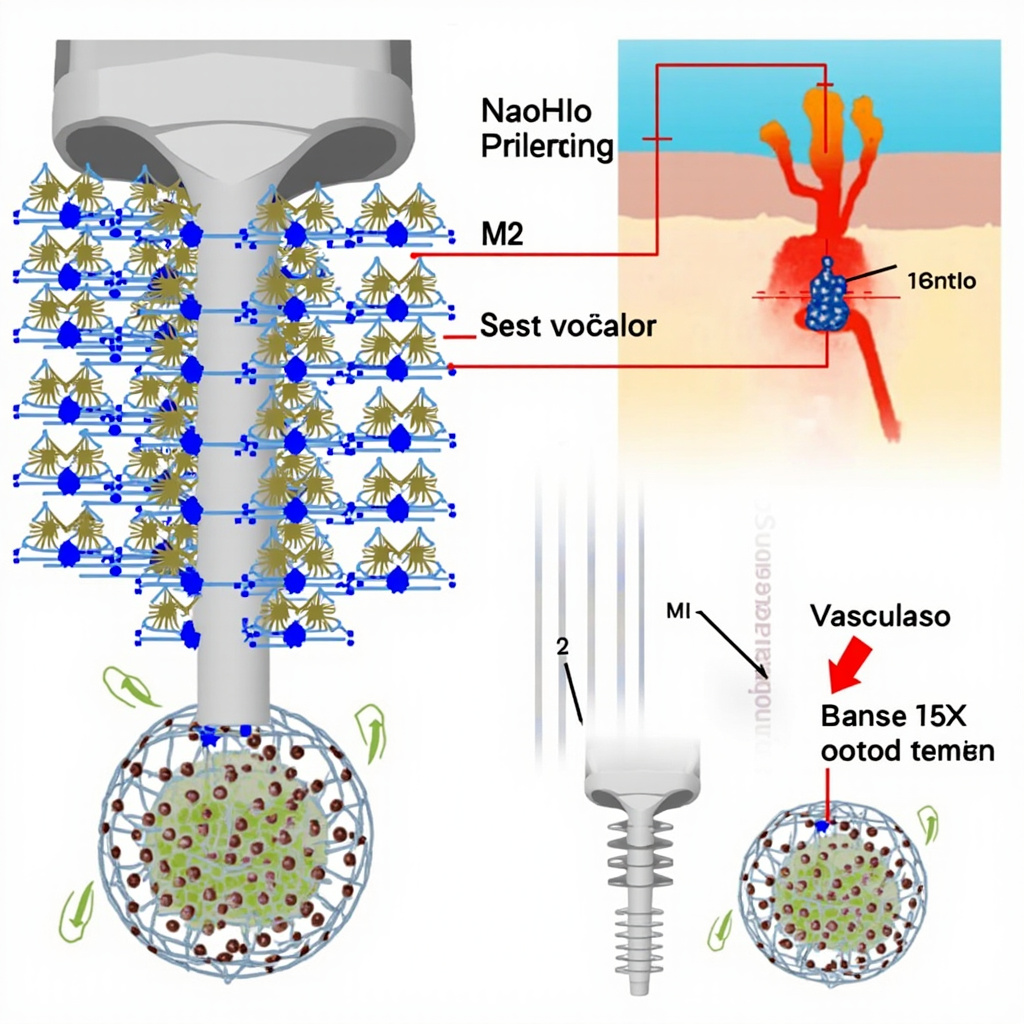
Surface bioactive nanocoatings on titanium alloy (Ti6Al4V) orthopedic implants (artificial hip/knee joints, spinal fusion cages, bone screws and plates) construct osteoconductive nanotopography via nano-HA (particle size 20–80 nm) electrophoretic deposition/electrospinning/micro-arc oxidation. In 2026, Bioactive Materials (Vol. 55) reported multi-ion doped (Sr2+/Mg2+/Zn2+/CO32-/SiO44-) HA nanorod arrays—mimicking the chemical composition and nanostructure of natural bone matrix—promoting M2 macrophage polarization (anti-inflammatory immune microenvironment)—enhancing vascularized osseointegration—retaining anti-inflammatory activity even after particle detachment—preventing aseptic loosening (incidence approx. 5–15% per 15 years). In 2025, Chemical Engineering Journal: HA-Zn/Cu TA coating—pH-responsive Cu2+ release (antibacterial: 71.67% E. coli, 98.54% S. aureus) + sustained Zn2+ release (osteogenesis + immunomodulation). In 2025, Int. J. Pharmaceutics (Aug): anodized titanium + electrophoretic deposition of nano-HA—loading alendronate sodium + gentamicin—92–94% sustained drug release—72 h cell viability 100%. In 2026, BMC Oral Health (Vol. 26): CNT + 1% HA coating—rabbit mandibular model—significantly increased bone-implant contact (BIC) and new bone area (NBA). Meets ISO 13779-3:2018 (HA coating bond strength >15 MPa) and ASTM F1609 standards. The global orthopedic implant market was approx. USD 53 billion in 2025 (CAGR 5.8%), with the share of cementless types (relying on HA coating osseointegration) rising from approx. 35% in 2015 to approx. 55% in 2025.