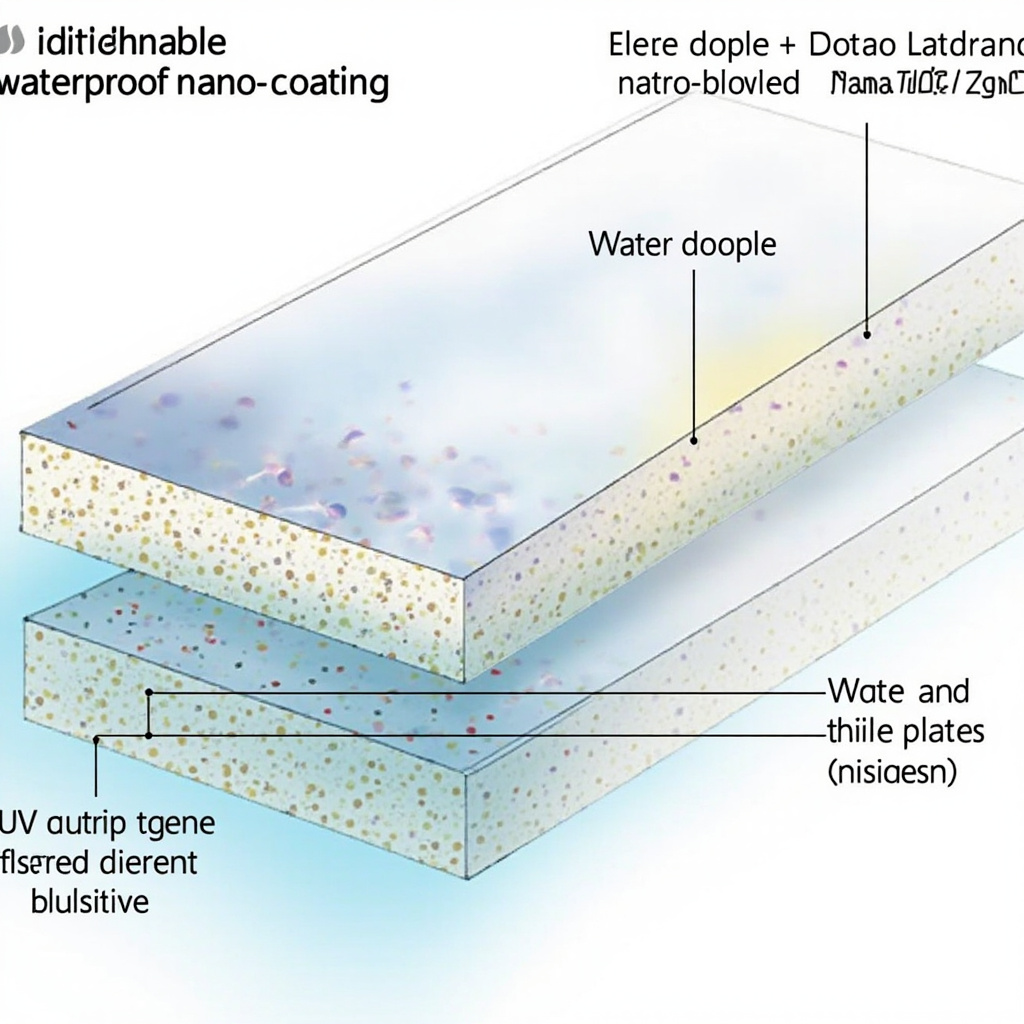
Outdoor tent, footwear and headwear breathable waterproof nanocoating constructs a microporous breathing structure via nano-SiO2/PU electrospun nanofiber membranes (fiber diameter 200-500 nm, pore size 0.5-5 μm—smaller than 100 μm water droplets but far larger than 0.0004 μm water vapor molecules—achieving breathability without water penetration) or PU/FPU/SiO2 nanofibers (hydrostatic pressure 59 kPa+ WVTR 7.9 kg/m2/day)—water contact angle >152°—water droplets cannot penetrate while sweat vapor escapes freely. Nano-TiO2 (rutile, 10-30 nm)/ZnO (20-50 nm) provides UV shielding—UPF>50. Validated in 2025: PFAS-free graded nano-SiO2 + long-chain silane—retains superhydrophobicity after 65 wash cycles (Advanced Engineering Materials); self-healing—recovers superhydrophobicity at 80°C for 5 min (Progress in Organic Coatings); CS/PDMS/PLA coating—CA 159° + photothermal self-sterilization (Progress in Organic Coatings 2025). Global outdoor equipment market ~USD 54 billion in 2025 (CAGR 6.2%). Meets EN 343 (rain-protective clothing) and AATCC 127 (hydrostatic pressure) standards.