A microencapsulated phase change material (MPCM) is a functional powder in which an organic phase-change core—paraffin or a fatty acid ester—is confined at the micron scale inside a melamine-formaldehyde resin shell, an acrylic resin shell or an inorganic shell. A phase-change temperature-regulating coating is a finish in which these microcapsules are dispersed into a paint at a defined loading, and the core then absorbs and releases latent heat reversibly around its phase-change temperature (typically 20-30 °C indoors), clipping temperature peaks and buffering surface temperature.
The figures on a quotation always look respectable: capsule powder at 176 J/g enthalpy, a claimed 3 °C of indoor cooling. On site, however, 15 kg of microcapsules are dumped into a tonne of paint, the dried film powders under a fingertip and the colour blooms, and two side-by-side test cabins record a surface temperature difference below 0.5 °C. Those three scenes each step on one of the three core questions of a phase-change coating: in which dimensional frame latent heat is being read, where the feasible boundary of loading lies, and under what test conditions the temperature-regulating effect is reproducible. Working from verifiable literature, standards currently in force and published testing practice, this article takes the product line apart layer by layer—core and shell chemistry, unit conversion, DSC measurement, the price of loading, particle size selection, cycling decay and compliance limits.
Overview: Six Conclusions to Take Away First
- Capsule-powder latent heat spans 83.3-203 J/g in the published record: n-octadecane in a melamine-formaldehyde shell at 176.5 J/g (Journal of South China University of Technology, 2007), paraffin in a methacrylate shell at 83.3 J/g (Journal of Zhejiang University of Technology, 2020), and an ester core with a high-temperature shell at 203 J/g (patent CN115414877B). Core-shell systems differ by close to 2.4 times in magnitude, so identify the core material before comparing prices.
- At film level only single-digit to low-teens J/g survive: the interpenetrating polymer network (IPN) coating film is reported at a DSC enthalpy of 9.21 J/g, and the microcapsule/IPN blend at 15.84 J/g. Powder enthalpy, paste enthalpy and film enthalpy are three separate frames of reference; mix them and every number stops meaning anything.
- The feasible loading window is usually 10-30% on resin mass: at 10 wt% an inorganic-shell system still holds adhesion grade 1 and pencil hardness 2H; the silicone-acrylic literature recommends 15%; 30% is chosen where time lag is the priority. Beyond that, film-forming continuity and scrub resistance deteriorate sharply.
- Cycling verification has published criteria to stand on: thermal reliability testing follows JG/T 534-2018; the prevailing third-party basis is a phase-change temperature shift of no more than 2 °C and an enthalpy retention of at least 90% after 100-1000 thermal cycles; the German RAL-GZ 896 scheme sets a quality-assurance framework for PCM in building materials targeting no significant performance decay over 30 years.
- Particle size decides whether a capsule can enter a topcoat: only 0.4-1.5 μm inorganic-shell capsules make translucent, thin-film work realistic; 4 μm-class melamine shells belong in primers and mortars; roughly 60 μm capsules carry settling, pick-off and intercoat delamination risks, and the anti-settling logic is the same as in nano-silica dispersion practice.
- Free formaldehyde in melamine shells is a process-control item, not a finished-product defect: a pre-polymer formaldehyde/melamine molar ratio of 3.0, secondary shell formation, hydrogen peroxide post-treatment and thorough water washing are the published routes for driving it down. Indoor use must be verified inside the GB 18582-2020 and GB 30981.1/.2-2025 framework (effective 2026-06-01), not by borrowing toy or textile certificates.
From Paraffin to Microcapsule: Why Coatings Need a Core-Shell Structure
The solid-liquid transition of a paraffin core stores useful latent heat, but dosing it straight into paint creates three problems: the liquid phase bleeds out above the melting point, the volume change on transition ruptures the film, and compatibility with the resin matrix cannot be controlled. Microencapsulation answers by locking the liquid inside a shell—the shell carries the capillary pressure and the deformation while the core melts and crystallises only within the capsule. That shell simultaneously sets the ceiling on service temperature, the level of residual monomer and the boundary of mechanical strength.
Core-shell systems and three routes to a shell
In-situ polymerisation is the route most often seen in the literature: with a melamine-formaldehyde resin wall and an n-octadecane core it yields capsules averaging 4 μm with 176.5 J/g latent heat and complete coverage. Suspension polymerisation on a methyl methacrylate-ethyl methacrylate copolymer wall gives paraffin capsules with a phase-change temperature of 25 °C, 83.3 J/g latent heat and heat resistance to 150 °C. Interface polymerisation combined with Pickering emulsification can push the initial decomposition temperature into the 300 °C class (patent CN115414877B). The inorganic-shell route—calcium carbonate, barium sulfate or sol-gel silica—earns its place on acid-alkali resistance and thin shells carrying high enthalpy: calcium-carbonate-shelled n-eicosane capsules at 0.74-1.54 μm with 100-131 J/g latent heat, and barium-sulfate-shelled capsules at 0.4-1.1 μm with enthalpy above 100 J/g that remain stable from pH 1 to pH 14.
Inside coatings the microcapsule also carries a second identity: it is the standard encapsulation format for functional carriers. Swap "healing agent" for "heat storage core" and the logic of assessing shell integrity is unchanged; the mechanism and repair-efficiency evaluation in our article on microcapsule self-healing coatings reads directly across: Microcapsule Self-Healing Coatings: Rupture-Release Mechanism and Repair Efficiency.

Leakage, volume change and supercooling
Leakage is judged from exudate on a compressed pellet or after solvent extraction. Published work on inorganic amorphous systems quotes leak rates capped at 0.5% or even in the 0.05% class, but such figures belong to one formulation and one test temperature, so they must always be cited with "at what temperature, over how many cycles, in what matrix". Supercooling is the other elephant: apparent supercooling of paraffin-type capsules is generally under 3 °C, while hydrated salts can reach 5-20 °C. How far the crystallisation peak measured by DSC sits below the melting peak decides whether the coating gives up its heat inside the design window. On specimen preparation, third-party laboratories broadly advise testing the capsule as a whole rather than cracking the shell and assaying the extracted core, because the latter measures a raw material, not a product.
Latent Heat Has Three Frames of Reference, and Mixing Them Distorts Everything
Capsule powder: the literature band of 83.3-203 J/g
Set the fully characterised published data side by side and the spread in magnitude speaks for itself:
| Capsule system | Phase-change temperature / °C | Latent heat J/g | Particle size μm | Other key characterisation |
|---|---|---|---|---|
| n-Octadecane@melamine-formaldehyde shell (in-situ polymerisation) | about 28 (core melting range) | 176.5 | 4 (mean) | Fully encapsulated, smooth surface |
| Paraffin@MMA-EMA copolymer shell (suspension polymerisation) | 25 | 83.3 | No single value reported | Heat resistance to 150 °C |
| Nano SiO2-modified paraffin@melamine shell | 29.1 | 145.7 | about 60 | Encapsulation rate 81.8% at 5% SiO2 |
| Calcium carbonate shell@n-eicosane | about 36 (core melting range) | 100-131 | 0.74-1.54 | Well dispersed in a cement matrix |
| Barium sulfate shell@n-eicosane | about 36 (core melting range) | above 100 | 0.4-1.1 | Stable across pH 1-14 |
| Ester core@melamine shell (Pickering interface polymerisation) | Ester melting range | 203 | Sub-micron | Initial decomposition temperature 300 °C, encapsulation rate 90% |
The purpose of this table is not to nominate the highest enthalpy but to calibrate expectations: the core sets the latent-heat ceiling (pure paraffin is commonly quoted at 150-250 J/g in public sources), the shell fraction and encapsulation rate decide how much of that the capsule powder actually delivers, and loading plus film thickness decide how much is left at the coating end.
Film level: enthalpy dropping to single digits is an arithmetic necessity
Measured evidence from dissertations: the dried film of an IPN phase-change thermal-storage emulsion paint gives a DSC melting enthalpy of 9.21 J/g, and blending microcapsules with IPN produces a double endotherm at 30-50 °C with a melting enthalpy of 15.84 J/g. Why an order of magnitude below the powder? Run a geometric estimate: at a dry-film density of 1.2 g/cm³ and 100 μm of dry film, one square metre of dry coating weighs roughly 120 g. At 15% loading that is about 18 g of capsules per m², and even at an ideal 100 J/g a single complete phase change stores only about 1800 J/m², equivalent to roughly 0.5 W·h/m². That is the physical ceiling behind "you cannot hang a few watt-hours on one square metre", and any pitch that transfers capsule-powder enthalpy straight into an indoor cooling promise has to clear this conversion first. On the instrument, a scraped coating sample is typically only a few milligrams, so baseline and weighing errors are amplified, and the report must state where the sample was taken and how thick the film was.
Making DSC Credible: GB/T 19466.3 / ISO 11357-3 / ASTM D3418
Differential scanning calorimetry is the arbitrating method for phase-change temperature and enthalpy. The corresponding standards are GB/T 19466.3 (determination of melting and crystallisation temperatures and enthalpy; framework part GB/T 19466.1-2025, released 2025-12-02 and effective 2026-07-01, so verify the current text part by part before citing), ISO 11357-3:2018, ASTM D3418 (transition temperatures and melting/crystallisation enthalpies of polymers) and ASTM E794 (melting and crystallisation temperatures by thermal analysis). Melting points of paraffin feedstocks fall under GB/T 2539-2008 by the cooling-curve method and under ASTM D4419. Specific heat is measured to ISO 11357-4 / ASTM E1269, and thermal conductivity to ISO 22007-2 transient plane source or GB/T 10297 hot-wire method.
Heating rate and where to read the temperature
Routine determinations run at 5-10 °C/min; careful re-checks drop to 1-2 °C/min. The faster the ramp, the heavier the thermal lag, and the melting peak shifts to higher temperature and broadens. The phase-change temperature should therefore be reported primarily as the double-tangent extrapolated onset, with peak and final temperatures given alongside it, and calibration (commonly a zinc reference material) must be run at the same rate and atmosphere as the determination—otherwise the calibration does not cover the real test condition.
Sealed pans and specimen preparation are the main error sources
Mass loss from a volatile core is logged by the instrument as a thermal effect, appearing as a slow, broad baseline drift rather than an obvious transition peak—samples containing volatile components must be run in sealed pan assemblies, with pan type and sealing method stated in the report. How firmly a sample pan is crimped changes the thermal contact, and the error introduced by inconsistent preparation routinely exceeds the error of the instrument. When re-checking a batch of capsules, read the weighing and sealing records before you read the curve.
Loading Versus Performance: The Price Curve
| Loading basis | System | Measured effect | Performance cost |
|---|---|---|---|
| 10 wt% | Barium sulfate shell microcapsule composite coating | Indoor air 3.2 °C below the control in a small model | Adhesion grade 1, pencil hardness 2H (compliant) |
| 15 wt% | Paraffin microcapsule in waterborne silicone-acrylic paint | Reported as the recommended formulation | Viscosity rises, routine properties still met |
| 30 wt% | Nano SiO2-modified microcapsule composite coating | Heating from 15 °C to 31 °C takes about 12 min longer; cooling from 38 °C to 20 °C takes about 6 min longer | Source does not quantify the loss in mechanical properties |
| 40% by volume | Microcapsule cement mortar phase-change wall panel | Peak temperature down 5.166 °C, peak delayed 145 min, peak heat transfer down 22.202 W/m² | Mechanical strength falls with loading; the structural layer must be decoupled |
| 20% | Microcapsules in a cement matrix | Volumetric specific heat through the phase-change band rises to about 2.6 times; overall thermal conductivity drops by more than 41% | Non-peer-reviewed source, directional reference only |
Why the film gets worse as loading goes up
Film-forming continuity is the first casualty. A microcapsule is a rigid particle that does not film; once its volume fraction passes a threshold the resin phase is interrupted, and cohesive strength, intercoat adhesion and scrub resistance all slide together—powder coming off under a fingertip and crumbling along a cross-cut pattern are the macroscopic symptoms. Past the critical pigment volume concentration (PVC), gloss and stain resistance collapse in the same way; this is the same trade-off as hardness versus toughness in ceramic-filled systems, dissected in our article on Balancing Hardness and Toughness in Nano Ceramic Coatings. The workable engineering answer is to divide the labour between layers: put the phase-change capsules in the primer or mid-coat, keep the topcoat a continuous resin film, and recover mechanical performance with film thickness and number of coats.
Particle Size: 0.4 μm and 60 μm Are Two Separate Product Lines
Particle size acts on optics, application and durability at the same time. Optically, the refractive-index mismatch between capsule and matrix scatters light, so only fine capsules in the 0.4-1.1 μm band make a translucent topcoat realistic, while coarse ones simply chalk the film white. In the can, density and size set the settling rate, so large capsules demand a far stronger anti-settling package, and dispersion and thixotropy practice with nano silica cross-checks directly against it: Nano Silica in Coatings: Dispersion, Anti-Settling, Flatting and Abrasion Resistance. On durability, coarse particles riding proud of the surface are the first to come off in a wet scrub; packing a 60 μm-class capsule into a 100 μm film leaves half of the functional layer stranded at the interface.
Cycling Decay: How Many Cycles Before It Goes into Acceptance
Latent heat does not vanish; it is worn down year by year by component segregation, shell fatigue and interface debonding. Through repeated freezing and melting the low-melting fractions of a paraffin drift apart, which shows up as a broadened melting peak with an earlier onset; hydrated salts face worsening supercooling and salt-liquor segregation, with peak temperatures that can wander by several degrees. For phase-change materials in buildings, industry standard JG/T 534-2018 specifies the thermal reliability test method, and the prevailing third-party criterion is a phase-change temperature shift of no more than 2 °C and an enthalpy retention of at least 90% after 100-1000 hot-cold cycles. In the literature, n-octadecane in a silica shell has been reported at under 1.2% decay across 500 cycles—however that source sits in a non-peer-reviewed journal, so it should be downgraded to directional evidence when cited. What deserves a line in an acceptance document is a method number plus criterion values, not a blanket guarantee of "no decay after xx cycles".
Three tiers of evidence: literature value, test criterion, quality-assurance scheme
The three tiers carry different weight. A literature value proves the mechanism is sound; a test report proves your batch is sound; a quality-assurance scheme such as RAL-GZ 896—initiated by the Quality Association PCM in 2004 and adopted by RAL Germany in 2006—proves the product is sustainable. It lists heat storage capacity, phase-change temperature band, thermal conductivity and stability as the four core indicators, requires building applications to target no significant performance decay over 30 years, and subjects them to annual audit. In procurement, ask the supplier for three things at once: the raw DSC curve of the capsule powder, a post-cycle report run to JG/T 534-2018 or to a cycling programme both parties accept, and batch testing for free formaldehyde and harmful substances.
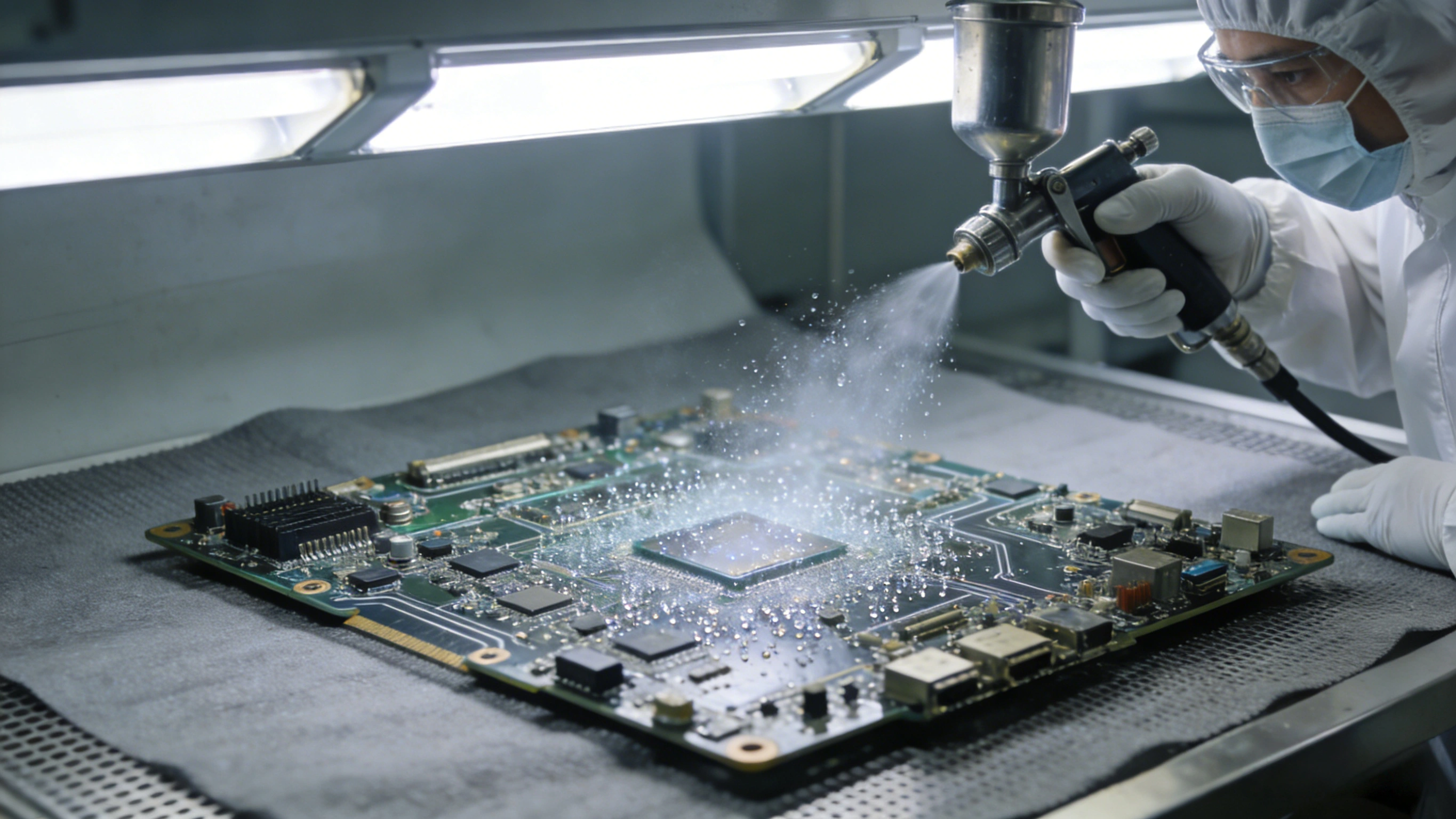
Post-cycle re-test methodology is not exclusive to phase-change materials. Superhydrophobic coatings define durability as "abrasion cycles against performance retention", which is the same construction, and their failure-curve design repays comparison: Mechanical Durability and Abrasive Failure of Superhydrophobic Coatings. In charge-discharge systems the afterglow decay curve of a photoluminescent coating is another isomorphic sample: Photoluminescent Coatings: Strontium Aluminate Matrix, Afterglow Decay and Engineering Boundaries.
Choosing Between Phase Change, Aerogel and Far-Infrared Routes
These three routes end up on the same slide deck and bid against each other, but they act on different physical quantities:
| Comparison dimension | Phase-change microcapsule coating | Aerogel insulation coating | Far-infrared insulation coating |
|---|---|---|---|
| Physical quantity acted on | Latent heat (J/g) and equivalent specific heat | Effective thermal conductivity W/(m·K) | Emissivity and radiative heat rejection |
| Magnitude in literature or practice | Capsule powder 83.3-203 J/g; film 9.21-15.84 J/g | Thermal conductivity down to the 0.02 W/(m·K) class (measured basis in our aerogel article) | High-emissivity coatings in the mid- and far-infrared band |
| Where it works | A band of roughly ±5 °C about the phase-change temperature | All day, constant (blocks heat flux) | Radiative exchange around the clock |
| Dominant failure mode | Too little loading is imperceptible; too much powders and segregation drifts the transition | Chalking and pore degradation after compression | Filler settling and coating ageing lower emissivity |
| Verification method | DSC enthalpy plus re-test after cycling | Steady-state or transient thermal conductivity | Emissivity spectroscopy plus whole-vehicle or whole-wall comparison |
| Typical misapplication | Sun-exposed roofs needing continuous insulation | Indoor surfaces needing peak clipping | Cold-chain totes needing stored latent heat |
The conclusion is layering, not choosing one of three. Where heat flux must be blocked, take the aerogel route (systematic treatment in our article on Aerogel Thermal Insulation Coatings: Nanopore Heat-Blocking Mechanism, Conductivity and Thickness Conversion); where heat must be pumped off actively, take far-infrared (vehicle applications in our article on Far-Infrared Self-Insulating Nano Coatings for Vehicles); and only where peaks must be clipped in the 20-30 °C band, buffering equipment skins or interior walls, does the phase-change microcapsule earn its place. When combining routes, do the thickness arithmetic for each one before claiming any combined benefit.
Indoor Compliance: Free Formaldehyde, Flammability and Odour
The synthesis chemistry of melamine shells fixes the residual risk: free formaldehyde comes from unreacted aldehyde and from hydrolysis of the shell. The process route published by a Donghua University team controls the pre-polymer formaldehyde/melamine molar ratio at 3.0, cuts the single-pass wall-material dose in favour of secondary shell formation, oxidises residual formaldehyde by hydrogen peroxide post-treatment, and supports it with encapsulation from a fine-particle emulsion plus thorough washing. Those are manufacturing-side actions; the procurement-side counterpart is free formaldehyde data for every batch. Finished-product control belongs to the mandatory standard system: interior wall paints are limited under GB 18582-2020, while the new harmful-substance system GB 30981.1/.2-2025 is already published and takes effect on 2026-06-01, bringing colour pastes and additives into scope; as a functional filler, the microcapsule should be pushed into the same declaration.
Flammability is routinely overlooked: a paraffin core is combustible, and adding capsules does not by itself improve the fire performance of the system, so where a construction carries a fire class requirement the coating and the build-up must be tested as an assembly to GB 8624 rather than quoting a report on the paint alone. On odour, esters and paraffin cores are relatively mild in themselves, but residual monomer from melamine shells blends with fresh-film emissions and needs a ventilation window to be verified. Children's furniture and food-contact applications must not borrow toy or textile certificates for cover—test items have to match the product category one to one. Release and test documentation should travel with the packaging batch record; for example: 
Reading Small-Model Data, and Why Real Buildings Fail to Replicate It
The attractive "5.2 °C lower" and "145 min delayed" in the literature all come from controlled models: incandescent or xenon lamps standing in for radiation, boxes only tens of centimetres across, and a phase-change layer carrying far more latent heat per unit area than a hundred-micron coating on a real wall. Four reductions stand between model and building. The thermal inertia of the wall itself dilutes the surface latent-heat contribution. Air changes and coupling with neighbouring rooms flatten the peak. Coating storage is only in the 1800 J/m² class by the estimate above, so the phase-change band covers a limited number of hours. And if the transition point misses the actual surface temperature by more than 3 °C, the coating spends most of its life as ordinary filler. The same discount separates laboratory durability from field durability, and the lesson from superhydrophobic coatings transfers directly: Mechanical Durability and Abrasive Failure of Superhydrophobic Coatings. For engineering clients, write the expectation as two measurable indicators—peak delay plus surface temperature swing—with an infrared thermography camera and a thermocouple array against an uncoated reference patch on the same wall, instead of promising indoor air temperature.
Key Data on One Page
- Capsule-powder latent heat in the literature: 83.3-203 J/g; public figures for pure cores: paraffin 150-250 J/g, hydrated salts 150-300 J/g.
- Film-level enthalpy examples: 9.21 J/g for a single IPN system, 15.84 J/g for a microcapsule/IPN blend with a double endotherm at 30-50 °C.
- Indoor temperature band: phase-change temperatures concentrate at 20-30 °C; simulations for hot-summer/cold-winter climates put the better melting point near 24 °C.
- Particle-size families: inorganic shells 0.4-1.54 μm, melamine shells about 4 μm, modified coarse capsules about 60 μm; use the last with caution in a 100 μm film.
- Loading window: 10-30% on resin mass; 20-40% by volume in cement matrices; every step up requires re-running adhesion and scrub resistance.
- Cycling criteria: a phase-change temperature shift within 2 °C and enthalpy retention of at least 90% after 1000 cycles (prevailing third-party basis), with JG/T 534-2018 as the method reference.
- Conductivity magnitudes: conventional organic phase-change materials 0.20-0.25 W/(m·K); dosing capsules into a cement matrix cuts overall thermal conductivity by roughly 41% (non-peer-reviewed basis).
- Geometric estimate: at 15% loading and 100 μm of dry film there are about 18 g of capsules per m², storing roughly 1800 J/m² per phase change, or about 0.5 W·h/m².
- Compliance milestones: GB 18582-2020 currently in force; GB 30981.1/.2-2025 effective 2026-06-01; the GB/T 19466.1-2025 framework effective 2026-07-01; free-formaldehyde control routes are molar ratio 3.0, secondary shell formation, hydrogen peroxide post-treatment and washing.
Frequently Asked Questions
Q1: The capsule powder is rated at 176 J/g—why does the finished paint feel like nothing?
Because what the customer receives is never 176 J/g. It is film-level enthalpy multiplied by areal mass, a two-stage reduction. Powder enthalpy is per gram of capsules; blended at 15% only about 26 J remains per gram of dry paint; at 100 μm of dry film there are about 18 g of capsules per m², so one phase change stores roughly 1800 J/m², whereas pushing a wall-heated room by 1 °C takes hundreds of kilojoules. The test is simple: make the supplier state J/m² from "loading × film thickness × density". Below 3000 J/m² a system on an ordinary dwelling wall is unlikely to produce any perceived difference; such systems belong on equipment skins and tote liners, where a thin layer with high heat capacity does the work.
Q2: Should the phase-change temperature be 23 °C or 28 °C?
It is set by the target surface temperature, not by the room setpoint. Interior wall surfaces usually run 2-4 °C cooler than indoor air (and cooler still beside cold radiant surfaces in winter), while a south-facing wall surface can exceed room air by more than 5 °C in summer, so daytime peak-clipping schemes for interior walls mostly land at 23-27 °C. For external surfaces or equipment skins, choose the melting point so that it covers 15%-30% of the duration above the measured surface temperature peak. The wrong direction returns a negative benefit: with the transition point above the actual surface temperature the coating stays solid all day and is just filler, while below it the coating gives up heat continuously through the night. At acceptance, require both the DSC extrapolated onset and the peak temperature (GB/T 19466.3 basis) and check them against the surface temperature distribution measured by thermography on site.
Q3: Can loading be raised from 15% to 40% to double the effect?
No, and it will not scale linearly. Microcapsules do not form a film. Once the volume fraction of the resin phase falls below the continuity threshold, adhesion, scrub resistance and intercoat adhesion degrade together: the published systems at 10% and 15% still hold adhesion grade 1 and hardness 2H, and cement panels can carry 40% only because structure and function are decoupled into separate layers. On the paint side the sounder route is a two-layer build—a high-loading mid-coat for storage and a low-loading topcoat for properties—or a thicker film per coat rather than a higher capsule ratio. Against any claim of "double the loading, double the effect", ask for cross-cut adhesion and scrub resistance data on the same batch system before discussing further.
Q4: Will these coatings save heating cost in winter?
Phase-change regulation is peak shifting, not heat reduction: what is stored during the day is returned to the same room at night. In a heated interior, daytime solar gain stored and released at night can in principle smooth the swings, but internal gains are small and the phase-change band rarely aligns with the day-night temperature difference, so the saving is hard to raise to the level of insulation and air-tightening works on the envelope. The genuinely useful winter duties lie elsewhere: solar thermal collection and storage, the equalising layer of underfloor heating, and cold-chain boxes. In proposals to owners, position the phase-change layer as a comfort and peak-load management tool, costed separately from the insulation and shading layers, rather than resting an energy-saving promise on latent heat.
Q5: For incoming inspection I only want authenticity and content—how should DSC be run?
A closed loop in three workable steps. First, take the capsule powder and run two heating and cooling cycles to GB/T 19466.3 / ISO 11357-3 at 5 °C/min under nitrogen: the first pass erases thermal history, the second provides the data; report the extrapolated onset temperature, peak temperature and melting enthalpy, and trigger a re-check whenever the deviation from the nominal value exceeds 10%. Second, run thermogravimetry (TGA or simultaneous thermal analysis) on the same batch—if the onset of core weight loss does not support a claim such as "heat resistant to 150 °C", hold the goods. Third, scrape a coating film and re-measure enthalpy against the theoretical reduction of "loading × capsule enthalpy"; a shortfall greater than 30% points to dispersion damage or substitution. Weighing to 0.01 mg, consistent crimping of sealed pans and calibration at the same rate as the determination influence the conclusion far more than the grade of instrument.
Q6: What happens when the shell breaks, and are there signals the eye can catch?
The macroscopic signatures of shell failure are bleeding, blooming and powdering: an oily sheen on the paste during storage (core exudation), cloudy blooming in the film (the scattering particle distribution has shifted), and functional powder coming off first during wet scrub (interface debonding). For accelerated verification follow the JG/T 534-2018 logic—thermal cycling, then re-measure DSC enthalpy and exudate; the prevailing third-party criteria are enthalpy retention of at least 90% and a phase-change temperature shift within 2 °C after cycling. Melamine shells add one hidden ageing path: shell hydrolysis accelerates in alkaline service such as cement matrices or strong alkaline cleaners, and the pH 1-14 stability data for inorganic shells is the direct counterpoint for that duty. Write "matrix pH range plus post-cycle retention" into the purchase specification as hard requirements.
Q7: Is it safe to buy a functional coating advertised as zero formaldehyde?
Do not trade on the claim; trade on the evidence chain. Melamine shell production cannot do without formaldehyde—what can be negotiated is residual control. Ask the supplier for batch free-formaldehyde data (against the GB 18582-2020 and GB 30981.1/.2-2025 control framework), a process description (molar ratio 3.0, secondary shell formation, hydrogen peroxide post-treatment, washing) and the third-party report number, and keep a retained sample from receipt for comparison. A blanket "zero formaldehyde" statement is itself outside advertising compliance practice, and a quotation built on that language should have the credibility of all its data downgraded. For the same reason, material that borrows toy, textile or food-contact certificates to endorse a coating must be returned until testing for the corresponding coating product category is supplied.
References and Basis of Measurement
- GB/T 19466 series, Part 3: determination of melting and crystallisation temperatures and enthalpy; framework part GB/T 19466.1-2025 released 2025-12-02, effective 2026-07-01 (cite the currently valid text for each part).
- ISO 11357-3:2018, ISO 11357-4, ISO 11357-8, ASTM D3418, ASTM E794, ASTM E1269, ASTM D4419, GB/T 2539-2008, ISO 22007-2:2015, GB/T 10297-2015.
- JG/T 534-2018, test methods for thermal reliability of phase change materials used in buildings; RAL-GZ 896, quality assurance and test specification for phase change materials (Quality Association PCM, adopted by RAL in 2006 and under continuous revision).
- GB 18582-2020, limits of harmful substances in wall coatings for building interiors; GB 30981.1/.2-2025, limits of harmful substances in coatings, effective 2026-06-01.
- Yuan Wenhui et al., Preparation and characterisation of microencapsulated phase change materials, Journal of South China University of Technology (Natural Science Edition), 2007, Issue 7, pp. 46-51.
- Yu Binbin and Pei Kemei, Preparation and performance analysis of paraffin phase-change microcapsules for self-regulating temperature coatings, Journal of Zhejiang University of Technology (Natural Science Edition), 2020, Issue 5, pp. 602-608.
- Zhang Yunfeng et al., Preparation and performance characterisation of nano SiO2-modified paraffin phase-change microcapsule coatings, Paint & Coatings Industry, 2021.
- Zhang Luman and Hou Feng, Thermal performance tests and numerical simulation of phase-change temperature-regulating wall panels, Bulletin of the Chinese Ceramic Society, 2024, Vol. 43, No. 3; Shou Chenyan et al., Methods for reducing free formaldehyde in the preparation of phase-change microcapsules, Dyeing & Finishing, 2010, Issue 1, pp. 27-30; patent CN115414877B.
- Basis note: the values "18 g/m², 1800 J/m², 0.5 W·h/m²" are geometric estimates from assumed film thickness and density, not measured results; data marked "non-peer-reviewed" or "third-party testing service practice" are cited only to show order of magnitude, and formal determinations rest on the standard text, accredited test reports and the procedures agreed between supplier and purchaser.
Delivery and acceptance are organised on B2B engineering terms: functional pastes and complete coating systems travel in the manufacturer's original packaging with the batch record, each shipment carrying that lot's DSC curve and its free-formaldehyde and harmful-substance test documents; trade terms on an EXW / FOB basis only. Example:  .
Last updated: 2026-11-08 | Signed: Kexin New Materials (Guangdong) Co., Ltd. | This article addresses engineering and procurement scenarios; all data are taken from public literature and standardised measurement bases and constitute neither a certification nor a performance guarantee.