Introduction: Industrial Significance of Surface Metallization of Plastic Materials
With the popularization of lightweight design, the application proportion of plastics (such as ABS, PC, PP, etc.) in automotive interiors, consumer electronics, and household appliances continues to rise. However, the natural visual texture of plastics often struggles to meet the aesthetic demand for a "metallic feel" in the high-end market. Plastic electroplating paint, as a solution that imparts a metal-like appearance to plastic surfaces through coating technology, not only avoids the high pollution and high cost of traditional electroplating, but also excels in the uniform coverage of complex structural parts.


I. Industry Understanding: Classification and Selection Logic of Plastic Plating Coatings
For different plastic substrates and performance requirements, plastic plating coatings are generally classified into the following major technical routes:
1.1 Air-dry / Low-temperature Bake Plating Paint
Mainly used for heat-sensitive plastic substrates (e.g., general-purpose ABS, PS). Such coatings rely on physical solvent evaporation and initial crosslinking of resin molecules to form the film, and their advantages lie in energy saving and maintaining the dimensional stability of the substrate.
1.2 Vacuum Coating Companion Coatings (Primer / Intermediate Coat / Topcoat)
In physical vapor deposition (PVD) processes, plastic coatings play a crucial role:
- Primer (Basecoat): Used to fill the microscopic pits on the plastic surface, providing an extremely smooth "mirror-like base".
- Topcoat: Provides hardness, abrasion resistance, and chemical barrier on the metal thin-film layer to prevent oxidation of the metal layer.
1.3 1K/2K High Flash Point Electroplating-Like Paint
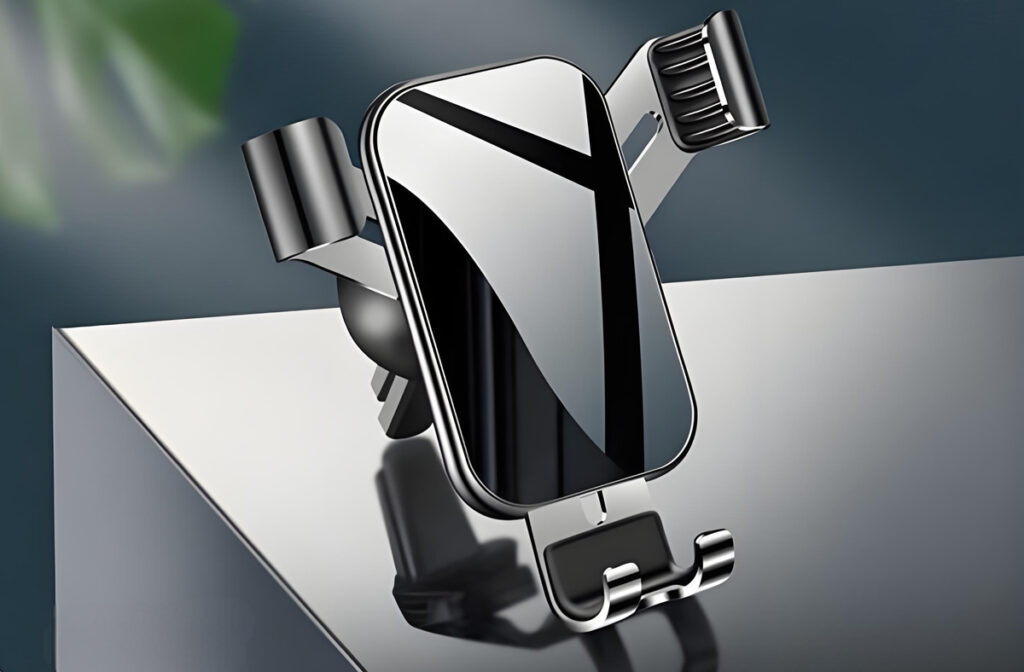
Through high-precision aluminum powder orientation technology, a stainless steel- or chrome-plating-like effect is directly sprayed onto plastic surfaces, widely used on automotive wheel hub caps, mobile phone middle frames, and similar parts.
II. Technical Explanation: The "Interaction Logic" Between Plastic Substrate and Coating
The combination of plastic and metallic-feel coatings is not a simple physical covering; its core lies in interface wetting and intermolecular forces.
2.1 Surface Tension and Wettability
Plastics (especially polyolefins such as PP and PE) have extremely low surface energy.
- Technical Explanation: The solvent system of the coating must possess moderate, controlled etching capability, able to slightly swell the plastic surface without damaging its structure, thereby forming a "hooking effect". For low-surface-energy substrates, it is usually necessary to pre-spray a primer promoter or perform flame/plasma treatment.
2.2 Flexibility of the resin and stress matching
Plastics expand easily when heated; during thermal cycling, the metallic-effect coating (usually containing a high proportion of inorganic pigments) and the plastic substrate exhibit a huge difference in coefficient of linear thermal expansion.
- Film-forming logic: The resin matrix of plastic electroplating paint must possess excellent elastic modulus to absorb the thermal stress between the two, preventing the coating from cracking or peeling during temperature cycling.
2.3 Laminar Orientation of Metal Particles
To achieve a electroplated appearance on plastic, the silver paste particles in the coating must complete parallel alignment within an extremely short time. This involves precise control of the solvent evaporation gradient to ensure that the paint film generates downward pressure during drying, forcing the metal flakes to lie flat.
III. Logical Analysis: Core Dimensions for Ensuring the Quality of Plastic Electroplating Coatings
3.1 Stability Logic of Adhesion
Adhesion is the lifeline of plastic plating coatings.
- Causal Analysis: If the solvent system has excessively strong dissolving power on the plastic substrate, it will cause deformation of the plastic part or "blushing" on the surface; if the dissolving power is insufficient, there will be no intermolecular penetration, and the adhesion test (such as the cross-cut test) will inevitably fail. Therefore, the design of the solvent gradient needs to be customized according to the specific plastic material (such as the PC/ABS alloy ratio).
3.2 Balance between Hiding Power and Reflectance
- Technical Trade-offs: The higher the metal powder content, the stronger the reflectivity (more like electroplating), but the density of the coating decreases, causing the alcohol resistance and sweat resistance tests to fail. Industrial-grade solutions typically adopt a combination of "ultra-fine particle size aluminum powder + high-performance transparent resin", balancing the contradiction between the two through nano-scale dispersion technology.
3.3 Analysis of Environmental Resistance Properties
Plastic products frequently come into contact with human skin.
- Logical Deduction: The coating must be capable of resisting erosion from artificial sweat, hand cream, and daily cleaning agents. This requires the clearcoat layer to possess a high degree of crosslink density, typically achieved using two-component polyurethane (2K PU) or UV-curable systems.

IV. Frequently Asked Questions (FAQ)
Q1: Why does plastic electroplating paint appear "dull" or have a grainy texture after spraying? A: Dullness is usually caused by the metal particles failing to achieve parallel orientation, or by insufficient smoothness of the primer resulting in diffuse reflection. A grainy texture may be due to excessive environmental dust, or flocculation of the aluminum powder during dilution; the compatibility of the thinner needs to be checked.
Q2: How to solve the problem of electroplating paint easily peeling off on PP or PE plastics? A: Polyolefin plastics have extremely low surface energy. It is recommended to first spray a dedicated PP adhesion primer (treatment agent), or use an electroplating paint based on graft-modified chlorinated polypropylene resin system to establish strong chemical bonding.
Q3: Can plastic electroplating paint achieve 100% simulation of water electroplating? A: Currently, high-end imitation electroplating paint can achieve 90%-95% visual similarity. However, in terms of tactile temperature (metallic cold feel) and extremely high requirements for mirror clarity (DOI value), there are still subtle differences from traditional water electroplating. Its advantages lie in comprehensive cost, environmental standards, and color diversity (such as gunmetal, rose gold).
Q4: How to avoid cracking (stress cracking) of plastic parts during construction? A: Low-polarity solvents should be selected, and aggressive solvents (such as high-content acetone or toluene) should be avoided. At the same time, immediate high-temperature baking after spraying should be avoided, allowing sufficient natural flash-off time for the solvent.
V. Conclusion: Establishing a Highly Reliable Plastic Surface Treatment System
Plastic electroplating coatings are not merely the product of chemical formulations, but the crystallization of substrate science and coating technology. Achieving excellent electroplating texture requires establishing a closed-loop logic spanning substrate analysis, coating selection, and application parameter control. With increasingly stringent environmental regulations, high-solids, waterborne, and UV-curable electroplating coatings are becoming the focus of industry evolution. Through precise technical interpretation and rigorous process control, plastic electroplating coatings will continue to provide more sustainable aesthetic solutions for the global manufacturing sector.