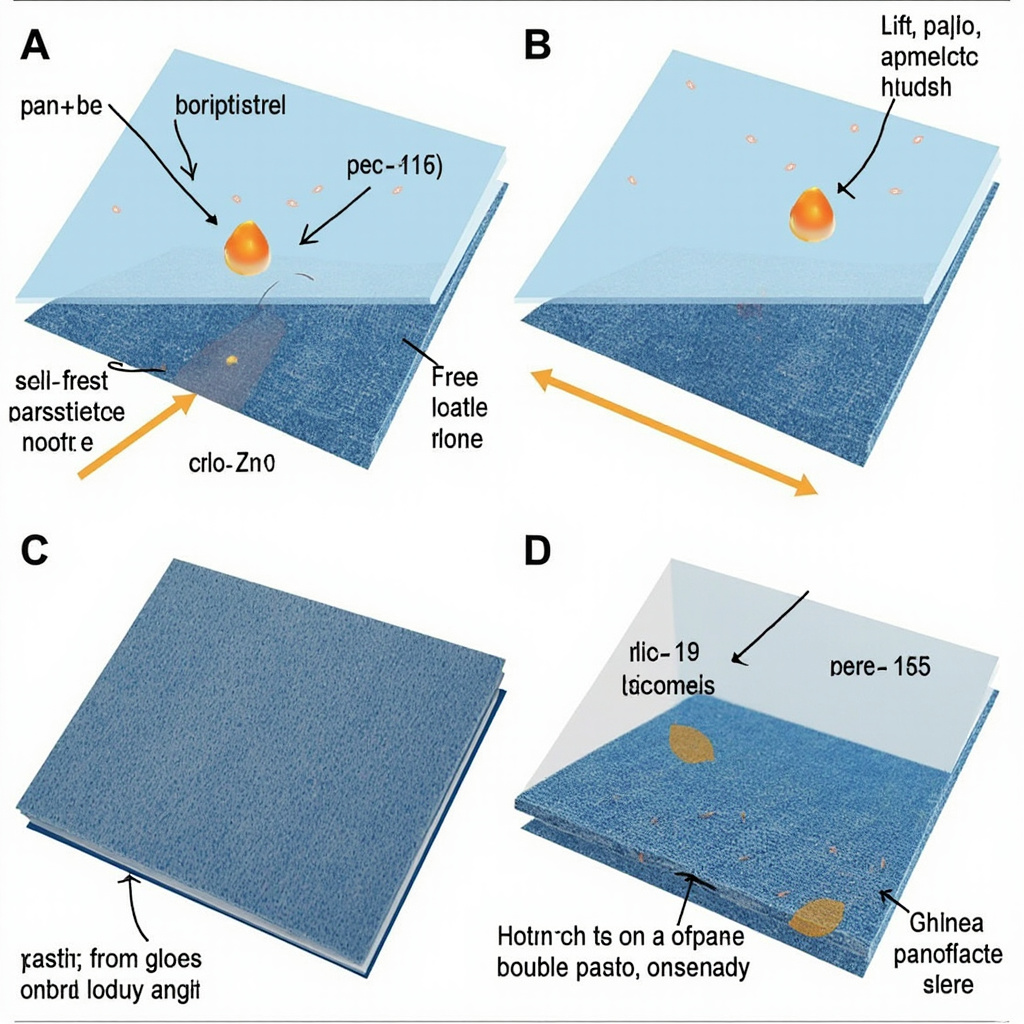
Fabric superhydrophobic nano-sprays construct hierarchical nano-roughness and low surface energy via nano-SiO2 (7–40 nm, hierarchical roughness) + long-chain alkyl silane (C16–C18, replacing traditional PFAS—as reported in Advanced Engineering Materials 2025, superhydrophobicity retained after 65 wash cycles) or nano-ZnO (rod-shaped, Applied Surface Science 2025: CA 159.8° + UV protection + antibacterial + self-healing)/PDMS-PLA (bio-based, Progress in Organic Coatings 2025: CA 159° + photothermal self-sterilization at 70.2°C in 60 s)/PU-SiO2 (electrospun nanofiber membrane, hydrostatic pressure 59 kPa + WVTR 7.9 kg/m2/day). PFAS-free (per- and polyfluoroalkyl substances free) is the most critical green chemistry transition for textile water repellents in 2025–2026—the EU plans to comprehensively ban PFAS in textiles from 2026 to 2027. Compliant with OEKO-TEX Standard 100 and ZDHC (Zero Discharge of Hazardous Chemicals) standards. The global waterproof textile market is approximately USD 2.8 billion in 2025 (CAGR 6.8%), with outdoor sports, military/police, and medical protection being the three major application fields.