Introduction: Predicting 25 Years in 3000 Hours — The Engineering Value of QUV Accelerated Weathering
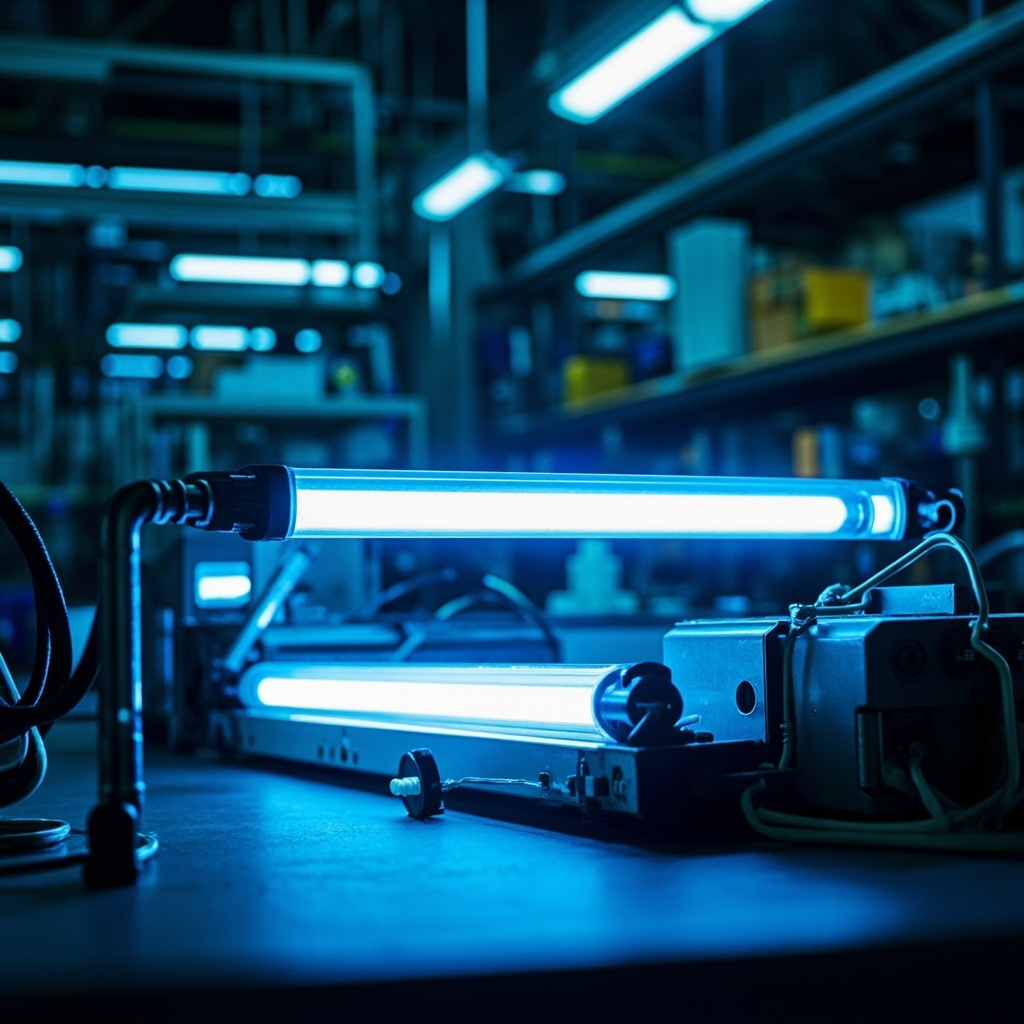
The super weather resistance (over 25 years outdoors) of fluorocarbon topcoat is its core value proposition, but it is obviously impossible to wait 25 years to verify this performance before the product leaves the factory. The QUV ultraviolet weathering tester uses UVA-340 lamps to simulate the short-wave ultraviolet portion (290-400nm) of sunlight, accelerating the simulation of 10-15 years of outdoor photo-aging effects within 3000 hours (about 4 months), providing a quantifiable rapid assessment tool for the weather resistance quality of fluorocarbon topcoat.
I. Comparison of Three Types of Accelerated Weathering Lamps
| Lamp Type | Spectral Range (nm) | Peak Wavelength (nm) | Simulated Scenario | Acceleration Factor (vs Outdoor) | Suitable Coating Types |
|---|---|---|---|---|---|
| UVA-340 | 295-400 | 340 | Short-wave UV in sunlight (best sunlight simulation) | 5-10x | Outdoor weather-resistant topcoats (recommended) |
| UVA-351 | 310-400 | 351 | Daylight UV through window glass | 3-6x | Interior coatings, automotive interiors |
| UVB-313 | 270-380 | 313 | Extreme UV (not true sunlight simulation) | 15-30x (but distorted) | Only for formulation screening comparison |
| Xenon Arc | 295-800 (full spectrum) | — | Most complete sunlight simulation (UV + visible + infrared) | 3-8x | High-end weather-resistant topcoat certification (high cost) |
II. Comparison of Curing Process Parameters of PUA with Different Functionalities
| Parameter | Difunctional PUA | Trifunctional PUA | Hexafunctional PUA |
|---|---|---|---|
| Recommended photoinitiator (%) | 3-4 | 4-5 | 5-6 |
| UV energy (mJ/cm²) | 500-800 | 800-1200 | 1200-1500 |
| Curing speed (m/min) | 10-15 | 8-12 | 5-8 |
| Shrinkage (%) | 3-5 | 5-8 | 12-18 |
| Suitable wood | Flexible veneer / facing | Furniture panel (recommended) | Flooring / high wear resistance |
II. Correlation Model between Gloss Retention and Outdoor Weathering
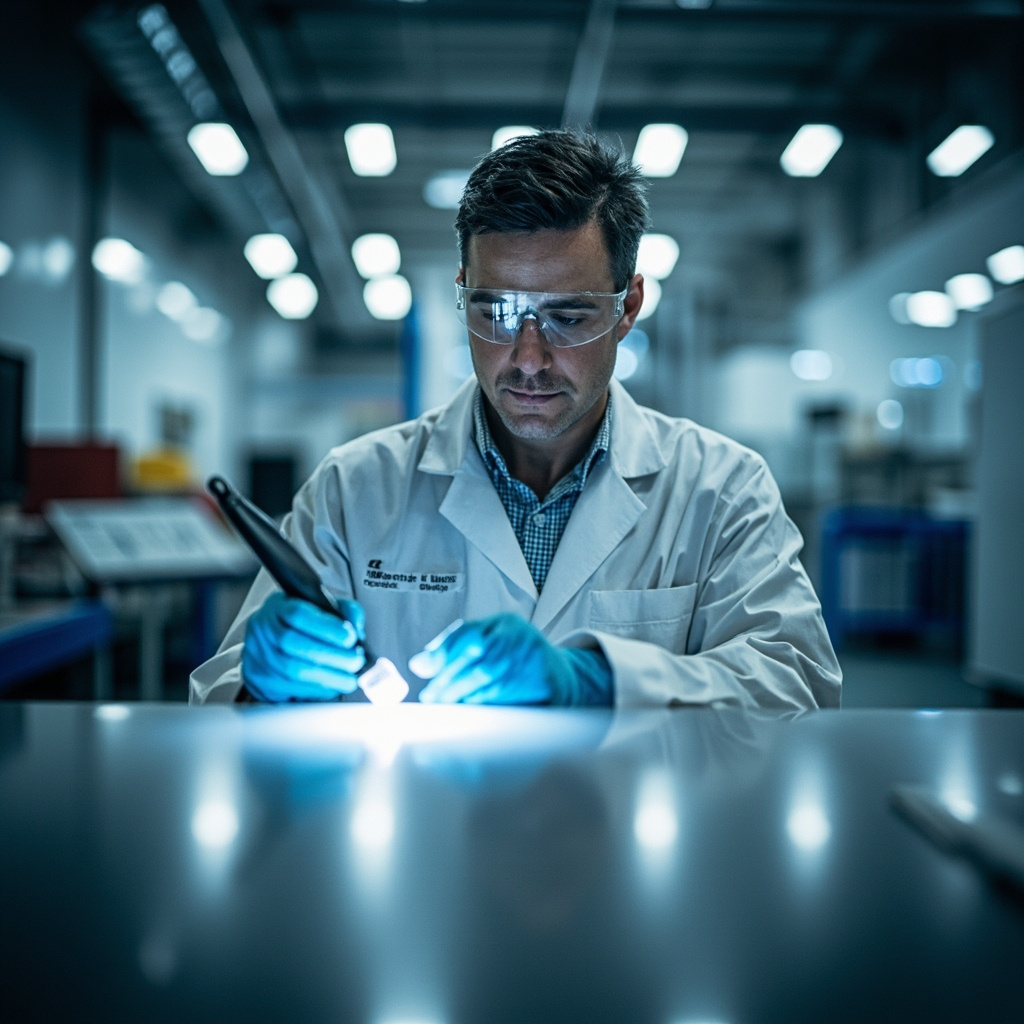
Based on long-term data accumulation, there is a good linear correlation (r²>0.85) between the gloss retention of Q-UV 3000h and the 5-year gloss retention outdoors (Florida, south-facing 45°). Empirical formula: Outdoor 5-year gloss retention ≈ QUV 3000h gloss retention × (0.8~1.0). That is: when QUV 3000h gloss retention >80%, the outdoor Florida 5-year gloss retention is expected to be 64%-80%. For FEVE fluorocarbon topcoat (2nd generation FEVE), the gloss retention after QUV 3000h usually remains >85% (equivalent to 20 years outdoors), far superior to polyurethane topcoat (gloss retention after QUV 3000h is 50%-70%, equivalent to 10-12 years outdoors).
Key process parameters for QUV testing: UVA-340 lamp irradiance 0.76±0.02 W/m² at 340 nm (calibrate periodically with a calibrated radiometer), black panel temperature 60±3°C (during pure UV exposure / non-condensation phase), test cycle 4 h UV/60°C + 4 h condensation/50°C. Every 500 h, pause the test, remove the panels to measure 60° gloss (GU value) and record gloss retention % = GU_after aging / GU_initial × 100%.
FAQ
Q1: Can 3000h of QUV testing completely replace outdoor weathering testing?It cannot completely replace it. QUV simulates the main effect of photo-aging, but cannot simulate the real multi-factor coupling outdoors—rain washing (physical abrasion), large temperature fluctuations (thermal fatigue), atmospheric pollutants (chemical corrosion from SO₂/NOₓ), microorganisms (mold/algae), etc. QUV is a necessary accelerated screening tool, but final performance verification still requires outdoor weathering data (at least 2-3 years).
Q2: When should UVB-313 be used instead of UVA-340?Only for: (1) Extremely rapid formulation screening—the short-wave UV (<295nm) of UVB-313 is rarely present in natural terrestrial sunlight, producing an "unnatural" aging pattern (resin yellows faster, degradation path differs). Results from UVB-313 cannot be used to predict outdoor performance! They can only serve as relative comparison (UV resistance ranking of Formulation A vs Formulation B).
Q3: How to choose the gloss measurement angle (20°/60°/85°)?High-gloss coatings (initial 60° GU > 70) use the 20° angle; medium gloss (GU 10-70) uses the 60° angle; low gloss (GU < 10) uses the 85° angle. For gloss retention testing, the 60° angle is recommended as the standard angle (covering the widest gloss range). The measurement angle must be stated in the report.
Q4: How is coating yellowing (Δb* value) quantified in QUV testing?Use a spectrophotometer to measure the b* value in the CIELAB color space (positive = yellow, negative = blue): Δb* = b*_aged – b*_initial. Δb*>3 indicates noticeable yellowing perceptible to the human eye, and Δb*>6 indicates severe yellowing. Non-yellowing aliphatic FEVE coatings typically have Δb*<2 after 3000h of QUV, while aromatic PU coatings can reach Δb* 10-20.
Q5: How is lamp aging compensated for during testing?After approximately 1500h of use, the irradiance of UVA-340 lamps begins to decline (about 10%-15%). Modern QUV chambers are equipped with an automatic irradiance compensation system—it monitors lamp irradiance in real time and automatically increases lamp power to maintain the set irradiance of 0.76W/m². When lamps have been used for over 4000h and even maximum power cannot compensate, the full set of lamps should be replaced (approximately every 6-8 months).
Q6: Why do some coatings show high gloss retention after QUV but severe chalking outdoors?Possible reasons: (1) QUV uses UVA-340 lamps lacking long-wave UVA and visible light (380-500nm); certain pigments/resins are sensitive to this wavelength range but QUV does not detect it; (2) Outdoor rain washing effect — the surface chalking layer produced by photo-degradation remains in place in QUV without water contact, protecting the underlying resin, while outdoors it is washed away by rain, exposing fresh underlying resin and accelerating chalking. It is recommended to use QUV + condensation water cycle testing, but the washing effect of condensation water is still weaker than actual rainfall.
Q7: What is the difference in QUV performance between FEVE fluorocarbon topcoat and PVDF fluorocarbon topcoat?FEVE (fluoroolefin-vinyl ether/ester copolymer) and PVDF (polyvinylidene fluoride) show very similar QUV performance (both >80%@3000h), but their failure modes differ — PVDF requires baking for film formation (230-250°C), which limits it to factory-prefinished coil coating; FEVE can cure at room temperature and is suitable for on-site construction of steel structures and large-area coating. In QUV testing, the gloss retention decay curves of the two are almost identical.
Q8: How to establish an internal accelerated-outdoor weathering database for an enterprise?Key steps: (1) Place 2-3 sets of outdoor exposure racks (south-facing 45°) at different locations (Florida/Hainan Wanning/Lhasa, Tibet) for each topcoat system; (2) Test four indicators annually: gloss retention + color difference + chalking + adhesion; (3) Plot QUV data (e.g., gloss retention at 1000/2000/3000h) against outdoor data (gloss retention at 1/2/3/5 years) as a scatter plot and perform linear regression; (4) When r²>0.85, the regression equation can be used to predict the outdoor performance of similar formulations. The construction period is about 3-5 years and represents a core competitive asset for coating enterprises.
Q9: How to rate the "chalking" that appears on the coating after QUV testing?According to ISO 4628-6: after pressing standard tape onto the coating surface and peeling it off, compare the amount of powder adhered to the tape with the standard chart (grades 0-5). Grade 0 = no chalking, Grade 5 = severe chalking. Fluorocarbon topcoat typically reaches grade 0-1 after 3000h QUV, while ordinary acrylic PU topcoat may reach grade 3-4.
Q10: Should the irradiance be set to 0.76 or 1.35 W/m²?0.76 W/m² is the irradiance of "standard sunlight" (equivalent to the irradiance at 340 nm at noon in summer). 1.35 W/m² (high irradiance mode) has a higher acceleration factor (about 1.5-2 times) but may produce non-linear aging effects (coating overheating/excessive oxidation). It is recommended to use the 0.76 W/m² standard mode for daily quality control to obtain data with the best correlation to outdoor conditions. For R&D rapid screening, 1.35 W/m² can be used, but the results should be noted as "high irradiance mode".
Related Reading
Summary
QUV UVA-340 accelerated weathering test (0.76 W/m²/3000 h) is a core quality control tool for predicting the outdoor weather resistance of fluorocarbon topcoats—a 3000 h gloss retention >80% corresponds to a 5-year Florida outdoor gloss retention of 64%–80% or actual service life >20 years. Establishing an in-house QUV-to-outdoor weathering correlation database (r² > 0.85) is a long-term project for achieving accurate weather-resistant service life prediction. Kexin New Materials' fluorocarbon topcoat products meet the ex-factory quality control standard of QUV 3000 h gloss retention >85% for every batch.