Introduction: ±0.5°C—the temperature red line that determines curing agent quality
Polyurethane curing agent is the core component of two-component coatings.A temperature deviation exceeding ±0.5°C may lead to excessive free monomers, loss of control over molecular weight distribution, and viscosity deviating from specifications.The reaction rate increases by 2–3 times for every 10°C rise (Arrhenius equation).
I. Triple Effects of Temperature on Curing Agents
Free monomer content: At high temperatures, reaction selectivity decreases and promotes the reverse reaction of already-reacted oligomers, releasing free monomers. Industrial synthesis temperatures of 60-80°C (HDI) or 50-65°C (TDI) can control free monomer ≤0.5% (GB 18581-2020). Molecular weight distribution: Precise temperature control (±0.5°C) ensures PDI ≤1.5 and stable viscosity between batches. Temperature fluctuations above ±3°C produce a "bimodal distribution".
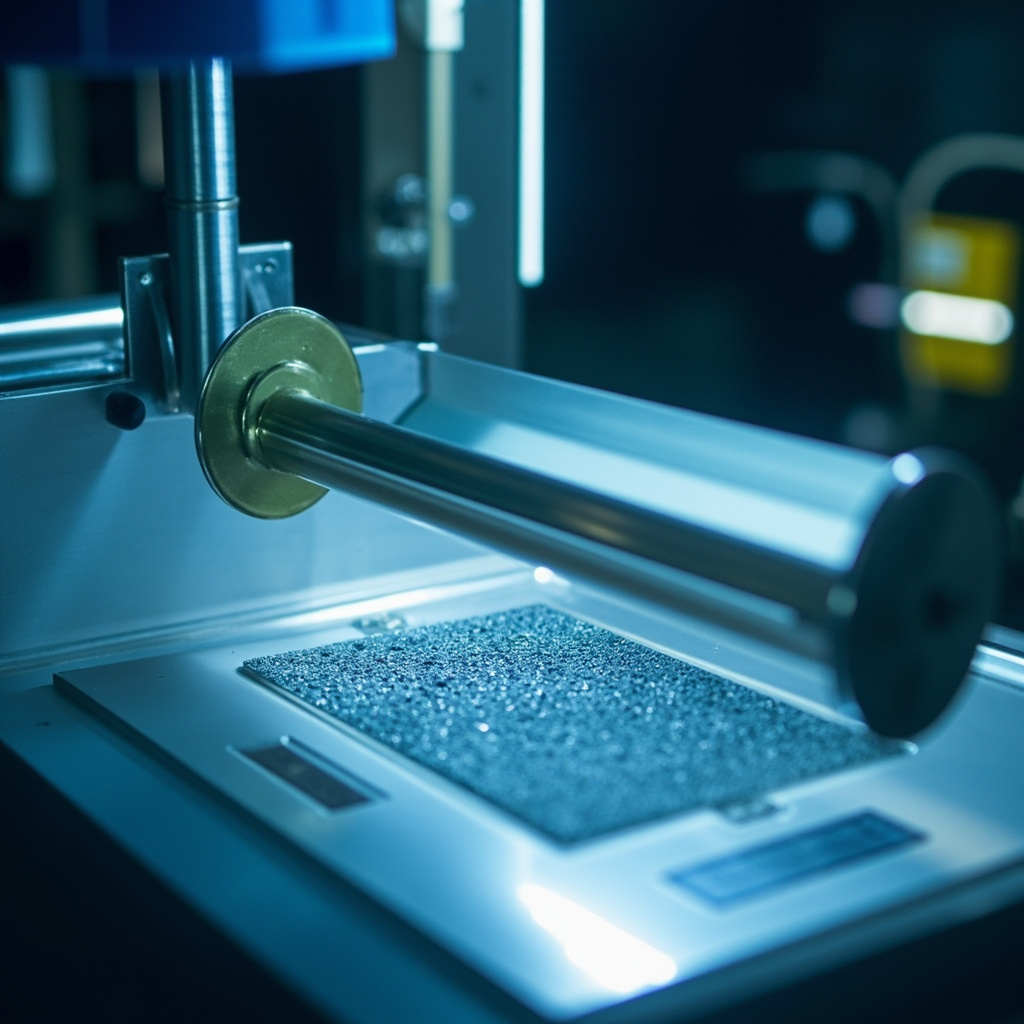
II. Technical Configuration of the Precision Temperature Control System
| Component | Parameter | Accuracy | Function |
|---|---|---|---|
| Jacket heat transfer oil | 50-200°C | ±1°C | Main heating/cooling buffer |
| Coil cooling water | 5-25°C | ±0.5°C (PID) | Handle exothermic peak |
| Multi-point thermocouple | Type K (-50~+300°C) | ±0.1°C | Upper/middle/lower layer monitoring |
| PLC temperature control | PID + feedforward control | ±0.3°C dynamic | Heating/cooling coordination |
| Online FTIR | -NCO peak (2270cm⁻¹) | — | Reaction progress feedback |
III. Five-stage Temperature Control Profile for HDI Trimer
(1)Preheat 50°C→(2)Induction 50-60°C→(3)Main reaction 60-75°C (most critical! Temperature rise ≤1°C/min, prevent exceeding 80°C)→(4)Hold at 75°C for 2-4h→(5)Cool down to terminate <40°C.
IV. Consequences of Temperature Control Failure
| Failure Type | Temperature | Consequence | Detection Method |
|---|---|---|---|
| Over-temperature thermal runaway | >90°C | Free HDI >1.0%, darkened color | NCO titration + colorimetry |
| Insufficient temperature | <50°C | Conversion rate <90%, storage thickening | NCO + viscosity monitoring |
| Large fluctuation | ±5°C | PDI >2.0 bimodal distribution | GPC detection |
| Too fast heating | — | Trimer/pentamer imbalance | GPC peak area ratio |
Technical Deepening: Engineering Safety and Scale-up Effects of Reactor Temperature Control
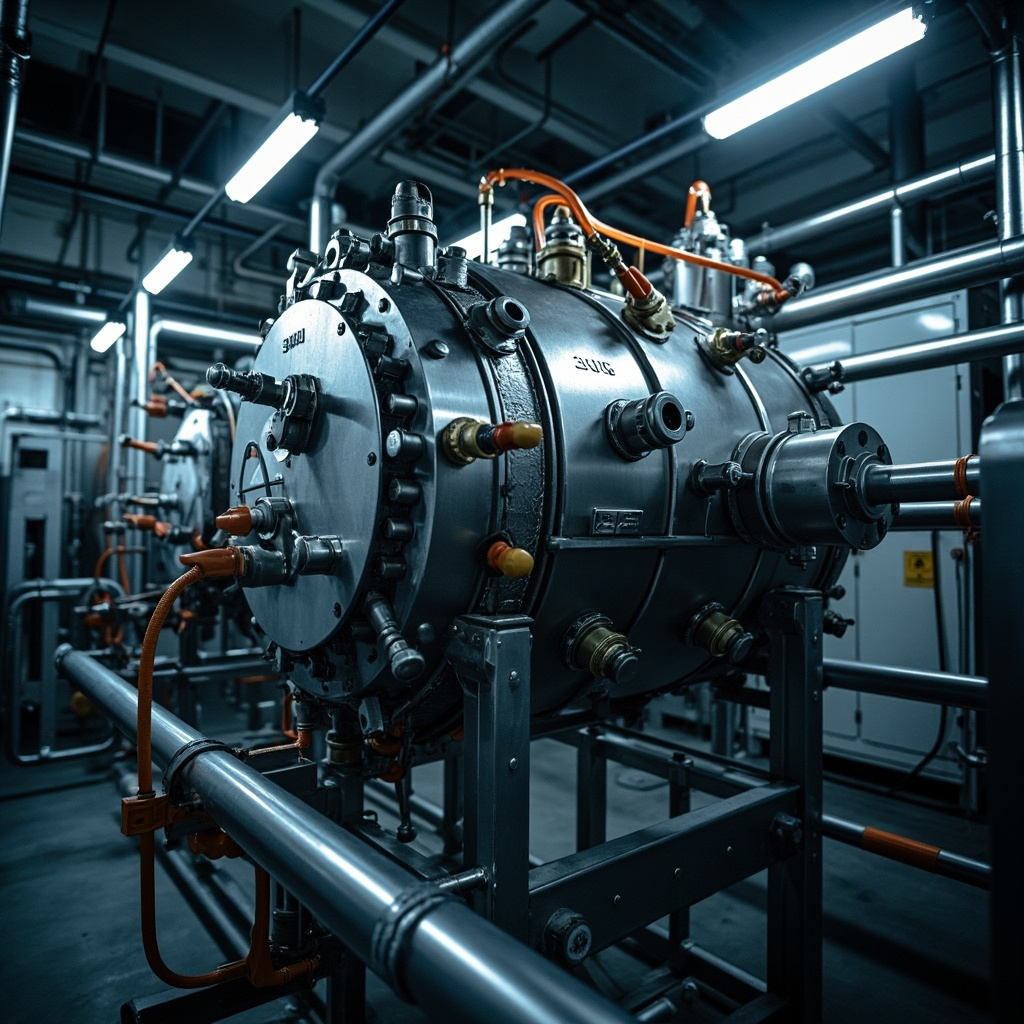
The "temperature runaway" of a reactor is the most dangerous accident in chemical production—uncontrolled reaction temperature → exponential acceleration of reaction rate (Arrhenius law) → more heat generated → further temperature rise → forming a positive feedback loop. Three layers of protection to prevent temperature runaway—(1) PLC temperature control + full cooling water open (automatic); (2) Safety valve/rupture disc (mechanical protection); (3) Emergency terminator injection (benzoyl chloride/chemical termination).
Engineering challenges of the "scale-up effect" in reactors — the heat transfer capacity of a 5000 L reactor is only 1/10 to 1/20 of that of a 100 mL laboratory flask — an exotherm peak easily controlled in the lab may evolve into a thermal runaway in the production reactor. Scale-up strategy — reduce the heating rate (0.5°C/min in production vs 2°C/min in the lab) + segmented feeding (added in 3–5 batches) + use a reaction calorimeter (RC1) to pre-measure the heat transfer demand of the production-scale reactor.
Industry Case: The Million-Yuan Cost of a Runaway Reaction Incident in Curing Agent Synthesis
A curing agent plant—TDI adduct synthesis—operator increased the heating rate from the standard 1°C/min to 3°C/min—temperature surged to >110°C—safety valve lifted—reactants ejected (containing TDI vapor + solvent)—workshop TDI concentration instantly exceeded the limit—workers emergency evacuated—entire batch >2000kg scrapped + safety valve replaced + workshop line stopped for 3 days—total loss >1 million RMB—lesson: "Reactor temperature control parameters are a safety red line—must never be compressed."
FAQ
Q1: Why is stepwise temperature control necessary?Different stages have different kinetics—induction requires low temperature, the main reaction requires gradual heating, and holding requires constant temperature. A single constant temperature cannot balance selectivity and conversion rate.
Q2: What is the difference in temperature control between HDI and TDI synthesis?HDI trimer has a higher temperature (60-80°C), and the two -NCO groups have the same activity, requiring high temperature to initiate. TDI adduct has a lower temperature (40-65°C), and the two -NCO groups have a large activity difference, making low temperature favorable for selectivity.
Q3: Online monitoring methods?NCO titration (dibutylamine method) is the most classic; online FTIR (2270 cm⁻¹); online viscometer; refractive index method.
Q4: Insufficient cooling capacity?Lower cooling water temperature (chiller 5-10°C), reduce feed temperature, adopt semi-batch dropwise addition, and increase jacket area.
Q5: What are the temperature control differences between 100L and 5000L reactors?The surface-area-to-volume ratio of a 5000L reactor is about 1/3 to 1/5 that of a 100L one, resulting in poorer heat dissipation. Countermeasures: replace steam with heat transfer oil, add internal coils, charge materials in stages, and use a conservative heating rate (0.5°C/min for production).
Q6: Importance of temperature control during induction period?Optimal induction temperature 50-55°C, induction period 30-60 min. Too low leads to insufficient activity (>2h), too high causes violent reaction (<10min).
Q7: How to prevent storage thickening?Conversion rate >95%, add stabilizers (benzoyl chloride/phosphoric acid), seal under nitrogen, store at 5-30°C.
Q8: Emergency response for temperature control failure?Stop heating → Fully open cooling water → Emergency dilution (30%-50% solvent) → If out of control, add terminator (benzoyl chloride).
Q9: PT100 vs K-type thermocouple?PT100 accuracy ±0.1°C (suitable for 300°C).
Q10: Definition of synthesis yield? Yield = (actual effective-NCO / theoretical-NCO) × 100%. HDI trimer >85%, excellent >90%. Each 1% increase in yield saves 100-200 RMB/ton.
FAQ: In-Depth Technical Q&A Supplement
Q11: How do the differences in domestic and international standards for this technology affect product export?Domestic standards (GB) differ from ISO/ASTM standards in test methods and acceptance criteria. For example, salt spray testing—GB/T 1771 (equivalent to ISO 7253) has test conditions basically consistent with ASTM B117—but the rating systems (ISO 4628 vs ASTM D610/D714) differ—when providing test reports for exported products, the corresponding international standards must be indicated simultaneously, otherwise overseas customers cannot make a comparative assessment. It is recommended to list both GB and ISO/ASTM dual-standard indicators in the TDS (Technical Data Sheet) of exported products—to enhance the trust of international customers.
Q12: How to verify the long-term service performance of this technology in actual engineering?Laboratory accelerated testing (salt spray/QUV/cyclic corrosion) provides comparative data—but cannot fully replace actual outdoor exposure testing. Recommendations—(1) Set up outdoor exposure racks at both the factory location and typical customer locations (e.g., coastal C5-M/industrial C4)—conduct annual inspections of coating appearance/adhesion/film thickness changes—establish a company-owned outdoor service database; (2) Collaborate with universities/research institutes—combine enterprise data with academic research—enhance data credibility.
Q13: What should SMEs pay attention to when purchasing related raw materials/equipment?(1) The batch stability of suppliers is more important than unit price—it is recommended to require suppliers to provide COA data for >10 batches—and evaluate batch variation (CpK); (2) For equipment procurement, visit peers who have used the equipment for >2 years to understand the long-term reliability and after-sales service quality of the equipment—rather than relying only on the demonstration data from the equipment supplier; (3) For key raw materials (resin/curing agent)—maintain at least 2 qualified suppliers to guard against single-supply risk.
Q14: What is the current state and trend of digital transformation in this field?The digital transformation of the coatings industry is evolving from “point-based applications” (automation of individual equipment/processes) to ”system integration” (full-chain ERP+MES+PMS). Currently, the digitalization of small and medium-sized coatings factories has the ”highest ROI investment”: automatic batching systems + digitalization of quality control data — payback period of 1-3 years — which is the prioritized recommended direction. Future trend — AI + sensors enabling real-time optimization of process parameters — further reducing quality fluctuations between batches.
Q15: How can a newly entered coating engineer quickly master this technology?(1)Combine theory and practiceDo not only read literature without touching actual production—nor rely solely on experience without studying theory;(2)Build a “failure case archive”Every customer complaint/production anomaly/coating failure—record the root cause and resolution process—this is the most effective learning material;(3)Learn from suppliersTechnical personnel from resin/additive/pigment suppliers are carriers of "tacit knowledge" in this field—communicate more with them about solutions to specific problems.
Related Reading
Summary
Curing agent synthesis is a precision chemical reaction engineering process extremely sensitive to temperature. Kexin New Materials' curing agent synthesis workshop is equipped with a PID + feedforward temperature control system to achieve ±0.3°C dynamic temperature control, ensuring industry-leading free monomer content, molecular weight distribution, and viscosity in every batch.