Alkyd anti-rust primer is the most "down-to-earth" primer in industrial painting: single-component, ready to use straight from the can, suitable for brush or roller application, affordable, and user-friendly for applicators. In mild to moderate corrosive environments (ISO 9223 C2–C3, such as rural areas, ordinary urban steel structures, mechanical equipment, pipe racks), it remains a pragmatic choice for a large number of projects. But alkyd also has obvious shortcomings—weak water and alkali resistance, slow drying, and a "lifting" incompatibility with polyurethane topcoats. Used correctly it is economical; used wrongly it leads to rust return and peeling. Many on-site failures are not due to poor coating quality per se, but to forcing alkyd, which should be used in C2–C3, into harsh environments above C4, or ignoring its chemical incompatibility with strong-solvent topcoats. Understanding its film-forming mechanism and applicable boundaries is the prerequisite for turning "cheap" into "cost-effective".
As a technical supplier of industrial protective coatings, Kexin New Materials (kexinMaterials) often adopts alkyd anti-rust primer as a cost-effective solution in mild protection scenarios, but will clearly define its environmental boundaries and compatibility taboos. This article clarifies its mechanism, formulation, application and taboos, and contrasts it with the anti-rust coating system compatibility design to understand its positioning within the system, while combining the steel rusting mechanism and classification to explain why alkyd falls short in humid environments.
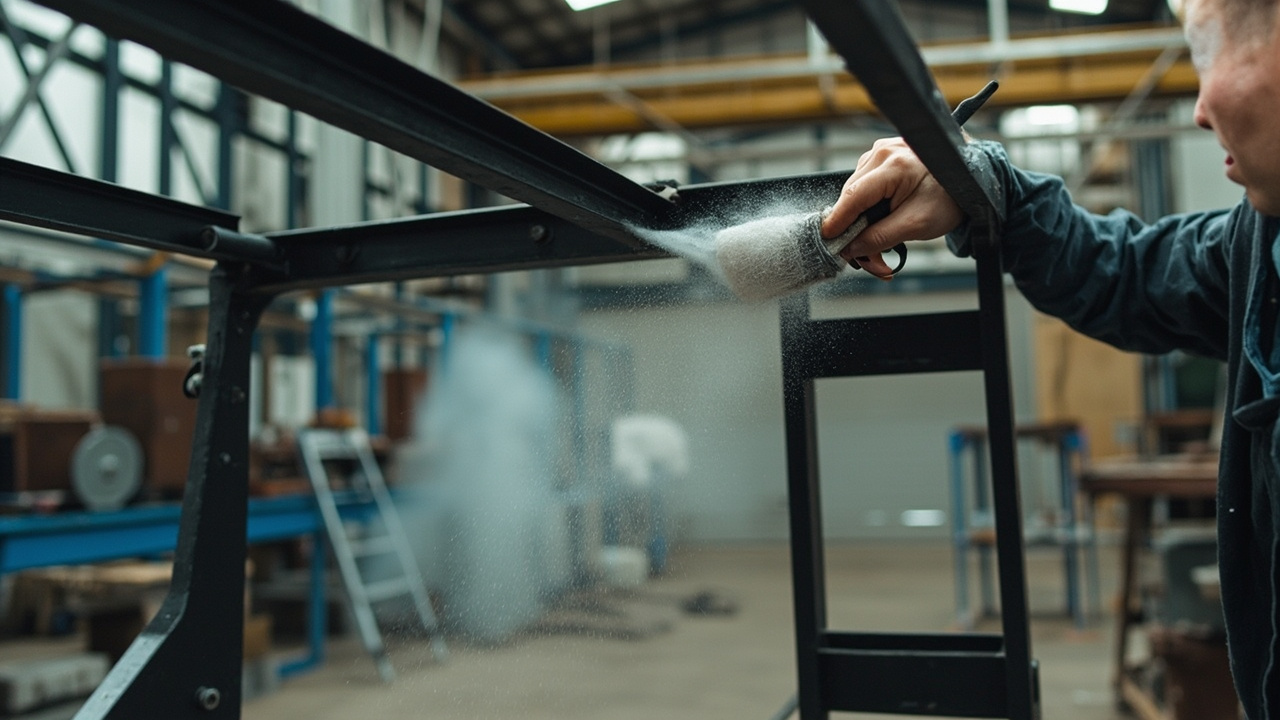
I. What is alkyd resin: from edible oil to coating
Alkyd resin is a class of polyester condensed from polyhydric alcohol (e.g., glycerol) + polybasic acid (e.g., phthalic anhydride) + fatty acid. Its name comes from the combination of "alcohol" (Alcohol, providing polyhydric alcohol) and "acid" (Acid, providing polybasic acid), and it belongs to modified polyester resin. The fatty acid used determines the properties:
- Drying-oil fatty acids (linseed oil, tung oil, dehydrated castor oil) → can undergo oxidative crosslinking drying (air-dry), used in air-dry alkyd paint;
- Semi-drying-oil fatty acids (soybean oil, sunflower oil) → dry slower, need driers or blending with other resins;
- Non-drying-oil fatty acids (coconut oil, castor oil) → cannot oxidize and film by themselves, need baking or crosslinking cure with amino resin, polyurethane, etc., mostly used in amino baking paint, hammer-tone paint.
Anti-rust alkyd primer uses oxidative-drying alkyd, relying on the unsaturated double bonds in fatty acids to undergo auto-oxidation with oxygen in the air and free-radical crosslinking to form a film, without needing external curing agent—this is the fundamental reason for its "single-component, brush straight from the can" nature. From a chemical structure perspective, the alkyd resin main chain is a polyester backbone with fatty acid segments attached to the side chains; the double bonds in unsaturated fatty acid segments (especially conjugated double bonds, such as eleostearic acid in tung oil) form peroxy radicals under oxygen and metal soap catalysis, then undergo free-radical polymerization crosslinking, linking the originally linear resin chains into a three-dimensional network. This mechanism determines its "slow but continuous" drying, and also its dependence on driers.
It should be added that alkyd resin can also be classified by oil length (proportion of fatty acid content in total resin mass) into short-oil (<40%), medium-oil (40%–60%), long-oil (>60%). Short-oil alkyd has high hardness, fast drying, average weather resistance, mostly used indoors; long-oil alkyd has good flexibility, excellent weather resistance, slow drying, mostly used in outdoor topcoats; anti-rust primers mostly use medium-oil or medium-long-oil to balance hardness, adhesion and drying. Alkyds of different oil lengths differ in solubility, application solids, and compatibility with topcoats, so selection cannot just look at the word "alkyd".
II. Drying mechanism: oxidative crosslinking and driers
The "drying" of alkyd paint is chemical oxidation, not physical evaporation. The process can be broken down into several consecutive steps:
Unsaturated fatty acid double bond → oxygen absorption to form hydroperoxide (ROOH) → decomposition to produce alkoxy radical / hydroxyl radical → coupling and chain transfer between radicals → crosslinking into three-dimensional network
To accelerate and regulate this reaction, the formulation must add driers (metal soaps):
- Cobalt (Co): surface-dry promoter, mainly drives surface oxidative polymerization, letting the film quickly become "touch-dry";
- Manganese (Mn): through-dry promoter, deeply promotes inner-layer crosslinking, but used alone easily darkens;
- Lead (Pb): traditional high-efficiency drier, restricted due to toxicity, now mostly replaced by calcium, zirconium, cerium, rare earth, etc.;
- Zinc/Calcium: auxiliary driers, prevent surface wrinkling and settling, improve storage stability.
Driers need careful balancing—too much cobalt easily causes "surface dry but not through", surface skinning and wrinkling; too much manganese darkens the film and reduces weather resistance; too little overall dries extremely slowly and easily picks up dust. This is also the technical root of alkyd paint being "soft early, not thoroughly dry". Modern lead-free formulations mostly use cobalt–zirconium–calcium composites, with rare-earth additives, to balance drying rate, hardness and storage stability.
Temperature and humidity greatly affect oxidative drying. Alkyd crosslinks by oxygen absorption; the ideal application temperature range is 5–35℃ with relative humidity ≤ 85%; when temperature is below 10℃ and humidity above 85%, oxygen dissolution and free-radical reaction rates drop sharply, the film stays tacky for long, easily picks up dust, or even fails to cure thoroughly. In addition, if the alkyd film is wetted by rain or condensation after surface dry, the incompletely crosslinked surface layer will be "re-dissolved" or turn white, so it must be protected from rain and dew during the curing period (usually over 7 days).
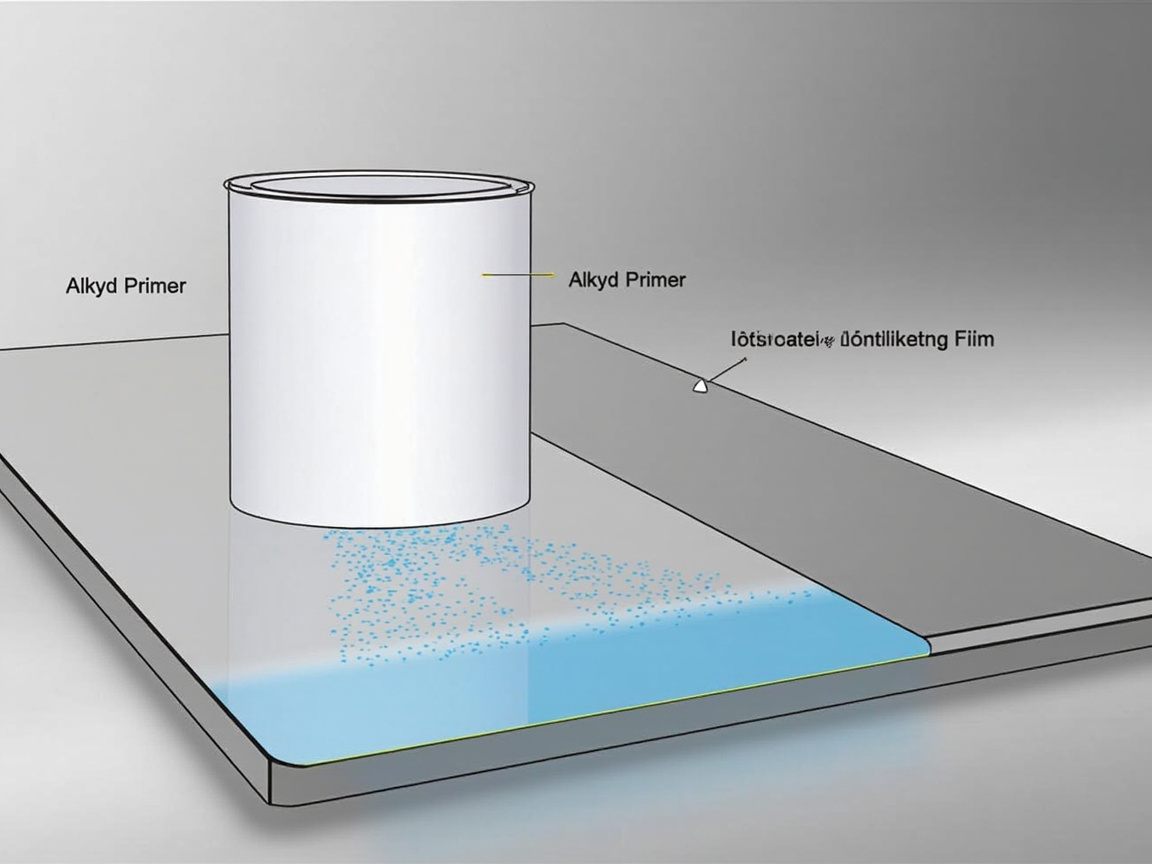
III. Anti-rust pigments and formulation
The anti-rust effect of alkyd primer relies on the synergy of "resin barrier + inhibitive pigment + physical filling". The film-forming substance (alkyd resin) itself forms a continuous film, blocking water, oxygen and ions; the anti-rust pigment undergoes chemical or physical action at the interface, inhibiting anodic dissolution or extending the medium path. Common anti-rust pigments are as follows:
| Pigment | Mechanism of action | Application and notes |
|---|---|---|
| Red lead (Pb₃O₄) | Strong anodic passivation, formation of lead soap sealing | Toxic, restricted, gradually replaced, and risks promoting corrosion on light metals such as aluminum |
| Zinc phosphate | Non-toxic passivation, forms iron phosphate complex film with metal | Mainstream eco-friendly choice, often compounded with aluminum tripolyphosphate |
| Aluminum tripolyphosphate | Passivation + shielding, dissociates phosphate root for chelation | Replaces chromate systems, white, easy to tint |
| Iron oxide red (Fe₂O₃) | Physical shielding, cheap extender pigment | Often used as main filler, improves shielding |
| Micaceous iron oxide | Flake shielding, extends medium path | Improves anti-permeation, UV resistance, intercoat |
| Zinc yellow (zinc chromate) | Passivation (chromate root) | Contains hexavalent chromium, restricted, increasingly phased out |
| Molybdate/tungstate | Environmentally friendly corrosion inhibition, synergistic passivation | New heavy-metal-free alternative, higher cost |
Modern alkyd anti-rust primers mostly use a composite of "iron oxide red + zinc phosphate + aluminum tripolyphosphate + flake filler (mica powder / micaceous iron oxide)", eliminating restricted items such as red lead and zinc yellow, complying with the limits on heavy metals such as lead and chromium in GB 30981-2020. The formulation also adds anti-settling agents (fumed silica, bentonite, hydrogenated castor oil) to prevent pigment settling, rheological aids to improve brushability without sagging, and small amounts of antioxidant / UV absorber to mitigate yellowing. It is worth noting that the anti-rust performance of alkyd primer highly depends on the relationship between pigment volume concentration (PVC) and critical pigment volume concentration (CPVC): when PVC is close to but does not exceed CPVC, shielding is densest; too high makes the film porous, reduces shielding, and easily causes rust return.
IV. Applicable boundaries: C2–C3 is the main battlefield
Alkyd primer has weak water, alkali and chemical resistance, so its applicable boundary is very clear. The fundamental reasons are three: first, alkyd resin contains ester bonds, which are prone to hydrolytic chain scission under long-term action of acid, alkali and water, causing chalking, gloss loss and reduced adhesion; second, its crosslink density is lower than thermosetting systems such as epoxy and polyurethane, with higher water-oxygen transmission rate; third, alkyd film easily molds and blisters in continuously humid environments. Therefore:
Applicable scenarios:
- Rural/urban atmosphere (C2–C3), without continuous high humidity and salt spray;
- Indoor mechanical equipment, pipe racks, ordinary plant steel structures, non-harsh sections of tank exteriors;
- Maintenance repair, non-critical structures, areas that can be periodically recoated;
- Projects requiring low cost, easy application, brush or roller feasible, not extremely sensitive to schedule.
Inapplicable scenarios:
- Marine/coastal (C5-M), heavy industrial pollution (above C4) and other high-corrosion environments;
- Areas with continuous high humidity, immersion, frequent wet-dry alternation;
- Conditions with direct contact of acid, alkali, solvent, oil;
- Heavy anti-corrosion structures requiring high durability (ISO 12944 high durability ≥15 years).
In environments above C4, it should be upgraded to epoxy / zinc-rich systems (see water-based epoxy zinc-rich primer). A common engineering misjudgment is equating "indoor" with "low corrosion". In fact, indoor swimming pools, food factory cooking workshops, and damp sections of underground garages have non-low actual corrosion, and using alkyd alone will still rust early. Judgment must use the ISO 9223 environmental classification, not the intuition of "indoor/outdoor".
V. The "lifting" taboo with polyurethane topcoat
Alkyd primer has a well-known minefield: it cannot be directly overcoated with polyurethane (especially 2K polyurethane or nitro and acrylic topcoats containing strong solvents), otherwise the strong solvent will cause "lifting" — the topcoat solvent dissolves the incompletely cross-linked alkyd layer, leading to wrinkling, lifting, peeling, and even large-area delamination.
The reasons can be summarized into two points. First, alkyd cures by oxidative cross-linking, which takes 7 days or even longer to fully cure, and the alkyd film always retains a certain amount of soluble uncross-linked oligomers and free fatty acid segments; second, polyurethane topcoat (especially solvent-based 2K) contains strong solvents (esters, ketones, aromatics) that have strong dissolving power on alkyd. When the topcoat solvent penetrates the alkyd layer, the semi-dried alkyd is re-"activated", swells, and entangles with the upper layer, manifesting as lifting, wrinkling, and interlayer separation after drying. There are four countermeasures:
- Allow the alkyd to fully cure (generally more than 7 days, extended in low temperature) before applying topcoat;
- Or first apply an isolation layer (such as epoxy intermediate coat, chlorinated rubber paint, epoxy micaceous iron oxide) to physically separate the alkyd from the strong-solvent topcoat;
- Or select a topcoat with weak solvent and same system, such as alkyd topcoat, phenolic topcoat for compatibility;
- For greater safety: directly switch the primer to epoxy or epoxy ester system, avoiding the taboo from the source.
For the trade-off in selection between alkyd and polyurethane, you can read further at Alkyd vs Polyurethane Paint Comparison. It must be emphasized that not all polyurethane topcoats are absolutely incompatible with alkyd — water-based polyurethane and weak-solvent polyurethane can sometimes be used on fully cured alkyd, but a small-scale overcoating test must be done to confirm, and one cannot gamble based on experience. The safest practice in engineering is "same-system compatibility" or "epoxy primer + polyurethane topcoat", completely bypassing the alkyd–polyurethane taboo.
VI. Construction key points
The high construction tolerance of alkyd primer is its biggest selling point, but several disciplines must still be observed:
- Surface treatment: For light maintenance, St2/St3 (manual and power tool cleaning) can be used; for higher requirements or heavy anti-corrosion renovation, sandblasting Sa2 is recommended; oil, salt, and loose floating rust must be removed, while firmly adhered rust may be tolerated to a moderate extent.
- Coating method: Brush, roller, air spray, and airless spray are all acceptable; single-component requires no mixing, just stir after opening the can; brush coating is less likely to miss edges and corners, while spray is more efficient.
- Viscosity adjustment: Use matching thinner (solvent-based) or a small amount of water/alcohol ether (for some modified alkyds) for adjustment, avoiding excessive dilution that lowers film thickness.
- Film thickness: Single-coat dry film thickness (DFT) is recommended at 30–50 µm, usually 1–2 coats, with total system per design requirements; too thick easily causes sagging, wrinkling, and incomplete drying.
- Environment: 5–35℃, RH ≤ 85%, substrate temperature at least 3℃ above dew point; drying is extremely slow under low temperature and high humidity, easily becomes tacky and attracts dust, and prone to mildew.
- Compatible topcoat: Alkyd topcoat is most compatible, or apply polyurethane/chlorinated rubber topcoat after an epoxy isolation layer; it is strictly forbidden to force overcoating on wet film.
- Drying interval: Allow sufficient surface-dry to hard-dry time between two coats (usually 4–8 h or more, depending on temperature and humidity) to avoid "sandwich non-drying".
VII. Performance evaluation and standards
The quality of alkyd anti-rust primer must be judged by standard data:
- Drying time: GB/T 1728 (surface dry/hard dry), judging by feel is unreliable;
- Adhesion: GB/T 9286 cross-cut method, grade 0/1 is excellent;
- Salt spray resistance: GB/T 1771, alkyd anti-rust primer system in C2–C3 generally requires 72–240 h without blistering or rusting (subject to design documents), far lower than the 480–1000 h of epoxy zinc-rich;
- Water resistance: GB/T 1733, alkyd is generally weak, long-term immersion easily causes blistering and peeling;
- VOC: Belongs to solvent-based, constrained by GB 30981-2020 limits, usually higher than water-based systems;
- Storage stability: 50℃ hot storage or room temperature observation, to prevent skinning, settling, and gelling.
It needs to be pointed out that the salt spray value of alkyd primer cannot be viewed in isolation — it only makes sense when combined with alkyd topcoat and epoxy intermediate coat as a system. The result of salt spray test on single alkyd primer alone has limited reference value. Acceptance should focus on "salt spray resistance and adhesion after the whole system", rather than the hours of a single primer.
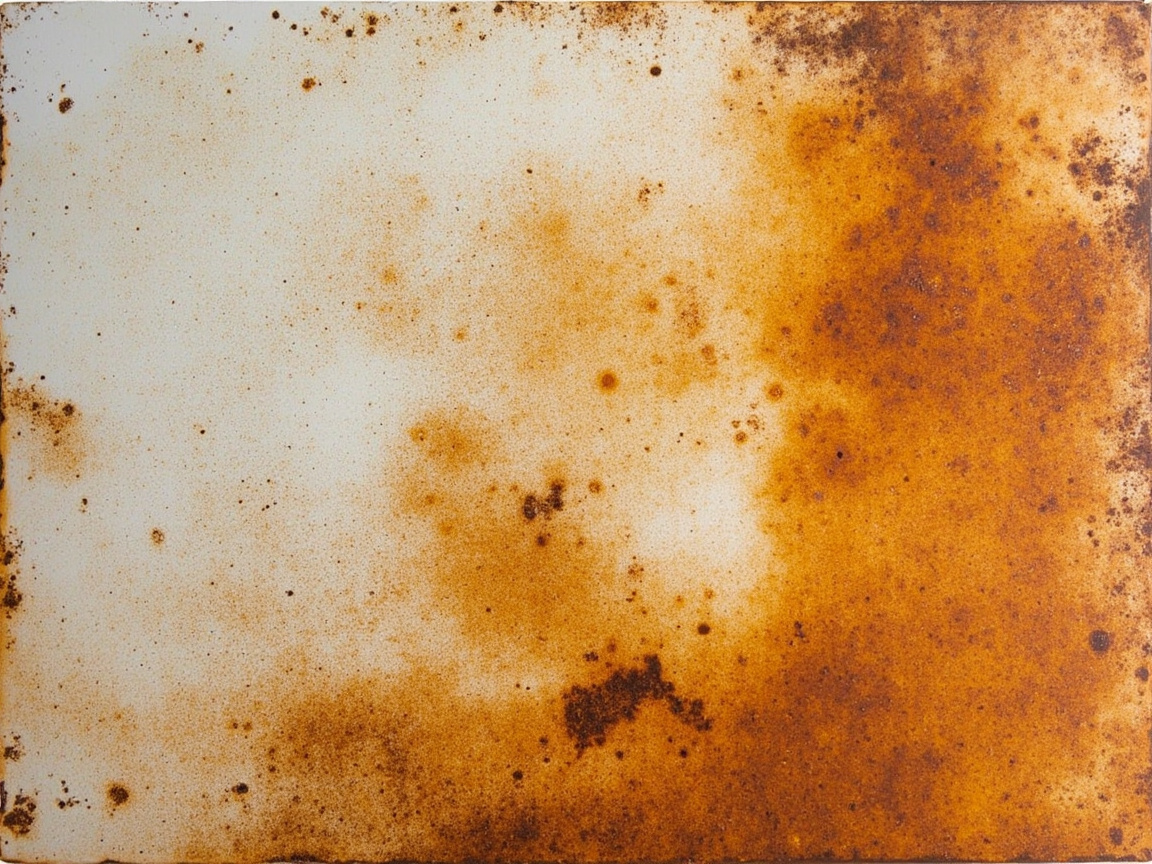
VIII. Common misconceptions
Misconception 1: Alkyd is cheap so it can be used anywhere. Wrong. Weak water and alkali resistance; marine/heavy pollution/continuous immersion environments will rust early, and the saved coating cost is far from enough for rework.
Misconception 2: Alkyd can be topcoated once surface dry. Wrong. Oxidative cross-linking is incomplete, strong-solvent topcoat will lift, must cure 7 days or add isolation layer, preferably do overcoating sample.
Misconception 3: Red lead alkyd is the best. Wrong. Red lead (Pb₃O₄) contains toxic lead and is restricted, and poses corrosion-promotion risk to light metals such as aluminum; modern alternatives use zinc phosphate, aluminum tripolyphosphate, etc.
Misconception 4: Alkyd equals inferior. Wrong. In C2–C3 light protection, alkyd is a rational choice for cost-performance and construction convenience; the problem is "used in the right place", not that the material itself is inferior.
Misconception 5: One coat is enough. Wrong. Alkyd dries fast but single layer is thin; critical structures should have two or more coats to reach the specified total DFT to form continuous shielding.
Kexin New Materials (kexinMaterials) selection advice is: clarify the environmental grade (ISO 9223) and design service life; alkyd is reasonable for C2–C3 maintenance, directly use epoxy/water-based system above C4, do not force alkyd to overstep; and attach a "surface treatment — film thickness — topcoat compatibility" process card upon delivery to avoid on-site random matching by feel.
IX. Comparison trend with water-based systems
Facing the continuously tightening VOC limits of GB 30981-2020, alkyd primer has also seen a water-based branch — water-based alkyd, water-based alkyd modified epoxy ester. They exist as water-dispersed forms, with greatly reduced VOC, safe construction and low odor, but drying is more dependent on temperature and humidity, early water resistance is weaker than solvent-based, and requirements for construction window are higher. For indoor equipment and urban maintenance projects where dust and odor are not allowed, water-based alkyd is a compromise that balances "eco-friendly" and "convenience"; but for outdoor heavy corrosion, epoxy or zinc-rich systems should still be preferred. For formulation key points of the water-based route, refer to Water-based Anti-rust Paint Formulation Key Points.
From the industry-wide trend, alkyd primer will not disappear — it still has an irreplaceable position in light anti-corrosion, maintenance, DIY, and low-cost scenarios. The real changes are: red lead/chromate pigments withdraw, lead-free driers become popular, water-based proportion rises, and compatibility with polyurethane topcoat is subject to stricter process constraints. Understanding these changes enables correct selection during the transition of old and new systems.
X. Storage, safety, and waste paint disposal of alkyd primer
Alkyd primer contains organic solvents and is a flammable liquid; storage and construction safety are often underestimated. Warehouses should be cool and ventilated, away from open flames and heat sources, equipped with anti-static and fire-fighting equipment; barrels sealed for storage to prevent skinning and viscosity increase due to solvent evaporation. Long-term storage will cause pigment settling and surface oxidative skinning; before use, stir thoroughly, and the skin should be removed and not stirred back into the paint, to avoid particles affecting appearance and shielding. In low-temperature winter areas, pay attention to antifreeze; water-based alkyd especially needs to prevent emulsion freeze-thaw breaking.
In terms of construction safety, both brush and spray should be done in well-ventilated areas; spray must be equipped with dust-proof and anti-toxic masks and goggles to avoid solvent vapor accumulation; waste paint, waste thinner, and paint-soaked cotton yarn are hazardous waste and should be disposed of by qualified units per local environmental requirements, not poured into sewers or randomly burned. For owners, standardized storage and waste paint management is part of the project's overall environmental compliance and should not be ignored.
Kexin New Materials (kexinMaterials) upon delivering alkyd systems, provides safety data sheets and waste paint disposal advice with the goods, extending "selling the coating" to "safe use and compliant collection", reducing the safety and environmental risks of the user.
XI. Industry applications and quick selection reference
The usage logic of alkyd anti-rust primer varies significantly across industries; below is a quick reference by typical scenario:
| Application scenario | Environmental grade | Recommended system | Remarks |
|---|---|---|---|
| General mechanical equipment | C2–C3 | Alkyd primer + alkyd topcoat | Cost priority, convenient maintenance |
| Plant pipe racks, platforms | C3 | Alkyd primer + alkyd/chlorinated rubber topcoat | Brushable, less equipment |
| Municipal guardrails, street light poles | C3 | Alkyd primer + alkyd enamel | Balances appearance and cost-performance |
| Agricultural machinery | C2–C3 | Alkyd primer + alkyd topcoat | Average weather resistance, periodic recoating |
| Indoor storage tank exterior | C3 | Alkyd primer + epoxy/alkyd topcoat | Pay attention to topcoat compatibility |
The core principle of selection has always been "environmental grade matching": alkyd paint is reasonable for C2–C3, while C4 and above must upgrade to epoxy or zinc-rich systems. Many early rust cases are not due to poor paint, but to applying a C3 scheme at a C5 site. For heavy-corrosion systems, refer to Anti-rust Coating System Compatibility Design and Steel Structure Anti-rust Engineering Specification.
XII. Common Application Defects of Alkyd Primer and Troubleshooting
Most high-frequency on-site defects stem from process loss of control rather than the paint itself, summarized below by "phenomenon—cause—countermeasure":
| Defect | Main Cause | Countermeasure |
|---|---|---|
| Surface dry but interior not dry, tacky | Imbalanced drier, low temperature and high humidity | Adjust cobalt/manganese/calcium ratio, control temperature and humidity |
| Wrinkling, skinning | Excess cobalt, applied too thick, surface dries too fast | Reduce surface-dry drier, apply thin coats in multiple passes |
| Sagging | Excessive thinning, uneven film thickness | Control viscosity, apply thin coats in separate passes |
| Early rust return | Insufficient film thickness, overly corrosive environment | Increase DFT, upgrade system |
| Bottom biting (over strong-solvent topcoat) | Alkyd not fully cured | Cure 7 days or add barrier layer |
| Yellowing, chalking | Weak weather resistance of resin, UV | Use weather-resistant topcoat, avoid bare use |
The general rule for troubleshooting is "first check the environment, then check film thickness, then check the system", using thickness gauge and adhesion data for定位, rather than guessing by visual inspection. Listing common defects in the work instruction can significantly reduce rework rate.
XIII. Cost–Life Trade-off between Alkyd Systems and Water-based, Epoxy Systems
Selection is essentially a "trade-off between cost and life". Alkyd systems have the lowest initial application cost and easiest application, but short life (needs recoating in a few years under C2–C3); water-based epoxy/epoxy ester have slightly higher initial cost, longer life, and lower VOC; zinc-rich epoxy systems have the highest initial cost, longest life, and suit the harshest environments. For easily replaceable, non-critical components, alkyd's "low initial cost + periodic recoating" is economically reasonable; for critical structures like bridges and storage tanks, the saved initial cost is far from enough for one early-rust overhaul, so a long-life system should be adopted directly. The decision should not compare "who is cheaper", but compare "whole-life-cycle cost and risk".
XIV. Future Evolution and Positioning of Alkyd Primer
Although epoxy, water-based, and zinc-rich systems keep expanding, alkyd primer's vitality in the light anti-corrosion market remains strong; its evolution is not being replaced but repositioned. On one hand, traditional solvent-based alkyd is transitioning to high-solid, low-VOC water-based alkyd and alkyd-modified epoxy ester to respond to environmental regulations; on the other hand, by introducing acrylic modification and silicone modification, alkyd's weather resistance, fast drying, and gloss retention are improved, making it more competitive in maintenance of outdoor equipment and agricultural machinery. It can be foreseen that alkyd will not disappear in the future, but coexist long-term with water-based systems: water-based handles new construction and environmentally sensitive projects, while solvent-based alkyd continues to play a role in maintenance, remote, and equipment-constrained scenarios. For users, the key is not "chasing new and abandoning old", but clearly knowing the boundaries of each system, using alkyd where it excels—neither abusing it because it is cheap, nor discriminating against it because it is outdated. This rational positioning is the mature attitude toward material selection.
XV. Matching of Alkyd Primer and Application Tools
Alkyd primer has good compatibility with application tools; brush, roller, air spray, and airless spray are all feasible, but different tools correspond to different film thickness and efficiency. Brush is most suitable for edges, weld pre-coating, and local repair, as it can actively press paint into gaps, but efficiency is low and appearance uniformity depends on technique; roller suits large flat areas, with high efficiency but prone to roller marks; air spray has good atomization and appearance, but more overspray waste and solvent emission; airless spray has high efficiency and easy film-thickness control, suitable for large-volume maintenance. Tool selection must match the specified film thickness: when single-pass target is 30–50 microns, brush tends to be thin and requires two passes; spray should control gun travel speed and overlap to avoid local over-thickness sagging. Regardless of tool, a small sample should be made before application to confirm appearance and film thickness, and tool cleaning solvent should be included in hazardous waste management. For owners and contractors, tools are not trivial—they directly determine film-thickness pass rate and material utilization, and are the key link to implement specifications on every square meter.
FAQ
Q: Why can alkyd anti-rust primer air-dry as single component?
A: It uses oxidative-drying alkyd resin; unsaturated double bonds in fatty acids undergo auto-oxidation with oxygen in air and free-radical crosslinking to form a film, without needing external curing agent, so it can be brushed after stirring upon opening. This is the fundamental reason for its application convenience.
Q: Can alkyd primer be directly paired with polyurethane topcoat?
A: Direct pairing is not recommended. Alkyd relies on oxidative crosslinking and needs over 7 days for full cure, retaining soluble uncrosslinked components in the film; polyurethane topcoat contains strong solvents such as esters and ketones, which will re-dissolve the alkyd layer causing "bottom biting", wrinkling, and peeling. Wait for alkyd to fully cure, or first apply epoxy/chlorinated rubber barrier layer, or directly switch to epoxy primer.
Q: How many hours of salt spray resistance does alkyd anti-rust paint generally have?
A: As light protection (C2–C3), alkyd anti-rust primer system per GB/T 1771 usually requires 72–240 h without blistering or rusting (subject to design documents), far below the 480–1000 h of zinc-rich epoxy systems, which reflects its applicable boundary and cannot be used for heavy anti-corrosion.
Q: Can red lead alkyd primer still be used?
A: Red lead (Pb₃O₄) is toxic and restricted under regulations such as GB 30981-2020, and promotes corrosion risk on light metals like aluminum. Modern alternatives use non-toxic inhibitive pigments such as zinc phosphate and aluminum tripolyphosphate, which are both eco-friendly and avoid light-metal corrosion.
Q: Why does alkyd paint dry slowly and easily attract dust?
A: Oxidative crosslinking depends on temperature, humidity, and drier balance; below 10℃ and above 85% RH, oxygen absorption and free-radical crosslinking are extremely slow, and the surface remains tacky for long after surface dry, easily attracting dust. Apply at 5–35℃, RH ≤ 85% with good ventilation, and allow sufficient cure maintenance period.
Q: Is alkyd primer suitable for marine environment?
A: Not suitable. Marine (C5-M) is high-salt and high-humidity; alkyd has weak water and salt-spray resistance and will rust early. Switch to zinc-rich epoxy + epoxy intermediate coat + polyurethane topcoat system, see Anti-rust Coating System Compatibility Design.
Q: What are the advantages of alkyd topcoat paired with alkyd primer?
A: Same-system solvent compatibility, no bottom-biting risk, high application tolerance, low cost, suitable for C2–C3 ordinary steel structures and equipment maintenance, one of the most cost-effective light anti-corrosion combinations, but must hold film thickness and environmental boundaries.
Q: Is the difference between water-based alkyd primer and solvent-based large?
A: Water-based alkyd has lower VOC, less odor, and is safer, but drying more depends on temperature/humidity, early water resistance is weak, and application window is narrower; solvent-based dries faster and has slightly better water resistance. Indoor or environmentally sensitive scenarios can choose water-based; outdoor heavy corrosion still prioritizes epoxy/zinc-rich.
Q: How to judge whether alkyd paint is "cured dry" and ready for topcoat?
A: Besides no mark and non-tacky under fingernail press, more reliably reach the specified maintenance period (generally over 7 days, extended at low temperature); if unsure about strong-solvent topcoat pairing, must first do small-sample overcoating test and observe 24–48 h for bottom biting or wrinkling.
Q: Can alkyd primer be applied on galvanized parts?
A: Ordinary alkyd has poor adhesion on smooth galvanized layer and easily peels as whole sheets. Galvanized parts should use dedicated wash primer, epoxy zinc chromate primer, or be roughened by grinding before pairing; do not directly apply conventional alkyd, otherwise it will scale off shortly.
Further Reading
- Anti-rust Coating System Compatibility Design: Understand the positioning of alkyd primer in the overall system, film-thickness allocation, and topcoat selection principles.
- Steel Corrosion Mechanism and Classification: Explain from electrochemical corrosion essence why alkyd falls short in humid environments.
- Water-based Anti-rust Paint Formulation Key Points: Compare solvent-based alkyd with water-based low-VOC route to grasp eco-upgrade direction.
- Rust Converter Principle and Application: Tannic Acid and Phosphoric Acid Routes, Applicable Boundaries and Compatibility Systems
- Anti-rust Paint Salt Spray Test: DIN EN ISO 9227 and GB/T 1771