Applying a single coat of "rust-preventive paint" is almost never the correct engineering practice. True rust prevention is a system: the primer provides cathodic protection/passivation and adhesion, the intermediate coat provides barrier and thickness, and the topcoat provides weather resistance and media resistance; the three work in division of labor and interlock to form a film. This is called "Coating System / Specification" design. It upgrades "what paint to brush" into a calculable engineering of "in what environment, with what combination, how thick each coat, and achieving how many years of durability".
Kexin New Materials (kexinMaterials) insists on the sequence of "first grade the environment, then design the system, then select the product" in projects. This article takes ISO 12944 as the main line, thoroughly explains the design logic, film thickness allocation, and typical schemes of rust-preventive systems, and connects with the companion articles on water-based epoxy zinc-rich primer and alkyd anti-rust primer application.

I. Why "System" Instead of "One Coat of Paint"
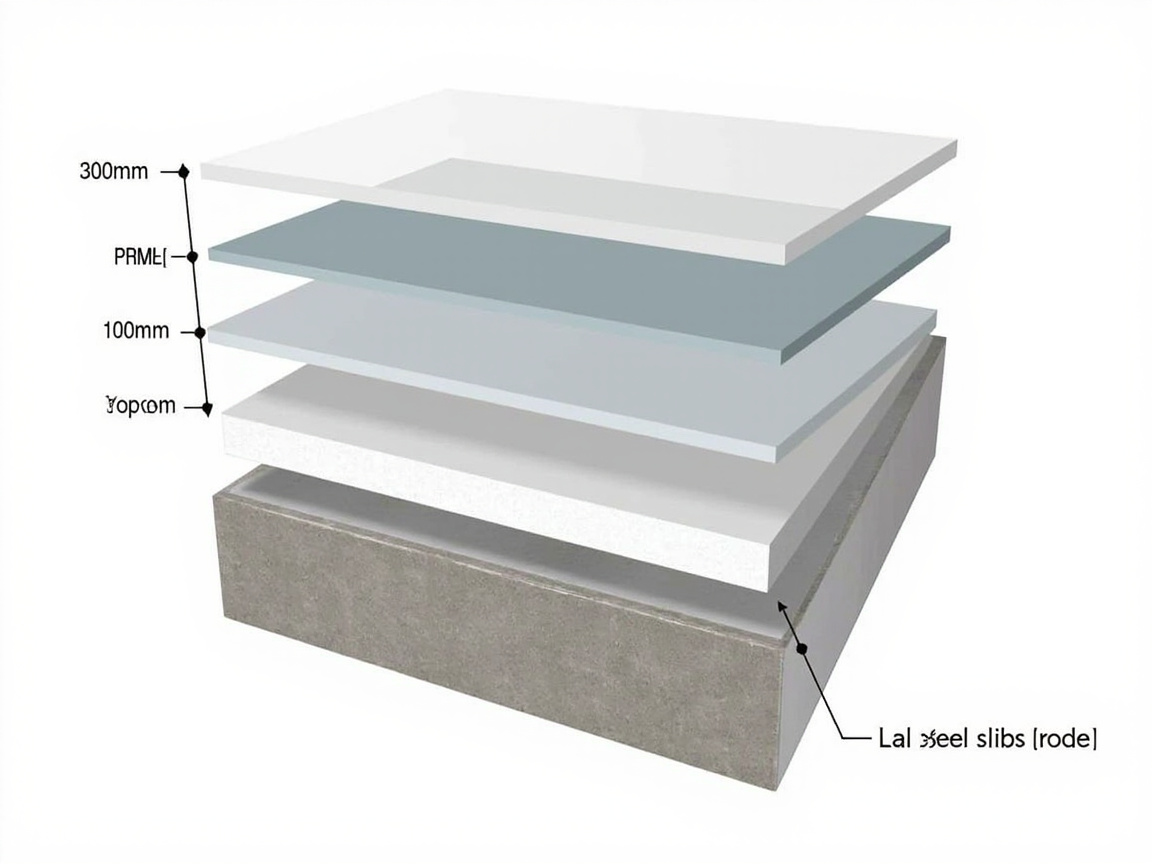
Corrosion is a multi-dimensional attack: water, oxygen, ions, UV, mechanical, temperature. No single coating can optimally shield, passivate, and resist weathering at the same time. The logic of a system is layered defense:
- Primer: close to the metal, provides adhesion + cathodic protection (zinc-rich) or passivation (zinc phosphate), the first line of anti-corrosion defense;
- Intermediate coat: thick-film barrier, contains flake fillers (micaceous iron oxide, glass flake) to extend the media path and supplement film thickness;
- Topcoat: weather-resistant, UV-resistant, chemical-resistant, decorative, protects the lower layers from photo-oxidative degradation.
The three layers each perform their own function, more reliable than a single thick coat. ISO 12944-5 defines systems precisely by the combination of "primer + intermediate + topcoat" (e.g., systems S2.01–S5.x). Understanding this is the prerequisite for good system design. It is not an exaggeration to understand the system as a "sandwich": without the bread (topcoat) the filling dries, without the filling (intermediate coat) the thickness and barrier are insufficient, without the base (primer) the whole layer cannot stand. In the system tables of ISO 12944-5, almost every heavy-duty anti-corrosion system clearly lists the combination of "primer + intermediate coat + topcoat", which itself is the industry's authoritative endorsement of "layered defense".
II. Environment Grade Drives Design: ISO 9223 → ISO 12944
The first step of system design is to define the environment (review steel rust mechanism and classification):
| Grade | Environment | Total Dry Film Thickness (high durability reference) |
|---|---|---|
| C2 | Rural/low pollution | Around 160 µm |
| C3 | Urban/light industrial | Around 200 µm |
| C4 | Industrial/coastal | 240–280 µm |
| C5-I/M | High pollution/offshore | Above 320 µm |
| CX | Extreme offshore | Higher |
| Im1–Im3 | Immersion/buried | Determined separately by medium |
Note: The above are typical total DFT magnitudes in the high durability (≥15 years) category of ISO 12944; the actual values shall be based on the standard values of the selected system and the design documents. The harsher the environment, the greater not only the film thickness, but also the grade of the primer (zinc-rich) and weather-resistant topcoat (aliphatic polyurethane/fluorocarbon). The environment grade is not "estimated", but should be judged based on the corrosion rate assessment of ISO 9223 or field data; misjudging by one grade may cause the system to rust years earlier. For projects lacking historical data, corrosion coupons can be placed at typical locations or reference made to measured results of neighboring similar structures; if necessary, engage a professional organization for environmental corrosivity assessment, rather than deciding by experience. It should be added that ISO 12944-2 divides durability into low (2–5 years), medium (5–15 years), high (above 15 years) and very high (above 25 years); in design, the two dimensions of "environment grade" and "durability target" should be locked simultaneously to select the uniquely suitable system from the standard.
III. Core Parameters of System Design
3.1 Total DFT
Determined by environment grade and durability. Allocation principle: primer 60–80 µm (zinc-rich single coat should not be too thick; based on epoxy zinc-rich application experience, single coat over 80 µm tends to crack and zinc powder settles), intermediate coat can be built up in multiple passes (e.g., epoxy micaceous iron oxide 80–120 µm per coat), topcoat 60–80 µm. Insufficient total thickness means weak barrier, excessive means internal stress cracking and waste. The design value of each layer should fall within the standard range of the selected ISO 12944 system, not added up by feel.
3.2 Intercoat Compatibility
The layers must be compatible: chemical type matching (epoxy primer + epoxy intermediate + polyurethane topcoat is common), intercoat adhesion (GB/T 9286 grade 0/1), overcoating interval (minimum/maximum recoat interval; if exceeded, need abrading). The GB/T 5210 pull-off method can also be used as a key compatibility verification means, especially for thick-film systems and heavy-duty main systems; the cross-cut method may not be enough to expose weak interlayer interfaces, while the pull-off method gives more quantitative adhesion values.
3.3 Surface Preparation Grade
Pre-treatment before primer determines the upper limit: heavy-duty blasting Sa2.5 (ISO 8501-1 / GB/T 8923.1), light-duty can be St2/St3 or with rust (see rust-inhibitive coating surface treatment). Roughness is also required; usually after blasting the profile reaches Ry5 40–70 µm magnitude, giving mechanical interlocking to the coating without premature rusting at wave peaks. Wrong surface preparation grade is the most common "low-level but fatal" error in system design.
IV. Typical System Schemes
| Environment | Design | Primer | Intermediate coat | Topcoat | Total DFT (reference) |
|---|---|---|---|---|---|
| C2–C3 | Light anti-corrosion | Alkyd anti-rust | — | Alkyd topcoat | 120–160 µm |
| C3–C4 | General purpose | Epoxy anti-rust/zinc-rich | Epoxy micaceous iron | Aliphatic polyurethane | 200–240 µm |
| C4–C5 | Heavy-duty anti-corrosion | Epoxy zinc-rich | Epoxy micaceous iron (multi-coat) | Polyurethane/fluorocarbon | 280–320 µm |
| Rust-inhibitive maintenance | Maintenance grade | Rust conversion/stabilization + epoxy ester | Epoxy intermediate | Polyurethane | Per design |
| Water-based scheme | Low VOC | Water-based epoxy zinc-rich | Water-based epoxy intermediate | Water-based polyurethane | Same as corresponding grade |
| Immersion/buried | Im1–Im3 | Epoxy zinc-rich/coal tar epoxy | Epoxy high-build | — | Per medium |
This table is the "menu" of system design, but actual implementation must be fine-tuned based on structural shape, accessibility, and maintenance cycle. For example, for the same C4, outside and inside of a bridge box girder, windward and leeward faces may differ in system and film thickness. For members in the splash zone, additional wear resistance and impact resistance should be considered; simply following the atmospheric zone system will lead to premature failure.
V. Primer Selection: Cathodic Protection vs Passivation vs Barrier
- Sacrificial cathodic protection: Epoxy zinc-rich (solvent/water-based), suitable for heavy-duty priming, provides low creep from scribe (see water-based epoxy zinc-rich primer);
- Passivation type: Zinc phosphate/aluminum triphosphate epoxy ester, economical for moderate corrosion;
- Barrier type: Iron oxide red/micaceous iron oxide primer, with intermediate coat;
- Rust-inhibitive type: Conversion/stabilizer, for maintenance scenarios.
Primer selection = environmental class × design life × surface treatment achievability. It must be emphasized that although zinc-rich primer is strong, it is not "the more zinc the better"—excessively high zinc content leads to porous and brittle films, and demands extremely strict surface treatment; it must be paired with blast cleaning Sa2.5 or above to deliver value. Forcing zinc-rich primer in St2/St3 maintenance scenarios yields far worse results than a stable-type system. The dry film zinc content of epoxy zinc-rich is typically required at 70%–80% (per ISO 12944 zinc-rich primer requirements); too low fails to provide adequate cathodic protection, too high degrades the mechanical properties of the film—this is a point where balance must be struck according to standards.
VI. Intermediate Coat: The Underestimated "Thickness Workhorse"
Many projects focus on primer and topcoat but neglect the intermediate coat—in fact, the intermediate coat is the main force of film thickness and barrier protection. Epoxy micaceous iron oxide (MIO) intermediate coat contains flake-shaped micaceous iron oxide arranged in an overlapping tile-like pattern, greatly extending the penetration path of water and oxygen ions, and is standard in ISO 12944 heavy-duty anti-corrosion systems (e.g., S4.x). Building thickness with only primer + topcoat and no intermediate coat is costly and less barrier-efficient than flake-filler systems. The intermediate coat also serves to "fill roughness, level the surface, and provide a good substrate for the topcoat," and is equally critical to the final appearance and durability of the topcoat. Glass flake intermediate coat offers superior barrier effect in harsh media environments (e.g., tank interiors, chemical plant buildings), but demands tighter control of sagging and bubbling during application; constructability should be weighed in design.
VII. Topcoat: The "Final Gate" of Weather Resistance
The topcoat determines the system's service life outdoors:
- Aliphatic polyurethane: weather-resistant, gloss and color retention, chemical resistant, mainstream for C4–C5;
- Fluorocarbon: super weather-resistant (15–20 years+), high-end;
- Acrylic polyurethane/alkyd: light anti-corrosion;
- Avoid: alkyd topcoat directly over uncured alkyd primer causes lifting (see alkyd anti-rust primer application).
The "weather resistance" of a topcoat is essentially resistance to UV degradation and media penetration. Once the topcoat chalks or cracks, the underlying intermediate coat and primer are exposed, and protective life decays rapidly. Therefore, the topcoat is not a "decorative layer" but the life gate of the entire system. When selecting, attention should also be paid to the topcoat's gloss retention, color retention, and self-cleaning ability—especially on hard-to-access high structures (towers, bridge pylons), where the topcoat's long-term appearance and integrity directly determine the maintenance cycle. For structures in industrial atmospheres, the topcoat should also possess some resistance to chemical fumes; purely decorative topcoats will prematurely lose gloss and chalk in such environments.
VIII. What the Design Document Should Specify
A qualified system design (Specification) must include:
- Environmental class (ISO 9223 Cx) and durability objective (low/medium/high/very high);
- Surface treatment grade (Sa2.5/St3) and roughness;
- Product type, color, and mixing ratio of each coat;
- Film thickness of each coat (single coat/total DFT);
- Recoat interval and number of coats;
- Application environment limits (temperature, humidity, dew point);
- Acceptance criteria (adhesion GB/T 9286, salt spray GB/T 1771, film thickness GB/T 13452.2);
- Maintenance cycle and repair process.
If any item is missing from the design document, it leaves room for on-site "free interpretation," ultimately deviating from the design intent. Kexin New Materials (kexinMaterials) delivers not just coatings, but an executable process card: putting the above 8 items into numbers, so the site "constructs by drawing" rather than "by experience." Further, the design document should be dynamically updated with construction records—actual film thickness, rework points, and changes should be written back, keeping the as-built drawing consistent with and traceable to the initial design, avoiding the information gap of "one design, another construction," and preserving a complete evidence chain for future O&M and liability definition.
IX. Common Misconceptions
Misconception 1: The more expensive the paint, the better; just use a top-tier topcoat alone. Wrong. Without qualified primer and intermediate coat, even the best topcoat cannot hold up—interlayer failure causes overall delamination.
Misconception 2: Total film thickness meeting the standard is enough, no need to separate layers. Wrong. At the same thickness, "primer + intermediate + topcoat" flake barrier far outperforms single thick coat, and the functions of each layer cannot substitute for one another.
Misconception 3: Roughly estimating the environment is fine. Wrong. The total thickness of C3 vs C5 systems may differ by a factor of two; misestimation causes early rust. Must be assessed/determined per ISO 9223.
Misconception 4: Recoat interval is arbitrary. Wrong. Too short an interval causes solvent mutual dissolution and lifting; too long exceeds the window and reduces interlayer adhesion. Must follow TDS.
Misconception 5: Copy solvent-based film thickness directly to water-based systems. Wrong. Water-based film formation mechanisms differ, initial water resistance is weak, and thickness and curing need redesign—see water-based anti-rust paint formulation key points.
Misconception 6: Detail areas can be treated the same as large surfaces. Wrong. Edges, welds, bolts, and laps are high-risk corrosion points and must have separate requirements (chamfering, grinding, pre-coating, extra coats); otherwise, even if overall thickness meets standard, local early rust will start the collapse.
X. Industry-Specific System Examples
Different industries have vastly different corrosion environments and maintenance conditions, and their systems have different focuses:
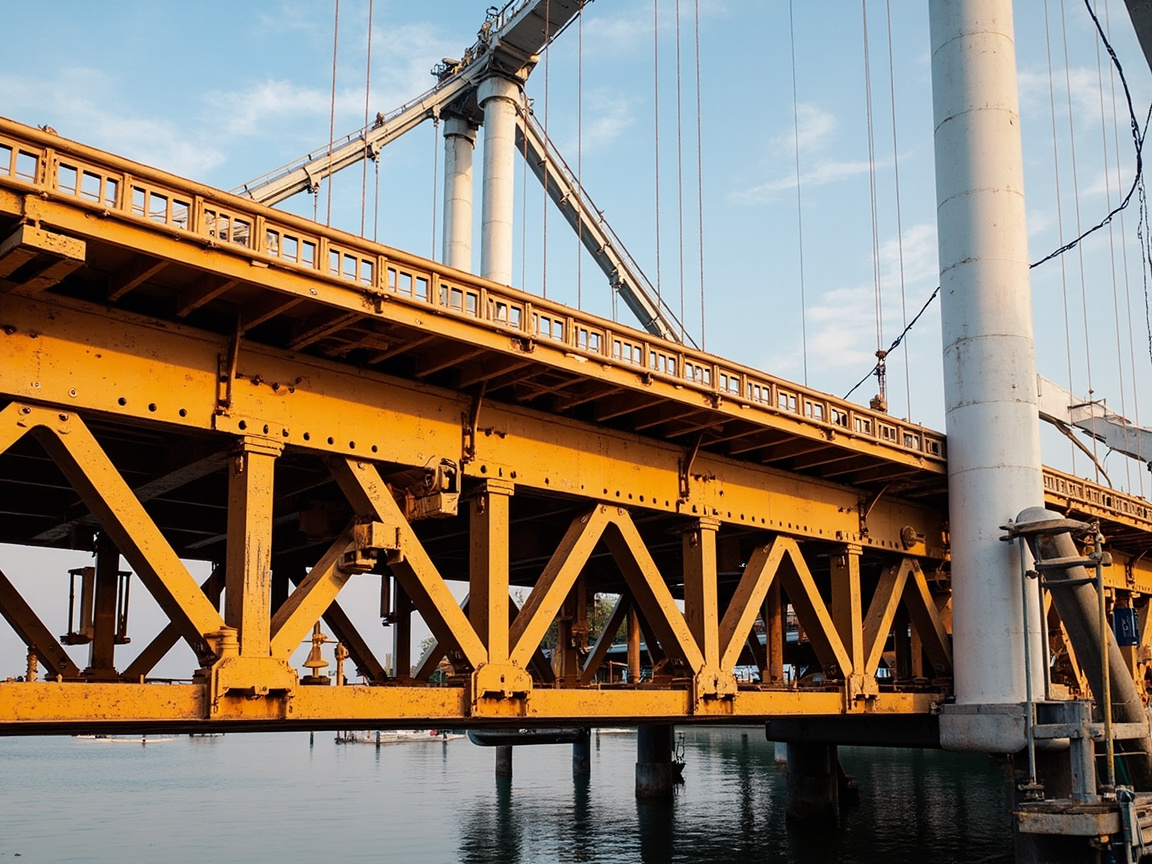
- Sea-crossing bridges: C5-M/CX, blast cleaning Sa2.5 + epoxy zinc-rich + epoxy micaceous iron oxide (multiple coats) + fluorocarbon/aliphatic polyurethane, total thickness 320–500 µm, high durability;
- Ships and offshore platforms: ballast tanks, hull, splash zone per respective specs, mostly epoxy systems; splash zone needs wear and impact resistance;
- Petrochemical tanks: exterior C4–C5, interior selected per stored medium as anti-static/chemical-resistant epoxy; under insulation (CUI) needs temperature-resistant hydrophobic system;
- Wind turbine towers: onshore C3–C4, offshore C5-M, similar to bridges but with more emphasis on maintainability;
- Containers: industry-specific system, emphasizing fast dry, wear resistance, and consistency.
These examples show: system design has no "universal formula"; environment, structure, and maintenance must jointly decide. Copying a successful system from elsewhere often fails to adapt.
XI. Maintenance Systems and Local Repair
The logic of maintenance systems for existing structures differs from new construction: old coating condition is uneven, surface treatment is limited (often only St2/St3 or local blasting), and schedule is tight. Maintenance systems usually follow the "compatibility first" principle: first identify old coating type and adhesion, select compatible maintenance paint to avoid "new paint lifting old paint"; for damage to substrate, do local blasting or stabilization then repair primer; overall apply intermediate and topcoat to restore thickness. Maintenance total thickness may be slightly lower than new construction, but critical nodes (edges, laps) must be fully restored, as these are most prone to early rust. For completely failed old coatings, must thoroughly remove to compliant substrate; do not cover directly on chalked layer for convenience.
XII. Water-Based System Design
Under the "oil-to-water" trend, water-based systems are increasingly common, but the design framework (primer—intermediate—topcoat) remains unchanged; details need redesign:
- Primer: water-based epoxy zinc-rich (heavy anti-corrosion) or water-based epoxy ester (medium anti-corrosion);
- Intermediate coat: water-based epoxy micaceous iron oxide;
- Topcoat: water-based acrylic polyurethane/water-based fluorocarbon;
- Key points: weak initial water resistance, long curing period (generally 7+ days); narrow application window (more sensitive to temperature/humidity); thickness distribution needs re-validation, do not copy solvent-based values.
The advantage of water-based systems is low VOC, safe, low odor; the cost is higher demand on application discipline. For water-based primer mechanism, see water-based epoxy zinc-rich primer; for water-based film formation key points, see water-based anti-rust paint formulation key points. Note that the "intercoat overcoating interval" of water-based systems is often more sensitive than solvent-based, because water-based paint dries fast on surface but slow to harden; too early overcoating may seal lower-layer moisture causing bubbling, so design should refer to manufacturer TDS for specific intervals.
XIII. Cost and Life-Cycle Perspective
System design should not only look at material unit price, but at whole-life-cycle cost: high-durability systems cost more in single material and application, but extend major maintenance from 5 to 15 years, and the amortized annual cost is often lower, plus reduced downtime loss. Conversely, cutting thickness and skipping intermediate coat to save money looks like short-term saving, but brings frequent rework and structural damage, ultimately more expensive long-term. Decisions should compare the sum of "initial cost + maintenance cost + downtime/risk cost," not isolated price comparison. For plants with high continuity demands (e.g., chemical, power), one unplanned shutdown loss often far exceeds coating price difference; a system design that is "a bit more expensive, lasts longer" is essentially a hedge against downtime risk.
XIV. Common Design Error Cases
- Case A: A plant designed for C3 but located coastal C4, overall blistering in three years. Lesson: misjudged environmental class.
- Case B: Alkyd topcoat directly over uncured epoxy primer, whole-sheet lifting and falling off. Lesson: interlayer chemical incompatibility, interval out of control.
- Case C: Total thickness met but no intermediate coat, single thick coat cracked. Lesson: layer missing, high internal stress.
- Case D: Heavy anti-corrosion site only achieved St3 but used zinc-rich primer, insufficient adhesion and early rust. Lesson: surface treatment grade does not match primer requirement.
Common point of these cases: failure is not in "bad paint," but in "broken system logic." Locking each layer's role, compatibility, and pretreatment is the core of design.
XV. Design Review Checklist
Turn the system design into an executable review checklist: First, whether the environmental class is determined and recorded per ISO 9223; Second, whether the durability target (low/medium/high/very high) is clearly defined; Third, whether each layer's product and film thickness correspond to the system standard values; Fourth, whether intercoat chemical compatibility and overcoating interval are confirmed; Fifth, whether the surface preparation grade and roughness are achievable; Sixth, whether the construction environmental boundaries are clearly stated; Seventh, whether the acceptance criteria are quantifiable; Eighth, whether repair and refinish procedures are reserved. Confirm the checklist item by item, which can block the vast majority of design loopholes.
16. Relationship Between System Design and Salt Spray Verification
System design cannot stay on paper; it must be closed-looped with salt spray and cyclic corrosion verification (see Neutral Salt Spray Test NSS Assessment). At the design stage, "panel verification" should be planned: prepare test panels per the designed system (same pretreatment, same film thickness, same number of coats) and send them to the lab for GB/T 1771 neutral salt spray and CCT cyclic corrosion, using the three ratings of scribe creep, blistering, and rusted area to inversely verify whether the designed film thickness and material selection are reasonable. Many designs look fine on paper with "total thickness sufficient", but actual tests show large scribe creep, indicating insufficient primer cathodic protection or passivation, requiring adjustment of primer type or film thickness. Making "design—verification—correction" an iteration is far more reliable than a one-time decision.

17. Digitalization and Database-Assisted System Design
For large projects (such as cross-sea bridge groups, hundreds of wind farm towers), system design is shifting from "experience + manual" to "database + model". Feasible approaches include: building a reference library of environmental class—system—film thickness—expected durability to auto-recommend systems by structural part; entering past maintenance records and failure cases into the database to correct initial design with real data; using BIM or asset management platforms to link each component's coating age, system, and test values, with early warning before expiry. This digitalization does not require sophisticated algorithms; the core is to datafy the four things—"whose system, what environment, how thick applied, current condition"—turning system design from a one-time document into a traceable, iterable asset.
18. Root Cause Analysis Framework for System Failure
When a system fails prematurely, troubleshooting should locate level by level through the five layers of "environment—design—material—application—acceptance":
- Environment layer: whether the actual corrosion class is higher than the design assumption (e.g., originally C3 but actually C4), the most common root cause;
- Design layer: whether film thickness/layers are missing, whether intercoats are compatible, whether pretreatment grade matches the primer;
- Material layer: whether wrong product used, batch anomaly, or storage degradation;
- Application layer: uneven film thickness, loss of overcoating interval control, high-humidity condensation, excessive thinning;
- Acceptance layer: whether film thickness/adhesion inspection was missed, whether salt removal was adequate.
The value of this framework is to avoid the intuitive reaction of "switch to more expensive paint upon failure"—most failures are a break in some system link, not the material itself. Identify the root cause and correct accordingly to cure rather than cover up.
19. Green Systems and Low VOC Trend
Under tightening regulations such as GB 30981-2020 "Limits of Harmful Substances in Industrial Protective Coatings", system design must consider VOC upfront: use high-solid/solvent-free where possible instead of high-solvent systems; use water-based where possible, prioritizing water-based. Green system is not simply "replace solvent paint with water-based paint", but redesigning layers and film thickness—for example, a full water-based system of water-based epoxy zinc-rich primer + water-based epoxy micaceous iron oxide intermediate + water-based polyurethane topcoat can cut total VOC by over half versus solvent-based. Design should treat "total VOC emission per unit area" as a hard metric alongside "durability, cost", not an afterthought. For projects with huge coating volumes, total VOC control also directly reduces hidden costs of ventilation, PPE, and waste disposal.
20. Detail Systems for Edges, Welds, and Bolts
The easiest place for system design to fail is not large flat areas but details: free edges (should be chamfered/R-radius treated), welds (prone to hidden rust, reinforcement height to be ground), bolts and laps (crevice corrosion hotspot), sharp corners and hole edges. These parts should have separate requirements in design: welds ground smooth, edges pre-coated (stripe coat), one extra coat around bolts, lap seams filled then coated. Systems with poor detail treatment, even if overall film thickness meets standard, will collapse from local early rust. Writing a "detail checklist" into the spec works better than vaguely stating "total thickness 280 µm". Engineering experience shows early structural rust often starts at edges and welds; one stripe coat can more than double film thickness there, extremely cost-effective.
21. Philosophy and Implementation of System Delivery
Back on site, the ultimate value of system design lies in "implementable, acceptable, accountable". Many projects fail not for lack of design, but because the design sits in the filing cabinet while site works by feel. Therefore the delivery form should upgrade from "one specification" to "a set of process cards + site service": process cards quantify environmental class, each layer's product, film thickness, interval, acceptance criteria; site service confirms substrate and environment before start, re-measures film thickness and adhesion at key nodes, archives data after completion. Kexin New Materials (kexinMaterials) has long followed this philosophy, treating system design as a continuous service "from paper to steel" rather than a one-time product delivery, which is the most pragmatic path to reduce system failure and extend protective life.
22. Standard System Related to System Design
System design is not made up but relies on a whole set of standards: environmental classification per ISO 9223 / GB/T 15957; pretreatment grade per ISO 8501-1 / GB/T 8923.1; corrosion protection general principles and system selection per ISO 12944 series (including -1 general, -2 environmental classification, -5 protective systems, -6 lab performance, -8 new and maintenance); film thickness measurement per ISO 2808 / GB/T 13452.2; adhesion per GB/T 9286 cross-cut, GB/T 5210 pull-off; salt spray per GB/T 1771. Design documents should cite these standards' numbers and clauses so the "system" can be audited by third parties, not a vague "construct per spec". Familiarity with this standard coordinate system is basic skill for system design.
23. System Lifecycle from Design to Operation
The endpoint of system design is not "paint applied" but manageable protection of the structure throughout service life. It is recommended to embed the system into an asset operation closed loop: ① design stage defines system and expected durability; ② application stage records actual film thickness, environment, batch; ③ after commissioning, establish periodic inspection (visual + film thickness + adhesion spot check), focusing on edges, laps, welds; ④ near design life or upon early rust, assess local repair vs. full refurbishment; ⑤ repair strictly per original system or validated compatible system. With this lifecycle management, system design truly becomes a "long-term asset protection plan" rather than a "one-time document", its value far exceeding the coating itself.
24. Review and Release of System Design
Before a system design is used for tendering and construction, it should pass structured review and signed release, avoiding "designer guesses, site improvises". Review points include: sufficient basis for environmental class determination (corrosion data support?); total film thickness and layer allocation within selected system standard range; basis for intercoat chemical compatibility (manufacturer system certificate or verification); pretreatment grade matching primer requirement; site-achievable construction environmental boundaries; quantifiable and executable acceptance criteria; reserved maintenance and refinish procedures. Review should be jointly confirmed by design, material, application parties with records. Released system is "locked"; any later change goes through change review, not on-site temporary substitution. This "design—review—release—change-controlled" closed loop is the final gate from paper to steel.
25. "Local Adaptation" Principle of System Design
Finally, emphasize an important philosophy: system design has no "standard answer", only "fitting answer". Same C4 environment, inland industrial atmosphere vs. coastal salt spray have different failure mechanisms, so system focus should adjust—coastal emphasizes salt spray resistance and edge protection, inland heavy industry emphasizes chemical and dust abrasion resistance. Same bridge, external windward face vs. internal enclosed space, steel box girder interior vs. orthotropic plate joints may differ. Designers should do "micro-customization" within a unified framework, not apply one table to the whole structure. This local adaptation ability is the watershed from "compliant" to "reliable" system design. Truly mastering environment, structure, maintenance, cost four factors yields an economical and durable fitting solution.
FAQ
Q: Why must anti-rust use primer—intermediate—topcoat system, not one thick coat?
A: Corrosion attacks multi-dimensionally (water, oxygen, ions, UV, mechanical); a single coat cannot optimally shield, passivate, and weather simultaneously. Primer for anti-corrosion adhesion, intermediate for shielding and thickness, topcoat for weathering—layered defense is more reliable than single thick coat, and is the basis of ISO 12944 system design.
Q: How is film thickness generally allocated per layer?
A: Total DFT is determined by environmental class (e.g., C4 high durability about 240–280 µm). Typical: zinc-rich primer 60–80 µm, epoxy micaceous iron oxide intermediate multiple coats (80–120 µm each), polyurethane topcoat 60–80 µm. Specific per selected system standard values.
Q: Is intermediate coat really that important?
A: Very important; it is the main force of film thickness and shielding. Epoxy micaceous iron oxide intermediate's flake structure greatly lengthens medium penetration path, standard in heavy-duty (ISO 12944 S4.x); omitting it and relying on primer+topcoat to build thickness is costly and low shielding efficiency.
Q: Where does C3 and C5 system differ?
A: Harsher environment, larger total DFT, higher primer grade (C5 uses zinc-rich), higher topcoat weathering requirement (polyurethane/fluorocarbon). C5 total often above 320 µm, C3 about 200 µm, different system types; mismatch causes early rust.
Q: Is water-based system design the same as solvent-based?
A: The framework is consistent (primer—intermediate coat—topcoat), but the water-based film-forming mechanism, early water resistance, pot life, and environmental sensitivity differ; film thickness and curing need to be redesigned, and solvent-based parameters cannot be directly copied.
Q: How to ensure intercoat adhesion?
A: Select chemically compatible coating combinations, control the overcoating interval (minimum/maximum), ensure surface cleanliness and roughness, and accept with GB/T 9286 cross-cut test (grade 0/1). Overcoating beyond the limit requires scarifying treatment.
Q: What must the design documents include?
A: Environmental class and durability target, surface preparation grade, products and mix ratio of each coat, film thickness and number of coats of each layer, overcoating interval, construction environmental limits, acceptance criteria (adhesion/salt spray/film thickness), maintenance cycle. Missing items will lead to arbitrary on-site construction.
Q: How to design the system for rust-in-place maintenance?
A: First determine the rust grade; light to moderate rust can use a maintenance-grade system of "rust conversion/stabilization + epoxy ester primer + epoxy intermediate + polyurethane topcoat", with total thickness matched to the environment; severe pitting corrosion (heavy grade D) should abandon rust-in-place and revert to blast-cleaned zinc-rich system (see Steel Structure Anti-corrosion Engineering Specification).
Q: Is higher zinc content in zinc-rich primer always better?
A: No. Excessively high zinc content makes the paint film porous and more brittle, and demands stricter surface preparation; it must be applied over blast-cleaned Sa2.5. Forcibly using zinc-rich primer in maintenance-grade St2/St3 scenarios yields worse results than stabilized systems, and should be matched to the environment.
Q: What happens to the lower coats after the topcoat cracks?
A: The topcoat is the weather-resistant gate; once it cracks and chalks, the intermediate coat and primer are directly exposed to UV and media, and the protective service life decays rapidly, even triggering chain corrosion from the cracks. Therefore, the topcoat condition is a key monitoring point for system health.
Further Reading
- Water-based Epoxy Zinc-rich Primer: Cathodic protection mechanism and film thickness of primer in heavy-duty anti-corrosion systems.
- Alkyd Anti-rust Primer Application: Cost-effective primer selection for light anti-corrosion (C2–C3) systems.
- ISO 12944 Anti-corrosion Coating System Selection Guide: A complete standard framework for environment-grade driven system design.
- Anti-rust Paint Salt Spray Test: DIN EN ISO 9227 and GB/T 1771