Core Conclusion:
1. The special industrial nano anti-corrosion paint resistant to strong acids and alkalis builds a chemically inert -Si-O-Si- cross-linked network through nano Al₂O₃/ZrO₂/SiC ceramic fillers (particle size 10-50nm, Mohs hardness 8-9.5) and siloxane/fluorocarbon resin—soaking in 20% H₂SO₄/HCl/NaOH for 7-30 days shows no loss of gloss, blistering, or softening—achieving full-spectrum tolerance of pH 1-14.
2. Atomfair UGL-9 nano acid-alkali resistant coating has hardness 7H (pencil), no rust after 1000h salt spray (ASTM B117), and pull-off adhesion >12MPa (ISO 4624)—the optimal engineering balance of chemical media resistance and mechanical properties. SIOResin SIO-8161H water-based nano ceramic coating withstands temperature >1000°C (peak 1500°C) and has hardness 9H (cold and hot states)—no cracking under rapid cooling and heating thermal shock.
3. The inner walls of chemical reaction kettles (80-120°C, alternating pH 1-14), electroplating tanks (chromic acid/sulfuric acid/cyanide), sewage treatment pools (combined corrosion of H₂S/NH₃/organic acids), and chimney desulfurization systems (SO₂/SO₃ condensed acid dew point corrosion) are the four core application scenarios.
Equipment and structures in the chemical, metallurgical, electroplating, and pharmaceutical industries are exposed long-term to highly corrosive media with an extremely wide pH range—from concentrated sulfuric acid (pH14), compounded by high temperatures (80-300°C) and mechanical wear. Traditional epoxy/polyurethane coatings typically have a service life of <2 years in such extreme chemical environments—frequent shutdowns for maintenance and recoating cause huge operational losses. Special Industrial Nano Anti-Corrosion Paint Resistant to Strong Acids and Alkalis starts from the underlying design of resin crosslinking chemistry, replacing organic C-O-C bonds with inorganic Si-O-Si bonds—elevating the chemical inertness of the coating to a ceramic level.
Chemically inert molecular design — why are -Si-O-Si- bonds resistant to both acids and bases?
Direct answer: The crosslinking bonds of traditional epoxy/polyurethane coatings are C-O-C ether bonds (bond energy ~358 kJ/mol) or ester bonds (-COO-, ~360 kJ/mol) — which undergo hydrolytic cleavage under acid catalysis (H⁺) or base catalysis (OH⁻) — this is the fundamental chemical reason for coating failure in strong acid/base environments. Nano anti-corrosion paint uses siloxane/sol-gel precursors (e.g., tetraethyl orthosilicate TEOS + methyltriethoxysilane MTES) as crosslinkers — after curing, an -Si-O-Si- inorganic crosslinked network is formed. The bond energy of the Si-O bond (~452 kJ/mol) is about 26% higher than that of the C-O bond; more critically — the Si-O-Si bond does not hydrolyze under acidic conditions (F⁻ catalysis or concentrated alkali/high temperature is required to break Si-O-Si) — this means the coating maintains the integrity of its crosslinked structure across the full pH 1–14 range.
Mechanism Details — Synergistic Reinforcement of Nano-Ceramic Fillers.The chemically inert resin matrix provides "passive defense" — nano-Al₂O₃ (Mohs 9, particle size 20-40nm) / ZrO₂ (Mohs 8.5, fracture toughness >10MPa·m½ — crack resistance) / SiC (Mohs 9.5, particle size 20-50nm) ceramic fillers provide "active reinforcement": (1) Physical filling — nano-ceramic particles occupy the free volume of the resin (0.5-2nm pores), reducing the effective cross-sectional area of the diffusion channels for corrosive media by 80-95% — ions such as H⁺/OH⁻/Cl⁻ cannot pass through; (2) Chemical trapping — the abundant Lewis acid/base sites on the surface of nano-Al₂O₃ and ZrO₂ (Al³⁺/Zr⁴⁺ as Lewis acids, O²⁻ as Lewis base) preferentially adsorb H⁺ and OH⁻ — forming a "buffer layer" on the coating surface, neutralizing trace amounts of acid and alkali that penetrate — protecting the internal Si-O-Si crosslinked skeleton; (3) Mechanical strengthening — the ultra-high hardness of nano-ceramic fillers (Mohs 8-9.5) endows the coating with excellent wear resistance and scratch resistance — in corrosive media containing solid particles (such as ore slurry / slurry), the erosion-corrosion resistance is 3-5 times that of traditional epoxy.
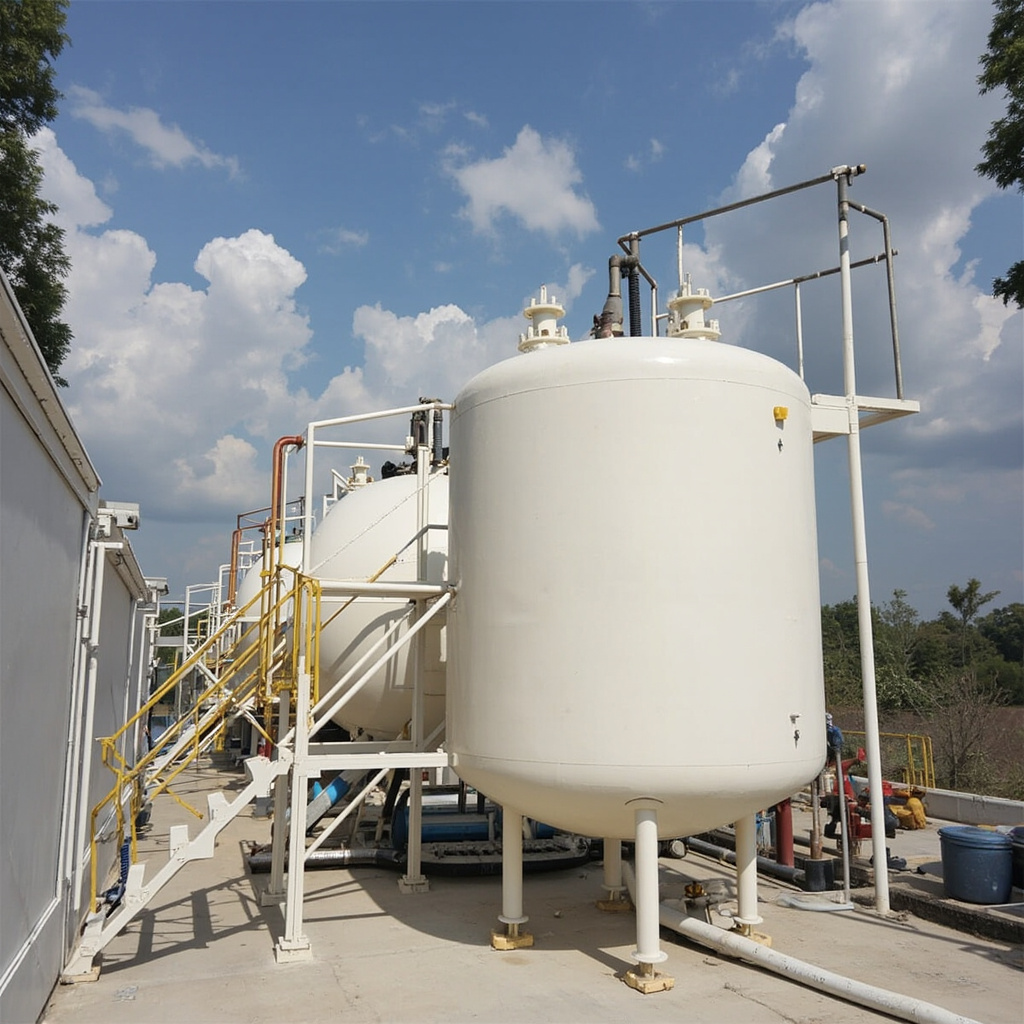
Data support: Atomfair UGL-9 system (nano Al₂O₃/ZrO₂/TiO₂/SiO₂ + siloxane crosslinking): 20% H₂SO₄ / 20% HCl / 20% NaOH / 20% HNO₃ / organic acids (acetic acid / citric acid) — room temperature immersion for 7–30 days — coating shows no loss of gloss (20° gloss change 5H). Salt spray 1000h: no blistering, no rust. Pull-off adhesion: > 12 MPa (ISO 4624, failure mode 100% cohesive failure — coating's own strength lower than adhesion). Jianbang waterborne fluorocarbon nano coating (salt spray resistance ≥ 3000h, 98% H₂SO₄ immersion resistance 1200h — extreme concentrated sulfuric acid corrosion conditions). SIOResin SIO-8161H (nano ceramic waterborne system): temperature resistance > 1000°C continuous / 1500°C short-term peak — thermal shock test (1000°C → 20°C water quench, repeated 10 times) no cracking, spalling, or discoloration.
Source:Atomfair UGL-9 TDS, SIOResin SIO-8161H TDS, Jianbang Coatings Technical Data, ASTM D714, ASTM B117, ISO 4624
Four core application scenarios — from chemical reactors to chimney desulfurization
Scenario 1: Inner wall of chemical reactor (80-120°C, alternating pH 1-14).Batch reactors may experience extreme chemical alternation from strong acid (esterification) — strong alkali (neutralization) — organic solvent (extraction) in each production batch — the coating experiences a complete pH span from 0 to 14 within 24 hours. The -Si-O-Si- cross-linked network of the nano-ceramic coating does not undergo hydrolysis/alcoholysis/acidolysis under such drastic chemical alternation — this is something organic coatings (C-O-C cross-linking) are completely incapable of. Complies with GB 51283-2020 "Fire Protection Standard for Engineering Design of Fine Chemical Enterprises" and HG/T 20581-2020 "Design Specification for Anti-corrosion of Chemical Equipment".
Scenario 2: Electroplating bath (chromic acid/sulfuric acid/cyanide).The chrome plating bath solution contains CrO₃ (250-400g/L) + H₂SO₄ (2.5-4g/L) — extremely oxidizing and acidic (pH13). The nano-ceramic coating does not undergo oxidative degradation or complexation dissolution in environments with Cr⁶⁺ (strong oxidant) and CN⁻ (strong complexing agent) — this is something that traditional epoxy (aromatic structure easily oxidized) and polyurethane (urethane bonds insufficiently alkali-resistant) cannot simultaneously satisfy.
Scenario 3: Sewage treatment tank (combined corrosion by H₂S/NH₃/organic acids).The H₂S (hydrogen sulfide) generated from anaerobic sewage treatment dissolves in water to form a weak acid—enriching in the condensate on concrete tank walls to create an acidic environment with pH 3-5. At the same time, NH₃ (ammonia) and volatile organic acids (acetic/propionic/butyric acid) launch a combined chemical attack on the coating—the chemical inertness of the nano-ceramic coating toward H₂S/NH₃ and organic acids provides significant protective advantages in this scenario.
Scenario 4: Chimney desulfurization system (SO₂/SO₃ condensation acid dew point corrosion).After wet flue gas desulfurization (FGD), the inner wall temperature of the chimney drops below the acid dew point (approximately 120-150°C) — residual SO₂/SO₃ in the flue gas dissolves in the condensate film to form H₂SO₃/H₂SO₄ (pH800°C and is resistant to concentrated sulfuric acid condensate — Si-O-Si covalent bonds condense with Fe-OH on the steel substrate surface to form chemical anchoring — adhesion >15MPa (pull-off method) — maintains coating integrity under flue gas temperature fluctuations (150-800°C).
Source:GB 51283-2020, HG/T 20581-2020, ZG-203 TDS, China Chemical Anticorrosion Technology Association
FAQ
Can nano-ceramic coatings withstand hydrofluoric acid (HF)?
No. HF is the "nemesis" of SiO₂ and Al₂O₃ — SiO₂ + 4HF → SiF₄↑ + 2H₂O, Al₂O₃ + 6HF → 2AlF₃ + 3H₂O — HF directly dissolves the nano-ceramic fillers and the Si-O-Si crosslinked network. For service conditions involving HF (e.g., stainless steel pickling, semiconductor etching), fluoroplastic linings such as graphite/PTFE/PVDF or phenolic resin coatings should be selected; nano Si/Al-based ceramic coatings must not be used.
Is the application of nano ceramic coatings the same as that of ordinary paints?
Substrate preparation requires higher standards—blast cleaning to Sa2.5 (ISO 8501-1), anchor profile 50–75 μm—to ensure sufficient condensation reaction between –Si–OR and substrate Fe–OH. The two-component system has a short pot life after mixing (30–60 min)—must be used up within the pot life. Curing conditions: ambient temperature cure for 24–48 h (25 °C) to reach handleable strength, full cure in 7 days (complete chemical crosslinking)—avoid contact with water and chemicals during this period.
Q: What is the cost and service life of nano ceramic coatings?
Raw material cost is approximately 2–4 times that of traditional epoxy. However, under strong acid/alkali conditions—where traditional epoxy requires recoating within 1–2 years—nano-ceramic coatings offer a designed service life of 8–15 years, reducing 10-year LCC by 50–70%. A single production shutdown for recoating of a chemical reactor (lost capacity + labor + coating materials) can cost hundreds of thousands to several million yuan; the economic value of doubling the maintenance interval far exceeds the coating material cost differential.
How to test the chemical resistance of nano-ceramic coatings?
GB/T 9274-2018 (Paints and varnishes — Determination of resistance to liquids): Immerse the coated test panels in the specified chemical at a prescribed temperature and duration, then after removal assess blistering (ASTM D714), rusting (ASTM D610), cracking (ASTM D661), flaking (ASTM D772) and color change (ASTM D2244). Key criteria: after 30 days of immersion, adhesion retention >80% (ISO 4624), pencil hardness retention >80%, and 20° gloss change <10 GU.
Reference sources:Atomfair UGL-9 TDS, SIOResin SIO-8161H TDS, ZG-203 TDS, ASTM D714/B117/ISO 4624, GB 51283-2020, HG/T 20581-2020
Author: Kexin Technical Quality Department | Rewritten: July 6, 2026 Deep Edition