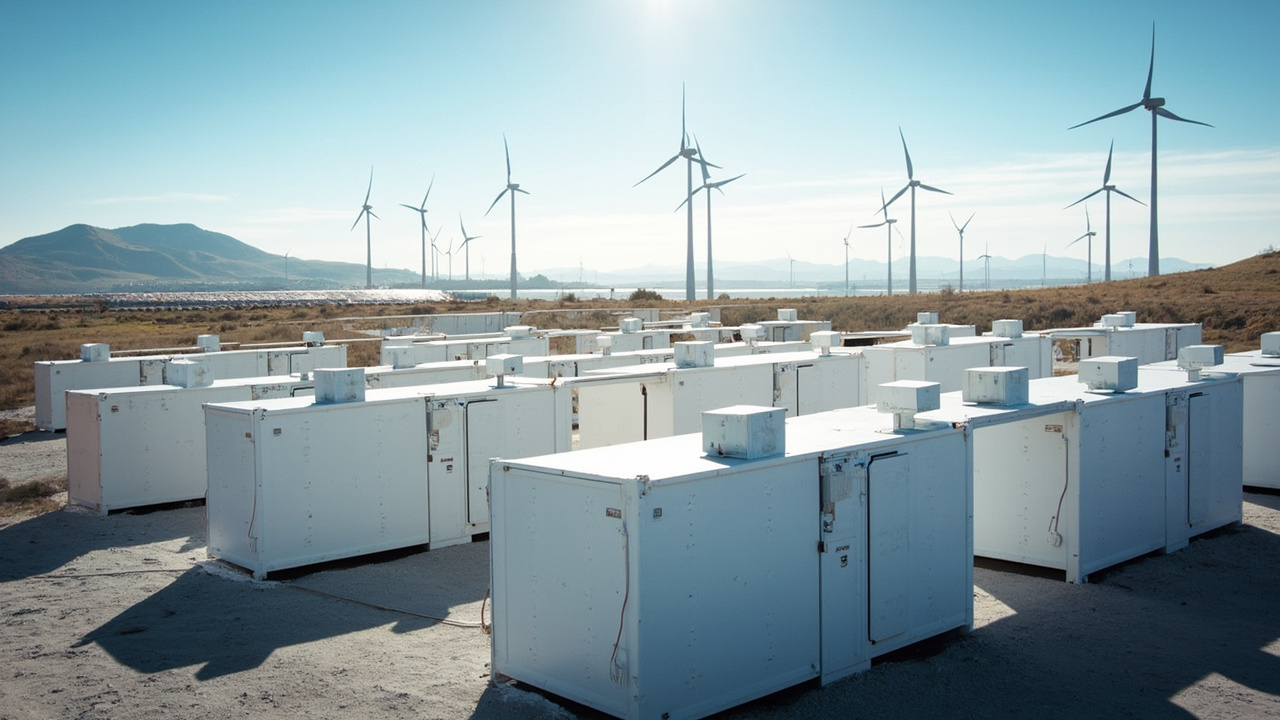
Under the dual drivers of the "dual carbon" goals and the construction of new power systems, energy storage power stations, commercial and industrial storage cabinets, and new energy vehicle battery packs are expanding at a rate exceeding 25% annually. However, in sharp contrast to the rapid capacity growth is the fact that—the safety boundary of energy storage systems increasingly relies on inconspicuous functional coatings. When lithium batteries experience thermal runaway, what truly prevents fire from spreading between cells is often not the outer steel shell, but the functional coating of tens to hundreds of microns applied to the surfaces of module housings, Busbars, and structural parts.
For equipment manufacturers, system integrators, and component suppliers, battery pack coating has been upgraded from a "anti-rust decorative layer" to a key component of passive safety. This article systematically breaks down the three major functions—flame retardancy, insulation, and thermal management—that coatings must fulfill in energy storage and power battery scenarios, and provides a selection logic based on substrates and operating conditions.
I. Why Energy Storage Systems Need Functional Coatings
The higher the energy density of lithium-ion batteries, the greater the destructive power of their thermal runaway. Once a single cell triggers thermal runaway, it will heat up to several hundred degrees Celsius within seconds and radiate large amounts of heat to adjacent cells. If the module lacks effective thermal barriers and electrical isolation internally, failure will propagate cell by cell like dominoes, eventually evolving into a fire at the scale of an entire cabinet or even the whole station.
Under such operating conditions, functional coatings assume three roles:

- Flame retardant and fire barrier: Coated on housings and partitions, it forms an intumescent char layer or ceramicized hard shell when exposed to fire, blocking oxygen and heat transfer and delaying thermal runaway propagation.
- Electrical insulation: Coated between cell brackets, Busbars, and metal structural parts, it provides reliable breakdown voltage resistance, avoiding high-voltage short circuits and arcs.
- Thermal management assistance: High-thermal-conductivity coatings quickly distribute local hot spots, while thermal insulation coatings "lock" the heat of failed cells in a local area to protect the neighborhood.
These three types of functions often need to be collaboratively achieved on the same structural part—which is the core difficulty distinguishing energy storage coatings from ordinary industrial paint.
II. Three Core Functions: Flame Retardancy · Insulation · Thermal Management
1. Flame-Retardant Coating: From "Non-combustible" to "Controllable Carbonization"
The requirement for flame retardancy in energy storage scenarios is not simply "not ignitable", but controlled carbonization behavior. A high-quality flame-retardant coating self-extinguishes after the fire source is removed, and expands on the surface to form a porous char layer that reflects heat back to the fire source side.
Key technical indicators include:
- Flame retardant grade: UL 94 V-0 is the mainstream industry threshold; some module-level applications require more stringent burn residue.
- Smoke density and toxicity: Energy storage spaces are enclosed; smoke generation and toxic gases (such as hydrogen halides) from combustion are equally fatal risks, making halogen-free systems the mainstream choice.
- Arc resistance and tracking resistance: In high-voltage environments, the coating surface should not form a conductive path due to arc carbonization.
2. Insulating Coating: Breakdown Voltage and Long-Term Aging
Insulation failure between cells is one of the main causes of short circuits. Functional insulating coatings need to provide:
- Volume resistivity and dielectric strength: Usually required to withstand breakdown voltage at the kilovolt level or above, with specific values increasing with the system voltage platform (400V / 800V / 1500V).
- Wet-heat aging resistance: Under high-humidity and temperature-cycling conditions, insulation performance must not show a cliff-like decline.
- Adhesion to substrate: Substrates such as plastics, aluminum alloys, and electrophoretic parts vary greatly; insufficient adhesion will directly cause local insulation blistering.
3. Thermal Management Coating: The Two Faces of Thermal Conductivity and Insulation
Thermal management coating is two sides of one coin: one side is high-thermal-conductivity coating that quickly transfers cell operating heat to the liquid cooling plate; the other side is thermal-insulation flame-retardant coating that seals heat within the failed unit during thermal runaway. The former pursues thermal conductivity coefficient, the latter pursues low thermal conductivity and high heat resistance. A mature battery pack coating scheme often requires zonal design between these two seemingly contradictory demands.
III. Substrate and Operating Condition Graded Selection
The structural parts of energy storage and battery packs have complex materials; selection must be "tailored to the material":
| Structural part | Typical substrate | Core coating requirement | Recommended system |
|—|—|—|—|
| Module housing | Aluminum alloy / steel plate | Insulation + lightweight anti-corrosion | Nano ceramic insulating paint |
| Busbar / busbar | Copper / aluminum coating | Insulation + arc resistance | High-dielectric powder or electrophoretic paint |
| Cell bracket | PA / PET / glass fiber reinforced | Flame retardant V-0 + dimensional stability | Halogen-free flame-retardant coating |
| Liquid cooling plate | Aluminum extrusion | Thermal conductivity + coolant resistance | High-thermal-conductivity insulating paint |
| Cabinet frame | Galvanized steel | Mechanical rust prevention + fire resistance | Nano anti-rust primer + fire-retardant topcoat |
Special reminder: Mechanical rust prevention and functional safety are not in conflict. Energy storage cabinets are deployed long-term outdoors, coastal, and high-humidity environments; corrosion of structural parts will directly weaken housing strength and grounding reliability. Under the flame-retardant insulation system, applying a nano-scale anti-rust primer first is an invisible guarantee for extending the whole machine's life.
IV. Kexin (kexinMaterials) Nano Coating Solutions
As a manufacturing enterprise focused on nano new material R&D, Kexin New Materials (kexinMaterials)'s differentiation in energy storage and battery pack functional coatings comes from its nano-scale formulation platform:
- Nano ceramic insulation system: Using nano alumina and nano silica as fillers, it achieves high dielectric strength under thin coating (≤80μm), balancing lightweight and insulation reliability, suitable for aluminum alloy and engineering plastic substrates.
- Halogen-free intumescent flame-retardant system: Forms a dense ceramicized char layer when heated, with low smoke and toxicity release, meeting the fire safety orientation of enclosed energy storage spaces.
- Graphene/boron nitride thermal conductive channel: For liquid cooling plate and module thermal conductivity needs, builds a highly oriented thermal conduction network, significantly flattening the hot spot temperature gradient.
- Nano mechanical anti-rust primer: Constructs a nano passivation layer under the functional topcoat to inhibit substrate corrosion in coastal and high-humidity conditions, forming synergistic protection with the upper functional coating.
For OEMs and system integrators, Kexin's value is not just "selling a bucket of paint", but providing an integrated coating package from primer anti-rust to topcoat flame-retardant insulation based on specific substrates, voltage platforms, and certification targets, and giving implementable process parameters on the construction side.
V. Construction and Acceptance Key Points

The performance of functional coatings is 70% in formulation and 30% in construction. For energy storage scenarios, coating acceptance is recommended to grasp three lines: for energy storage scenarios, coating acceptance is recommended to grasp three lines:
1. Surface treatment: Aluminum alloy needs degreasing and micro-roughening; plastic parts need plasma or flame treatment to improve adhesion; rusted substrates must be thoroughly derusted first—nano anti-rust primer cannot save loose floating rust.
2. Film thickness control: Insulation and flame-retardant performance highly depend on dry film thickness uniformity; it is recommended to use wet film gauge + online thickness measurement, with full inspection of key parts.
3. Batch testing: Retain samples from each batch for voltage resistance, flame retardant grade, and adhesion re-inspection, and establish a traceability file from raw materials to finished products.
FAQ
Q1: What is the difference between battery pack coating and ordinary industrial paint?
Ordinary industrial paint mainly solves appearance and basic rust prevention, while battery pack coating must simultaneously meet multiple functional indicators such as flame retardancy, insulation, and thermal management, and remain stable long-term under high-humidity, temperature-cycling, and high-voltage conditions, belonging to functional safety components.
Q2: Why is halogen-free flame retardancy more important in energy storage?
Energy storage cabinets are mostly deployed in enclosed or semi-enclosed spaces; halogenated flame retardants release toxic gases such as hydrogen halides when burned, increasing risks to personnel and equipment, so the industry is generally shifting to halogen-free intumescent flame-retardant systems.
Q3: Is thicker insulating coating better?
Not necessarily. Too thick sacrifices lightweight and may cause internal stress cracking. Modern nano ceramic insulation systems pursue "thin yet strong"; achieving high dielectric strength at ≤80μm is the technical direction.
Q4: What extra attention is needed for coastal energy storage station coatings?
High salt spray and high humidity accelerate structural part corrosion and weaken grounding reliability; it is recommended to add a nano-scale mechanical anti-rust primer under the functional topcoat, forming dual anti-corrosion and functional protection.
Q5: What can Kexin do for energy storage customers?
Kexin (kexinMaterials) provides primer-surface integrated coating packages based on nano ceramic insulation, halogen-free flame retardancy, graphene thermal conductivity, and nano anti-rust, along with construction processes and batch testing recommendations.
Q6: Can thermal conductive coating and thermal insulation coating be applied on the same part?
Usually achieved through zonal design—the liquid cooling contact surface uses high-thermal-conductivity insulating paint, and the neighboring failure-risk surface uses thermal-insulation flame-retardant paint; the two are synergistic rather than stacked.