Introduction: A beam of ultraviolet light—the "molecular switch" that triggers trillions of chemical reactions
The chemical essence of UV-curable coatings is that the photoinitiator absorbs UV photons → transitions to an excited state → generates active species (free radicals or cations) → initiates chain polymerization of oligomers and monomers, converting the liquid coating into a solid film within seconds. The efficiency of this process depends on three core factors—(1) the overlap between the absorption spectrum of the photoinitiator and the emission spectrum of the UV light source (spectral matching / if mismatched — photons are not absorbed — no reaction); (2) the quantum yield (Φ) of the active species (number of active species generated per absorbed photon / higher Φ → higher light utilization efficiency); (3) the competition between diffusion rate and polymerization rate of the active species (diffusion rate is controlled by system viscosity / high viscosity limits diffusion → incomplete curing). Understanding the molecular-level mechanism of UV curing is the foundation for the scientific design of UV formulations.
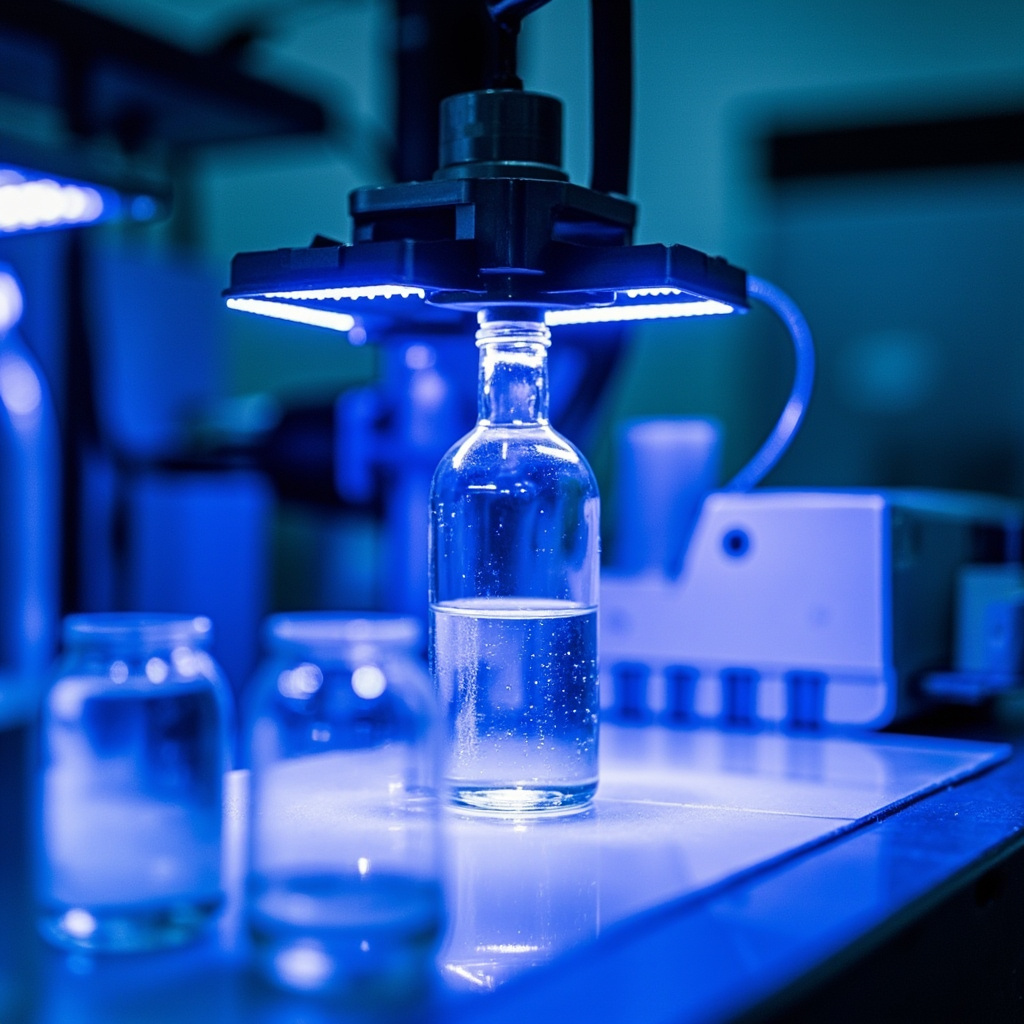
I. Comparison of Three Systems: Free-Radical vs Cationic vs Hybrid Photocuring
| Dimension | Free Radical Photocuring | Cationic Photocuring | Hybrid Photocuring |
|---|---|---|---|
| Photoinitiator | Norrish Type I/II (1173/184/TPO/benzophenone) | Iodonium salt/sulfonium salt + co-initiator | Free radical + cationic dual system |
| Oligomer/Monomer | Acrylate (PUA/epoxy acrylate/polyester acrylate) | Epoxy/oxetane/vinyl ether | Acrylate + epoxy blend |
| Curing Speed | Extremely fast (<1s) | Medium (several seconds / but can "dark cure") | Fast (free radical) + post-cure (cationic) |
| Oxygen Inhibition | Severe (O₂ consumes free radicals) | No effect (O₂ does not consume cations) | Free radical part inhibited / cationic unaffected |
| Shrinkage (%) | 5-18 (acrylate double bond polymerization) | 2-5 (epoxy ring-opening / volume expansion compensation) | 3-8 (compromise) |
| Adhesion to Substrate | Medium (high shrinkage → high internal stress) | Excellent (low shrinkage + epoxy polarity) | Good |
II. Reaction Kinetics of Norrish Type I and Type II Photoinitiators
2.1 Norrish Type I (α-cleavage) — unimolecular process
Norrish Type I photoinitiators (e.g., 1173/2-hydroxy-2-methylpropiophenone, 184/1-hydroxycyclohexyl phenyl ketone, TPO/2,4,6-trimethylbenzoyl diphenylphosphine oxide) upon absorbing UV photons directly cleave to generate two radicals (benzoyl radical + alkyl radical). The reaction rate constant kI is about 10⁶-10⁸ s⁻¹ (extremely fast/completed at nanosecond to microsecond scale) — quantum yield Φ = 0.6-0.9 (high — more than 0.6 active species produced per photon absorbed) — they are the most efficient type of photoinitiator. The benzoyl radical produced by cleavage is highly active (high electrophilicity) — the initiation efficiency for initiating acrylate double bond polymerization is >80%.
2.2 Norrish Type II (hydrogen abstraction) — bimolecular process
Type II Norrish photoinitiators (such as benzophenone BP / isopropyl thioxanthone ITX) in the excited state do not cleave from themselves but instead abstract a hydrogen atom from the co-initiator (tertiary amine / such as EDAB / ethyl 4-dimethylaminobenzoate) — generating an aminoalkyl radical (which initiates polymerization) and a ketyl radical (which has no initiating activity). The quantum yield of the hydrogen abstraction reaction Φ = 0.3–0.6 (lower than Type I) — because the hydrogen abstraction reaction is a bimolecular process (requiring the initiator + co-initiator to "meet" in solution; in viscosity-increased curing systems — the diffusion rate decreases — and the hydrogen abstraction efficiency is further reduced). But the advantages of Type II — (1) lower oxygen sensitivity than Type I (the amine consumes part of the O₂ while generating radicals); (2) the absorption wavelength (>300 nm) better matches UV-LED (365/395 nm).
FAQ
Q1: Chemical mechanism of oxygen inhibition — How does O₂ "kill" photocuring?O₂ is a diradical (ground state is triplet/two unpaired electrons) and the rate constant for reaction with carbon radicals generated by photoinitiation is kO₂>10⁹M⁻¹s⁻¹ (diffusion-controlled/extremely fast) — generating peroxy radicals (ROO·) The activity of peroxy radicals is much lower than that of carbon radicals — unable to effectively initiate acrylate double bond polymerization — polymerization is "killed by oxygen". The O₂ concentration is highest at the coating surface (in contact with air) — therefore the region most severely affected by oxygen inhibition is the coating surface The double bond conversion rate at the surface layer may be only 30-50% of that in the interior — leading to a "tacky" surface (incomplete curing).
Q2: Why is TPO the "standard" photoinitiator for UV-LED curing?Traditional photoinitiators (1173/184) have absorption peaks at 250-330nm (short-wave UV) — while UV-LED (365/385/395/405nm) is long-wave monochromatic light — 1173/184 have extremely weak absorption above 350nm — photoinitiation efficiency is very low (<10%) — coating curing is severely insufficient. TPO (benzoylphosphine oxide) has strong absorption at 350-420nm (π→π* transition / molar extinction coefficient ε>500M⁻¹cm⁻¹@395nm) which perfectly matches the wavelength of UV-LED — photoinitiation efficiency >80% — making it the "killer" initiator for UV-LED curing.
Q3: The "Dark Cure" effect of cationic photocuring — why does polymerization continue after the light source is turned off?The active species in cationic polymerization is a superacid (H⁺SbF₆⁻ / non-radical). The lifetime of the acid is extremely long (> several hours) — after the light source is turned off — the acid catalyst continues to slowly diffuse within the system and catalyze epoxy ring-opening polymerization. The "dark cure" proceeds continuously — the coating hardness and crosslink density keep increasing after the light source is turned off — and the final properties are reached only after several hours to several days. Dark cure is a unique advantage of cationic photocuring, compensating for the limitation of photocuring that "only the illuminated surface is cured" — coatings in shadowed areas can also be partially cured (acid diffuses into the shadowed regions).
Q4: What is the synergistic mechanism of hybrid curing (acrylate + epoxy dual system)?The hybrid system simultaneously contains free radical initiator (TPO) + cationic initiator (iodonium salt) + acrylate oligomer + epoxy monomer. Upon UV irradiation——(1) Free radical polymerization (acrylate / fast / provides initial hardness and "scaffold" structure); (2) Cationic polymerization (epoxy / slower / provides post-curing and adhesion). The synergy of the two——the "scaffold" provided by free radicals offers porous channels for the diffusion of the cationic acid catalyst (rather than the dense network of a pure epoxy system)——accelerates cationic post-curing——while cationic post-curing further compresses the internal stress generated by free radical shrinkage——resulting in a final coating with low shrinkage + high adhesion + chemical resistance.
Q5: The impact of "yellowing" of photoinitiators on transparent/white coatings?Photoinitiators (especially TPO/benzophenone) may produce colored (yellow) photolysis products after UV irradiation—transparent/light-colored coatings show a "slight yellow" tint after curing. Strategies to reduce yellowing—(1) use low-yellowing photoinitiators (e.g., BAPO/bisacylphosphine oxide/lower yellowing than TPO); (2) reduce photoinitiator addition to the minimum (just sufficient curing degree—"critical initiator concentration"); (3) post-cure heat treatment (60-80°C/several minutes)—further decompose residual initiator—reduce yellowing.
Q6: What is the fundamental difference between EB (electron beam) curing and UV curing?UV curing——relies on photoinitiators absorbing UV photons to generate free radicals/cations——requires photoinitiators. EB curing high-energy electron beam (>100keV) directly bombards monomer and oligomer molecules, knocking electrons out of molecules to generate free radicals, requiring no photoinitiator. Therefore, EB coatings (1) have no initiator residue——purer/low odor/food packaging coatings; (2) electron beam penetration depth is much greater than UV (>several cm)——suitable for thick and opaque coatings; (3) EB equipment price (>2 million RMB) and operating cost are much higher than UV——only used in high-value scenarios (food packaging/automotive/electronics).
Q7: The critical balance between the "dehydration" and "curing" steps in water-based UV coatings?Water-based UV coatings——water evaporates first (IR or hot air/1-3 min)→moisture drops to <5%→UV curing. Insufficient dehydration leaves residual moisture that absorbs UV (water absorption at 365 nm is about 0.01 cm⁻¹)——reduces UV intensity——inadequate curing; excessive dehydration causes the coating surface temperature to be too high——thermally initiated free-radical polymerization (non-photoinitiated) "thermal curing" replaces "photo curing" and coating properties deviate from the design. Optimal dehydration strategy: combination of IR lamp (short wave/0.8-1.4 μm) + hot air (80-100°C) IR penetrates the coating to directly heat water molecules——hot air carries away the water vapor evaporated from the surface——uniform and rapid dehydration (1-2 min).
Q8: Chemical mechanism of "yellowing" in UV-curable coatings — is it not only due to the photoinitiator?Sources of yellowing in UV-curable coatings — (1) photolysis products of photoinitiators (as mentioned above); (2) oxidation of acrylates unreacted acrylate double bonds in the cured coating under subsequent light/heat exposure — react with O₂ to form peroxides (ROOH) peroxides decompose to produce carbonyl compounds (aldehydes/ketones/chromophores) causing coating yellowing; (3) amine co-initiators (e.g., EDAB/tertiary amines) — oxidation products of amines under light/heat are nitro/nitroso compounds (yellow to brown). Comprehensive yellowing protection requires the synergy of photoinitiator + antioxidant + light stabilizer (HALS + UVA) all three.
Q9: The "shadow curing" challenge of UV-curable coatings on 3D irregular-shaped parts?The concave surfaces and inner cavities of 3D irregular-shaped parts are blocked from UV light by the workpiece itself—coatings in shadow areas are completely uncured. Solutions—(1) Multi-angle UV lamp array (>4 directions synchronized irradiation); (2) UV reflectors (using UV reflection of aluminum/stainless steel) to "guide" light into shadow areas; (3) Hybrid curing system—shadow areas rely on cationic "dark curing" post-curing (as mentioned earlier). UV curing of 3D parts remains a technical challenge—currently mainly used for 2D flat parts (flooring/panels/paper printing).
Q10: The "safety" of UV-curable coatings—toxicity and protection of photoinitiators and monomers?Photoinitiators (TPO/1173/184) and acrylate monomers (HDDA/TMPTA)—(1) Skin—acrylates are skin sensitizers (repeated contact causes allergic dermatitis)—operators must wear gloves; (2) Eyes—UV lamps (especially UV-C/200-280nm) cause photochemical damage to the eyes (keratitis/cataracts)—operators must wear UV protective face shields; (3) Inhalation—volatilization of photoinitiators and monomers—local exhaust ventilation (LEV) is required. The "green" (zero VOC) nature of UV-curable coatings refers only to the solvents in the coating formulation—the health hazards of photoinitiators and monomers must not be ignored.
Related Reading
Summary
The three major systems of photocuring chemistry—free-radical (acrylate/fast/oxygen inhibition), cationic (epoxy/dark cure/low shrinkage), and hybrid (acrylate + epoxy synergy)—each have distinct performance positioning. TPO (strong absorption at 350–420 nm) is a key photoinitiator for UV-LED curing. Oxygen inhibition (O₂ consumes radicals / k > 10⁹ M⁻¹s⁻¹) is the biggest technical bottleneck in free-radical curing—nitrogen blanketing / high photoinitiator loading / amine synergy are the main mitigation strategies. Kexin New Materials provides customers with full-suite UV/EB photocurable coating formulations and curing technical support.