Introduction: Flash Rust—The Cost of "Water" in Waterborne Coatings
Waterborne industrial coatings replace organic solvents with water—environmentally friendly, safe, and low-VOC—but water is also a catalyst for corrosion. When waterborne coatings are applied to steel surfaces—during the drying window from wet to dry film (typically 5–30 minutes)—water acts as an electrolyte—electrochemical microcell corrosion occurs on the steel surface beneath the coating: Fe→Fe²⁺+2e⁻ (anodic dissolution)—O₂+4e⁻+2H₂O→4OH⁻ (cathodic oxygen reduction)—Fe²⁺ is further oxidized to Fe(OH)₃ reddish-brown rust—forming flash rust spots on the coating surface. Flash rust not only damages coating appearance—corrosion products form a weak interfacial layer at the coating/steel interface—adhesion drops sharply from >6 MPa to 50%. Traditional sodium nitrite (NaNO₂) flash rust inhibitors are being phased out due to carcinogenic risk restrictions under REACH regulations—new-generation eco-friendly alternatives such as organic zinc chelates (Elementis NALZIN FA series), organic amines (DMEA/AMP-95), and molybdates are becoming the industry standard.
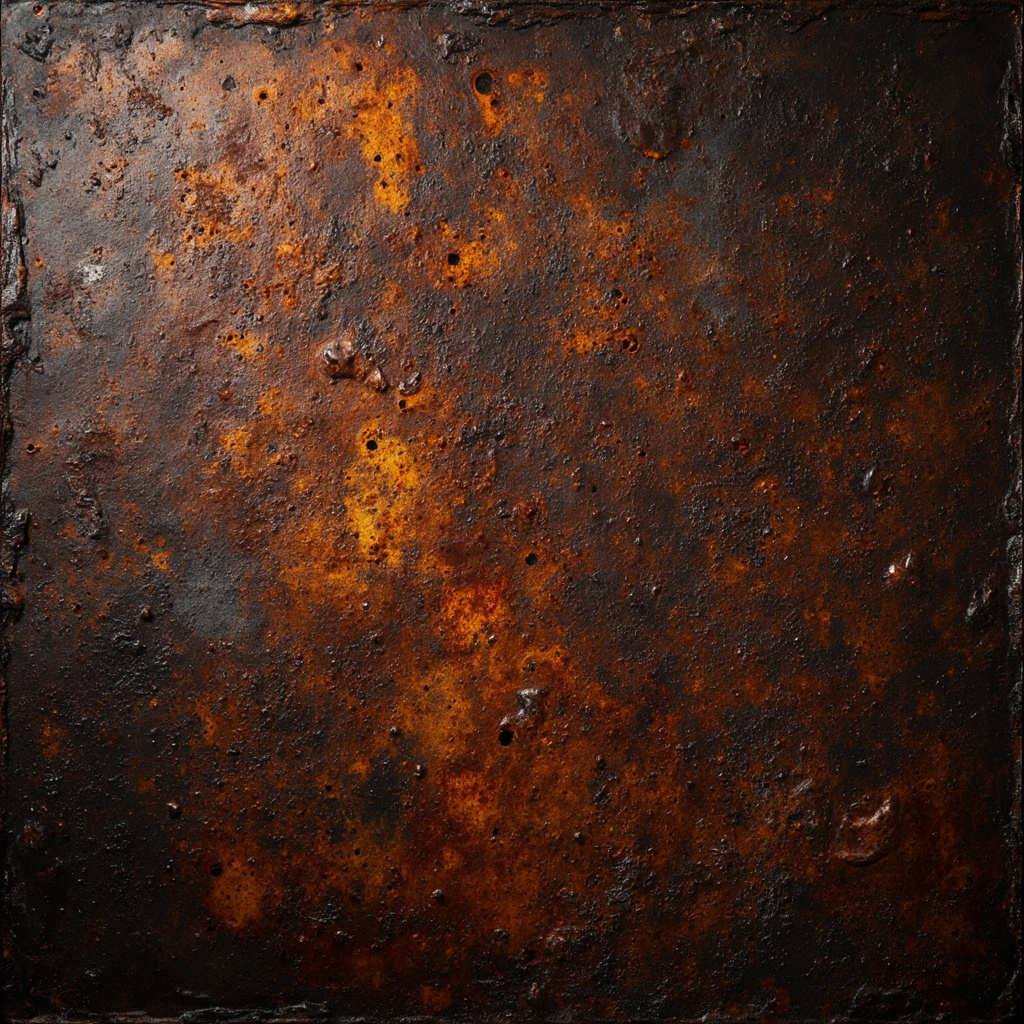
Flash rust is a rapid corrosion phenomenon where, after water-based coatings are applied to steel surfaces—during the drying of the wet film—water acts as an electrolyte to activate electrochemical micro-cells on the steel surface—Fe dissolves at the anode to form Fe2+—O2 is reduced at the cathode to form OH-—Fe2+ is further oxidized to reddish-brown Fe(OH)3 rust—forming visible rust spots inside and on the surface of the coating. Flash rust inhibitors protect the coating/steel interface integrity by blocking the electrochemical corrosion reaction within the drying window through three mechanisms: anodizing passivation (oxide film type), adsorption shielding (adsorption film type), or pH adjustment (alkaline inhibitor).
I. Chemical Mechanisms and Performance Comparison of Four Types of Flash Rust Inhibitors
| Type | Representative Products | Mechanism of Action | Addition Level (wt%) | Environmental Compliance | Long-term Anti-corrosion | Suitable Substrates |
|---|---|---|---|---|---|---|
| Sodium Nitrite (Traditional) | NaNO2 | Anodic Passivation——NO2- oxidizes Fe2+ into Fe2O3 passivation film | 0.1-0.5 | REACH Restricted | Poor (water-soluble loss) | Ordinary Carbon Steel |
| Organic Zinc Chelate | NALZIN FA 579/FA 379/FA 180 | Adsorption→Passivation→Insolubilization——Zn complex adsorbs on Fe surface→converts to insoluble Zn compound after drying | 0.5-2.0 | REACH Compliant | Excellent (permanently retained) | Carbon Steel/Cast Iron/Welds |
| Organic Amine/Alkanolamine | DMEA/AMP-95 | Adsorption Shielding + pH Adjustment——amine N lone pair coordinates with Fe + pH>10 alkalinity inhibits Fe dissolution | 0.3-1.0 | Environmentally Friendly | Medium (weakens after amine volatilization) | Carbon Steel (pH>10) |
| Molybdate/Phosphate Composite | Na2MoO4+Zn3(PO4)2/Halox | Synergistic dual mechanism of anodic passivation + cathodic precipitation | 1.0-3.0 | Environmentally Friendly | Good (slow release) | Carbon Steel/Galvanized Sheet |
FAQ
Q1: Electrochemical microcell model of flash rust — why are welds and cast iron more prone to flash rust than ordinary carbon steel?Steel surfaces are not homogeneous — potential differences (50-200mV) exist between different regions (ferrite vs cementite / weld vs base metal / scale vs bare steel) — forming short-circuited galvanic cells under aqueous electrolytes. The weld heat-affected zone undergoes microstructural changes due to welding thermal effects — the potential difference between weld and base metal can exceed >100mV — meanwhile the surface roughness of the weld (Rz>50-100μm) is higher than that of the base metal — capillary action retains more moisture — longer drying time — flash rust risk is >3-5 times that of ordinary carbon steel. Cast iron contains graphite flakes (cathode) + ferritic matrix (anode) — the intrinsic microcell effect between graphite and ferrite is extremely strong — after water-based coating application, water acts as an efficient electrolyte activating all microcells — flash rust is almost inevitable.
Q2: Why is the three-step mechanism of adsorption → passivation → insolubilization of NALZIN FA series organic zinc chelates more advanced than NaNO2?NaNO2 is simple oxidative passivation — NO2- oxidizes Fe2+ into a Fe2O3 film — but this film is a temporary product of water-soluble NO2- — after the coating dries, NO2- gradually leaches out — and the passivation film degrades. The three-step mechanism of NALZIN FA series: (1) Adsorption — Zn chelate has extremely strong affinity for the Fe surface — actively adsorbs from the aqueous solution to form a monolayer; (2) Passivation — the anionic part of the Zn chelate forms a passivation layer — simultaneously inhibiting anodic Fe dissolution and cathodic O2 reduction; (3) Insolubilization — during the coating drying process — water-soluble Zn chelate converts into water-insoluble Zn compounds — locked at the coating/steel interface — no leaching — providing long-term corrosion inhibition.
Q3: DMEA's pH adjustment + adsorption dual mechanism—why is pH>10 the critical threshold?According to the Pourbaix diagram (Fe-H2O system potential-pH diagram)—when pH>9-10—Fe is in the passive region—a dense Fe3O4/γ-Fe2O3 passive film forms on the surface—Fe dissolution rate drops to extremely low. DMEA (pKa≈9.3) can raise the pH of waterborne coatings to 10-11—keeping the steel surface in the passive pH region throughout the drying window—while the lone pair electrons of DMEA's N atom coordinate with Fe's empty d orbitals to form a chemisorbed film—pH passivation + chemisorption dual protection. However, DMEA partially volatilizes during coating drying—making it more suitable for fast-drying waterborne coatings (drying <10-15 min)—slow-drying systems require combination with organic zinc chelates to provide long-term protection.
Q4: Flash rust sensitivity of different substrates — why does the same coating perform OK on cold-rolled steel but show full-panel flash rust on hot-rolled steel?Cold-rolled steel (CRC / smooth surface Ra<5μm / no scale / uniform surface) — weak micro-cell driving force — low flash rust risk. Hot-rolled steel (HRC / rough surface Ra>12-25μm / incompletely covered scale — potential difference >100mV between scale and bare steel — scale = large cathode / bare steel = small anode) — extremely fast micro-cell corrosion rate — flash rust risk >5-10 times — requires high dosage (>2%) organic zinc chelate + organic amine combination. Galvanized steel (surface Zn layer / Zn corrodes rapidly in alkaline pH>10 environment) — cannot use strongly alkaline DMEA system.
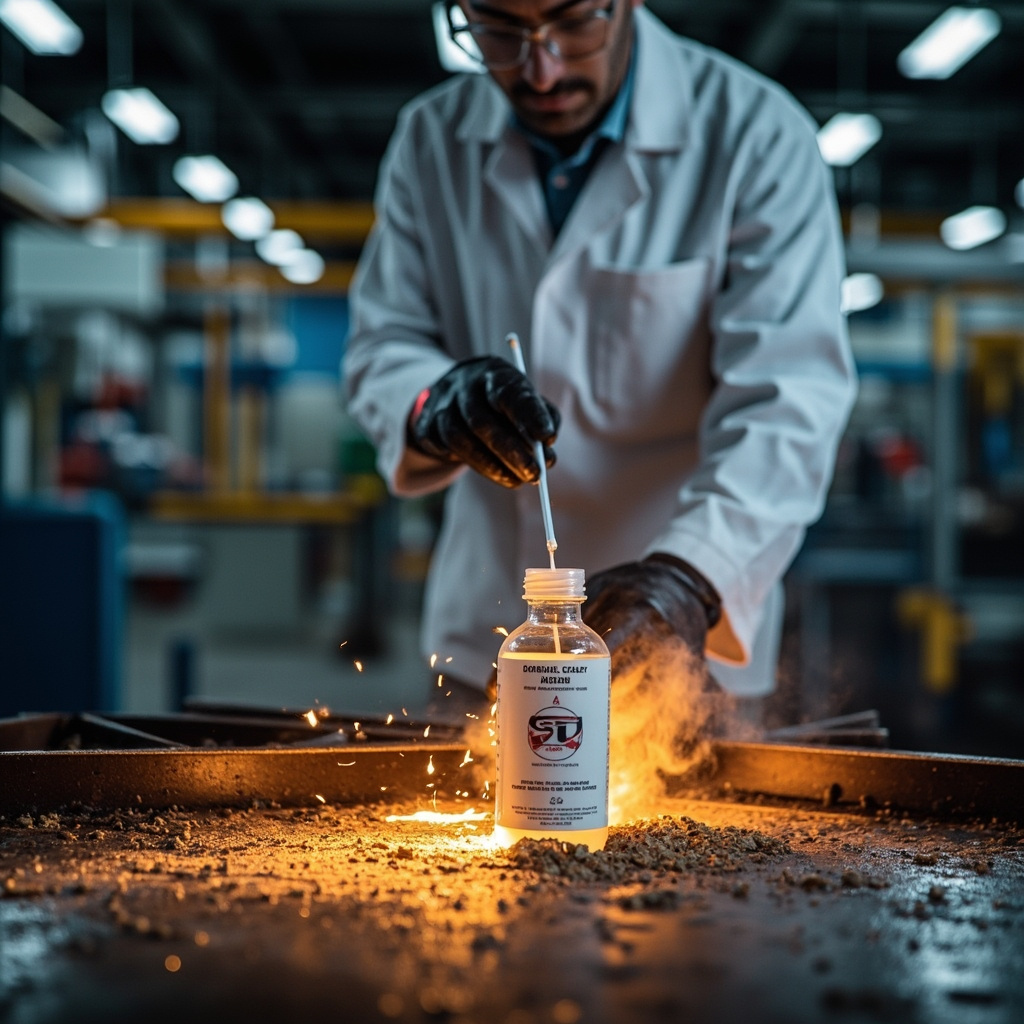
Q5: Rapid screening of flash rust inhibitors by the 24h droplet method?Dissolve the flash rust inhibitor candidate in deionized water at the recommended dosage—place a drop (0.5mL) on a degreased and sanded steel plate—keep the droplet from drying for 24 hours (cover to prevent evaporation)—observe whether rust appears in the droplet area. This method eliminates interference from other components such as coating resins/pigments/solvents—a direct interaction between pure flash rust inhibitor and pure steel—if no rust appears in the droplet area after 24h, the flash rust inhibitor is chemically effective—and can proceed to the next step of formulation testing. Different steel plates (cold-rolled/hot-rolled/cast iron/weld seam) can be tested in parallel to quickly determine suitability for specific substrates.

Related Reading
Summary
The root cause of flash rusting in waterborne industrial coatings lies in water acting as an electrolyte that activates electrochemical micro-cells on steel surfaces, leading to rapid corrosion during the drying window. Four types of anti-flash-rust agents—sodium nitrite (traditional, low-cost, toxic, and phased out), organic zinc chelates (NALZIN FA series / three-step mechanism of adsorption → passivation → insolubilization / long-lasting / REACH-compliant / currently the best option), organic amines (DMEA / pH adjustment + chemical adsorption / suitable for fast-drying systems), and molybdate/phosphate blends (dual-mechanism synergy / suitable for galvanized sheets)—each have their applicable scenarios. Kexin New Materials provides customers with comprehensive anti-flash-rust solutions for waterborne industrial coatings.