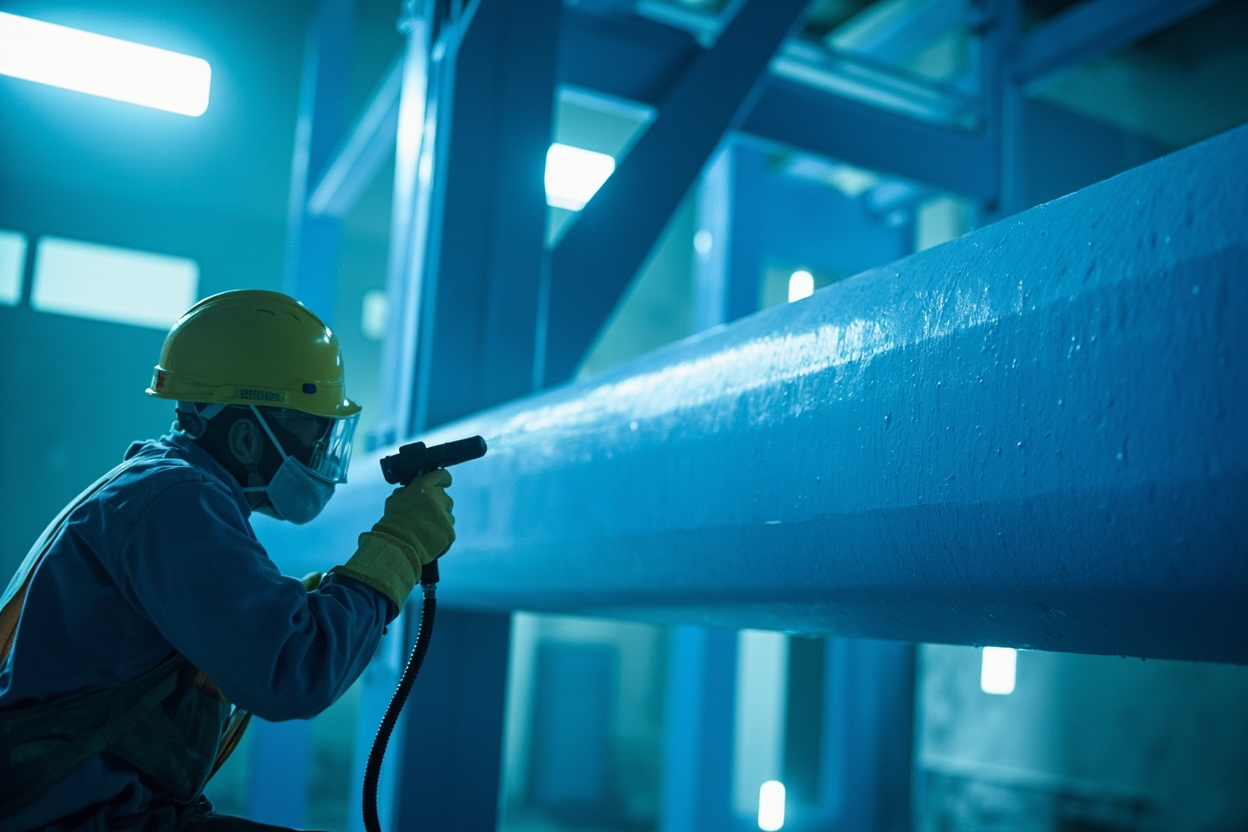
Introduction: Why Water-based Industrial Coatings Have Become an Irreversible Trend
Over the past two decades, the global coating industry has undergone a quiet yet profound shift—an evolution from solvent-based to water-based. This transformation is not merely a market trend, but a structural change driven jointly by environmental regulations, occupational health, end-user demands, and advances in materials science. In Europe, REACH regulations and the Industrial Emissions Directive (IED) have long barred many high-VOC (volatile organic compound) solvent-based products; in the United States, the EPA's NESHAP standards set strict caps on exhaust emissions from coating processes; in China, the "dual carbon" goals and the "14th Five-Year Plan for Comprehensive Work on Energy Conservation and Emission Reduction" explicitly require VOC reductions in key industries, and multiple provinces and cities have issued mandatory timelines for substituting low-VOC-content coatings.
For industrial sectors such as steel structures, equipment manufacturing, automotive parts, construction machinery, containers, and rail transit, water-based industrial coatings are no longer an "option" but a "mandatory answer" for compliant operations and brand responsibility. Yet the reality is that many coating engineers, purchasers, and plant managers still hold cognitive biases about water-based systems: some simply understand it as "paint diluted with water," some believe water-based paint "must underperform oil-based," and others remain wary of water-based conversion due to failed cases caused by immature early-stage water-based products.
The purpose of this article is to thoroughly explain water-based industrial coatings using a complete set of engineering technical language: what exactly it is, what core components it consists of, which scenarios different resin systems are suited for, what key control points must be mastered during application, how to diagnose and resolve common problems, and how to scientifically select products. Whether you are a technical decision-maker, a coating site manager, or a procurement lead, after reading this article you should be able to establish a practical cognitive framework.
It must be emphasized that water-based conversion does not mean "universalization." Water-based coatings have distinct advantage boundaries as well as process thresholds that must be faced squarely. The truly professional approach is to conduct systematic selection based on substrate, environment, performance requirements, and application conditions, rather than blind substitution or outright rejection. This is also the engineering-oriented mindset that Kexin New Materials has consistently advocated in the industrial paint field.
Chapter One: Basic Definitions and Classification Logic of Water-based Coatings
1.1 What is "Water-based Coating"
Water-based coatings (Waterborne Coatings) refer to coating systems in which the film-forming substance (resin), pigments, fillers, and various additives are stably dispersed in an aqueous phase through physical or chemical means, with water as the primary dispersion medium. The biggest difference from solvent-based coatings is: solvent-based coatings use aromatic hydrocarbons, esters, ketones, and other organic solvents as carriers, whereas water-based coatings use deionized water as the main body, supplemented by a small amount (typically 3%–15%) of co-solvents (such as propylene glycol butyl ether, dipropylene glycol methyl ether) to adjust solubility and film-forming properties.
Here is a key understanding: water-based coatings are not systems where "water can be added freely." The water-addition ratio of finished water-based paint is already locked in by formula design at the factory, and the dilution ratio (with water or dedicated thinner) during application is typically between 0%–10%. Excessive water addition will destroy the stability of the system, leading to pigment flocculation, gloss reduction, and durability degradation. This is the exact opposite of many people's intuition that "water-based means can be heavily diluted with water."
1.2 Three Dispersion Forms of Water-based
From the perspective of the dispersion state of the film-forming substance, water-based coatings mainly fall into three categories:
Water-soluble: The resin is completely dissolved in water after neutralization into salt, and the system is transparent or slightly turbid. Water-based alkyd, some water-based epoxy curing agents belong to this category. The advantage is good penetration and excellent wetting of the substrate; the disadvantage is relatively weak water resistance, because hydrophilic groups remain after film formation.
Water-dispersible / Emulsion: The resin is dispersed in water as latex particles with a diameter of 0.05–5 microns, and the system appears milky white. Water-based acrylic, water-based polyurethane dispersion (PUD) belong to this category. This is the most mainstream form of industrial coatings, with good hydrophobicity and excellent overall performance after film formation. Its film formation relies on "particle fusion" (particle coalescence) rather than solvent evaporation.
Water-reducible: The resin is first synthesized in an organic solvent, then neutralized with amine and diluted with water to undergo phase inversion into an oil-in-water state. Some electrophoretic paints and can coatings belong to this category.
1.3 Classification by Resin System
The core classification dimension of industrial water-based coatings is the resin system, and different resins determine the "genes" of the coating:
- Water-based acrylic: High cost-performance, good weather resistance, fast drying, but moderate chemical resistance and adhesion.
- Water-based epoxy: Extremely strong adhesion, excellent chemical resistance, but poor weather resistance (prone to chalking), suitable for primer or indoor use.
- Water-based polyurethane (PUD): Excellent flexibility, abrasion resistance, and chemical resistance, strong overall performance, but higher cost.
- Water-based alkyd: User-friendly application, good leveling, but slow drying and poor early water resistance, suitable for light anti-corrosion.
- Water-based fluorocarbon / polysiloxane: Super weather resistance, ultra-long service life, high cost, used for high-end curtain walls and heavy-duty anti-corrosion topcoats.
- Water-based inorganic zinc-rich: Based on potassium silicate / sodium silicate as binder, zinc powder as filler, cathodic protection + inorganic silicification, the ace primer for harsh environment primers.
Chapter Two: Film Formation Mechanism: How Water-based Paint "Dries"
Understanding the film formation mechanism of water-based coatings is a prerequisite for mastering their application essentials. Unlike solvent-based coatings which follow the path of "solvent evaporation → resin molecular chains approach → physical drying/crosslinking," the film formation of water-based emulsion coatings is a multi-stage particle coalescence process:
- Water evaporation period: After application, water and a small amount of co-solvent begin to evaporate, and latex particles gradually accumulate on the substrate surface, forming a tightly packed particle layer.
- Particle deformation and fusion period: When water is reduced to the critical volume fraction (about 74%, i.e., the closest packing point), under capillary pressure and co-solvent plasticization, the soft-core latex particles deform, fuse with each other, the interface disappears, and a continuous film is formed. This stage is temperature-sensitive—the temperature must be above the minimum film forming temperature (MFFT, Minimum Film Forming Temperature).
- Molecular diffusion and crosslinking period: For thermoplastic systems, fusion completes the process; for self-crosslinking or externally added crosslinker systems (such as amine curing agent for water-based epoxy, aziridine/carbodiimide for water-based PU), molecular chains further diffuse and undergo chemical crosslinking, ultimately forming a three-dimensional network.
Engineering insight: MFFT is the "lifeline parameter" of water-based coatings. The MFFT of most acrylic emulsions is between 5–15℃. When the ambient temperature is below MFFT, particles cannot fuse, resulting in "non-film-forming, whitening, poor adhesion, powdering when wiped" phenomena. This is why the temperature requirements for water-based paint application are often more stringent than those for oil-based paint—one must consider not only "whether it can dry" but also "whether it can form a film."
Chapter Three: In-depth Analysis of Resin Systems
3.1 Water-based Acrylic
Water-based acrylic is the "foundation" of industrial water-based coatings. Its emulsion is prepared by free-radical emulsion polymerization, with monomers including methyl methacrylate (MMA, providing hardness), butyl acrylate (BA, providing flexibility), acrylic acid (AA, providing polar adhesion), etc. By adjusting the ratio of soft and hard monomers, hardness and toughness can be balanced over a wide range.
- Advantages: Fast drying, good early water resistance, UV aging resistance (not prone to yellowing), controllable cost, high formulation freedom.
- Shortcomings: Adhesion to metal substrates depends on pretreatment, resistance to strong acids/bases and solvents is inferior to epoxy/PU, and the anti-corrosion durability as a single layer is limited.
- Typical uses: Steel structure intermediate coat, general industrial protection, automotive parts topcoat, construction machinery topcoat.
Engineering-wise, the combination of "acrylic emulsion + anti-rust pigment + zinc phosphate" is often used as a single-component water-based anti-rust paint, suitable for light-to-moderate protection in C2–C3 atmospheric environments.
3.2 Water-based Epoxy
Water-based epoxy consists of a two-component system of "water-based epoxy emulsion (usually an aqueous dispersion of liquid epoxy resin) + water-based amine curing agent." The curing mechanism is consistent with solvent-based epoxy (epoxy group and amine group ring-opening crosslinking), but the dispersion medium is water.
- Advantages: Excellent adhesion to metal, superior chemical and solvent resistance, good compatibility with various anti-rust pigments, can be applied at high film thickness.
- Shortcomings: Poor weather resistance—prone to chalking and gloss loss under UV, must never be used bare as a topcoat; two-component has pot life, typically 2–4 hours; still requires application temperature/surface treatment.
- Typical uses: Heavy industrial primer, tank interior walls, flooring, pipelines, immersion environment protection.
Water-based epoxy is currently the mainstream choice for water-based heavy-duty anti-corrosion primers, especially suitable for occasions requiring high adhesion and chemical resistance.
3.3 Water-based Polyurethane Dispersion (PUD)
PUD is prepared by acetone process or prepolymer dispersion method, with high molecular weight, fine particles, and dense film formation. It can be subdivided into aromatic (low cost, prone to yellowing) and aliphatic (yellowing-resistant, good weather resistance).
- Advantages: Excellent balance of flexibility and hardness, abrasion-resistant, chemical-resistant, good feel, can be made high-gloss.
- Shortcomings: Higher cost than acrylic; sensitive to moisture (substrate and air humidity must be controlled during application); early water resistance of some PUDs needs improvement via crosslinking.
- Typical uses: Automotive parts, high-end topcoats for construction machinery, woodware, plastic parts.
Engineering-wise, the combination of "water-based acrylic intermediate layer + water-based PU top layer" is often used to balance cost and performance.
3.4 Water-based Inorganic Zinc-rich
Using potassium silicate/sodium silicate as binder, with high zinc powder content (typically ≥80%), after application it absorbs CO₂ and moisture from the air to undergo a silicification reaction (forming zinc silicate gel), and forms strong bonding with the steel surface, while zinc provides cathodic protection.- Advantages: Withstands temperatures above 400℃, wear-resistant, ultra-strong anti-corrosion (can handle C5/CX and immersion), compatible with flame cutting.
- Shortcomings: Extremely high surface preparation requirements (above Sa2.5), high brittleness requiring matching systems, application window and curing affected by humidity, sensitive to water quality.
- Typical uses: Sea-crossing bridges, offshore platforms, tank bottom plates, high-temperature pipeline primer.
Chapter 4 Additive System: The "Invisible Engineers" of Water-based Coatings
Water-based systems rely more on additives than solvent-based ones, because the high surface tension of water (72 mN/m, far higher than 20–30 mN/m for solvents) brings a series of challenges: difficult wetting, easy foaming, easy cratering, easy flocculation. Core additives include:
- Dispersant: Adsorbs on pigment surfaces, providing electrostatic/steric stabilization to prevent settling and flocculation. Water-based systems must use water-compatible dispersants (polycarboxylates, comb copolymers).
- Defoamer: Destroys foam film stability. Water-based paint foams very easily; insufficient defoamer leaves pinholes, excess causes cratering. Compatibility screening is required.
- Wetting agent: Lowers surface tension, improves spreading on low-surface-energy substrates (e.g., plastics, oil residue).
- Thickener: Provides application viscosity and anti-sagging. Commonly alkali-swellable (ASE), hydrophobic-modified alkali-swellable (HASE), polyurethane associative (HEUR). Different thickeners vary in their effects on gloss, sagging, storage stability.
- Coalescing agent (co-solvent): Such as dipropylene glycol butyl ether (DPnB), propylene glycol butyl ether (PnB), lowers MFFT, helps particle fusion. This is one of the main sources of VOC in water-based paint; low-VOC formulations require precise calculation of dosage.
- Anti-rust pigment: Zinc phosphate, aluminum tripolyphosphate, zinc molybdate, modified magnesium silicate, etc., providing active/passive rust prevention. Note that water-based systems are sensitive to pigment water solubility (ions released by some anti-rust pigments upon contact with water can destabilize the emulsion).
- pH regulator: Such as AMP-95 (2-amino-2-methyl-1-propanol), maintains system alkalinity (pH 8–9) to stabilize emulsion and dispersion.
Engineering insight: Failures of water-based paint are six or seven out of ten due to additive mismatch and uncontrolled water dilution during application, rather than the resin itself. The "robustness" of a formulation is often more important than peak laboratory performance.
Chapter 5 Application Process and Key Control Points
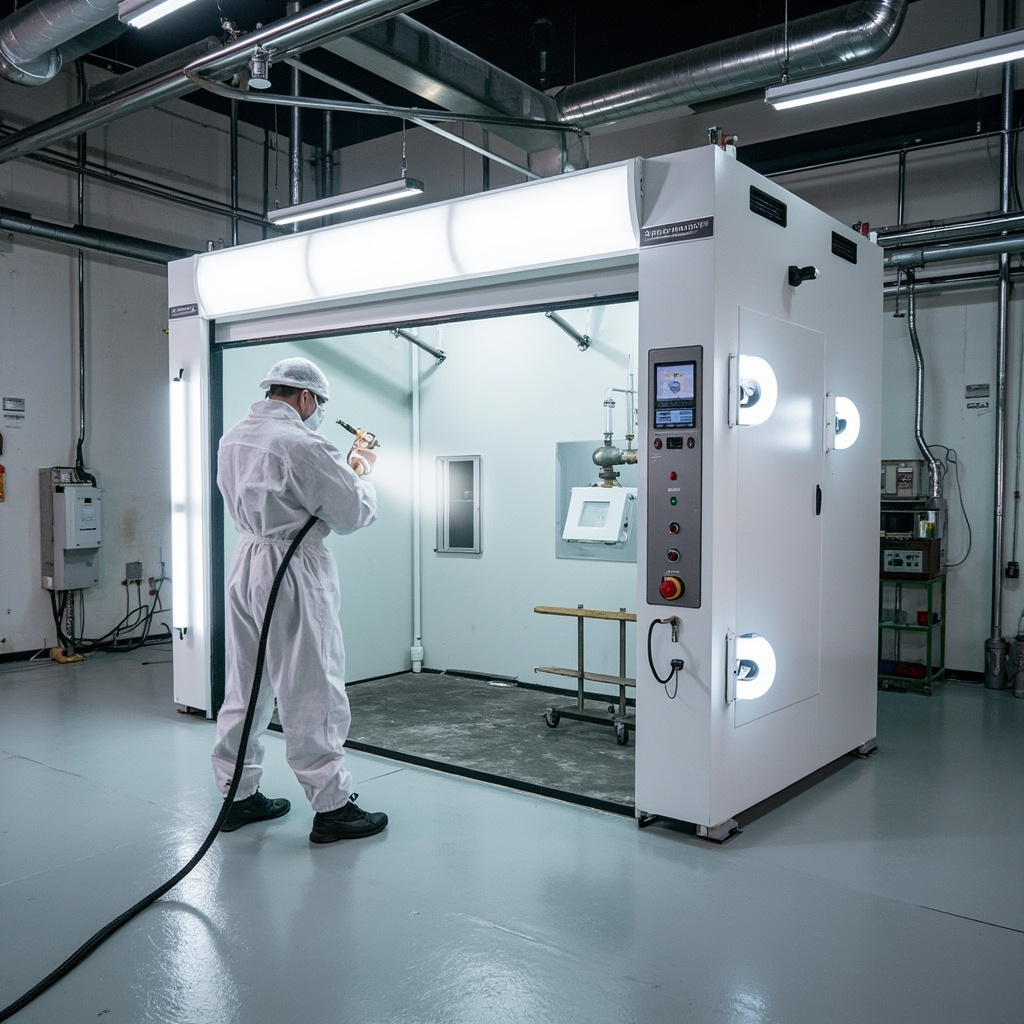
5.1 Surface Preparation
No matter how good the coating, it cannot do without surface preparation. Water-based coatings are more sensitive to cleanliness (water accelerates the negative effects of residual contaminants):
- Steel: Blast clean to Sa2.5 (near-white), roughness Ry 35–75 μm; when blasting is impossible, power tool clean to St3.
- Oil stains: Must be thoroughly degreased with alkaline or emulsifying cleaners; residual oil will cause severe cratering and adhesion failure.
- Flash rust prevention: After applying water-based paint on steel, if drying is slow and humidity is high, water retention can induce "flash rust" (spot-like red rust). Can be prevented by adding flash rust inhibitors (e.g., nitrite-based, organic zinc complexes) and increasing drying speed.
5.2 Application Methods
- Air spray: Suitable for small parts, complex parts; good atomization but low paint utilization (about 30%–40%).
- Airless spray: Industrial mainstream, high efficiency, uniform film thickness, suitable for large parts and thick coating. Need to control pressure and nozzle (water-based paint commonly uses 0.38–0.53 mm orifice).
- Air-assisted airless spray: Balances efficiency and surface quality, commonly used in automotive and construction machinery.
- Electrophoresis (E-coat): Unique "electrodeposition" process of water-based paint, used for automotive parts, home appliances; uniform film thickness, reachable in inner cavities.
- Roll/brush: Maintenance and local repair.
5.3 Environmental Control (Iron Rules for Water-based Application)
- Temperature: Substrate temperature ≥ 5℃ and at least 3℃ above dew point; ambient temperature recommended 10–35℃. Do not apply below MFFT.
- Humidity: Relative humidity recommended ≤ 85% (some primers ≤ 75%). High humidity delays drying, induces flash rust, reduces early water resistance.
- Ventilation: Good ventilation accelerates moisture removal, but strong wind causes surface to dry too fast (orange peel, pinholes).
- Intercoat interval: Strictly follow the "touch-dry—recoatable" window in the technical data sheet; water-based paint intercoat typically requires 2–6 hours (greatly affected by temperature and humidity).
5.4 Film Thickness Management
Single-coat applicable film thickness of water-based paint is usually lower than solvent-based (limited by sagging); heavy anti-corrosion often requires multiple thin coats. It is recommended to use a wet film gauge for real-time control, and verify dry film with magnetic/eddy-current thickness gauge to ensure design DFT is achieved.
Chapter 6 Common Problem Diagnosis and Countermeasures
| Problem | Possible Cause | Countermeasure |
|---|---|---|
| Flash rust (red rust spots) | Slow drying, high humidity, poor substrate preparation, no flash rust inhibitor | Add flash rust inhibitor, raise temperature and lower humidity, ensure Sa2.5 |
| Cratering/fish eye | Substrate oil, additive mismatch, compressed air with oil | Thorough degreasing, screen defoamer/wetting agent, purify air source |
| Sagging | Single coat too thick, low viscosity, low ambient temperature | Reduce film thickness, increase viscosity, raise temperature |
| Pinholes | Insufficient defoaming, uneven film thickness, fast surface dry | Optimize defoaming, adjust application, reduce surface dry speed |
| Poor adhesion | Insufficient surface preparation, not film-formed (low temp), intercoat contamination | Redo preparation, ensure film-forming temperature, clean intercoat |
| Early water-resistance whitening | Poor film formation, insufficient curing, additive bleed-out | Ensure MFFT, extend curing, optimize formulation |
| Uneven gloss | Poor pigment dispersion, insufficient leveling, film thickness fluctuation | Strengthen dispersion, use associative thickener, control film thickness |
Chapter 7 Selection Guide: How to Match a System to Your Working Conditions
Selection logic should be "reverse-derive system from environment":
- Determine corrosion environment level (refer to ISO 12944 C1–CX and immersion Im1–Im3).
- Determine performance priority: Anti-corrosion life? Chemical resistance? Weathering? Wear? Temperature resistance?
- Match resin system:
– Light anti-corrosion (C2–C3) + weathering → Water-based acrylic single coat or acrylic primer/topcoat
– Medium-heavy anti-corrosion (C4) + chemical resistance → Water-based epoxy primer + water-based acrylic/PU topcoat
– Heavy anti-corrosion (C5/CX) + immersion → Water-based inorganic zinc-rich primer + water-based epoxy intermediate + water-based PU/fluorocarbon topcoat
– High temperature → Water-based inorganic zinc-rich (withstands 400℃+)
- Assess application conditions: Temperature, humidity, whether equipment supports water-based application.
- Prototype verification: Conduct salt spray and adhesion verification on real substrates, let the data speak.
Chapter 8 Full Spectrum of Application Fields
- Steel structures and bridges: Water-based epoxy primer + water-based acrylic/fluorocarbon topcoat; use zinc-rich primer for C4 and above.
- Construction machinery: Water-based epoxy primer + water-based PU topcoat, balancing weathering and wear resistance.
- Automotive parts: Electrophoretic primer + water-based PU topcoat, dual excellence in environmental friendliness and appearance.
- Containers: Water-based epoxy zinc-rich/epoxy primer + water-based acrylic topcoat, meeting box owner specifications.
- Rail transit: Car body water-based PU, bogie water-based epoxy.
- Flooring: Water-based epoxy self-leveling, low odor for occupied work.
- Tanks and pipelines: Inner wall water-based epoxy (media resistant), outer wall water-based heavy anti-corrosion system.
Chapter 9 Future Trends and Technology Frontiers
- Ultra-low VOC and zero VOC: Continuously suppress VOC through AP-free/coalescent-free emulsions, high Tg self-crosslinking technology.
- Bio-based resins: Water-based resins derived from vegetable oils, lignin derivatives, further improving sustainability.
- Self-healing and smart coatings: Microcapsule corrosion inhibitors, pH-responsive release, achieving "self-healing when damaged".
- Water-based UV curing: Water-based dispersion + UV crosslinking, second-level curing, zero VOC, suitable for flat parts.
- Digital color matching and coating: AI color matching + robotic spraying, improving consistency and utilization.
Chapter 10 VOC Regulations and Limit Calculation Practice
Many companies stumble on "low VOC" due to unclear understanding of how regulatory limits are calculated. Taking China's GB 30981 "Limit of Harmful Substances in Industrial Protective Coatings" as an example, it sets limits based on VOC content (g/L) in the "application state" rather than the factory state. This brings a key engineering issue: adding water/thinner during application dilutes VOC concentration (g/L drops), but the total VOC mass remains unchanged, and dilution sacrifices performance.
Simplified VOC Content Calculation:
VOC(g/L) = [coating mass (excluding water) × VOC mass fraction %] / volume in application state
Water-based coatings, using water as the medium, often have significantly lower VOC after "water deduction" than solvent-based coatings, but they are still contributed to by co-solvents. Therefore, a truly low-VOC formulation must minimize co-solvents (film-forming aids, co-solvents) while ensuring film formation and performance—this is precisely the watershed of water-based resin synthesis capability.
The EU Ecolabel and Blue Angel have stricter VOC limits for water-based industrial coatings (often requiring < 30–50 g/L or even lower), and add restrictions on hazardous substances (e.g., specific heavy metals, APE surfactants banned). Export-oriented companies must design formulations for compliance according to target market regulations, rather than merely meeting domestic standards.
Chapter 11 Comprehensive Comparison of Water-Based and Solvent-Based Systems
| Dimension | Water-Based Industrial Coating | Solvent-Based Industrial Coating |
|---|---|---|
| Primary medium | Water (small amount of co-solvents) | Organic solvent |
| VOC emission | Low (can be < 100 g/L) | High (often 400–800 g/L) |
| Flash point / safety | Non-flammable or difficult to ignite, safe storage and transport | Flammable, requires explosion-proof |
| Occupational health | Low irritation | Requires strong ventilation and protection |
| Film-forming mechanism | Particle coalescence + crosslinking | Solvent evaporation + crosslinking |
| Minimum film-forming temperature | Constrained by MFFT (temperature control needed) | Constrained by solvent evaporation rate |
| Humidity sensitivity | High (high humidity triggers flash rust / slow drying) | Lower |
| Initial water resistance | Requires curing period | Relatively fast |
| Recoat window | Greatly affected by temperature and humidity | Relatively controllable |
| Equipment cleaning | Water suffices (convenient) | Solvent required (high cost, hazardous waste) |
| Overall cost | Lower in medium to long term (compliance + safety) | Low in short term, high hidden cost |
Conclusion: Water-based conversion has advantages in compliance, safety, and long-term cost, but its application tolerance is lower than solvent-based, and must be paired with stricter on-site management.
Chapter 12 Testing and Evaluation System for Water-Based Industrial Coatings
Scientific selection cannot be separated from test data. Core test items include:
- Salt spray test (neutral salt spray NSS / cyclic salt spray): Evaluates anti-corrosion; heavy-duty anti-corrosion systems often require 480–2000 h without blistering or rust-through.
- Adhesion (cross-cut method GB/T 9286 / pull-off method ISO 4624): Quantifies bond strength between coating and substrate; heavy-duty anti-corrosion requires ≥ 5 MPa (pull-off).
- Weather resistance (QUV UV aging / xenon lamp aging): Evaluates topcoat resistance to light aging; aliphatic PU/fluorocarbon superior to acrylic/epoxy.
- Chemical resistance (acid/alkali/salt immersion): For tanks, floor coatings and similar scenarios.
- Abrasion resistance (Taber abrasion): Key metric for engineering machinery, floor coatings.
- VOC and hazardous substances (GC-MS / headspace): Mandatory for compliance.
- Application properties (sagging, leveling, drying time): On-site adaptability verification.
Kexin New Materials provides TDS (Technical Data Sheet) and MSDS (Safety Data Sheet) for each batch of products, and can provide third-party test reports according to customer needs, supporting selection decisions with data.
Chapter 13 Reference Engineering Implementation Cases
Case A: Water-based conversion of an engineering machinery plant in South China
The original solvent-based painting line exceeded VOC emissions and faced production limits. Converted to "water-based epoxy primer + water-based polyurethane topcoat", with mixed-air spraying and temperature-humidity joint control (paint booth 15–30℃, RH ≤ 80%). The difficulty was summer high humidity triggering flash rust, solved by adding organic zinc flash-rust inhibitor + increasing primer drying speed. After conversion, VOC dropped about 70%, passed environmental acceptance, and per-piece coating overall cost decreased 12% due to reduced hazardous waste.
Case B: Coastal sea-crossing bridge steel box girder heavy-duty anti-corrosion
Environment C5-M (high salt, high humidity). System: "water-based inorganic zinc-rich primer (80 μm) + water-based epoxy micaceous iron intermediate coat (120 μm) + water-based fluorocarbon topcoat (80 μm)", total DFT about 280 μm. Blasting Sa2.5, dew point control ≥ 3℃. Passed 2000 h cyclic salt spray with no rust-through, designed protection life 25 years.
Case C: Food factory floor renovation
Original solvent-based epoxy could not be applied during shutdown due to strong odor. Switched to water-based epoxy self-leveling, allowing zoned application under low odor, put into use after 7 days curing, balancing food safety and schedule.
Conclusion: Water-based conversion is a competition of engineering capability
Water-based industrial coating is not as simple as "replacing solvent with water"; it is a system engineering involving resin chemistry, dispersion physics, application process, and quality system. It brings lower VOC, better occupational health, and broader market access, but also imposes higher requirements on surface treatment, environmental control, and on-site management.
For manufacturing enterprises, successful water-based implementation relies not on a certain "magic coating", but on scientific selection based on working conditions + strict application discipline + continuous sampling verification. Kexin New Materials (Foshan, Guangdong) provides complete systems in water-based industrial paint including water-based epoxy, water-based acrylic, water-based polyurethane, and water-based inorganic zinc-rich, supports free sampling by substrate and environment (regular samples shipped within 48 hours, with TDS/MSDS), and works with you to turn water-based conversion from "compliance pressure" into "competitiveness".
For further technical selection support, please feel free to contact us.
Further reading: Complete Guide to Industrial Anti-Corrosion Paint: How to Select the Right Supporting System for Steel Structures, Tanks, and Pipelines? · Differences and Selection between 1K Color Masterbatch and 2K Color Masterbatch