Epoxy floor bubbling and peeling are common chronic quality issues in construction. As a professional floor paint manufacturer, we provide an in-depth analysis of how temperature and humidity control, substrate preparation, and material mixing ratio affect floor lifespan, helping you avoid rework risks and deliver flawless projects.
Epoxy floor paint is widely used for its aesthetic appearance, wear resistance, and dust-proof properties, but many users report that the floor starts to bubble and even peel off in sheets shortly after completion. This is not only difficult to repair, but also disrupts production. As a floor paint manufacturer, we have summarized the 5 key factors that cause bubbling and peeling, to help you successfully "avoid pitfalls" before construction.

1. Excessive moisture content in the substrate (the most common cause of bubbling) A cement floor may look dry, but that does not mean it actually is.
- Crisis: If the moisture content exceeds 8%, after the paint film is sealed, the groundwater vapor at the bottom will expand when heated and push up the paint film, forming "bubbles" one after another.
- Suggestion: Before construction, a moisture meter must be used, or plastic film should be covered for 24 hours to observe whether there is moisture vapor.
2. Substrate preparation not done properly (leading to large-scale peeling) Floor paint is not simply "painting", but needs to become one with the cement floor.
- Crisis: Surface has laitance, oil stains, or old paint layers, which will result in extremely poor adhesion.
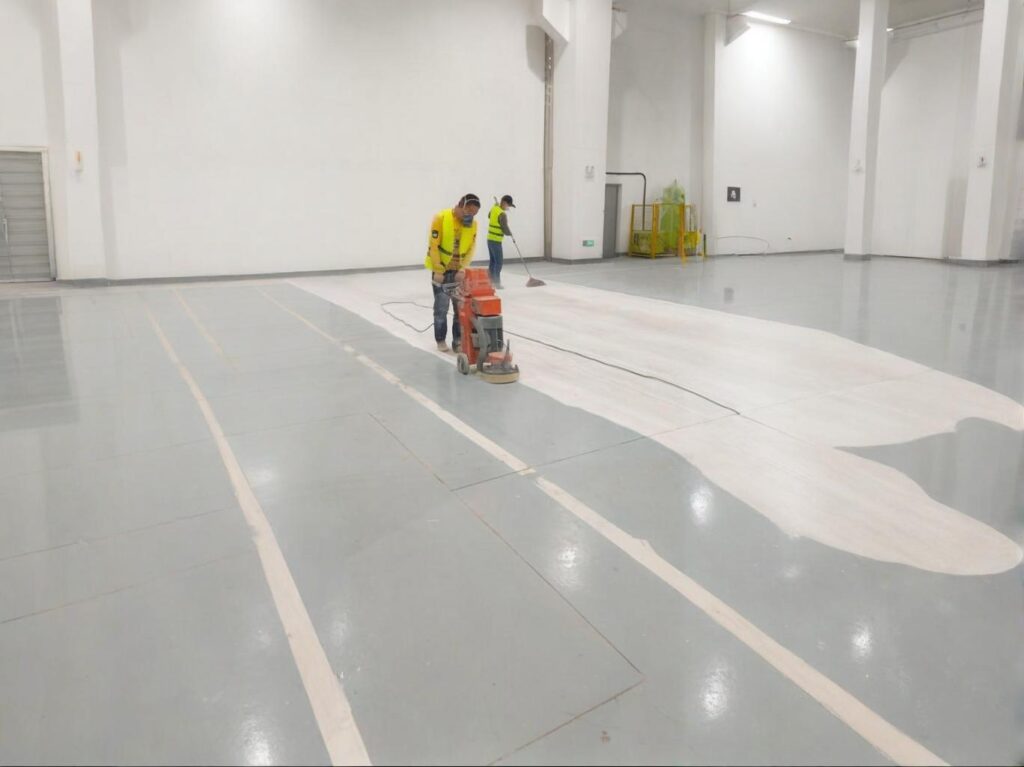
- Recommendation: A large grinding machine must be used for deep grinding to open the cement capillary pores and ensure the epoxy primer can penetrate.

3. Ignoring Environmental Temperature and Humidity
- Crisis: When the humidity during construction exceeds 85%, the paint film is prone to blushing and loss of gloss, and the intercoat adhesion will drop significantly.
- Suggestion: Strictly prohibit construction in rainy or extremely cold weather.
4. Inaccurate material ratio (non-curing or sticky)
- Crisis: Epoxy paint is a two-component material. If the ratio of the curing agent is incorrect, or if mixing and stirring are uneven, it will cause the paint film to remain partially uncured, with insufficient strength, making it highly susceptible to damage later on.
5. Control of Flash-Off Time Between Construction Coats
- Crisis: Between each process (primer, intermediate coat, topcoat), if the previous layer is not fully dry before applying the next, the solvent gets sealed inside, which will lead to "interlayer peeling" later.
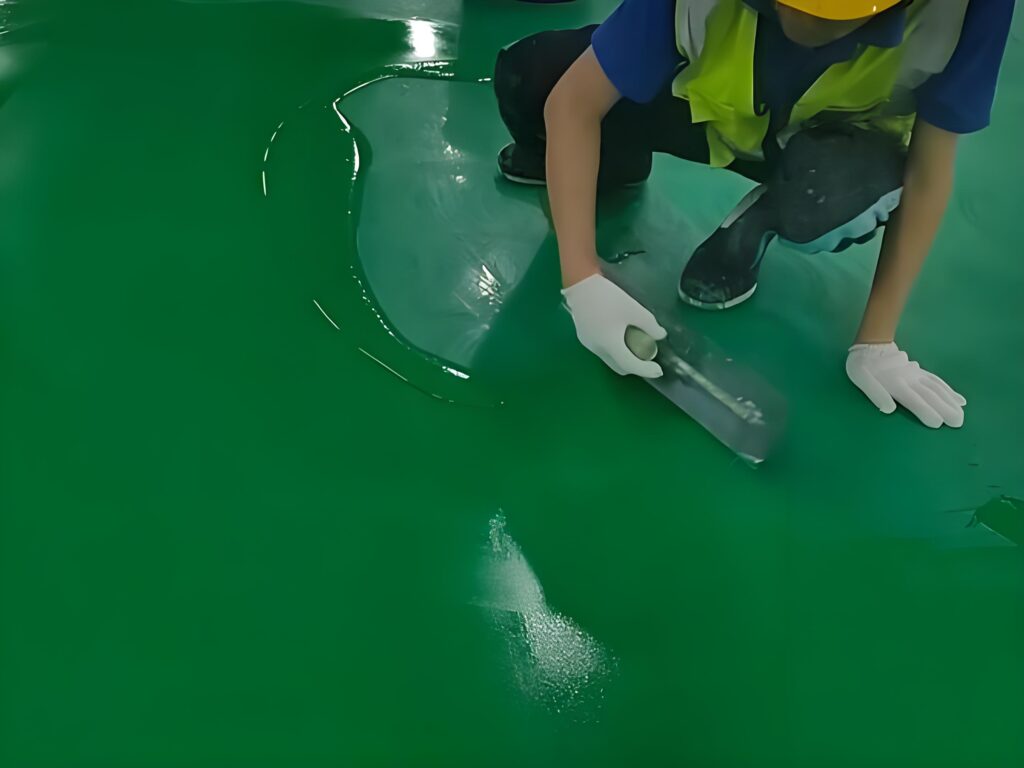
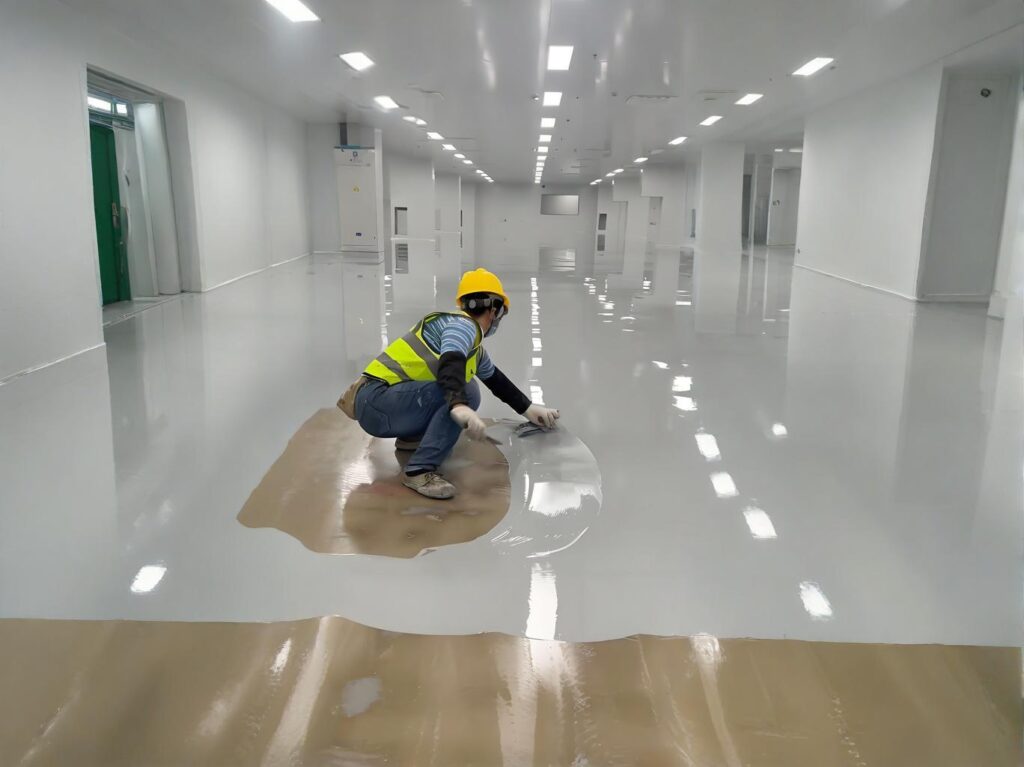

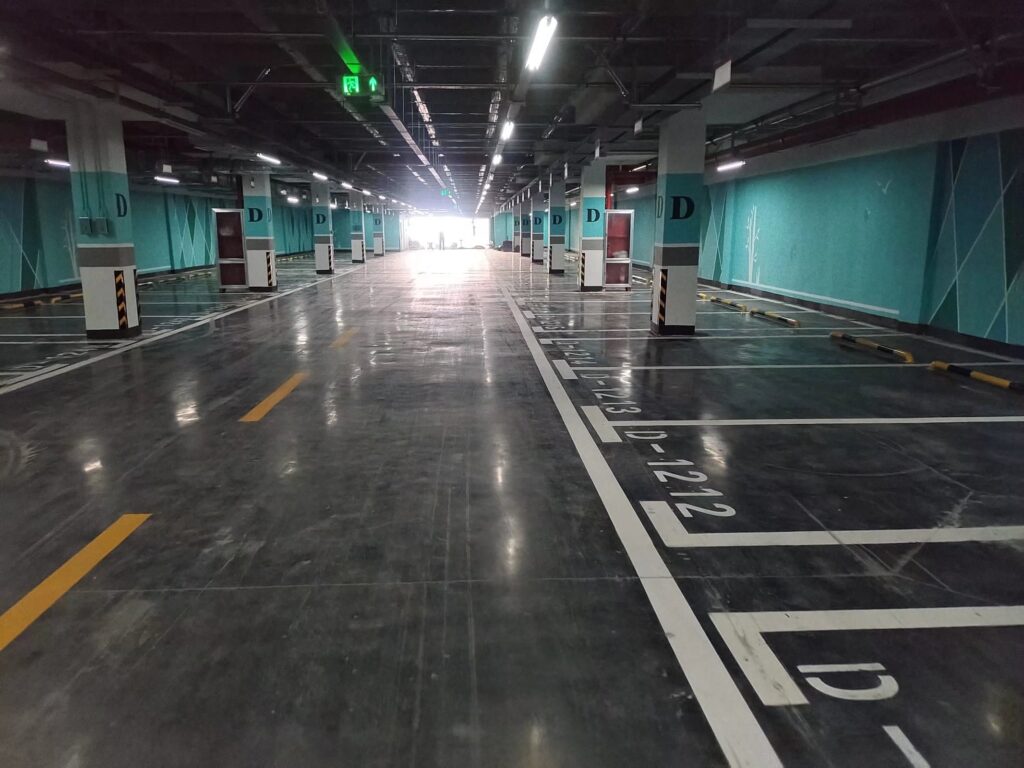

Conclusion: Floor engineering is "30% material, 70% construction." Choosing our matching high-penetration primer and high-quality topcoat, combined with a scientific construction process, is the only way to truly achieve a high-quality floor that is "long-lasting, durable, and bubble-free."