When you choose a glossy car paint for your beloved vehicle, select a favorite color for your home walls, or apply a protective layer to your cherished furniture, have you ever wondered what enables the coating to adhere tightly and stay brilliantly durable? In a paint factory, the step of slowly adding resin into the mixing tank is precisely the key that determines all these properties. Today, we will delve into the core of paint production to reveal how resin shapes the soul of coatings at the chemical level, and provide you with the ultimate guide to choosing high-quality coatings.
From a chemical perspective: what exactly is a resin?
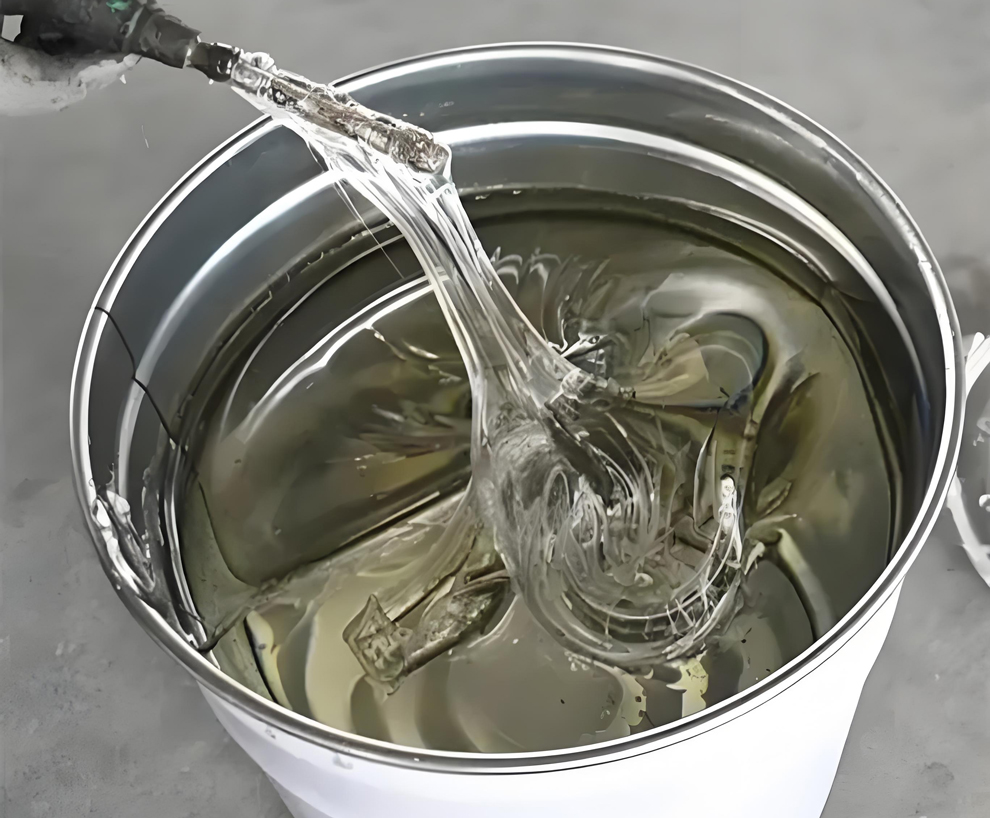
In coating science, resin is defined as a plasticizable polymer, usually an amorphous organic substance in a semi-solid or solid state. It is not a single substance, but a large family that includes natural resins (such as rosin, amber) and the more common synthetic resins (such as acrylic resin, epoxy resin, polyurethane resin, alkyd resin, etc.).
In coating formulations, the resin plays the core role of "film-forming substance". Simply put, it is the basic framework for forming a continuous, dense paint film after the coating dries. Imagine the reinforced concrete structure in buildings—the resin is the steel skeleton, while other components such as pigments and fillers are the concrete filling it. Without a solid skeleton, a building cannot take shape; likewise, without high-quality resin, a coating loses its fundamental performance support.






The four core missions of resins: comprehensive empowerment from production to service
Why must all coating factories add resins with precision? Its role goes far beyond mere "bonding"—it is a multi-dimensional performance enabler.
1. Foundation of Physical Properties: Hardness, Toughness, Wear Resistance
After the coating dries, the paint film formed needs to withstand various daily physical challenges. The chemical structure of the resin directly determines the mechanical properties of the paint film.
- Hardness and Abrasion Resistance: Resins with high crosslink density, such as epoxy resin and polyurethane resin, can form a three-dimensional network structure, imparting extremely high hardness and excellent abrasion resistance to the paint film. This is why such resins are mostly used for floor coatings and industrial machine tool topcoats.
- Flexibility and Impact Resistance: Some acrylic resins or elastic polyurethanes with longer flexible segments can impart excellent flexibility and extensibility to the film. This makes the coating less prone to cracking or peeling when applied to substrates such as wood or plastic that undergo slight deformation due to temperature and humidity changes.
2. Laying the Foundation for Application and Protection: Adhesion and Durability
Whether a coating can "grip" the substrate surface and resist external erosion depends entirely on the capability of the resin.
- Adhesion: This is the most fundamental magic of resins. Resin molecules contain polar functional groups that can produce strong physical adsorption and chemical bonding with the surfaces of different substrates (metal, wood, concrete), forming an "anchoring" effect. For example, epoxy resin has unparalleled adhesion to metal, which is the key reason it is the preferred choice for anti-rust primers.
- Chemical corrosion resistance and weather resistance: The resin forms a barrier that isolates the external environment. Resins with high chemical inertness (such as fluorocarbon resins and silicone resins) can effectively resist the erosion of acids, alkalis, salts, and solvents. At the same time, they can absorb or reflect ultraviolet rays, protecting themselves and the pigments from photodegradation, thereby greatly extending the service life of the coating in outdoor environments and preventing chalking, discoloration, and loss of gloss.
3. Shaping the final aesthetic performance: gloss, leveling, and fullness
The "appearance" of a coating is likewise governed by the resin.
- Gloss: Whether the resin can form a smooth, mirror-like surface during the drying process directly affects the gloss. The leveling property of the resin solution (in solvent) and the microscopic flatness of the surface after drying and curing determine whether the light is uniformly specularly reflected (high gloss) or diffusely reflected (matte). By adjusting the resin type and ratio, engineers can precisely design any effect ranging from full matte to high gloss.
- Leveling and fullness: High-quality resins can provide suitable rheological properties, allowing the coating to level quickly after application, eliminating brush marks or orange peel, and forming a smooth surface. At the same time, the solid content and film-forming characteristics of the resin determine the thickness and texture of the paint film; good resin can bring a rich, full visual and tactile experience.
4. Driving Environmental and Functional Innovation
The development trend of the modern coatings industry is closely centered on breakthroughs in resin technology.
- Environmental transformation: shifting from traditional solvent-based resins (high VOC emissions) to water-based resins, high-solid resins, and powder resins, the core of which is to develop new types of resins that can form films in water or lower-VOC environments. This is key to responding to global environmental regulations.
- Functional Add-ons: Through chemical modification of resins, coatings with special functions can be created. For example, introducing anti-mold monomers to synthesize anti-mold resins; designing self-crosslinking resins to achieve better scrub resistance; synthesizing resins with microphase-separated structures to realize the texture of real stone paint.
Consumer Guide: How to Choose the Ideal Coating by "Understanding Resins"?
Understanding the central role of resins, you will no longer choose coatings "by feel" or based on color alone. You can evaluate them through the following dimensions closely tied to resins:
- Focus on paint categories: Different types of resins determine the basic properties of the paint.
- Wall paint: The mainstream is acrylic latex paint (water-based). Pay attention to terms such as "pure acrylic" or "styrene-acrylic", as pure acrylic resin usually offers better weather resistance and scrub resistance.
- Wood coatings: divided into Polyurethane paint (PU, high hardness, good fullness), Nitrocellulose lacquer (NC, fast drying, easy to repair), and Water-based wood coatings (eco-friendly, using water-based acrylic or polyurethane dispersion as resin).
- Metal anti-rust paint: Epoxy primer offers the best adhesion and rust prevention. Paired with Polyurethane topcoat (weather-resistant and gloss-retaining) or Fluorocarbon topcoat (super weather-resistant) makes a high-end combination.
- Outdoor coatings: Be sure to select a resin system marked as "excellent weather resistance", such as modified acrylic, aliphatic polyurethane, or fluorocarbon resin.
- Study the product manual and technical specifications:
- Adhesion: Check standard test results (e.g., cross-cut test).
- Scrub resistance cycles: Directly reflects the density and strength of the resin film, and is a key indicator for interior wall paint.
- Chemical resistance: Crucial for kitchen, laboratory, or industrial environments.
- VOC Content: Low VOC means more environmentally friendly resins and formulation technologies are used.
- Trust reliable brands: Large coating manufacturers invest heavily in resin R&D, synthesis, and formulation applications, and their core technology often lies in their deep understanding and skillful use of resins. They can ensure the purity and batch-to-batch stability of resin raw materials, which is difficult for small factories to achieve.
Conclusion: The Invisible Backbone, The Visible Quality
Next time you admire a mirror-smooth wall, a dazzling car, or a set of furniture that stays fresh over time, remember that beneath that brilliant color lies an invisible skeleton made of resin, silently providing support. From the chemical reactions in factory mixing tanks to the beauty and protection finally delivered into your life, resin runs through it all and is the very soul of coating performance.
Choosing a coating is, in essence, choosing a resin. Once you understand this core principle, you hold the key to unlocking high-quality painting and coating.